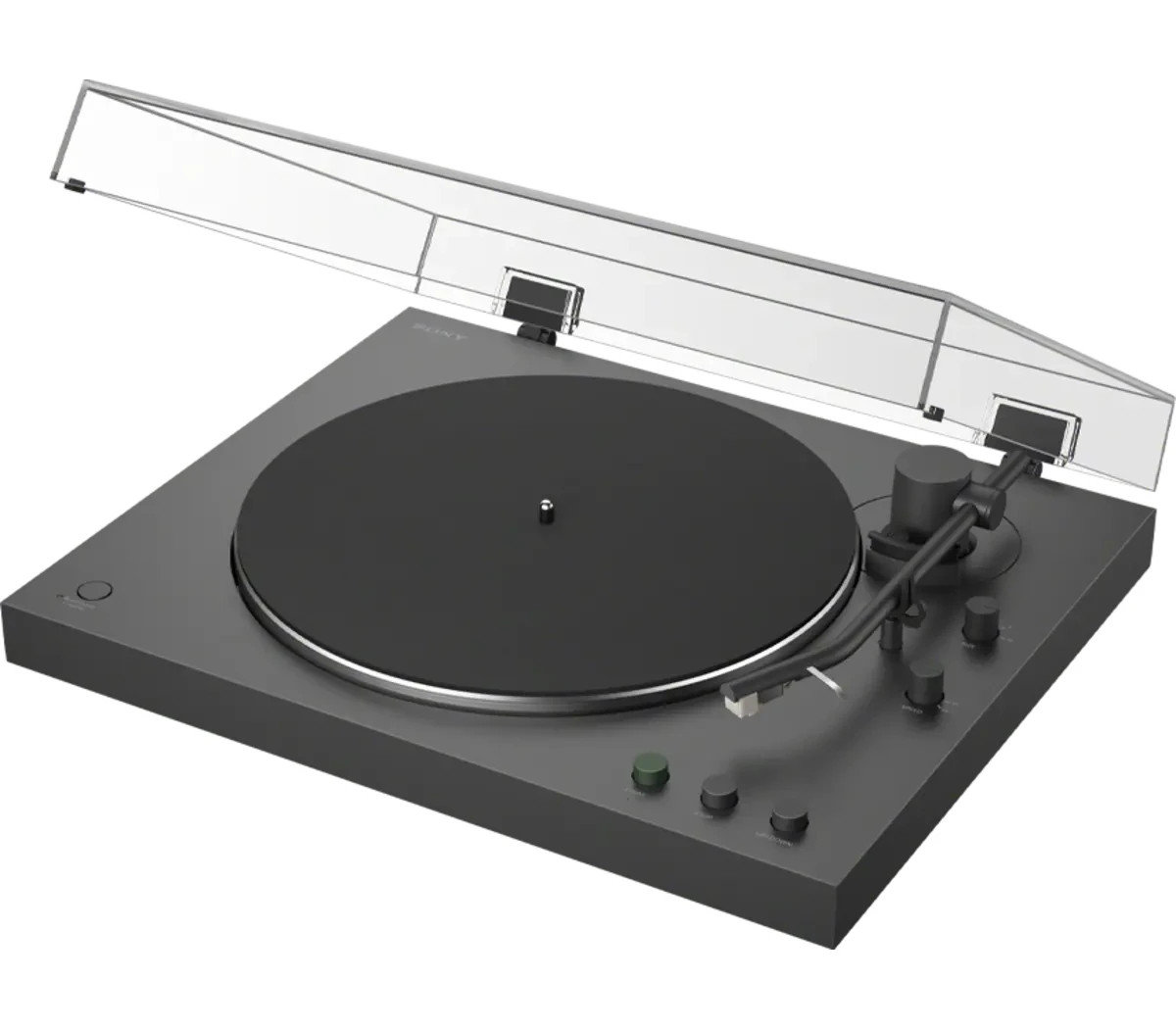

Photos from current listings. Actual item, color, and included accessories may vary.
Vinyl Turntable Buying Guide
A vinyl turntable is an electromechanical playback device where tonearm geometry, platter drive, and cartridge quality determine tracking accuracy and record longevity far more than cosmetic features. The primary trade-off is an all-in-one automatic Bluetooth deck versus a manual audiophile table with adjustable counterweight and upgradeable cartridge. The clear decision rule: buy a deck with a counterweighted tonearm and replaceable cartridge if you own more than a handful of records; treat fixed-tracking, ceramic-cartridge novelty players as toys, not hi-fi.
Key takeaways
- Belt drive isolates motor vibration for lower wow-and-flutter (typically 0.1-0.25% WRMS) versus direct drive (0.01-0.05%) which offers instant torque and DJ-grade speed stability.
- A counterweighted tonearm with adjustable tracking force (1.5-3.0 g range) and anti-skate is the single biggest durability factor — it prevents groove wear that fixed-tracking decks cause.
- Moving-magnet (MM) cartridges with user-replaceable styli (e.g., Audio-Technica AT-VM95, Ortofon OM series) are the standard upgrade path; ceramic cartridges on budget decks cannot be upgraded and track at 4-6 g, accelerating wear.
At a glance
- Category
- Turntables & Record Players
- Last updated
- Nov 25, 2026
Current offers
Highlights
- Belt drive isolates motor vibration for lower wow-and-flutter (typically 0.1-0.25% WRMS) versus direct drive (0.01-0.05%) which offers instant torque and DJ-grade speed stability.
- A counterweighted tonearm with adjustable tracking force (1.5-3.0 g range) and anti-skate is the single biggest durability factor — it prevents groove wear that fixed-tracking decks cause.
- Moving-magnet (MM) cartridges with user-replaceable styli (e.g., Audio-Technica AT-VM95, Ortofon OM series) are the standard upgrade path; ceramic cartridges on budget decks cannot be upgraded and track at 4-6 g, accelerating wear.
- Built-in phono preamps and Bluetooth transmitters (as on the Sony PS-LX3BT) add convenience but bypass the quality ceiling of a dedicated external preamp — expect entry-level RIAA accuracy, not audiophile-grade.
Best use cases
- Best fit: a first-time record collector with a receiver lacking a phono input should pick a belt-drive deck with a built-in switchable preamp and auto-return — skip direct-drive DJ tables, which cost more and offer no sonic benefit at home.
- Best fit: a vinyl enthusiast with a dedicated phono stage and speakers should buy a manual table with adjustable counterweight, anti-skate, and a replaceable MM cartridge — skip all-in-one Bluetooth decks if wired fidelity is the priority.
- Wrong fit: anyone buying for a child or casual decor should avoid fixed-tracking suitcase players that track at 5+ g; a budget belt-drive with a proper tonearm is the minimum safe tier for records you care about.
- Wrong fit: DJs and scratch performers should skip belt-drive entirely — only direct-drive tables with high-torque motors and slipmats provide the start/stop control and back-cueing durability required.
Buying tips
- Match the cartridge to the tonearm's effective mass: high-compliance MM cartridges suit light arms (8-10 g), while low-compliance carts need medium-mass arms (11-14 g) to avoid resonance in the audible band.
- Verify the deck includes a counterweight and anti-skate control — if the tonearm is fixed with no adjustment, the table is a toy, regardless of USB or Bluetooth features.
- For belt-drive decks, confirm the platter is at least 1.5 kg (die-cast aluminum or MDF) — lightweight stamped platters transmit motor noise and speed instability.
- If your amplifier lacks a phono input, choose a deck with a built-in switchable MM preamp (RIAA-equalized); otherwise budget for an external phono stage that matches your cartridge's moving-magnet or moving-coil type.
Specs
| Drive Type | Belt drive vs Direct drive |
|---|---|
| Tonearm Adjustment | Counterweight + anti-skate vs fixed |
| Cartridge Mount | ½-inch standard MM vs ceramic fixed |
| Speeds | 33⅓ / 45 RPM; 78 RPM rare |
Related searches
What to check before buying
- Measure your shelf or stand depth and clearance: most belt-drive decks need 35-45 cm width and 10-15 cm height with the dust cover closed, plus 5 cm rear clearance for cables.
- Confirm your amplifier or powered speakers have either a phono input or an auxiliary input — if only aux, the turntable must include a built-in preamp.
- Check the deck's platter speed options: 33⅓ and 45 RPM are mandatory for all modern vinyl; 78 RPM is only needed for shellac records and requires a separate stylus.
- Ensure the turntable ships with or accepts a standard ½-inch mount cartridge and a replaceable stylus — proprietary all-in-one cartridges limit future upgrades and replacement options.
FAQ
Data sources: eBay / Amazon listings and product attribute feeds. Updated Nov 25, 2026.
Some links on this page are affiliate links. If you buy after clicking one, we may earn a commission at no extra cost to you. This does not change which products appear here or their order. Affiliate disclosure.