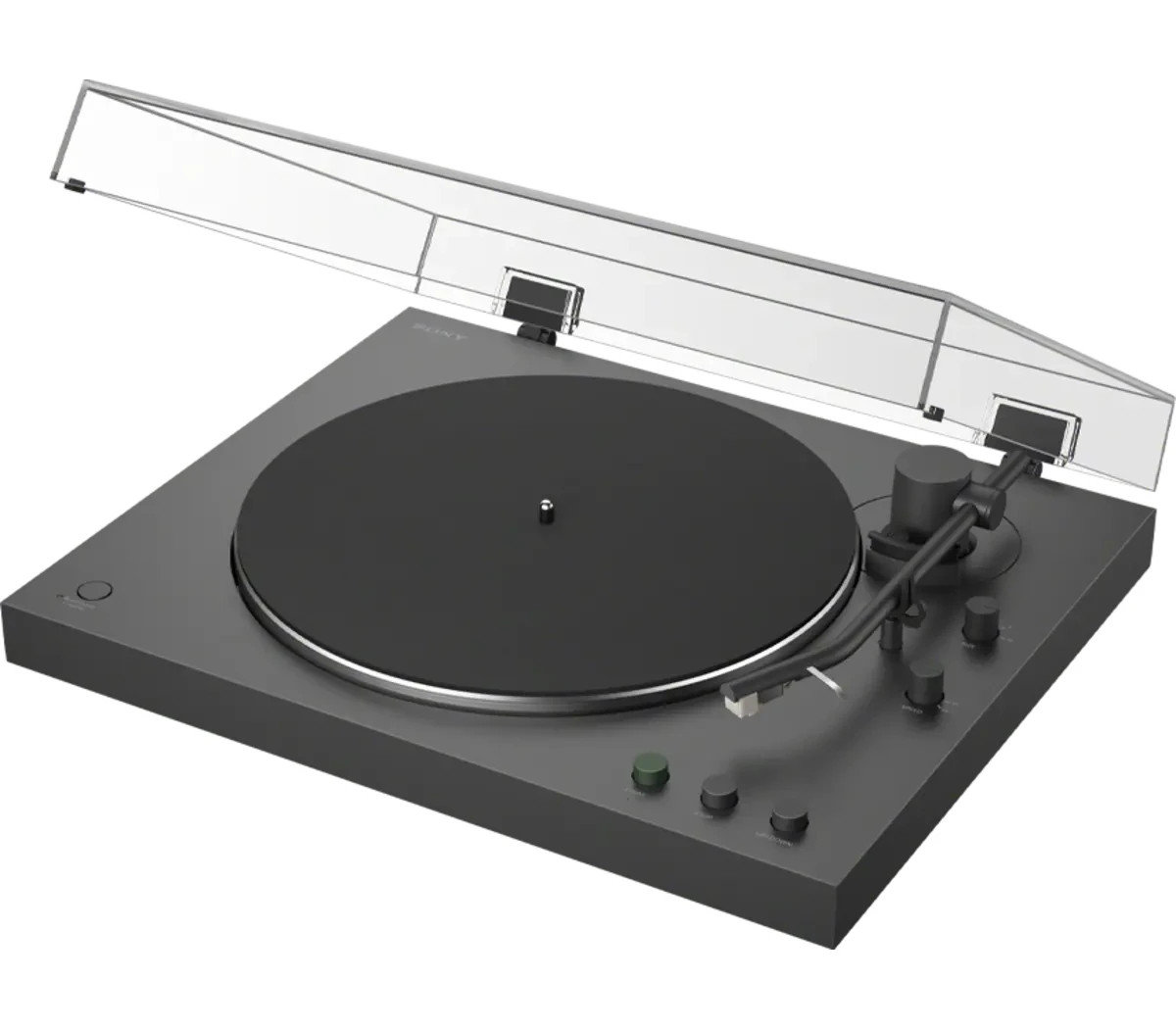

Photos from current listings. Actual item, color, and included accessories may vary.
Portable Vinyl Player Buying Guide
Portable vinyl players are self-contained record players built for transport—typically with a built-in speaker, rechargeable battery, and a folding or suitcase-style chassis—rather than audiophile-grade playback. The core trade-off is convenience versus groove protection: all-in-one portability means lightweight platters, short tonearms, and onboard speakers that amplify rumble and tracking error. Choose a unit with a counterweighted tonearm, replaceable stylus, and switchable Bluetooth output; skip fixed-sapphire, unweighted designs if you care about your records.
Key takeaways
- Tonearm design is the durability divider: counterweighted aluminum tonearms with replaceable moving-magnet cartridges track at 3–4 g and preserve records; fixed plastic arms with sapphire styli track higher and wear grooves faster.
- Battery architecture separates true portables: USB-C rechargeable Li-ion packs rated 8–12 hours support full-volume playback; AA-cell or 3.7V mini packs deliver 4–6 hours and add ongoing cell cost.
- Drive systems differ by tier: belt drive with a DC servo motor isolates motor noise for casual listening; direct-drive portable units start faster and resist bump-induced speed drift but transmit more vibration.
At a glance
- Category
- Turntables & Record Players
- Last updated
- Nov 25, 2026
Current offers
Highlights
- Tonearm design is the durability divider: counterweighted aluminum tonearms with replaceable moving-magnet cartridges track at 3–4 g and preserve records; fixed plastic arms with sapphire styli track higher and wear grooves faster.
- Battery architecture separates true portables: USB-C rechargeable Li-ion packs rated 8–12 hours support full-volume playback; AA-cell or 3.7V mini packs deliver 4–6 hours and add ongoing cell cost.
- Drive systems differ by tier: belt drive with a DC servo motor isolates motor noise for casual listening; direct-drive portable units start faster and resist bump-induced speed drift but transmit more vibration.
- Output flexibility defines real-world use: Bluetooth 5.x transmit plus 3.5mm headphone and RCA/line-out covers headphones, powered speakers, and soundbars; units with only a built-in speaker cannot feed an external system.
Best use cases
- Best fit: suitcase-style player with counterweighted tonearm, replaceable stylus, and Bluetooth out for dorm rooms, picnics, and vinyl swaps where one box does everything—pick belt drive for quiet casual listening.
- Best fit: compact vertical or briefcase player with USB-C charging and 10+ hour battery for travel and outdoor use—prioritize a hinged dust cover and latched case over speaker wattage.
- Wrong fit: any unweighted tonearm or fixed sapphire stylus model if you play valuable pressings—those sapphire tips wear out in tens of hours and cannot be replaced, risking permanent groove damage.
- Wrong fit: expecting audiophile fidelity from an all-in-one—onboard speakers and lightweight platters add rumble and wow/flutter; if sound quality is primary, buy a standard turntable plus powered speakers instead.
Buying tips
- Match platter size to your records: 12-inch LP playback requires a full-size platter or a 7/10/12-inch selectable speed set (33⅓ and 45 rpm); miniature 7-inch-only platters cannot properly support LPs.
- Require a replaceable moving-magnet cartridge or at minimum a user-replaceable stylus—fixed sapphire needles last roughly 30–50 hours and turn into groove-cutters; replacement styli should be commonly stocked.
- Check tonearm tracking force adjustability: a counterweight or spring-adjusted range of 2.5–4.0 g lets you set correct tracking; fixed-force arms are set too high for long-term record safety.
- For Bluetooth, confirm transmit (turntable to speaker) not just receive; Bluetooth 5.0+ with SBC/AAC is standard—low-latency codecs matter only for video-synced playback.
Specs
| Tonearm Type | Counterweighted aluminum vs fixed plastic |
|---|---|
| Stylus | Replaceable MM vs fixed sapphire |
| Battery / Charging | USB-C Li-ion 8-12 hr vs AA 4-6 hr |
| Outputs | Bluetooth 5.x + 3.5mm/RCA vs speaker-only |
Related searches
What to check before buying
- Measure your shelf or travel bag: suitcase units run roughly 13–15 inches wide and 4–6 inches tall; briefcase/vertical models are smaller but need clearance for the lid to open fully.
- Confirm the power standard for your region: USB-C 5V charging is universal; units with barrel-jack adapters need the correct 5–9V adapter and plug type—verify voltage before first use.
- Plan companion gear: powered speakers or headphones with 3.5mm/RCA/Bluetooth are required for most portables' best sound; budget for a replacement stylus and a carbon-fiber brush.
- Check surface stability: place on a level, vibration-free surface—lightweight portables skip if bumped, so a non-slip mat or rubber feet matter more than platter weight.
FAQ
Data sources: eBay / Amazon listings and product attribute feeds. Updated Nov 25, 2026.
Some links on this page are affiliate links. If you buy after clicking one, we may earn a commission at no extra cost to you. This does not change which products appear here or their order. Affiliate disclosure.