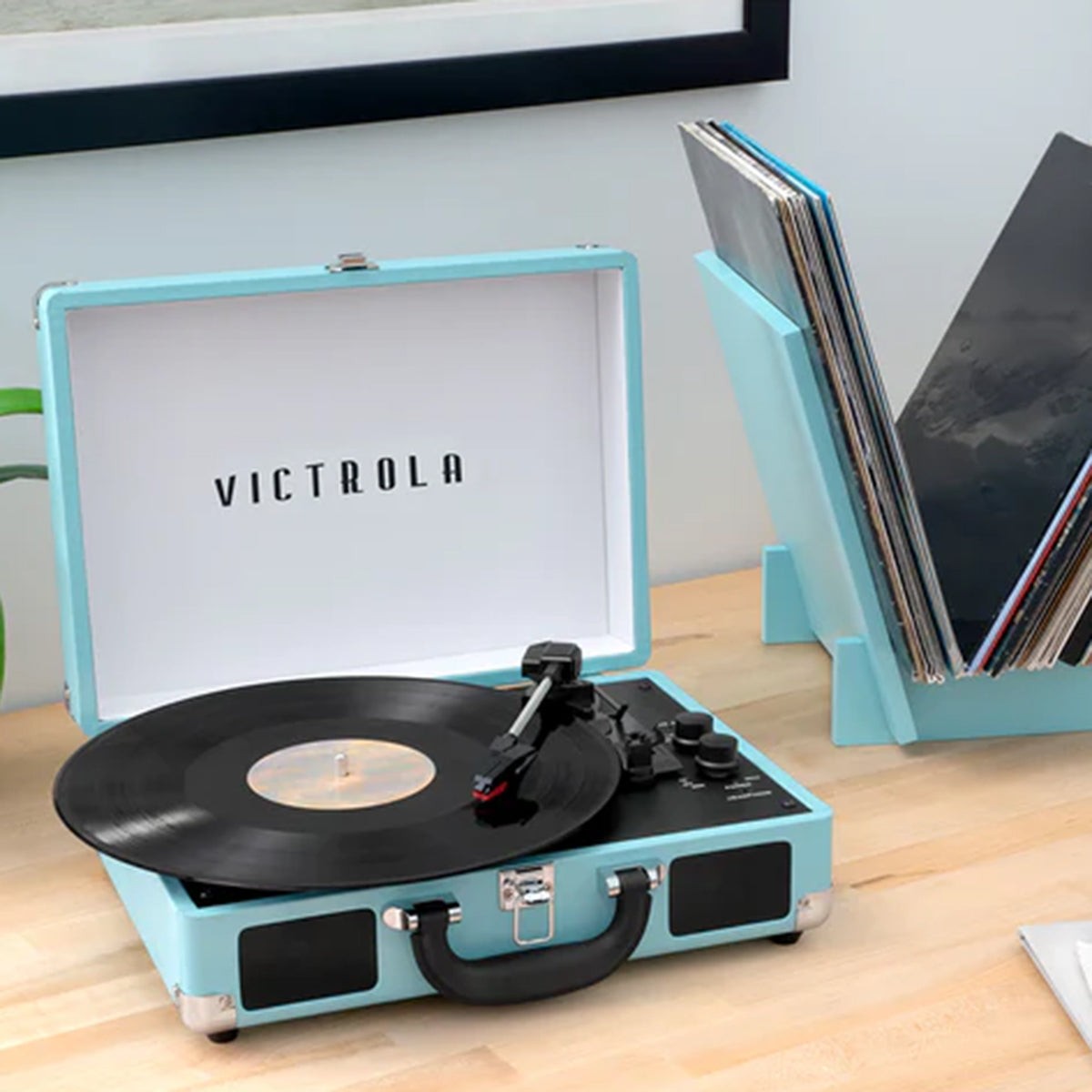

Photos from current listings. Actual item, color, and included accessories may vary.
Record Player With Vinyls Buying Guide
A record player with vinyl is a complete playback system—turntable plus a starter record—where the primary trade-off is bundled convenience versus component-grade durability. Entry bundles often use ceramic cartridges and plastic platters that wear records faster, while audiophile-tier decks use moving-magnet cartridges, anti-skate adjustments, and MDF plinths for long-term fidelity. The decision rule: buy a bundle only if it includes a replaceable magnetic cartridge and adjustable counterweight; otherwise buy the turntable and vinyl separately.
Median $140.00
Key takeaways
- Cartridge type is the durability divider: ceramic cartridges track at 4–6 g and accelerate groove wear, while moving-magnet cartridges track at 1.5–2.5 g with user-replaceable styli.
- Tonearm geometry matters more than plinth looks: adjustable counterweight and anti-skate let you set correct tracking force; fixed spring-loaded arms cannot be corrected.
- Drive architecture splits the segment: belt-drive isolates motor noise for quieter playback, while direct-drive offers instant start and higher torque for DJ-style use.
At a glance
- Category
- Turntables & Record Players
- Last updated
- Nov 25, 2026
Current offers
Highlights
- Cartridge type is the durability divider: ceramic cartridges track at 4–6 g and accelerate groove wear, while moving-magnet cartridges track at 1.5–2.5 g with user-replaceable styli.
- Tonearm geometry matters more than plinth looks: adjustable counterweight and anti-skate let you set correct tracking force; fixed spring-loaded arms cannot be corrected.
- Drive architecture splits the segment: belt-drive isolates motor noise for quieter playback, while direct-drive offers instant start and higher torque for DJ-style use.
- Bluetooth output on modern decks transmits the phono signal digitally, but built-in phono preamps are required for powered speakers—turntables without one need a separate preamp.
Best use cases
- Best fit for casual listeners starting a collection: a belt-drive deck with built-in phono preamp, Bluetooth out, and a replaceable MM cartridge—skip fixed-ceramic suitcase players if you plan to keep records long-term.
- Best fit for vinyl-first audiophile setups: a manual belt-drive turntable with adjustable counterweight, anti-skate, and MDF plinth paired with a separate preamp and wired speakers—skip all-in-one bundles with non-adjustable tonearms.
- Wrong fit for DJ or scratching use: belt-drive decks with lightweight platters slip under torque—choose a direct-drive turntable with high-torque motor and slipmat instead.
- Best fit for space-limited rooms: compact Bluetooth turntables with dust cover and vertical storage fit shelves—skip full-size plinth decks if the shelf is under 14 inches deep.
Buying tips
- Check the cartridge spec first: a moving-magnet cartridge with replaceable stylus (e.g., AT3600L, Ortofon OM series) is the minimum for records you intend to keep; ceramic cartridges are disposable-tier.
- Match the preamp to your speakers: turntables with built-in phono preamps connect directly to powered speakers; decks without one require a standalone phono stage or an amp/receiver with a PHONO input.
- Verify the tonearm has both counterweight and anti-skate adjustment—fixed spring arms cannot be set to the 2.0 g tracking force that most MM cartridges require.
- For belt-drive decks, confirm the platter is at least die-cast aluminum or MDF; stamped steel platters ring and transmit motor noise into the stylus.
Specs
| Drive Type | Belt-drive vs Direct-drive |
|---|---|
| Cartridge Type | Moving-magnet vs Ceramic |
| Built-in Preamp | Yes (line/Bluetooth) vs No (phono only) |
| Tonearm Adjustability | Counterweight + anti-skate vs fixed |
Related searches
What to check before buying
- Measure your shelf or stand depth: most full-size turntables need 14–16 inches of depth plus clearance for the dust cover to open.
- Confirm your speaker/amp input type—powered speakers need a turntable with built-in preamp or a separate phono stage; passive speakers need an amplifier with a PHONO input.
- Check voltage and plug standard for your region (120 V 60 Hz North America vs 230 V 50 Hz Europe) since belt-drive motor pulleys are voltage/frequency specific.
- For bundled vinyl offers, verify the record is a standard 12-inch LP and that the bundle includes a 45 adapter if you plan to play 7-inch singles.
FAQ
Data sources: eBay / Amazon listings and product attribute feeds. Updated Nov 25, 2026.
Some links on this page are affiliate links. If you buy after clicking one, we may earn a commission at no extra cost to you. This does not change which products appear here or their order. Affiliate disclosure.