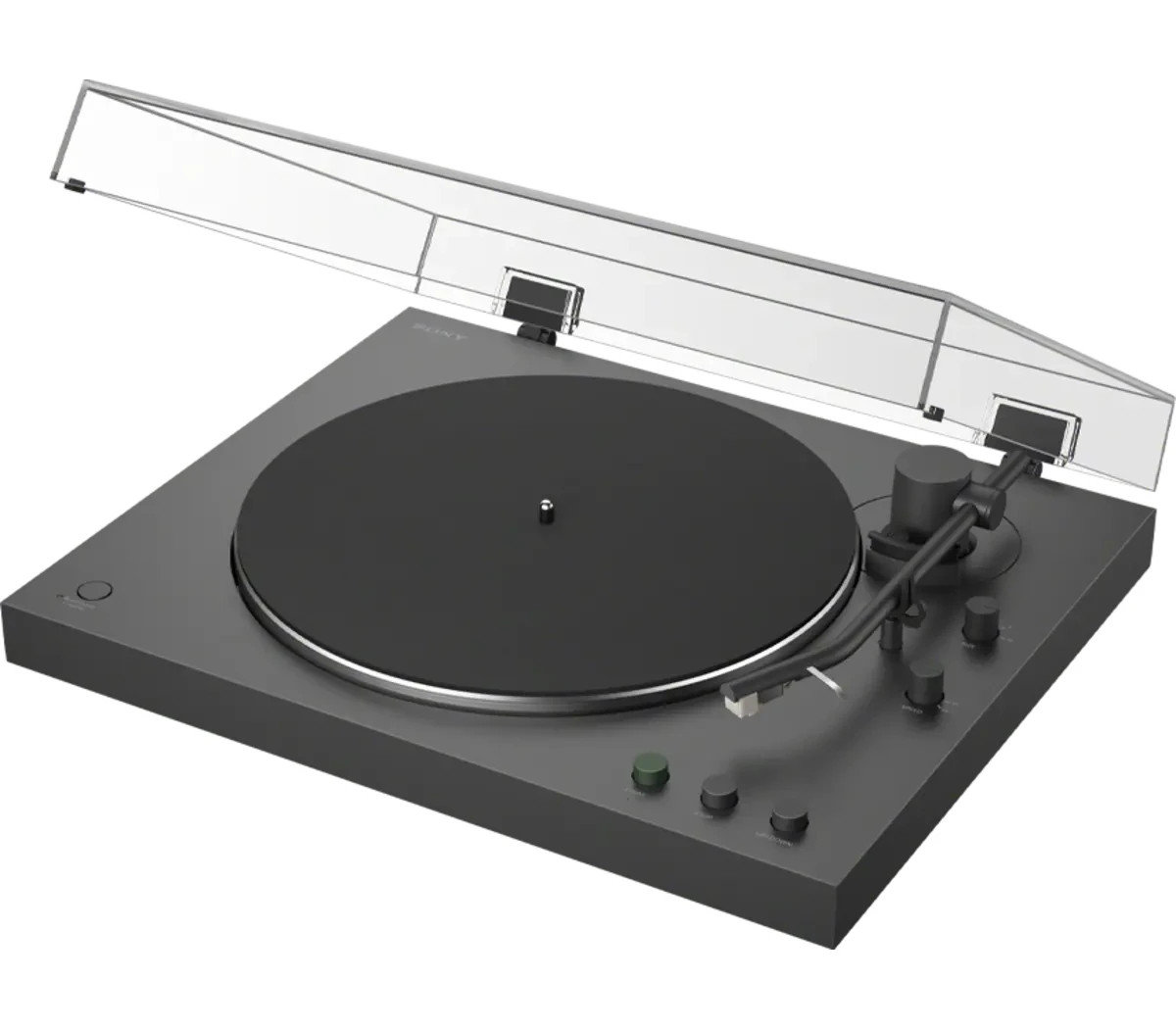

Photos from current listings. Actual item, color, and included accessories may vary.
Vinyl Player Buying Guide
A vinyl player is a complete playback system—motor, tonearm, cartridge, and phono stage—where the critical trade-off is whether the turntable includes a built-in phono preamp and a pre-mounted cartridge or requires separate components. The decisive rule: choose a belt-drive model with an integrated phono stage and a replaceable moving-magnet cartridge for low-vibration, low-hassle listening, and step up to a direct-drive or adjustable tonearm only if you plan to upgrade cartridges or need DJ-grade torque.
Key takeaways
- Belt-drive motors isolate the platter from motor vibration and are the standard for budget and mid-fi listening decks; direct-drive offers higher torque and faster start-up but can transmit motor noise if not well isolated.
- A built-in phono preamp (RIAA-equalized) lets you connect directly to powered speakers or Bluetooth without a separate receiver, while audiophile decks output phono-level signal needing an external preamp.
- Cartridge type dictates upgrade path: a pre-mounted moving-magnet (MM) cartridge on a standard 1/2-inch headshell is user-replaceable; moving-coil (MC) or integrated non-replaceable cartridges limit future upgrades.
At a glance
- Category
- Turntables & Record Players
- Last updated
- Nov 25, 2026
Current offers
Highlights
- Belt-drive motors isolate the platter from motor vibration and are the standard for budget and mid-fi listening decks; direct-drive offers higher torque and faster start-up but can transmit motor noise if not well isolated.
- A built-in phono preamp (RIAA-equalized) lets you connect directly to powered speakers or Bluetooth without a separate receiver, while audiophile decks output phono-level signal needing an external preamp.
- Cartridge type dictates upgrade path: a pre-mounted moving-magnet (MM) cartridge on a standard 1/2-inch headshell is user-replaceable; moving-coil (MC) or integrated non-replaceable cartridges limit future upgrades.
- Bluetooth and USB outputs on modern decks (e.g., Sony PS-LX3BT) add wireless streaming and digitization convenience but do not affect analog playback quality; prioritize platter mass and tonearm bearings instead.
Best use cases
- Best fit for casual listeners in small rooms: an all-in-one belt-drive deck with built-in phono preamp, Bluetooth output, and a pre-mounted MM cartridge—connect directly to powered speakers or a Bluetooth speaker.
- Best fit for vinyl enthusiasts building a component system: a belt-drive turntable with adjustable counterweight, anti-skate, and a replaceable headshell, paired with an external phono preamp and wired amplifier.
- Wrong fit for DJs or scratch artists: budget belt-drive decks lack the torque and start/stop speed for back-cueing—choose a direct-drive DJ turntable with high-torque motor instead.
- Wrong fit for audiophile critical listening on a tight budget: all-in-one decks with integrated non-replaceable cartridges and lightweight platters introduce resonance and limit upgrades—save for a deck with a heavy platter and standard tonearm.
Buying tips
- Match the platter to your environment: a heavier platter (1.5 kg+) resists speed fluctuations and acoustic feedback, but requires a level, solid shelf; lightweight platters suit portable or shelf-constrained setups.
- Check the tonearm's effective mass against your cartridge compliance: high-compliance MM cartridges pair with low-mass tonearms, low-compliance MC cartridges need higher-mass arms—mismatches cause resonance and mistracking.
- Confirm the phono stage: if your amplifier or speakers lack a PHONO input, you must buy a deck with a built-in preamp or add an external one; line-level output cannot connect directly to a phono input without overloading.
- Verify speed accuracy and adjustment: 33⅓ and 45 RPM are mandatory; a deck with electronic speed change and pitch adjustment (±%) is preferable to one with manual belt repositioning for 45 RPM.
Specs
| Drive Type | Belt-drive vs Direct-drive |
|---|---|
| Phono Preamp | Built-in vs External required |
| Cartridge Mount | 1/2-inch standard vs Integrated |
| Speeds | 33⅓ / 45 RPM (78 RPM rare) |
Related searches
What to check before buying
- Measure your shelf or stand depth and clearance: allow at least 40 cm width and 35 cm depth for the deck plus room for the dust cover to open; ensure the surface is level and isolated from speaker vibrations.
- Check your amplifier or speaker inputs: count PHONO vs LINE/AUX inputs—if no PHONO input exists, you need a built-in preamp or an external phono stage.
- Confirm voltage and plug standard for your country (e.g., 120V/60Hz US, 230V/50Hz EU) and whether the power supply is external or internal; external adapters simplify voltage matching.
- Verify cartridge and stylus availability: ensure the deck uses a standard 1/2-inch mount or a readily available proprietary stylus; avoid obscure integrated cartridges with no replacement supply.
FAQ
Data sources: eBay / Amazon listings and product attribute feeds. Updated Nov 25, 2026.
Some links on this page are affiliate links. If you buy after clicking one, we may earn a commission at no extra cost to you. This does not change which products appear here or their order. Affiliate disclosure.