
Photos from current listings. Actual item, color, and included accessories may vary.
Record Player Buying Guide
A record player is an electromechanical transducer: a stylus reads groove modulations, a cartridge converts them to voltage, and a tonearm/drive system preserves tracking stability. The core trade-off is between cheap all-in-one suitcase decks (ceramic cartridge, high wow & flutter, fixed tracking) and component-style turntables (moving-magnet cartridge, adjustable counterweight, belt or direct drive). The decision rule: buy a deck with a replaceable 1/2-inch cartridge, adjustable tracking force, and a switchable phono/line output—skip any player with a permanently glued ceramic cartridge and non-adjustable tonearm.
Median $247.55 · New listings
Key takeaways
- Drive architecture: belt drive isolates motor vibration for lower rumble; direct drive offers instant torque and quartz-locked speed but needs better motor isolation; idler drive is vintage-only and maintenance-heavy.
- Cartridge mount: 1/2-inch standard mount accepts thousands of moving-magnet upgrades (Audio-Technica AT-VM95, Ortofon OM); proprietary ceramic cartridges cannot be upgraded and often track at 4–6 g, accelerating groove wear.
- Tracking force: adjustable counterweight allows 1.5–3.0 g per cartridge spec; fixed spring-loaded arms typically run 3.5–6 g and cannot be corrected for worn styli or upgraded cartridges.
At a glance
- Category
- Turntables & Record Players
- Last updated
- Nov 25, 2026
Current offers
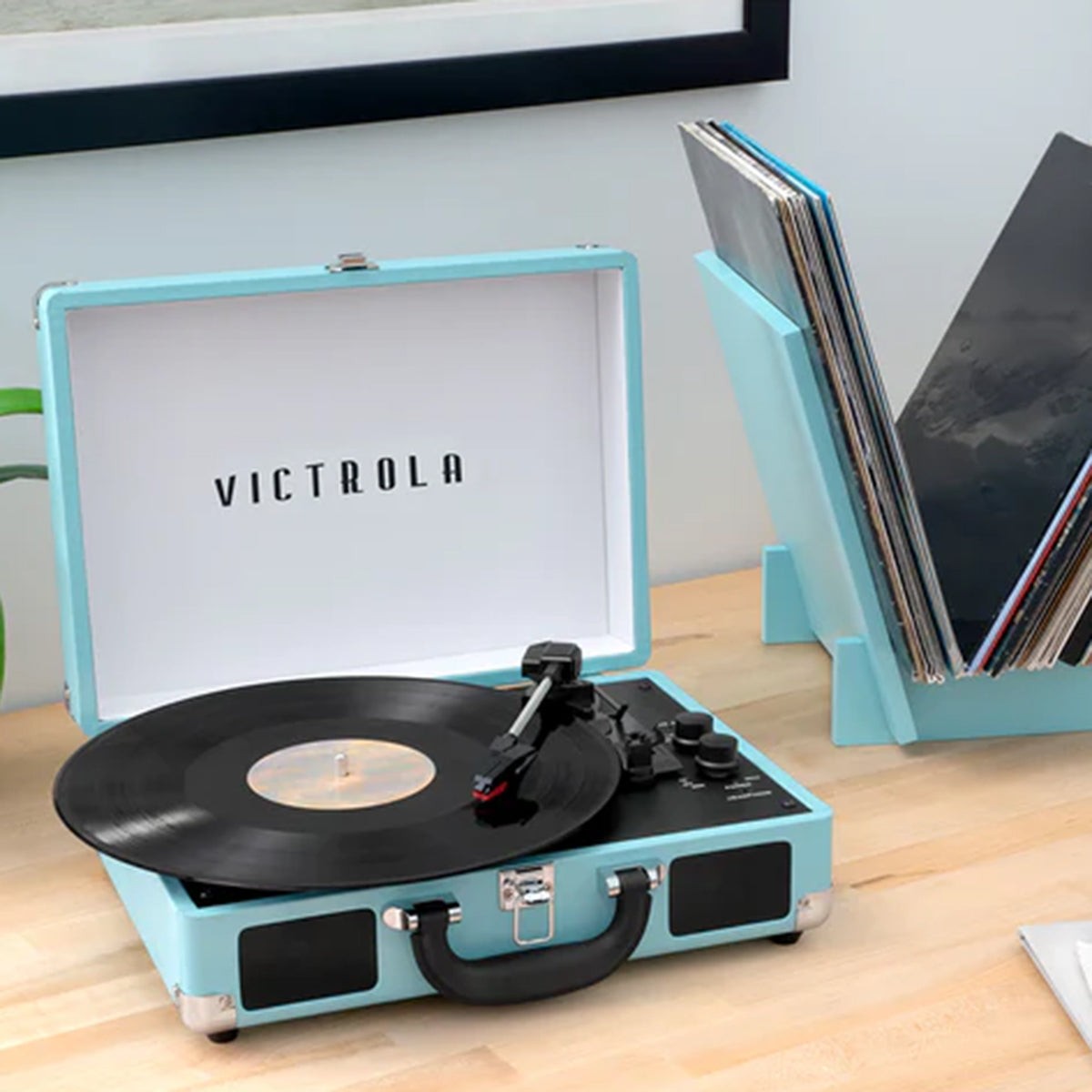 Victrola Journey+ Bundle Suitcase Record Player - Turquoise - Factory Direct$39.99View on eBay
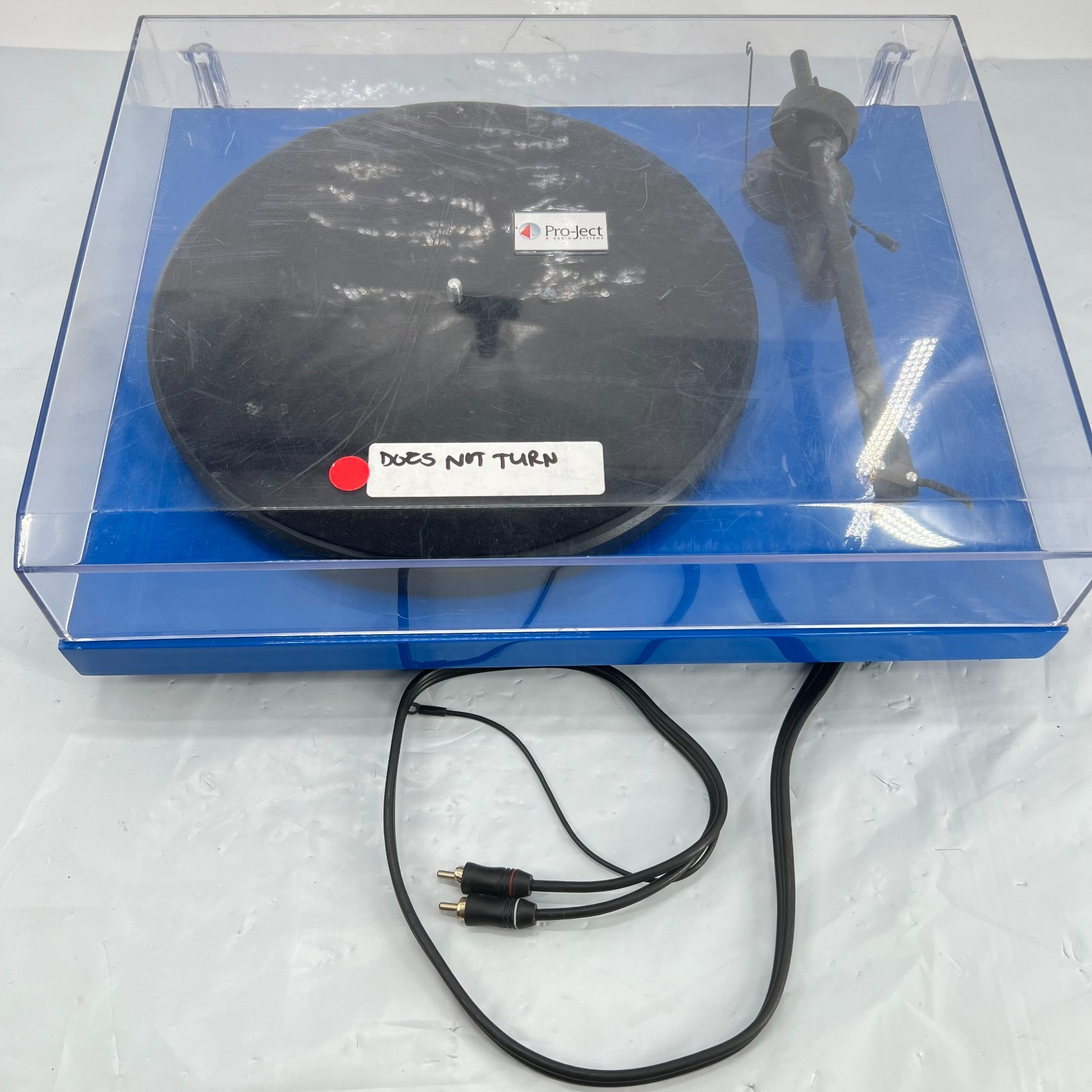 Pro-Ject Debut III Audiophile Turntable Record Player No. 226539$140.00View on eBay
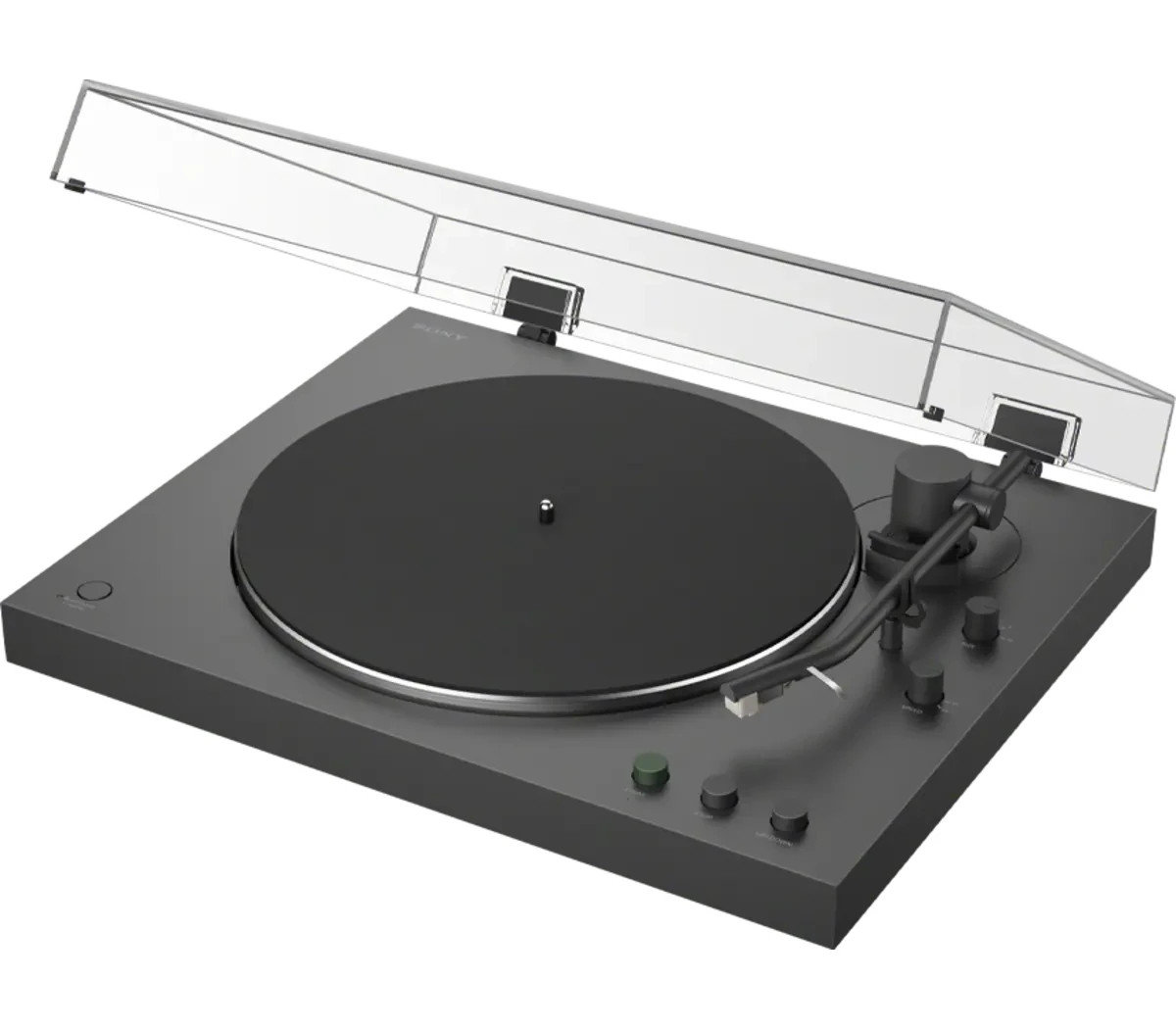 Sony PS-LX3BT Automatic Wireless Vinyl Record Player Bluetooth USB Turntable$219.00Last checked Nov 18, 2026View on eBay
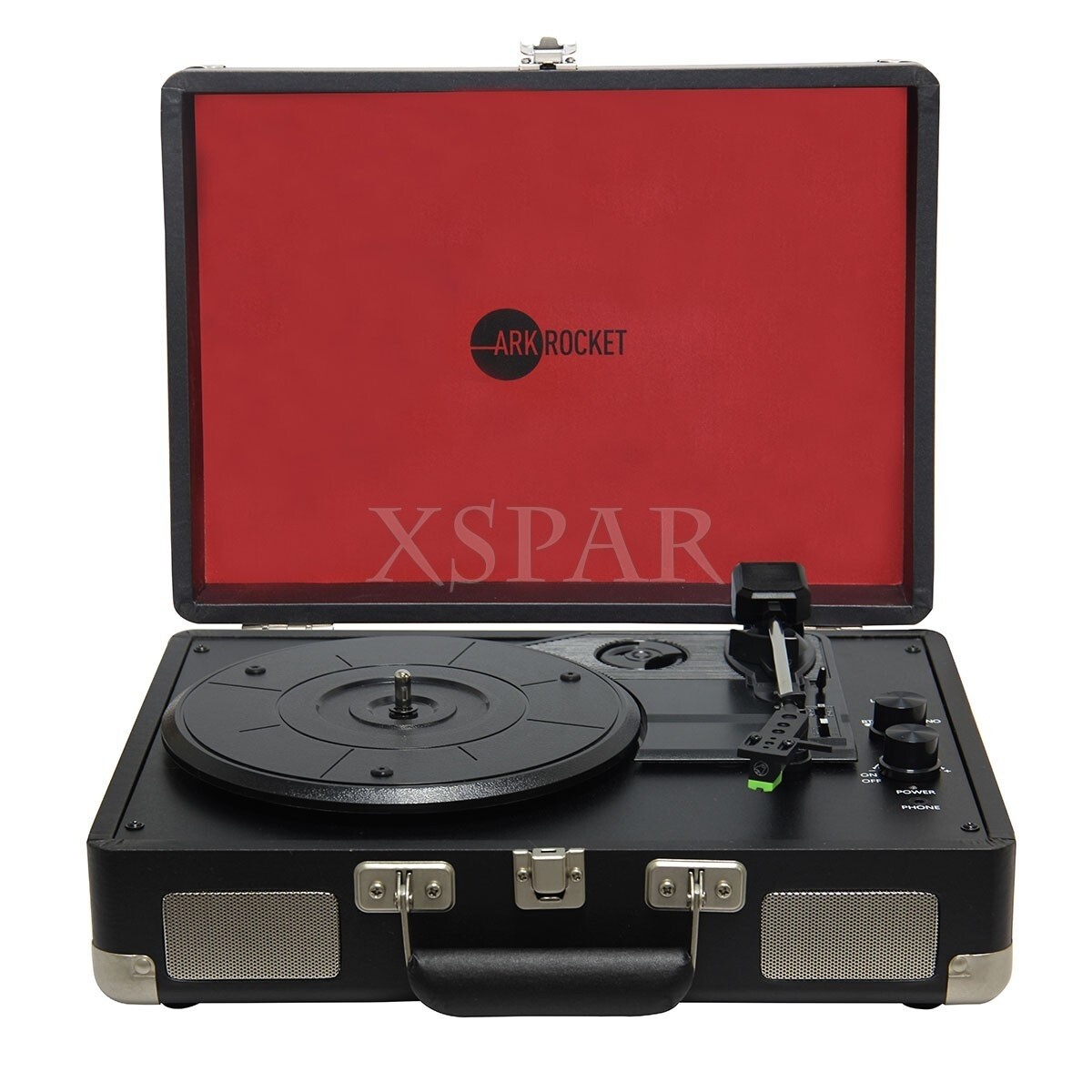 Curiosity Suitcase Turntable with Speakers Record Player for Arkrocket *gi$276.09New · Last checked Nov 20, 2026View on eBay
- Curiosity Suitcase Turntable with Speakers Record Player for Arkrocket #sqm$291.37New · Last checked Nov 20, 2026View on eBay
- Curiosity Suitcase Turntable with Speakers Record Player for Arkrocket #jg$342.83New · Last checked Nov 20, 2026View on eBay
Highlights
- Drive architecture: belt drive isolates motor vibration for lower rumble; direct drive offers instant torque and quartz-locked speed but needs better motor isolation; idler drive is vintage-only and maintenance-heavy.
- Cartridge mount: 1/2-inch standard mount accepts thousands of moving-magnet upgrades (Audio-Technica AT-VM95, Ortofon OM); proprietary ceramic cartridges cannot be upgraded and often track at 4–6 g, accelerating groove wear.
- Tracking force: adjustable counterweight allows 1.5–3.0 g per cartridge spec; fixed spring-loaded arms typically run 3.5–6 g and cannot be corrected for worn styli or upgraded cartridges.
- Output stage: switchable phono/line (RIAA equalization built in) lets you connect to powered speakers or a soundbar without a separate preamp; Bluetooth adds wireless convenience at the cost of one extra lossy codec stage.
Best use cases
- Best fit for first-time listeners in small rooms: belt-drive deck with built-in switchable preamp, 1/2-inch MM cartridge, and dust cover—skip suitcase players with ceramic cartridges and 2 g fixed tracking.
- Best fit for vinyl collectors with a receiver/amplifier: component turntable with adjustable counterweight, anti-skate, and no built-in preamp—skip Bluetooth-only decks that lack analog line-level output.
- Best fit for digitizing a collection: USB-equipped belt-drive model with 1/2-inch cartridge and adjustable tracking—skip USB suitcase players whose ceramic cartridge rolls off above 10 kHz.
- Wrong fit for high-volume party use: direct-drive DJ-style deck with slipmat and conical stylus—stay with belt drive and elliptical stylus for home listening to avoid groove wear.
Buying tips
- Match cartridge tracking to tonearm mass: high-compliance MM cartridges (e.g., 1.5–2.0 g) need low-mass arms under 10 g effective mass; low-compliance DJ cartridges need high-mass S-shaped arms.
- Check platter bearing and mat: aluminum die-cast platter with felt or rubber mat reduces resonance; plastic platters under 0.5 kg transmit motor noise directly into the groove.
- For Bluetooth output, confirm the codec: SBC/AAC are lossy but fine for casual listening; aptX or LDAC only appears on higher-tier decks and reduces latency for video use.
- Speed accuracy matters more than wow & flutter specs: 33⅓/45 RPM with ±0.5% tolerance keeps pitch stable; decks with ±2% drift are audible on sustained piano and strings.
Specs
| Drive Type | Belt / Direct / Idler |
|---|---|
| Cartridge Mount | 1/2-inch MM vs ceramic |
| Tracking Force | Adjustable 1.5–3.0 g vs fixed |
| Output / Preamp | Phono/line, Bluetooth, USB |
Related searches
What to check before buying
- Measure shelf or stand width: belt-drive decks with dust cover need 14–18 inches width and 4–6 inches height clearance; suitcase players need 13–15 inches but lack upgrade paths.
- Confirm your speaker/amp input: powered speakers need line-level (built-in preamp) output; a receiver with phono input needs a standard phono output without extra gain.
- Check voltage and plug: most turntables are 100–240 V external adapter or fixed 120 V; EU/UK buyers need the correct plug or a step-down transformer for US models.
FAQ
Data sources: eBay / Amazon listings and product attribute feeds. Updated Nov 25, 2026.
Some links on this page are affiliate links. If you buy after clicking one, we may earn a commission at no extra cost to you. This does not change which products appear here or their order. Affiliate disclosure.