
Photos from current listings. Actual item, color, and included accessories may vary.
Vinyl Record And Turntable Buying Guide
A vinyl record and turntable system is a electro-mechanical playback chain where the turntable's drive, tonearm, and cartridge determine groove-tracking accuracy while the record's pressing quality and condition set the dynamic ceiling. The primary trade-off is between fully automatic convenience with built-in phono/Bluetooth versus manual, upgradeable decks that demand an external phono stage and careful setup. The decision rule: buy a deck with a replaceable cartridge, adjustable tracking force, and a proper anti-skate or skip it—sealed-entry all-in-ones with fixed sapphire styli are compromises that wear records and cannot be repaired.
Median $271.05 · New listings
Key takeaways
- Belt-drive isolates motor vibration but adds wow/flutter; direct-drive locks speed instantly with higher torque and is preferred for DJ scratching and pitch stability.
- Moving-magnet (MM) cartridges output 3-5 mV and work with any standard 47 kΩ phono input; moving-coil (MC) outputs 0.2-0.5 mV and requires a step-up transformer or MC phono stage.
- Automatic return and auto-start mechanisms use mechanical trip levers that can drift out of adjustment; fully manual tonearms have fewer failure points and permit precise anti-skate and VTA tuning.
At a glance
- Category
- Turntables & Record Players
- Last updated
- Nov 29, 2026
Current offers
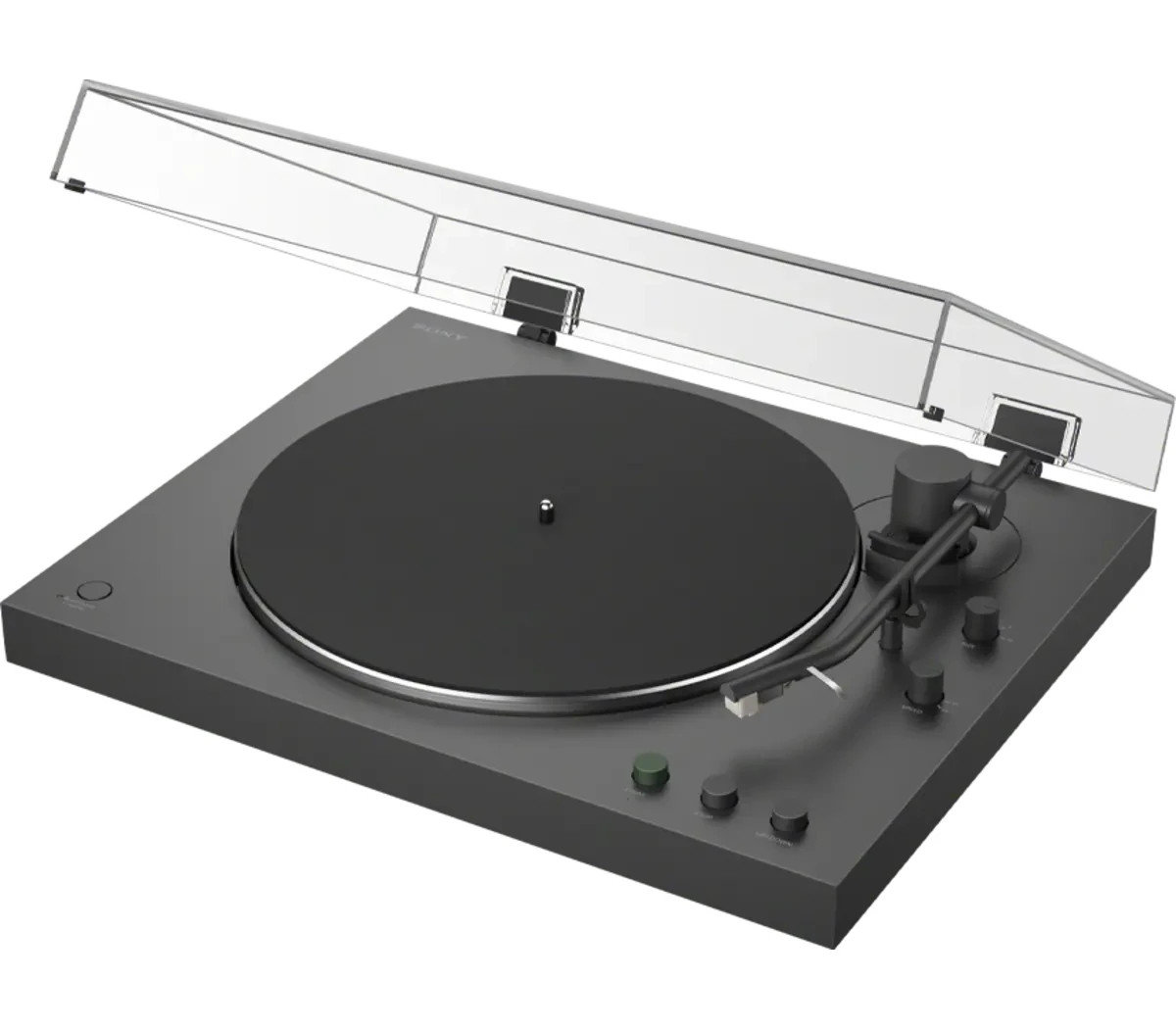 Sony PS-LX3BT Automatic Wireless Vinyl Record Player Bluetooth USB Turntable$219.00Last checked Nov 18, 2026View on eBay
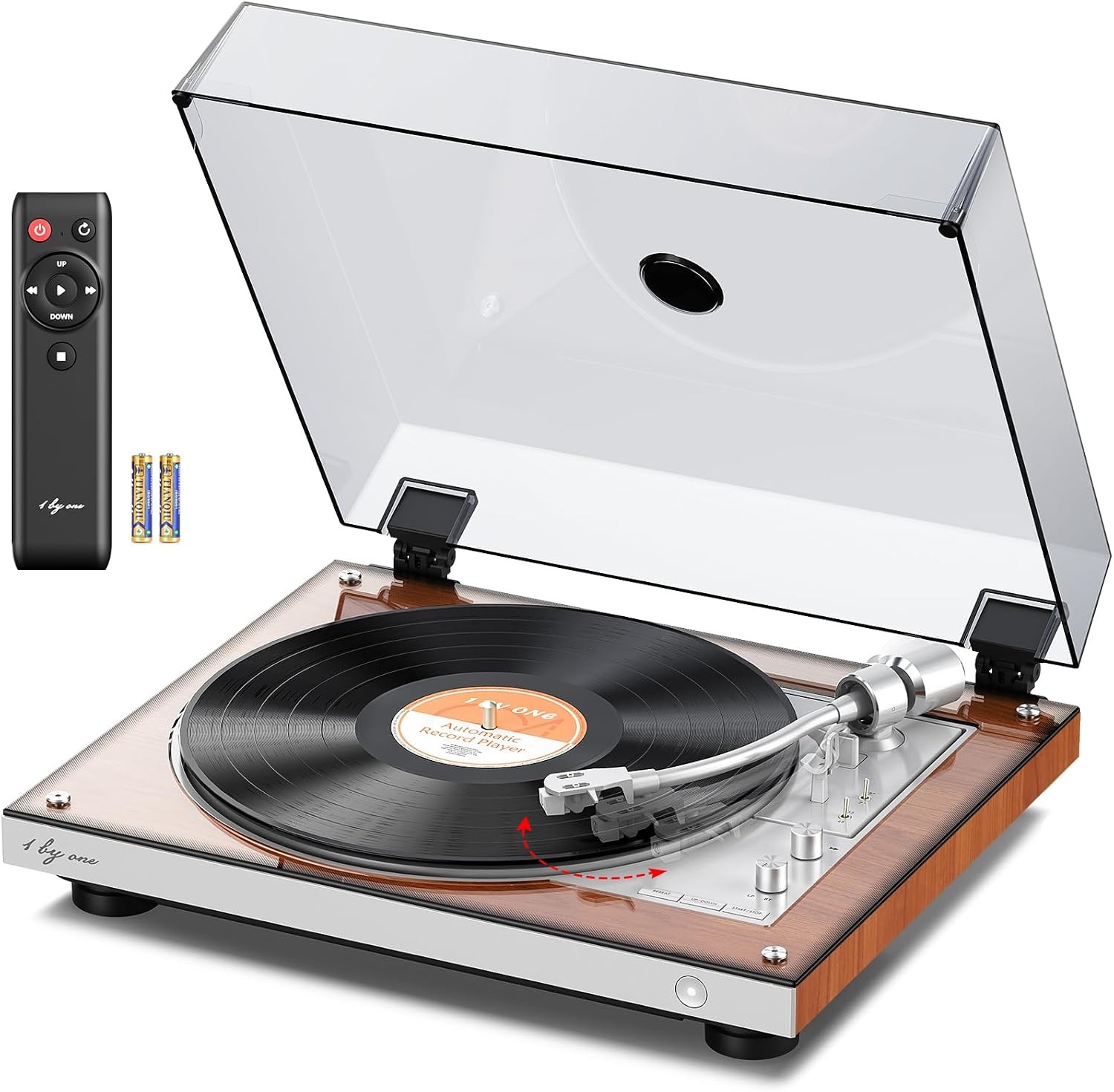 1 by ONE Fully Automatic Belt-Drive Turntable, Wireless Vinyl Record Player$266.69New · Last checked Nov 29, 2026View on eBay
- 1 by ONE Fully Automatic Belt-Drive Turntable, Wireless Vinyl Record Player$271.05New · Last checked Nov 29, 2026View on eBay
- 1 by ONE Fully Automatic Belt-Drive Turntable, Wireless Vinyl Record Player$273.27New · Last checked Nov 29, 2026View on eBay
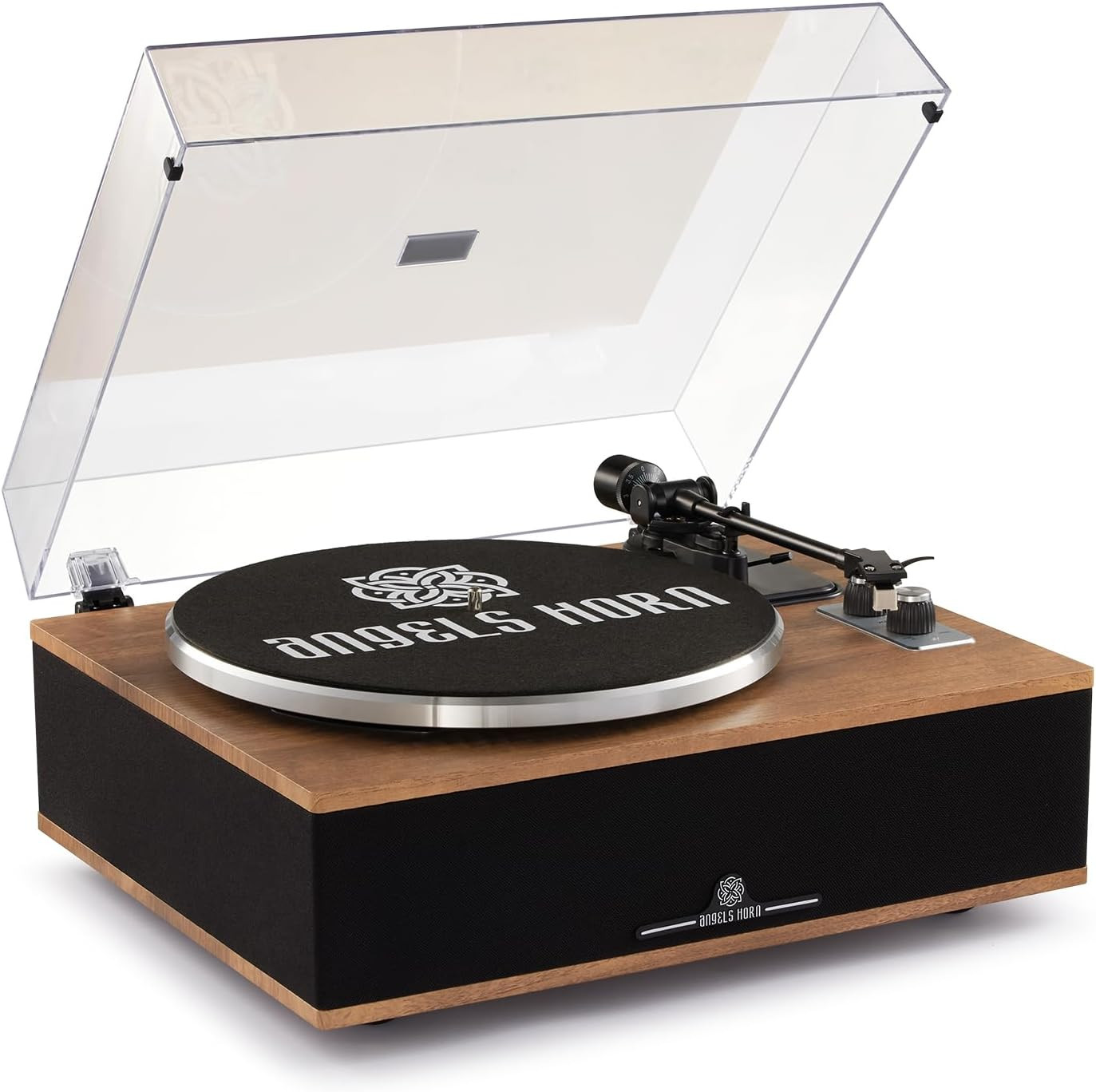 Vinyl Record Player, Bluetooth Turntable with Built in Speakers$279.97New · Last checked Nov 29, 2026View on eBay
Highlights
- Belt-drive isolates motor vibration but adds wow/flutter; direct-drive locks speed instantly with higher torque and is preferred for DJ scratching and pitch stability.
- Moving-magnet (MM) cartridges output 3-5 mV and work with any standard 47 kΩ phono input; moving-coil (MC) outputs 0.2-0.5 mV and requires a step-up transformer or MC phono stage.
- Automatic return and auto-start mechanisms use mechanical trip levers that can drift out of adjustment; fully manual tonearms have fewer failure points and permit precise anti-skate and VTA tuning.
- Bluetooth turntables transmit the phono signal after internal RIAA equalization; USB outputs typically stream raw or pre-equalized digital audio at 44.1/48 kHz for archiving, not hi-res.
Best use cases
- Best fit: casual listeners in apartments who want auto-start/stop and Bluetooth to a single speaker — choose a belt-drive automatic with built-in phono and a replaceable MM cartridge.
- Best fit: collectors and archivists digitizing LPs — choose a manual deck with USB output, adjustable anti-skate, and a line/phono switch so the internal stage can be bypassed.
- Wrong fit: DJs or anyone needing instant cueing and back-cueing — skip belt-drive and automatic decks; only direct-drive with a slipmat and high-torque motor holds pitch under hand pressure.
- Wrong fit: buyers with only a powered speaker and no phono input who choose a manual audiophile deck lacking a built-in stage — they must budget for an external phono preamp or the system is silent.
Buying tips
- Match cartridge type to your phono stage: MM (3-5 mV) into any 47 kΩ input; MC (0.2-0.5 mV) only with a dedicated MC stage or step-up transformer—never plug MC into an MM input.
- Verify the tonearm's counterweight range covers your cartridge mass: a 5-7 g cartridge needs a counterweight that balances a 10-15 g effective arm mass; too-light arms cause mistracking on warped records.
- For automatic decks, confirm the auto-return trip is adjustable or at least serviceable; fixed molded trip levers in budget all-in-ones often fail after a few years and cannot be replaced.
- Choose belt-drive for isolation in rooms with footfall or shared floors; choose direct-drive when speed accuracy (±0.01% wow/flutter) and instant start matter more than motor noise isolation.
Specs
| Drive Type | Belt-drive vs Direct-drive |
|---|---|
| Cartridge Type | MM (3-5 mV) vs MC (0.2-0.5 mV) |
| Phono Stage | Built-in / Line switch vs None |
| Operation | Automatic vs Manual tonearm |
Related searches
What to check before buying
- Measure your shelf or stand depth and clearance: most decks need 14-17 inches of depth plus 3-4 inches above the platter for the dust cover to open fully.
- Confirm your amplifier or speakers have a phono input (RIAA) or that the deck has a built-in phono/line switch; otherwise add an external phono preamp.
- Check the platter and plinth are level on your surface—use a bubble level; an unlevel deck causes skating and uneven groove wear regardless of anti-skate settings.
- Verify the deck's voltage and plug type match your region (100-120 V or 220-240 V) and that the supplied stylus is user-replaceable, not a sealed cartridge.
FAQ
Data sources: eBay / Amazon listings and product attribute feeds. Updated Nov 29, 2026.
Some links on this page are affiliate links. If you buy after clicking one, we may earn a commission at no extra cost to you. This does not change which products appear here or their order. Affiliate disclosure.