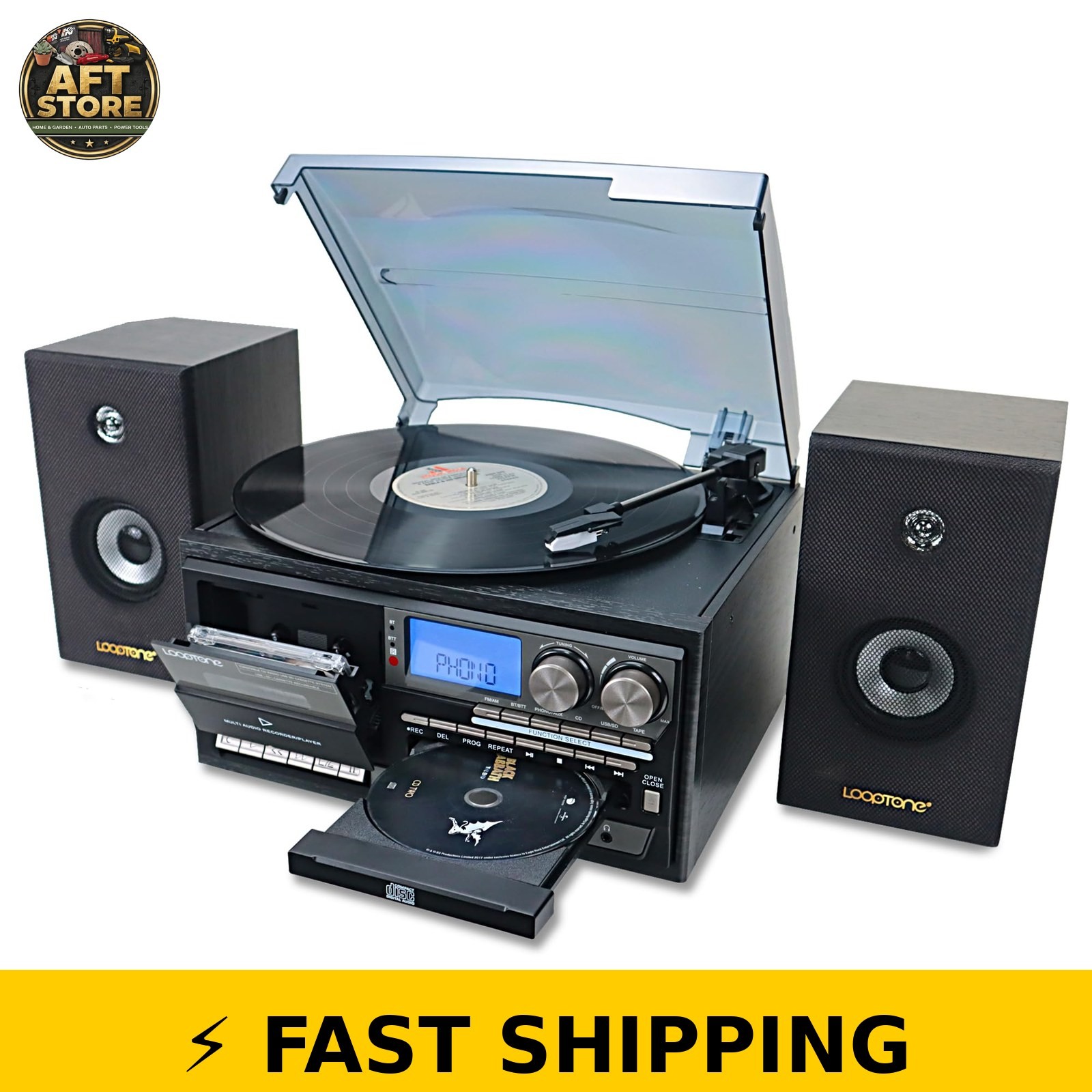

Photos from current listings. Actual item, color, and included accessories may vary.
Vintage Record Player With Speakers Buying Guide
A vintage record player with speakers is a self-contained playback system combining a turntable mechanism, a built-in phono preamp, and integrated speakers in a retro-styled cabinet. The core trade-off is between authentic vintage aesthetics and modern mechanical reliability: true vintage units often need servicing (belts, styli, capacitors), while modern 'vintage-style' units vary widely in tonearm quality and speaker isolation. The decision rule is simple: buy a modern unit with a magnetic cartridge, adjustable counterweight, and MDF cabinet if you want plug-and-play durability; choose a serviced true-vintage deck only if you accept maintenance and lack Bluetooth/USB convenience.
Key takeaways
- Cartridge type separates performance tiers: ceramic cartridges (common in budget retro units) track heavily and wear records; moving-magnet (MM) cartridges with a diamond stylus preserve vinyl and allow replacement styli.
- Tonearm construction determines tracking stability: a metal S-shaped or straight tonearm with adjustable counterweight and anti-skate outperforms fixed plastic tonearms that skip on bass-heavy passages.
- Speaker isolation matters: integrated speakers in the same cabinet as the platter transmit vibration; units with separate speaker chambers, rubber feet, or spring suspension reduce acoustic feedback and distortion.
At a glance
- Category
- Turntables & Record Players
- Last updated
- Nov 29, 2026
Current offers
Highlights
- Cartridge type separates performance tiers: ceramic cartridges (common in budget retro units) track heavily and wear records; moving-magnet (MM) cartridges with a diamond stylus preserve vinyl and allow replacement styli.
- Tonearm construction determines tracking stability: a metal S-shaped or straight tonearm with adjustable counterweight and anti-skate outperforms fixed plastic tonearms that skip on bass-heavy passages.
- Speaker isolation matters: integrated speakers in the same cabinet as the platter transmit vibration; units with separate speaker chambers, rubber feet, or spring suspension reduce acoustic feedback and distortion.
- Drive system affects speed consistency: belt-drive with a DC servo motor isolates motor noise and is standard in quality retro-style units; direct-drive offers instant torque but requires better motor shielding in compact cabinets.
Best use cases
- Best fit: living-room nostalgia with modern convenience—choose a belt-drive unit with MM cartridge, built-in preamp, Bluetooth out, and MDF cabinet; skip all-in-one plastic portables with ceramic cartridges.
- Best fit: small apartment or bedroom—pick a compact unit with downward-firing or front-ported speakers and headphone jack; avoid full-size vintage consoles that need restoration and floor space.
- Wrong fit: critical listening or vinyl archiving—integrated speakers and vibration-prone cabinets compromise fidelity; choose a separate turntable, phono stage, and powered speakers instead.
- Wrong fit: outdoor or humid environments—vintage wood veneers and unsealed electronics are vulnerable; use a weather-sealed portable with a sealed cartridge only for occasional patio use, not permanent outdoor placement.
Buying tips
- Check the cartridge: a moving-magnet cartridge with replaceable diamond stylus (e.g., AT3600L-class) is the minimum for safe playback; ceramic cartridges track at 5–7 g and accelerate record wear.
- Verify tonearm adjustments: adjustable counterweight and anti-skate control are non-negotiable for tracking below 3 g; fixed plastic tonearms typically track at 4–6 g and skip easily.
- Confirm the phono stage: a switchable built-in preamp (PHONO/LINE) lets you connect to modern amps and powered speakers; without it, you need an external phono preamp.
- Inspect cabinet material: MDF or solid wood with internal bracing damps vibration; hollow plastic cabinets resonate and color the sound, especially at higher volumes.
Specs
| Drive Type | Belt-drive vs Direct-drive |
|---|---|
| Cartridge Type | Moving-magnet vs Ceramic |
| Tonearm | Adjustable counterweight / anti-skate |
| Built-in Preamp | Switchable PHONO/LINE or none |
Related searches
What to check before buying
- Measure your shelf or table: allow at least 2 inches behind and 4 inches above for the dust cover to open; compact units range roughly 12–18 inches wide, full-size vintage consoles exceed 24 inches.
- Check speaker placement: integrated speakers need 6–12 inches of wall clearance for rear ports; front-ported or downward-firing designs suit tight shelves.
- Match voltage and plug: vintage units may be 110–120 V only; modern units often have external 12 V adapters—confirm your local mains voltage and plug type before purchase.
- Confirm included accessories: most modern units include a 45 RPM adapter, RCA cable, and counterweight; vintage decks often lack dust covers, belts, or stylus—budget for replacements.
FAQ
Data sources: eBay / Amazon listings and product attribute feeds. Updated Nov 29, 2026.
Some links on this page are affiliate links. If you buy after clicking one, we may earn a commission at no extra cost to you. This does not change which products appear here or their order. Affiliate disclosure.