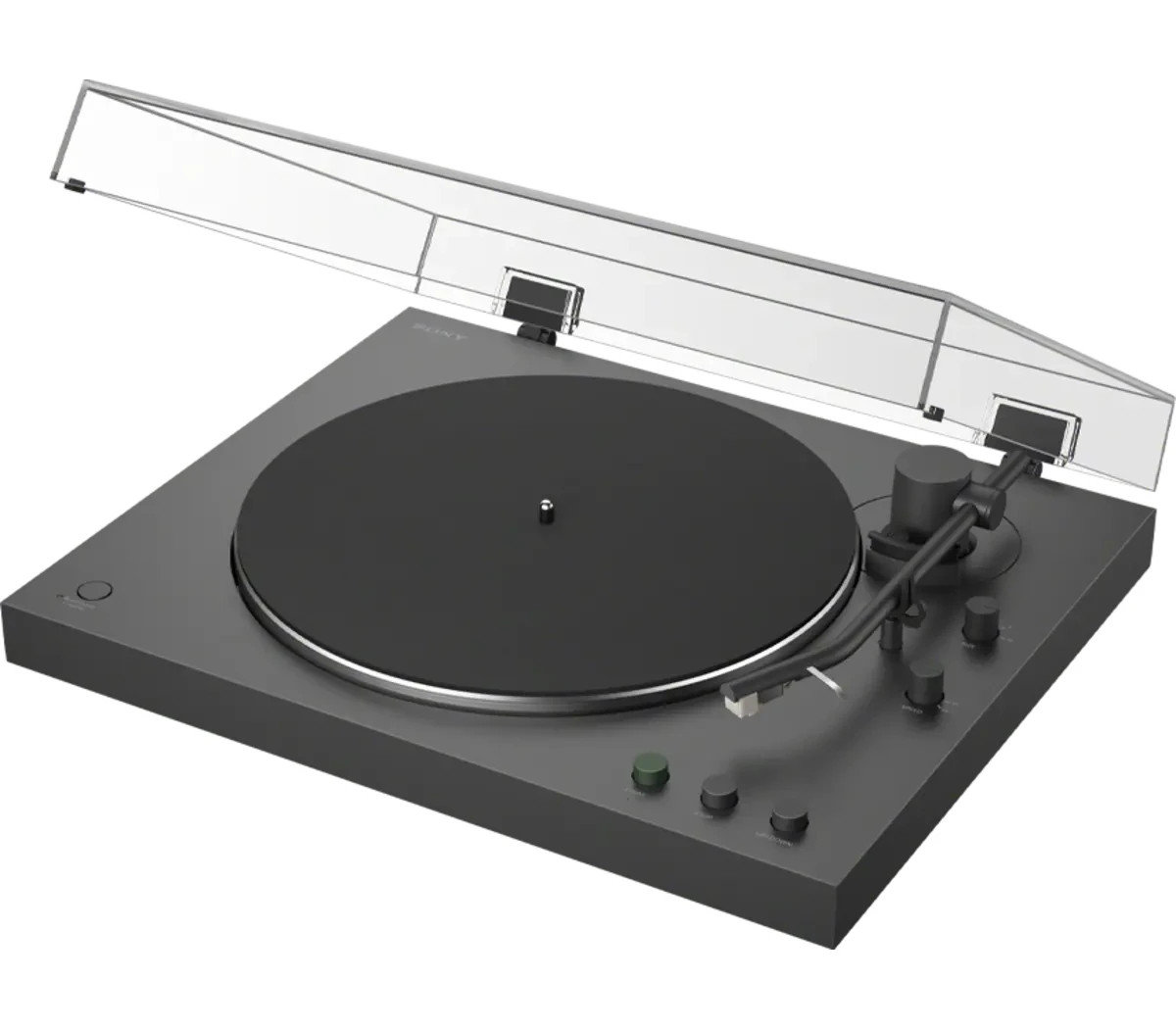

Photos from current listings. Actual item, color, and included accessories may vary.
USB Record Player Buying Guide
USB record players combine a vinyl playback mechanism with a built-in phono preamp and USB audio output, letting you digitize records or stream to Bluetooth speakers without a separate receiver. The core trade-off is between a proper moving-magnet cartridge and adjustable tracking force (durable, accurate ripping) versus a ceramic cartridge and fixed tonearm (cheap, high wear, poor audio). The decision rule: buy any model that explicitly lists a moving-magnet cartridge, a replaceable stylus, and USB output at 44.1/48 kHz—skip anything with a ceramic cartridge or a non-replaceable stylus, as those will damage records and cannot be upgraded.
Key takeaways
- Cartridge type is the single biggest durability factor: moving-magnet (MM) cartridges track at 2–4 g and have user-replaceable styli; ceramic cartridges track at 5–7 g and wear records faster.
- USB output on most consumer decks is 16-bit/44.1 kHz or 48 kHz via a built-in ADC; some models add a 24-bit/96 kHz mode for higher-fidelity archiving, but 16/48 is sufficient for casual digitizing.
- Belt-drive with a fixed or adjustable counterweight tonearm is standard at this tier; direct-drive USB turntables exist but cost more and are aimed at DJs who need instant start/stop and high torque.
At a glance
- Category
- Turntables & Record Players
- Last updated
- Nov 29, 2026
Current offers
Highlights
- Cartridge type is the single biggest durability factor: moving-magnet (MM) cartridges track at 2–4 g and have user-replaceable styli; ceramic cartridges track at 5–7 g and wear records faster.
- USB output on most consumer decks is 16-bit/44.1 kHz or 48 kHz via a built-in ADC; some models add a 24-bit/96 kHz mode for higher-fidelity archiving, but 16/48 is sufficient for casual digitizing.
- Belt-drive with a fixed or adjustable counterweight tonearm is standard at this tier; direct-drive USB turntables exist but cost more and are aimed at DJs who need instant start/stop and high torque.
- Bluetooth output on USB turntables (e.g., Sony PS-LX3BT) transmits the phono signal wirelessly to speakers, but Bluetooth adds latency and compresses audio—use USB or RCA for critical listening or ripping.
Best use cases
- Best fit: You want to digitize a small collection to MP3/FLAC—choose a belt-drive USB turntable with an MM cartridge, adjustable tracking force, and 16-bit/48 kHz USB output; skip ceramic-cartridge all-in-ones.
- Best fit: You want to play records through Bluetooth speakers without a receiver—pick a model with built-in Bluetooth transmitter and a built-in phono preamp; skip decks that require a separate preamp or only offer USB.
- Wrong fit: You plan to DJ or scratch—USB turntables at this tier lack the torque, slipmat, and start/stop speed of direct-drive DJ decks; choose a direct-drive DJ turntable instead.
- Wrong fit: You want the highest-fidelity rips for archiving—consumer USB turntables cap at 16/48 or 24/96 with a budget cartridge; for archival-grade transfers, use a dedicated turntable with a high-end cartridge and an external 24/192 ADC.
Buying tips
- Insist on a moving-magnet cartridge with a replaceable stylus (e.g., Audio-Technica AT3600L, AT95E, or Ortofon OM series); ceramic cartridges cannot be upgraded and track too heavily for long-term vinyl health.
- Check USB audio resolution: 16-bit/44.1 kHz or 48 kHz is fine for casual digitizing; 24-bit/96 kHz is better for archiving but requires software support and larger file sizes.
- Verify the turntable has a built-in phono preamp (switchable line/phono output) if you plan to connect directly to powered speakers or a computer via USB; without it, you need an external preamp.
- For Bluetooth output, confirm the deck transmits (not just receives) and supports at least Bluetooth 4.2 or 5.0 with SBC or AAC codecs; aptX is better but rare at this price tier.
Specs
| Drive Type | Belt-drive vs Direct-drive |
|---|---|
| Cartridge Type | Moving-magnet vs Ceramic |
| USB Audio | 16/44.1, 16/48, 24/96 kHz |
| Bluetooth | Transmit only, SBC/AAC/aptX |
Related searches
What to check before buying
- Measure your shelf or stand: most USB turntables need at least 16 × 14 inches of flat space and 6 inches of clearance above for the dust cover to open.
- Confirm your computer or recording device has a USB-A or USB-C port and that you have recording software (Audacity is free) that supports your OS.
- Check your speakers: if they are powered (active) with RCA or 3.5mm input, you can use the turntable's line output; if passive, you need an amplifier or receiver.
- Verify voltage and plug type for your region (100–240 V switching adapter is common, but plug shape varies); Bluetooth models need a powered outlet for the turntable itself.
FAQ
Data sources: eBay / Amazon listings and product attribute feeds. Updated Nov 29, 2026.
Some links on this page are affiliate links. If you buy after clicking one, we may earn a commission at no extra cost to you. This does not change which products appear here or their order. Affiliate disclosure.