
Photos from current listings. Actual item, color, and included accessories may vary.
Record Player With CD Player And Bluetooth Buying Guide
A record player with CD player and Bluetooth is a hybrid all-in-one audio source: a vinyl turntable, a CD transport, and a wireless streaming module sharing one chassis, preamp, and speaker or line output. The core trade-off is that the turntable's tonearm and cartridge quality and the CD transport's laser and buffer are compromised when bundled at low tiers, while Bluetooth adds a codec and latency layer that never matches wired playback. The clear rule: buy a hybrid only when a single unit must serve three formats in one room; otherwise spend the same budget on a dedicated turntable plus a separate CD deck for better mechanical isolation and upgrade paths.
Median $270.73 · New listings
Key takeaways
- Turntable drive architecture splits into belt-drive (isolated motor, lower rumble, needs speed check) vs direct-drive (instant torque, DJ-grade pitch stability, higher platter noise at budget tiers).
- CD section quality hinges on transport mechanism damping and DAC generation: a slot-load transport with anti-shock buffer and 24-bit DAC outperforms tray-load units with audible tracking noise and 16-bit output.
- Bluetooth receiver chipset determines codec support: SBC/AAC only vs aptX or aptX HD/LDAC; only the latter two approach wired CD quality, and Bluetooth output must feed active speakers or headphones since vinyl cannot transmit over Bluetooth by itself.
At a glance
- Category
- Turntables & Record Players
- Last updated
- Nov 29, 2026
Current offers
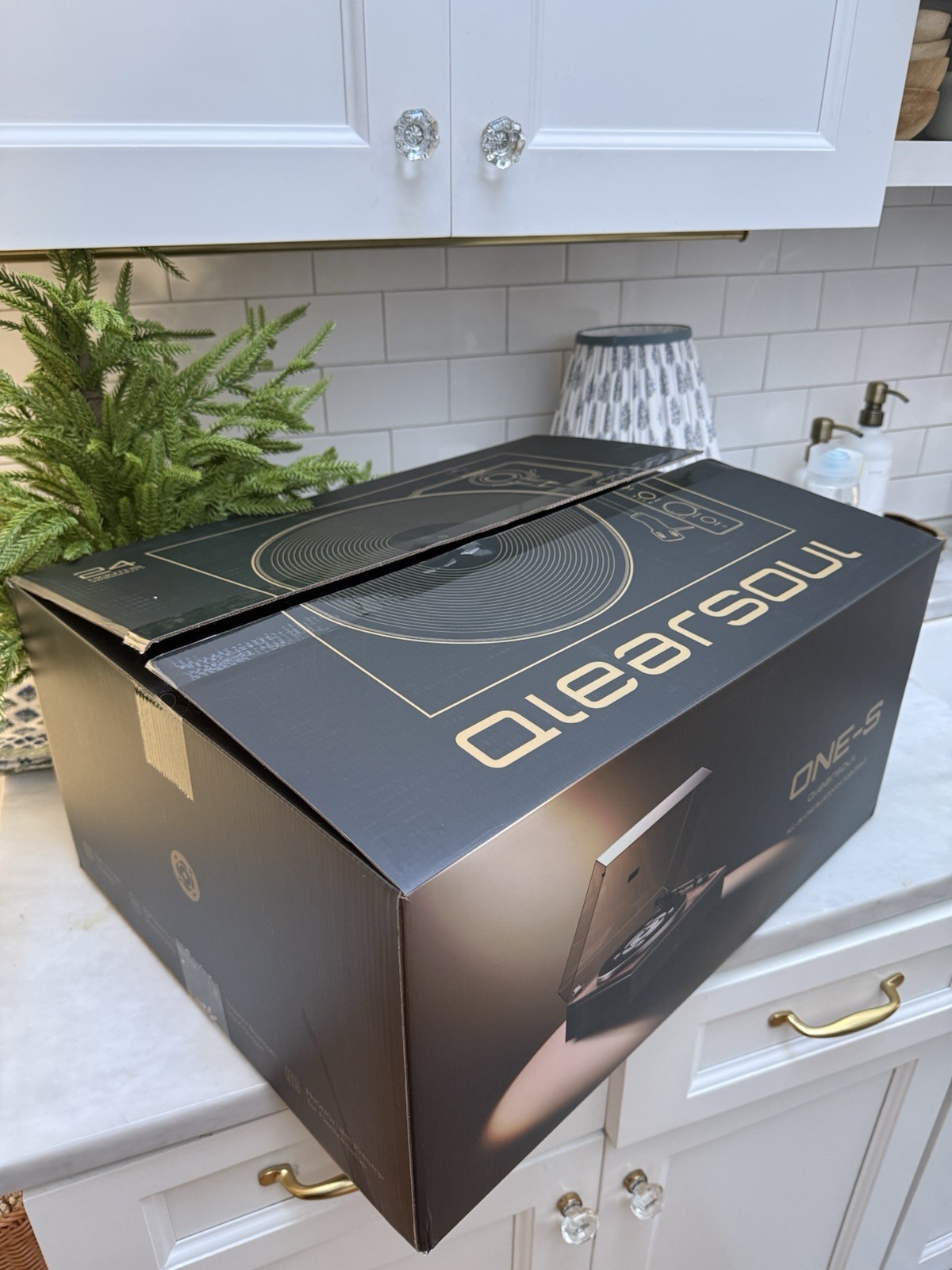 Qlearsoul ONE-S Vinyl Record Player with Bluetooth Input/Output, Al... Fast Ship$200.00New · Last checked Nov 29, 2026View on eBay
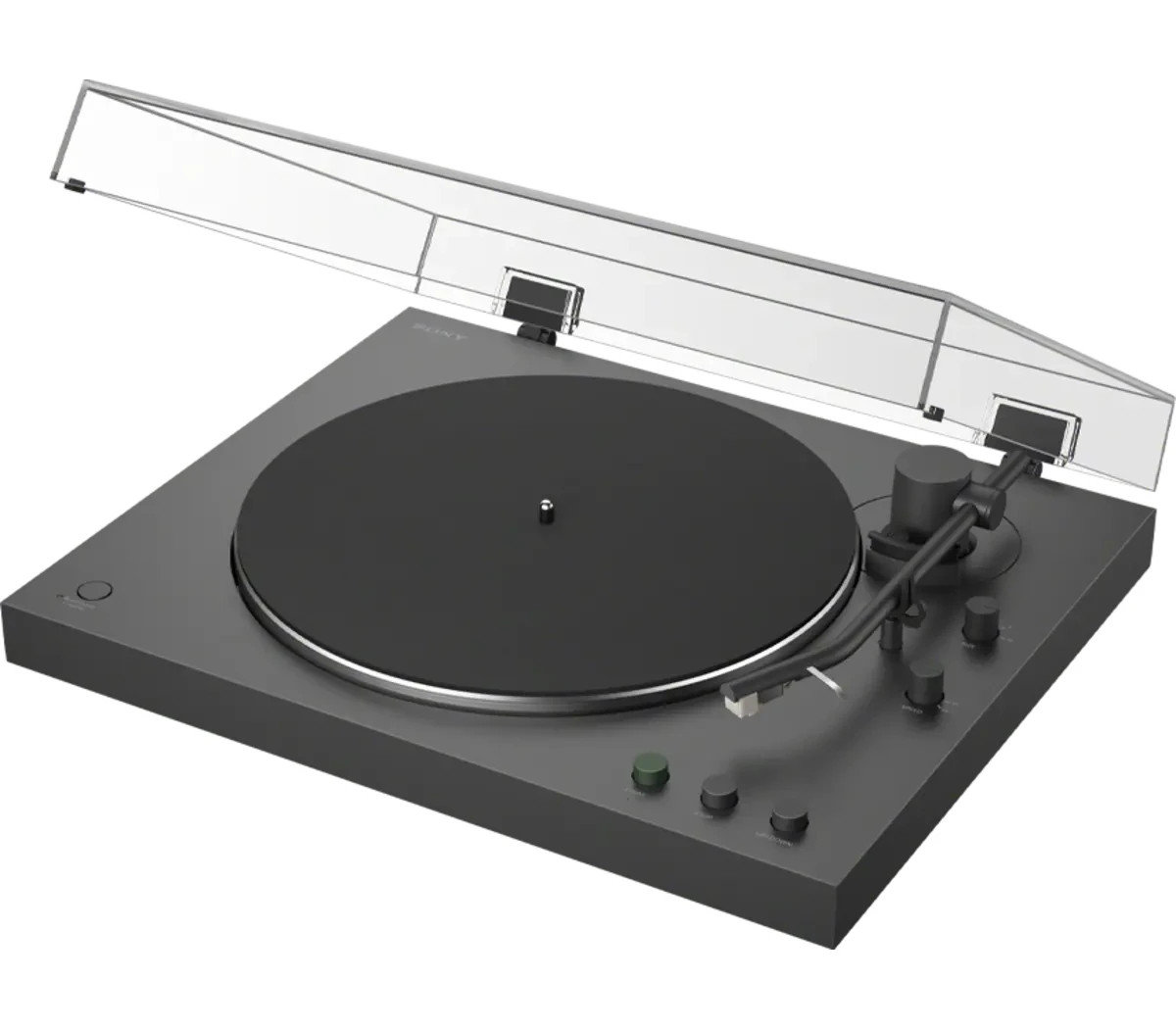 Sony PS-LX3BT Automatic Wireless Vinyl Record Player Bluetooth USB Turntable$219.00Last checked Nov 18, 2026View on eBay
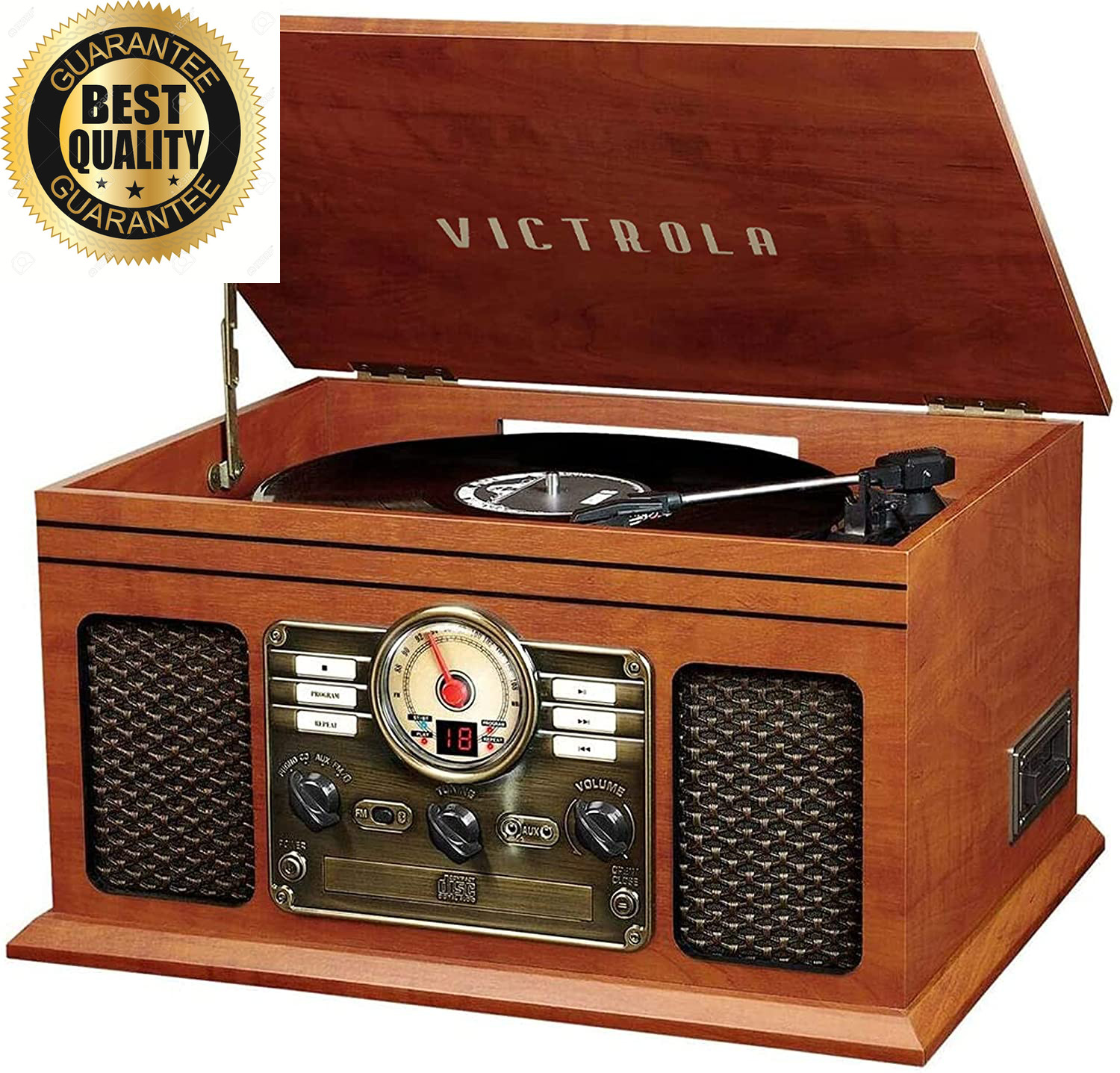 Victrola Nostalgic 7-In-1 Bluetooth Record Player & Multimedia Center with Built$249.99New · Last checked Nov 29, 2026View on eBay
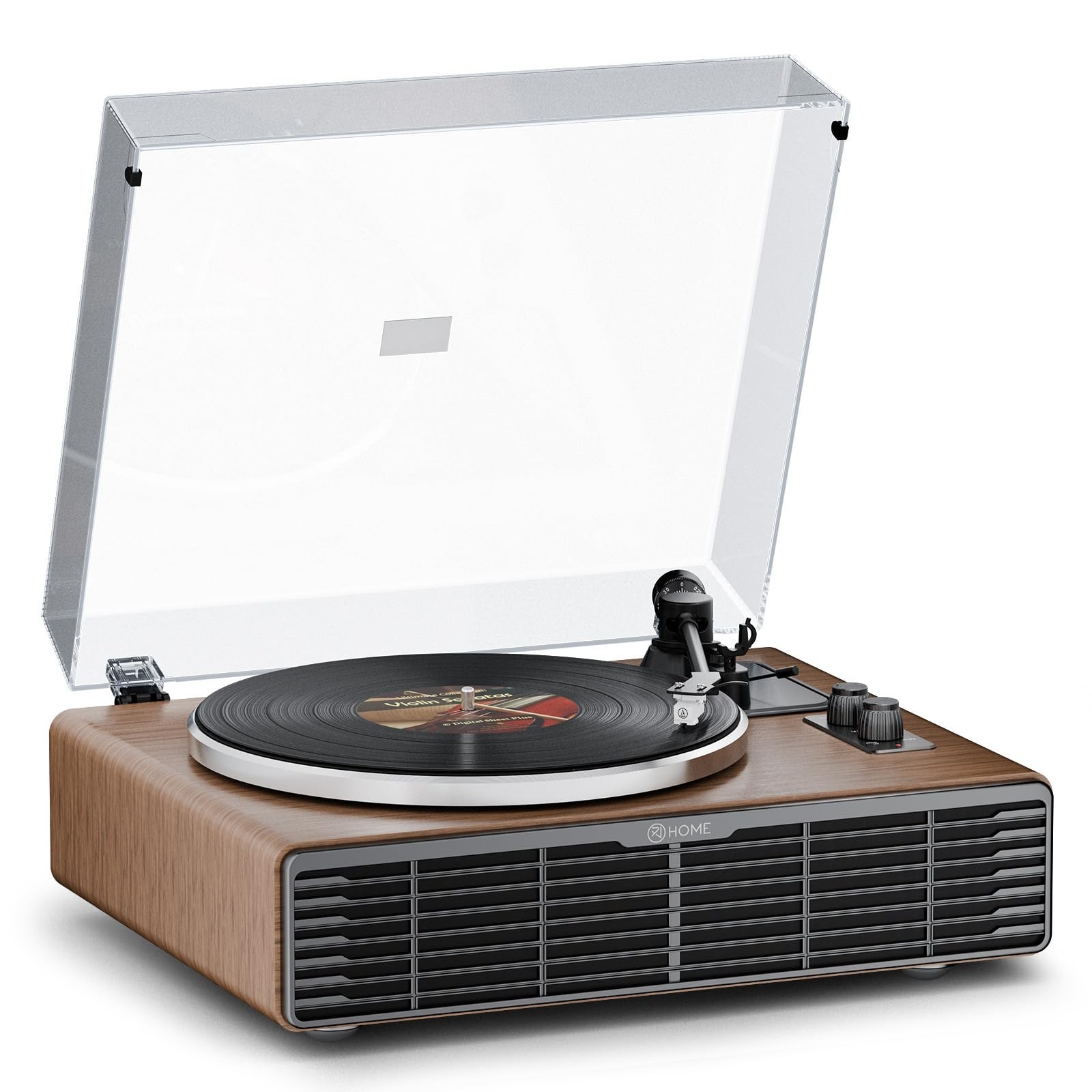 Vinyl Record Player with Speakers Bluetooth Turntable AT-3600L 33/45 RPM$270.73New · Last checked Nov 29, 2026View on eBay
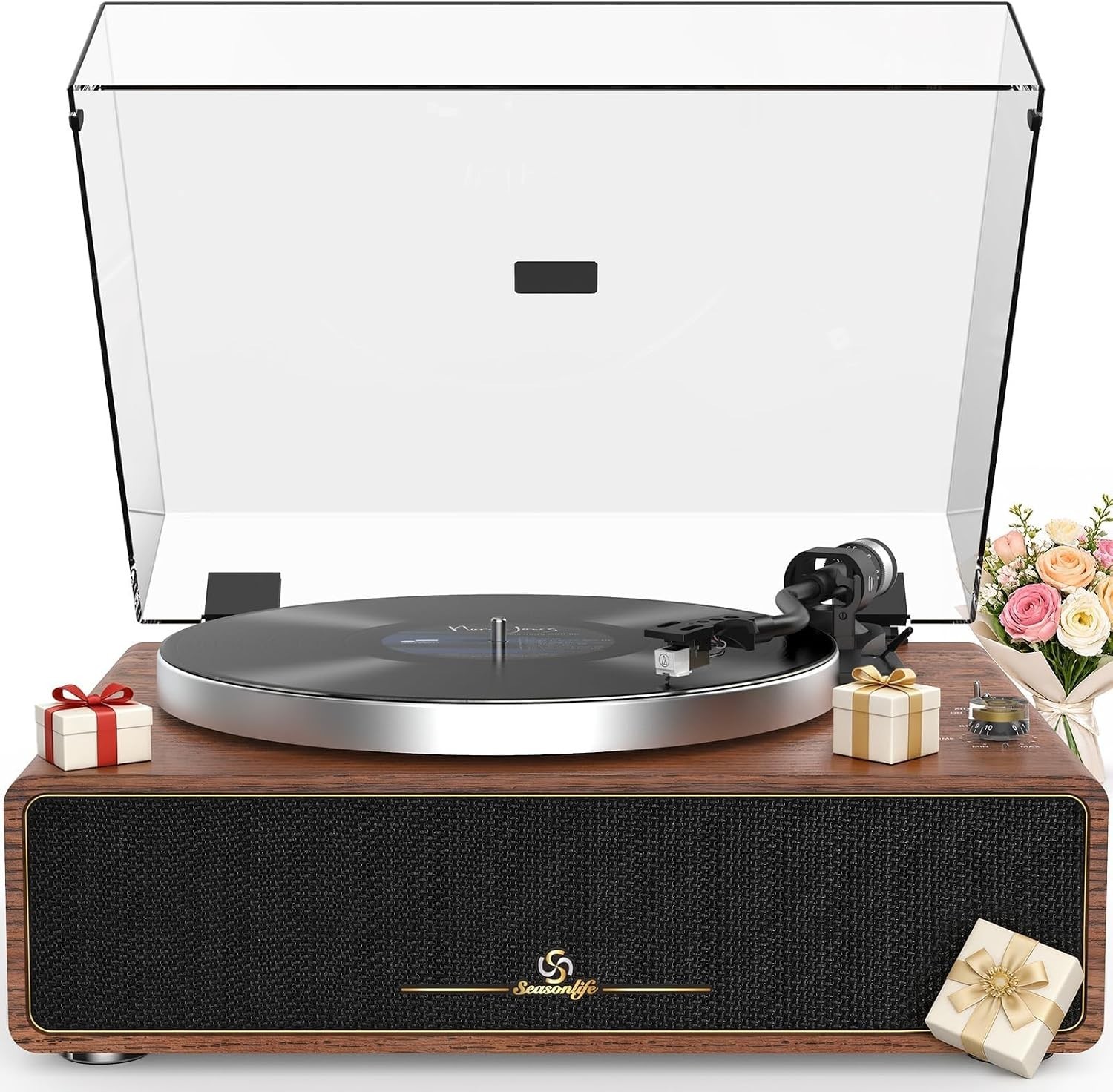 All-in-One Record Player with 4 Speakers & Bluetooth, Brown | Belt-Drive Vinyl P$270.88New · Last checked Nov 29, 2026View on eBay
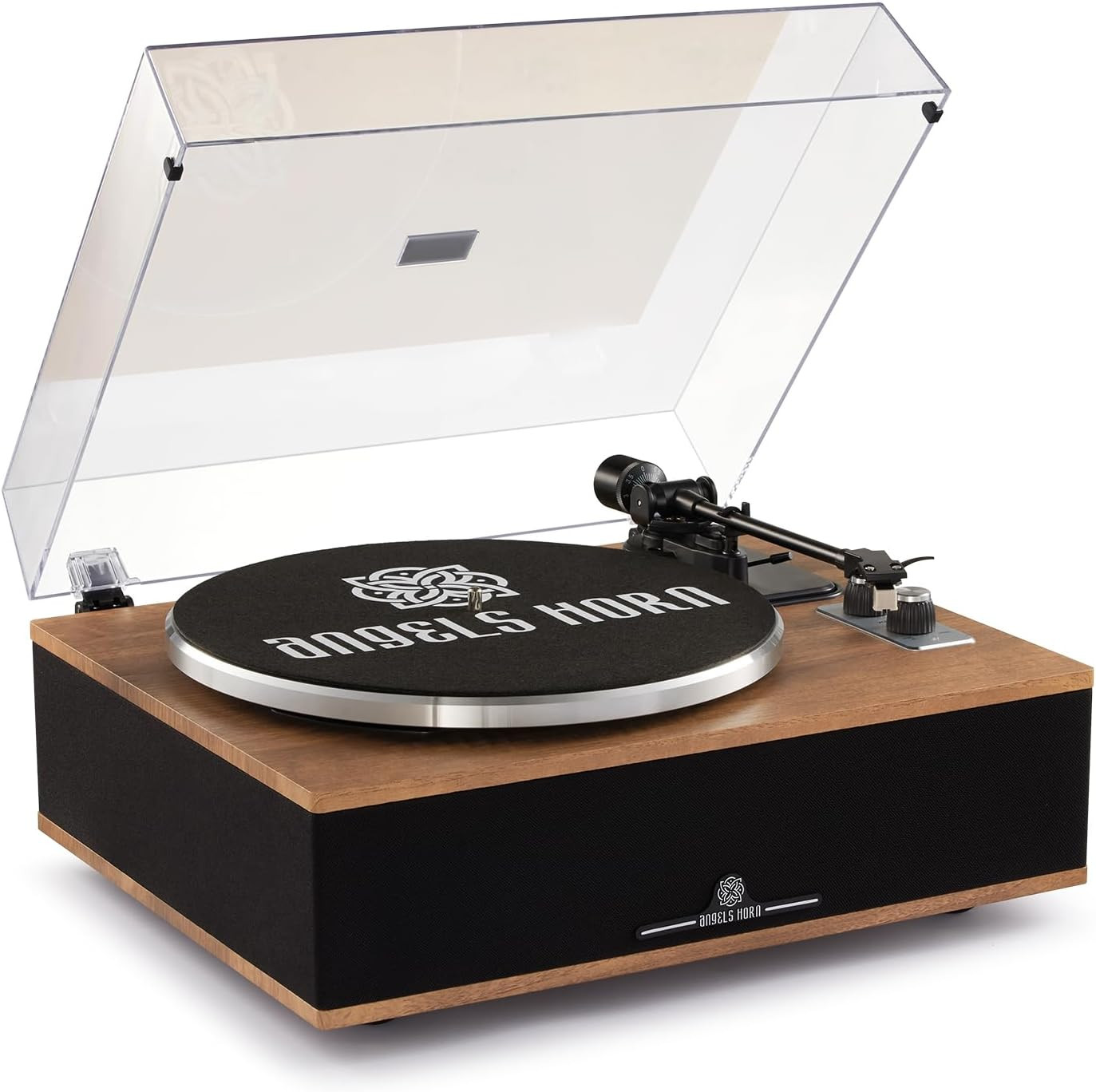 Vinyl Record Player, Bluetooth Turntable with Built in Speakers$279.97New · Last checked Nov 29, 2026View on eBay
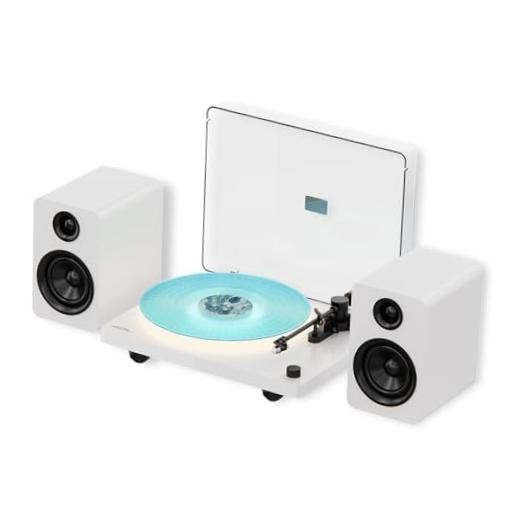 Vinyl Record Player with Bluetooth, Speakers and LED Lighting - Adjustable$367.49New · Last checked Nov 29, 2026View on eBay
Highlights
- Turntable drive architecture splits into belt-drive (isolated motor, lower rumble, needs speed check) vs direct-drive (instant torque, DJ-grade pitch stability, higher platter noise at budget tiers).
- CD section quality hinges on transport mechanism damping and DAC generation: a slot-load transport with anti-shock buffer and 24-bit DAC outperforms tray-load units with audible tracking noise and 16-bit output.
- Bluetooth receiver chipset determines codec support: SBC/AAC only vs aptX or aptX HD/LDAC; only the latter two approach wired CD quality, and Bluetooth output must feed active speakers or headphones since vinyl cannot transmit over Bluetooth by itself.
- Integrated units typically pair a ceramic or moving-magnet cartridge (MM) with a built-in phono preamp; moving-magnet with a replaceable stylus is the minimum for longevity, while ceramic cartridges are non-upgradeable and wear records faster.
Best use cases
- Best fit: a single-room listener with a small vinyl collection, a CD library, and Bluetooth headphones or a smart speaker — pick a belt-drive unit with MM cartridge, slot-load CD, and aptX Bluetooth.
- Wrong fit: a vinyl-focused audiophile with a large collection and a separate amplifier — skip hybrids entirely and buy a dedicated turntable plus a standalone CD player for cleaner signal paths and upgradeable cartridges.
- Best fit: a secondary system for a bedroom, office, or vacation home where space is tight and three formats must coexist — choose an all-in-one with built-in speakers and line-out for later expansion.
- Wrong fit: DJ or scratching use — hybrid units have lightweight tonearms and no pitch fader or direct-drive torque, so skip them and choose a direct-drive DJ turntable instead.
Buying tips
- Match the cartridge type: moving-magnet (MM) with replaceable stylus is the durable choice; ceramic cartridges cannot be upgraded and track at higher force, accelerating record wear.
- Confirm Bluetooth codec: aptX or LDAC is required for near-CD wireless quality; SBC/AAC-only units will audibly compress and add 100-200ms latency, making video sync unusable.
- Verify CD transport type: slot-load with anti-shock buffer is more vibration-resistant in an all-in-one chassis than a tray-load mechanism, which can skip when the turntable motor runs.
- Check speed stability: belt-drive units should include a 33/45 RPM selector and a strobe or auto-speed check; wow and flutter above 0.25% is audible on sustained piano and strings.
Specs
| Turntable Drive | Belt-drive vs Direct-drive |
|---|---|
| Cartridge Type | Moving-magnet (MM) vs Ceramic |
| Bluetooth Codec | SBC/AAC vs aptX HD/LDAC |
| CD Transport | Slot-load buffer vs Tray-load |
Related searches
What to check before buying
- Measure the shelf or stand footprint: hybrids are deeper than standalone turntables because the CD tray or slot and speaker cavities add 2-4 inches of depth — confirm clearance for the dust cover to open fully.
- Check output and input complement: line-out (RCA) for connecting to an external amp, plus aux-in if you want to route a phone or TV through the same speakers.
- Confirm voltage and plug standard for your region (100-240V switching vs fixed 120V/230V) and that the Bluetooth version (4.2 vs 5.0+) matches your source devices for stable range.
- Account for companion parts: a carbon-fiber brush, stylus cleaner, and replacement stylus for the fitted cartridge should be available — non-standard cartridges make future replacement difficult.
FAQ
Data sources: eBay / Amazon listings and product attribute feeds. Updated Nov 29, 2026.
Some links on this page are affiliate links. If you buy after clicking one, we may earn a commission at no extra cost to you. This does not change which products appear here or their order. Affiliate disclosure.