
Photos from current listings. Actual item, color, and included accessories may vary.
Record Player With Built In Speaker Buying Guide
A record player with built-in speakers integrates a phono preamp, amplifier, and stereo speakers into one chassis, eliminating the need for a separate hi-fi system. The core trade-off is enclosure rigidity and speaker isolation versus convenience—all-in-one units vibrate more and typically offer lower output than component setups. The decision rule is simple: buy a built-in-speaker model only if it uses a counterweighted tonearm, a replaceable MM cartridge, and a rigid MDF or dense-plastic plinth; skip any unit with a ceramic cartridge, plastic tonearm, or non-replaceable stylus.
Median $270.73 · New listings
Key takeaways
- Tonearm quality is the single biggest durability factor: counterweighted aluminum tonearms with adjustable tracking force (1.5–3.0 g) preserve records and stylus life, while spring-loaded plastic arms cause skipping and permanent groove wear.
- Cartridge type separates disposable from upgradeable decks: moving-magnet (MM) cartridges with replaceable styli (e.g., Audio-Technica AT3600L/AT91) allow 500–1,000-hour stylus swaps, whereas ceramic cartridges are non-serviceable and have higher tracking force.
- Built-in speaker output ranges from 2 W to 30 W RMS per channel; units under 5 W RMS distort at moderate volume, while 10 W+ RMS with a ported or sealed MDF enclosure delivers clean room-filling sound without external speakers.
At a glance
- Category
- Turntables & Record Players
- Last updated
- Nov 29, 2026
Current offers
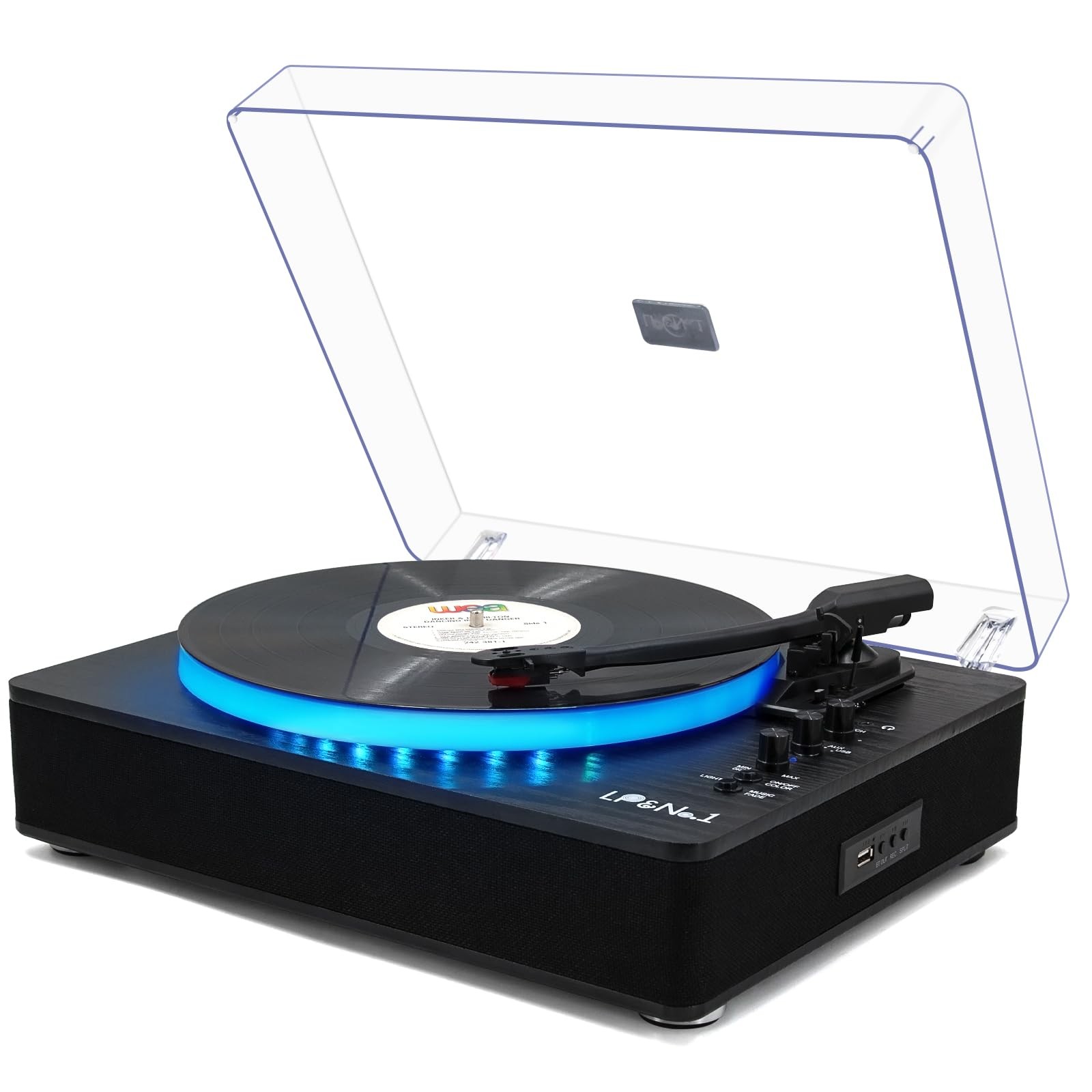 LP&No.1 Record Player with Built-in Stereo Speakers, LED Control, 3-Speed Bel...$236.21New · Last checked Nov 29, 2026View on eBay
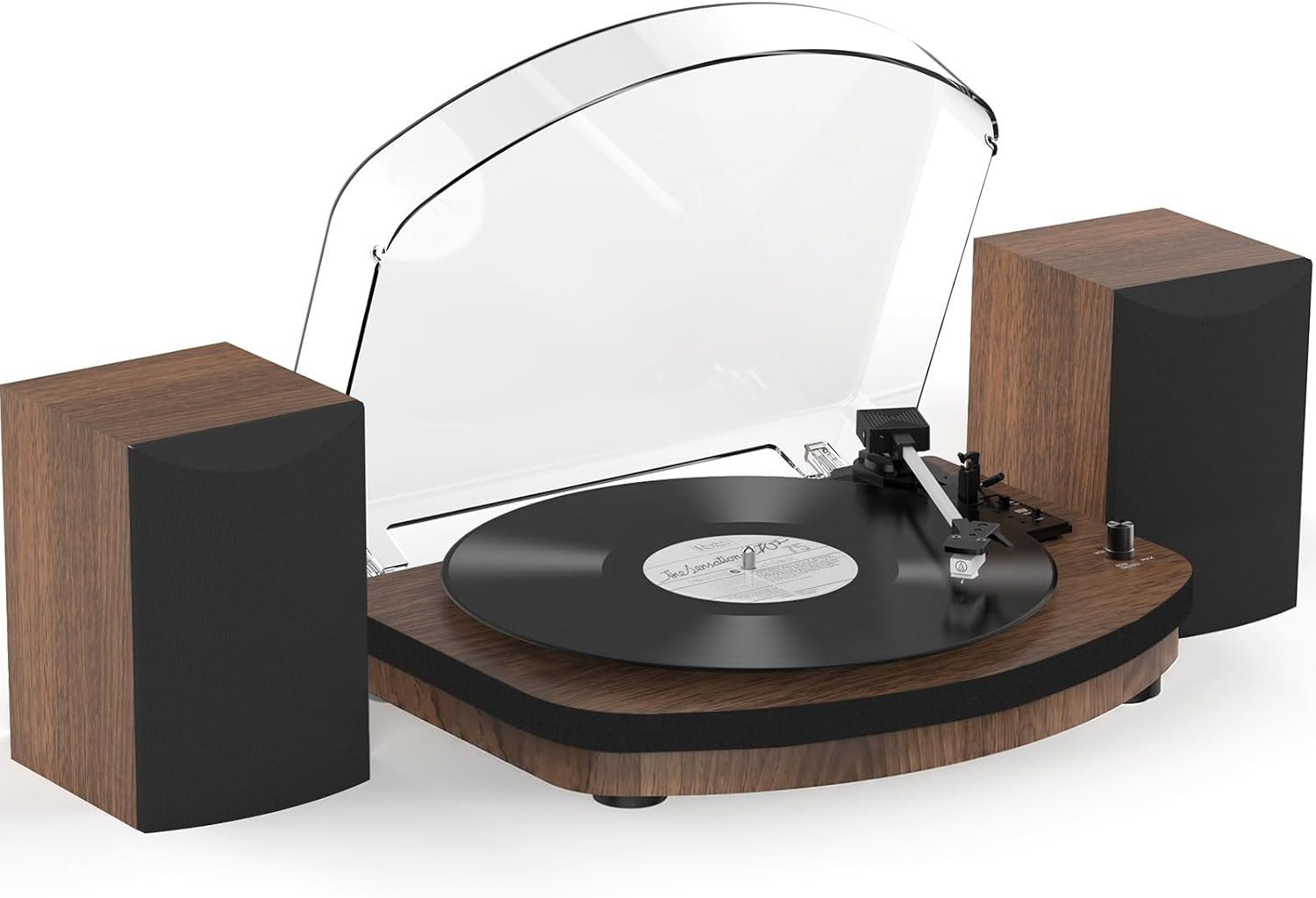 Vinyl Record Player with External Speakers AT-3600L Cartridge$254.27New · Last checked Nov 29, 2026View on eBay
- Vinyl Record Player with External Speakers AT-3600L Cartridge$255.18New · Last checked Nov 29, 2026View on eBay
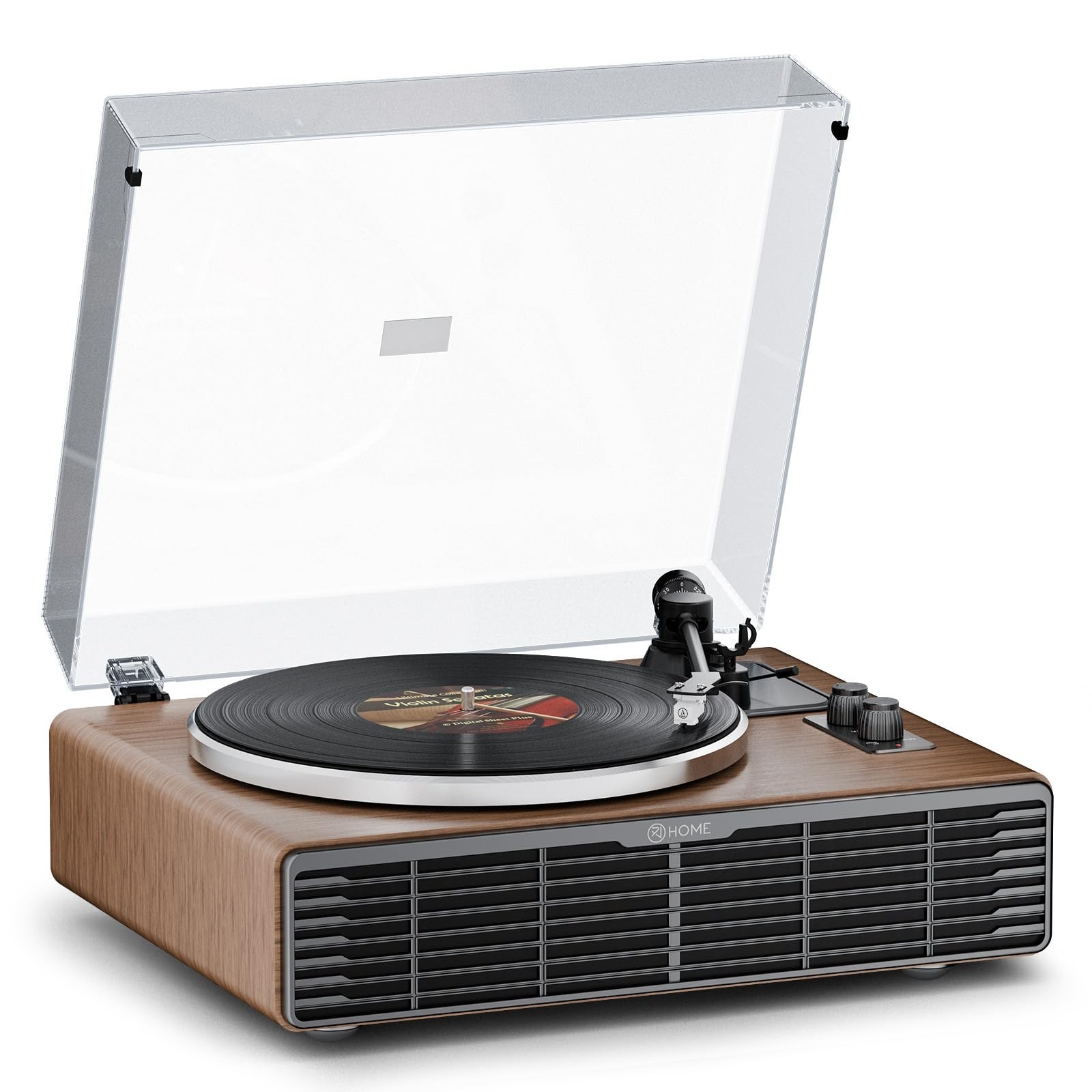 Vinyl Record Player with Speakers Bluetooth Turntable AT-3600L 33/45 RPM$270.73New · Last checked Nov 29, 2026View on eBay
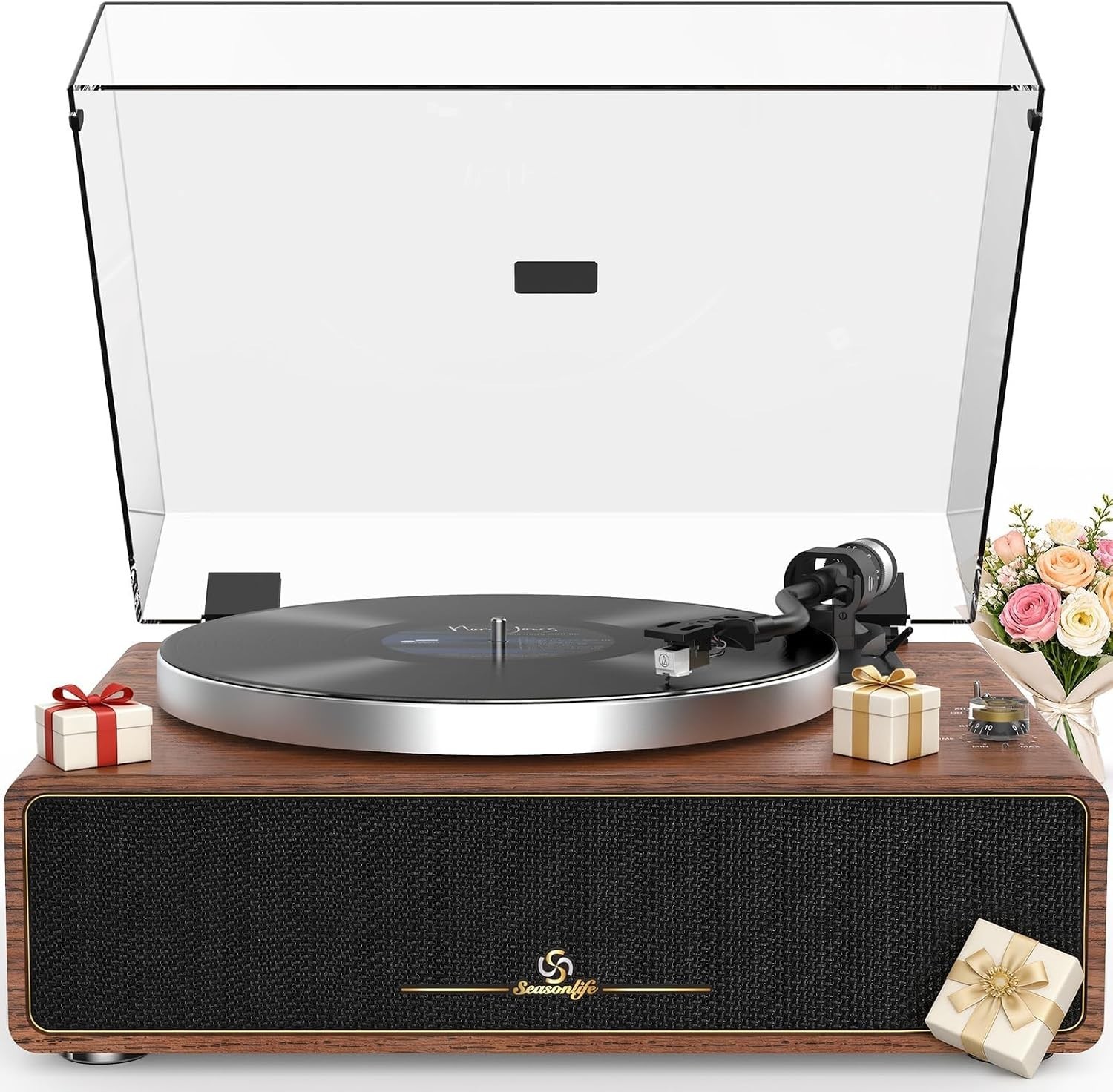 All-in-One Record Player with 4 Speakers & Bluetooth, Brown | Belt-Drive Vinyl P$270.88New · Last checked Nov 29, 2026View on eBay
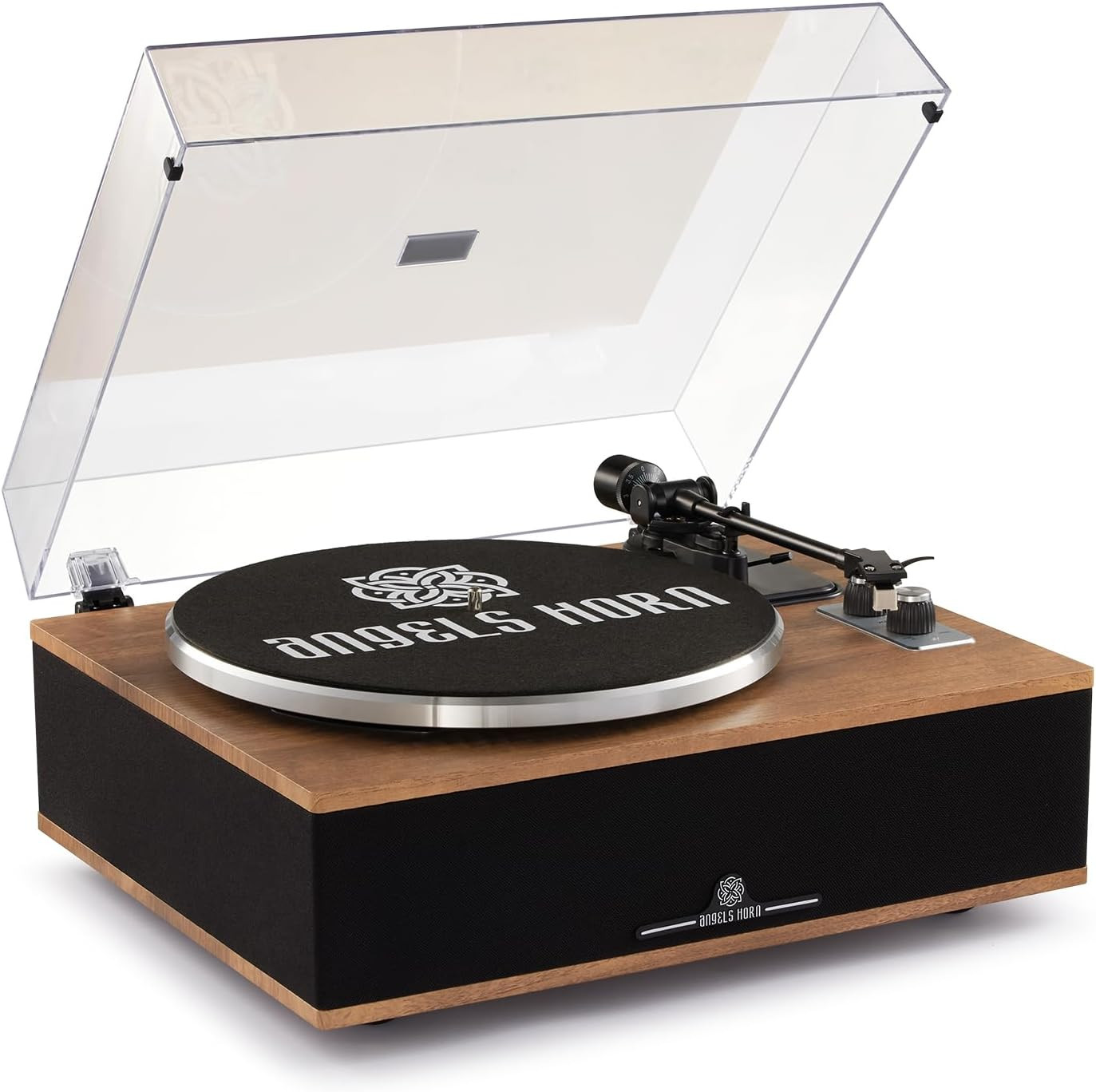 Vinyl Record Player, Bluetooth Turntable with Built in Speakers$279.97New · Last checked Nov 29, 2026View on eBay
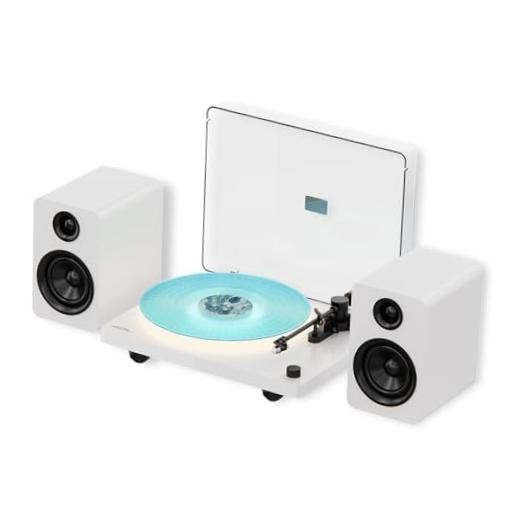 Vinyl Record Player with Bluetooth, Speakers and LED Lighting - Adjustable$367.49New · Last checked Nov 29, 2026View on eBay
Highlights
- Tonearm quality is the single biggest durability factor: counterweighted aluminum tonearms with adjustable tracking force (1.5–3.0 g) preserve records and stylus life, while spring-loaded plastic arms cause skipping and permanent groove wear.
- Cartridge type separates disposable from upgradeable decks: moving-magnet (MM) cartridges with replaceable styli (e.g., Audio-Technica AT3600L/AT91) allow 500–1,000-hour stylus swaps, whereas ceramic cartridges are non-serviceable and have higher tracking force.
- Built-in speaker output ranges from 2 W to 30 W RMS per channel; units under 5 W RMS distort at moderate volume, while 10 W+ RMS with a ported or sealed MDF enclosure delivers clean room-filling sound without external speakers.
- Bluetooth and USB output are generation-defining: Bluetooth 5.0+ transmitters (not just receivers) and USB-C audio output let built-in-speaker decks feed modern speakers or digitize records, while older units lock you into their internal amp.
Best use cases
- Best fit: small apartments or bedrooms where space is tight—choose a 10–15 W RMS all-in-one with a counterweighted tonearm and MDF plinth; skip 2–3 W novelty suitcase players that skip on footfall.
- Best fit: vinyl beginners who want one-box simplicity—pick a model with a replaceable MM cartridge, Bluetooth 5.0 output, and a dust cover; avoid ceramic-cartridge decks with non-replaceable styli that wear records faster.
- Best fit: secondary listening in kitchens or studies—a 5–10 W RMS unit with a sealed speaker enclosure and rubber feet works; wrong fit: critical listening or large living rooms, where built-in speakers lack stereo separation and bass extension—choose a deck with Bluetooth/line-out to powered speakers instead.
- Best fit: collectors who occasionally digitize—a built-in-speaker deck with USB-C audio out and a counterweighted arm is acceptable; skip if you need 78 RPM or 45 adapter precision, as most all-in-ones lack 78 RPM and have marginal speed stability (±1.5% vs ±0.5% for belt-drive hi-fi).
Buying tips
- Check tonearm tracking force adjustability: a threaded counterweight with a 0–3 g range (set 2.0–2.5 g for most MM cartridges) is the minimum; fixed spring arms with 4–5 g force accelerate record wear.
- Match speaker power to room size: 5–10 W RMS per channel covers a bedroom (under 150 sq ft), 15–30 W RMS suits a living room; below 5 W RMS distorts at conversational volume.
- Verify plinth material and mass: MDF or dense polymer plinths (1.5–3 kg) damp vibration better than hollow plastic; rubber or sorbothane feet further isolate speakers from the platter.
- Confirm Bluetooth is a transmitter (TX) as well as receiver (RX) if you plan to stream to external speakers; many budget decks only receive Bluetooth, not transmit.
Specs
| Drive Type | Belt-drive vs Direct-drive |
|---|---|
| Tonearm | Counterweighted aluminum vs plastic spring |
| Cartridge | Replaceable MM vs fixed ceramic |
| Speaker Output | 5–30 W RMS per channel |
Related searches
What to check before buying
- Measure your shelf or table depth: allow 14–18 inches for the deck plus 6 inches behind for the dust cover hinge and cable clearance.
- Check floor rigidity: built-in speakers couple vibration into the plinth—place on a solid shelf or add isolation pads if your floor is springy or shares walls with neighbors.
- Verify voltage and plug standard: most all-in-one decks are 100–240 V with regional plugs; confirm the included adapter matches your outlet (US Type A/B, EU Type C/F).
- Confirm required companion parts: some built-in-speaker decks omit the 45 RPM adapter, RCA cables, or dust cover—ensure these are included or budget for them.
FAQ
Data sources: eBay / Amazon listings and product attribute feeds. Updated Nov 29, 2026.
Some links on this page are affiliate links. If you buy after clicking one, we may earn a commission at no extra cost to you. This does not change which products appear here or their order. Affiliate disclosure.