
Photos from current listings. Actual item, color, and included accessories may vary.
Portable Record Player With Speakers Buying Guide
Portable record players with built-in speakers combine a turntable, phono preamp, and amplification into a single carry-friendly chassis, trading acoustic fidelity and vibration isolation for plug-and-play convenience. The core trade-off is between lightweight all-in-one designs with modest drivers and heavier portable decks whose higher-mass plinths and better cartridges reduce skipping and wow/flutter. Buy a model with a counterweighted tonearm, adjustable tracking force, and a replaceable cartridge if durability matters; skip fixed-tracking, ceramic-cartridge toys with no upgrade path.
Median $270.73 · New listings
Key takeaways
- Tonearm type separates durable decks from compromises: counterweighted aluminum tonearms with adjustable tracking force (2-4 g range) resist skipping; fixed plastic tonearms with ceramic cartridges cannot be tuned or upgraded.
- Drive architecture dictates speed stability: belt-drive with a DC servo motor isolates motor vibration and typically yields wow/flutter under 0.25%; direct-drive portable units offer faster start but transmit more rumble in lightweight chassis.
- Built-in speaker output is modest by physics: most portable units deliver 2-5 W per channel from 2-3 inch full-range drivers, so loudness and bass are limited regardless of cosmetic claims—line-out or Bluetooth output to external speakers is the real upgrade path.
At a glance
- Category
- Turntables & Record Players
- Last updated
- Nov 29, 2026
Current offers
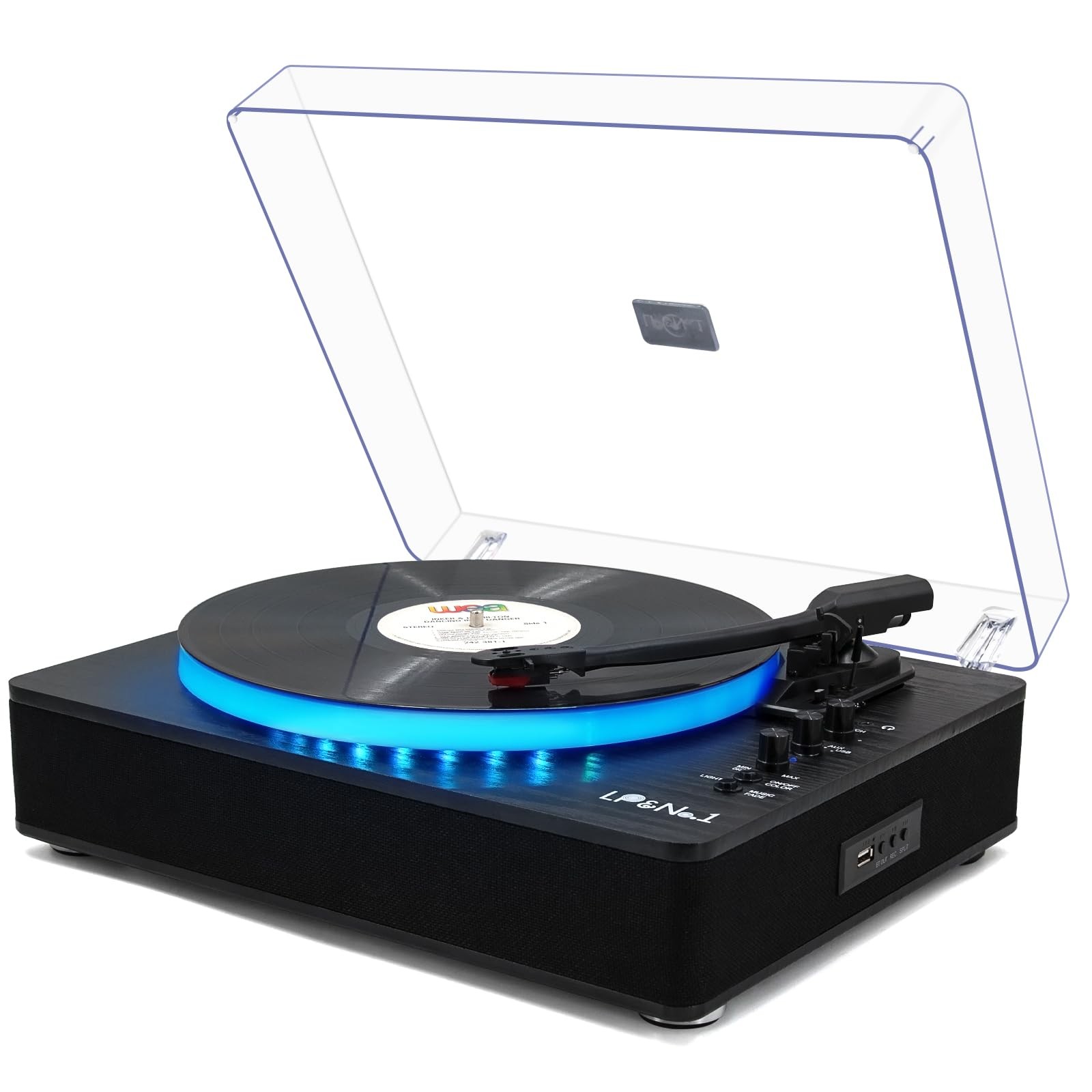 LP&No.1 Record Player with Built-in Stereo Speakers, LED Control, 3-Speed Bel...$236.21New · Last checked Nov 29, 2026View on eBay
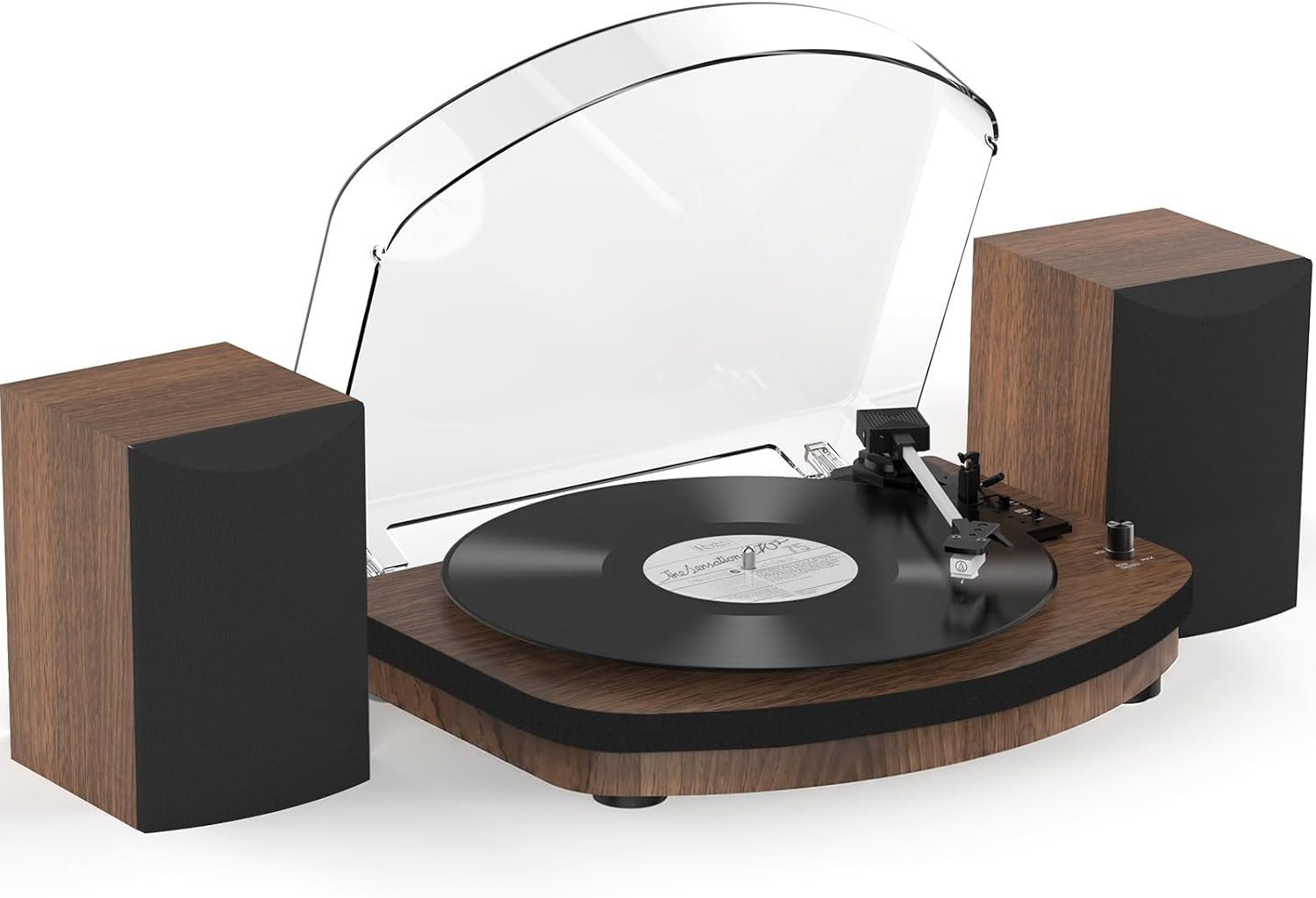 Vinyl Record Player with External Speakers AT-3600L Cartridge$254.27New · Last checked Nov 29, 2026View on eBay
- Vinyl Record Player with External Speakers AT-3600L Cartridge$255.18New · Last checked Nov 29, 2026View on eBay
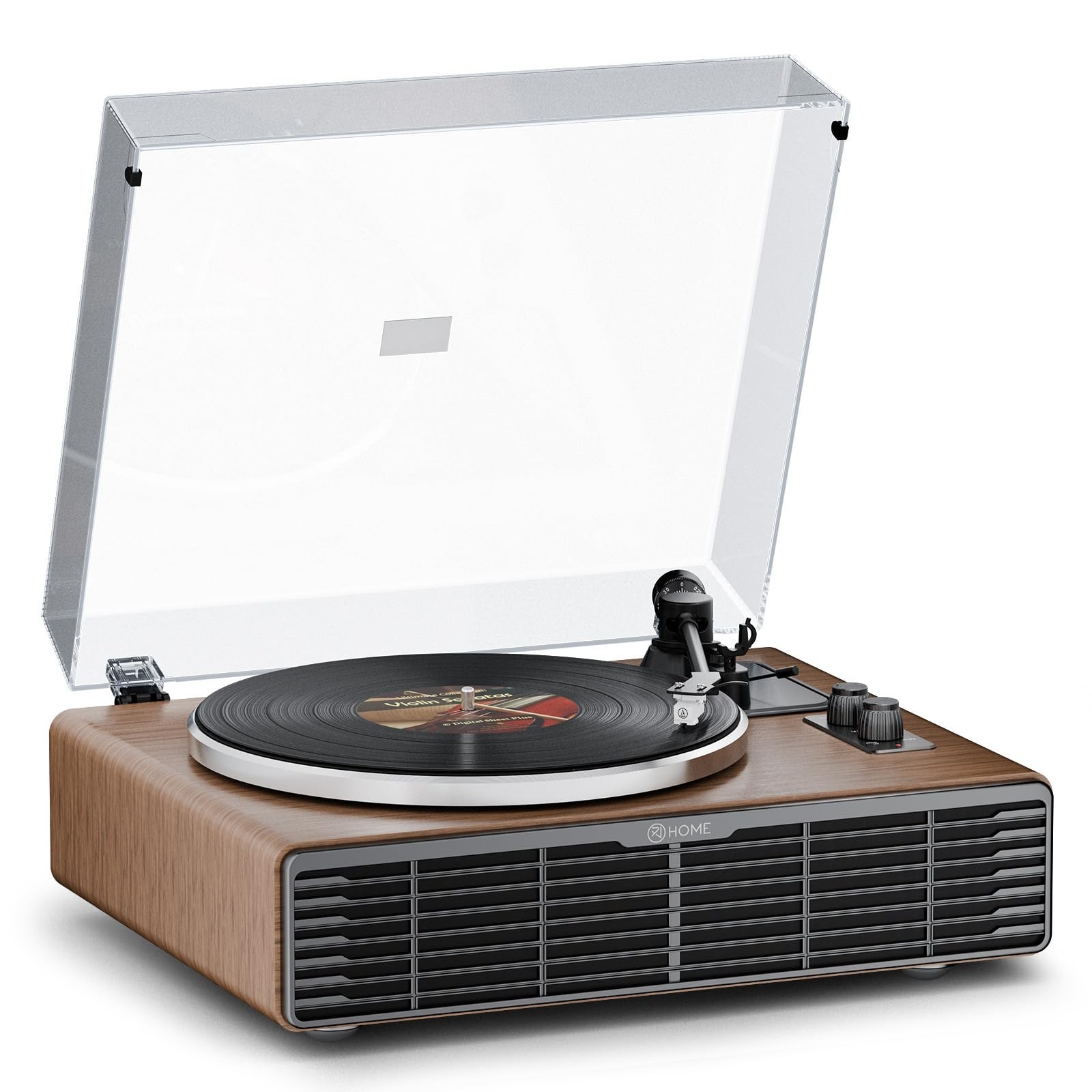 Vinyl Record Player with Speakers Bluetooth Turntable AT-3600L 33/45 RPM$270.73New · Last checked Nov 29, 2026View on eBay
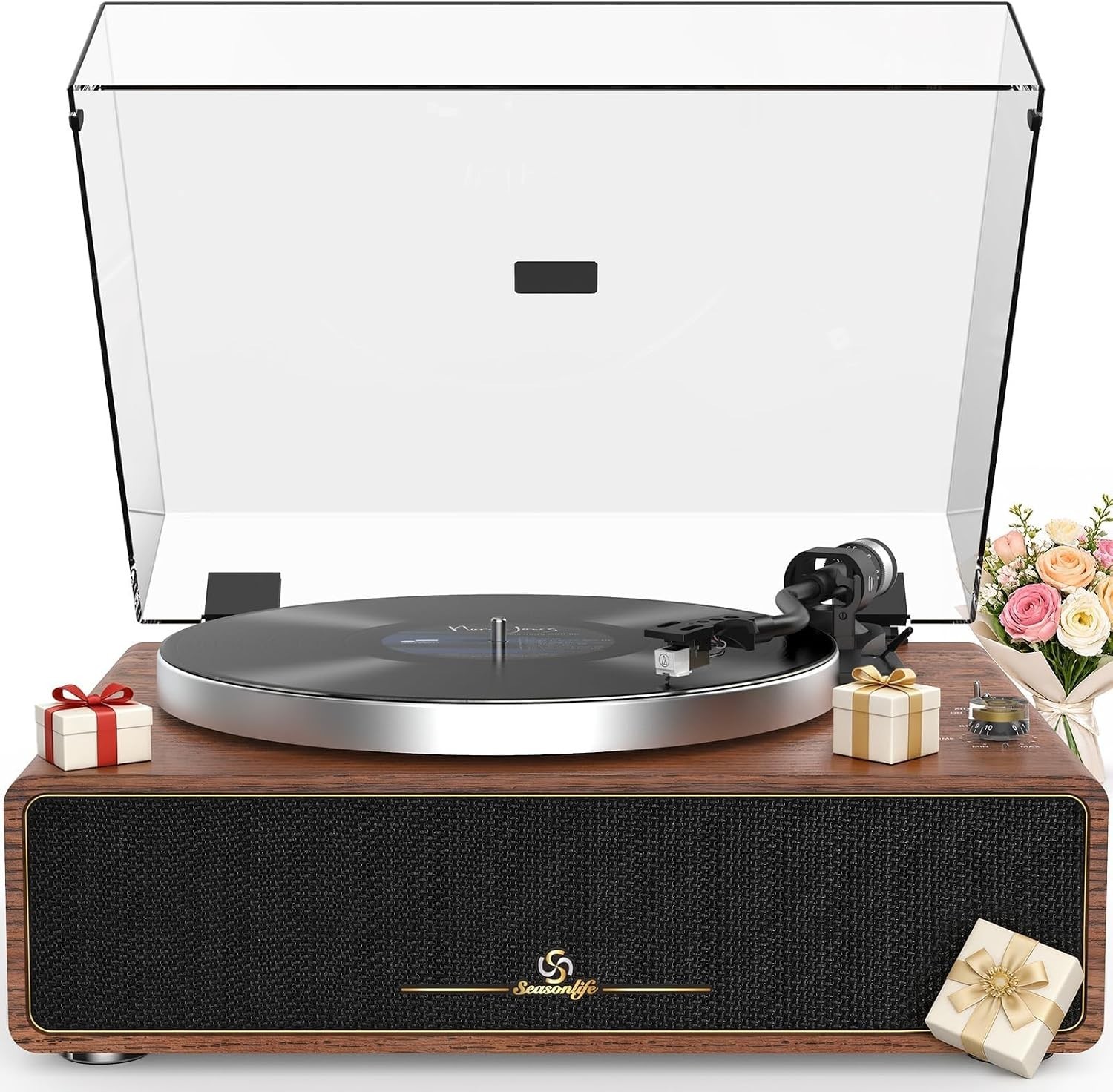 All-in-One Record Player with 4 Speakers & Bluetooth, Brown | Belt-Drive Vinyl P$270.88New · Last checked Nov 29, 2026View on eBay
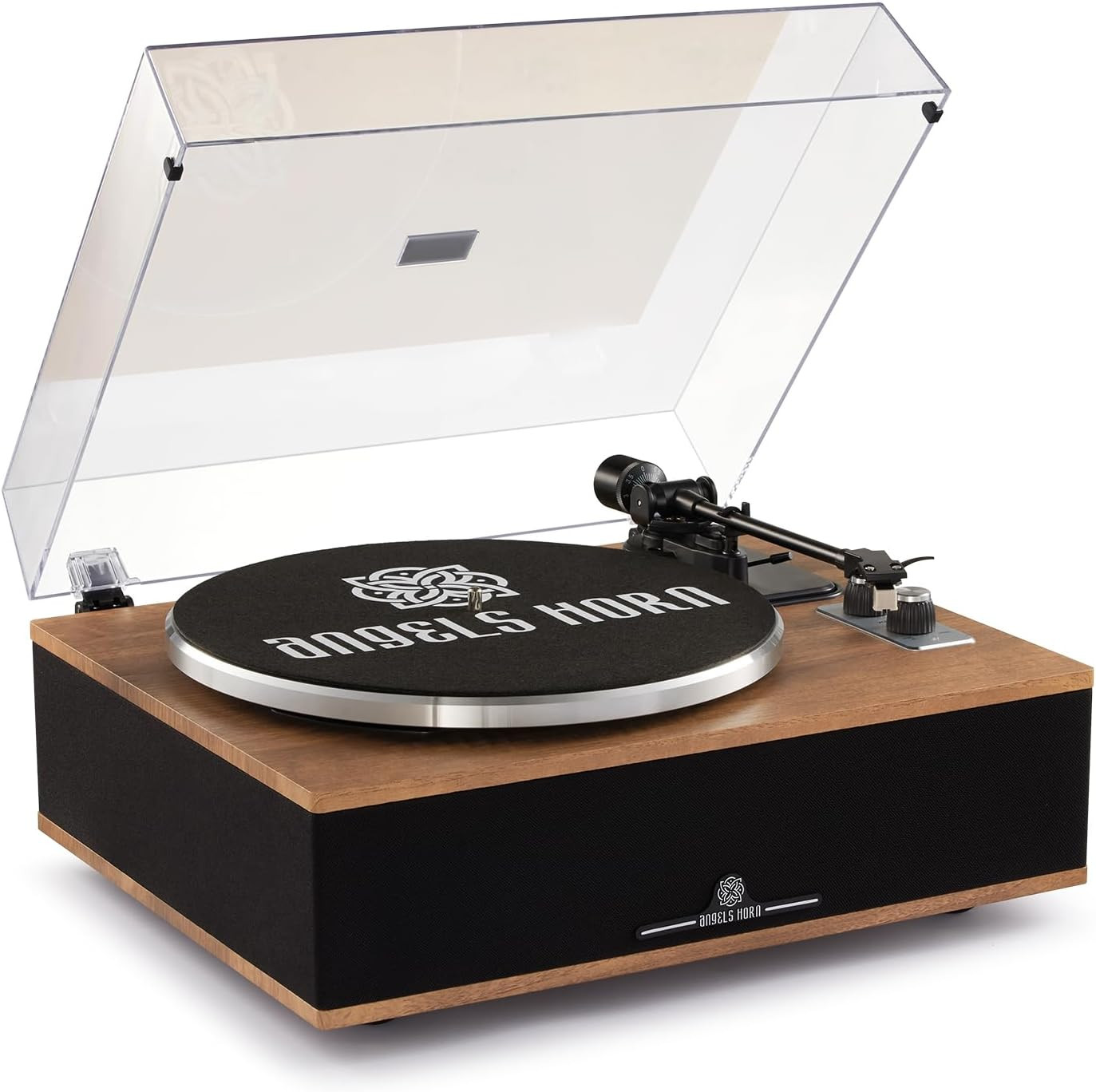 Vinyl Record Player, Bluetooth Turntable with Built in Speakers$279.97New · Last checked Nov 29, 2026View on eBay
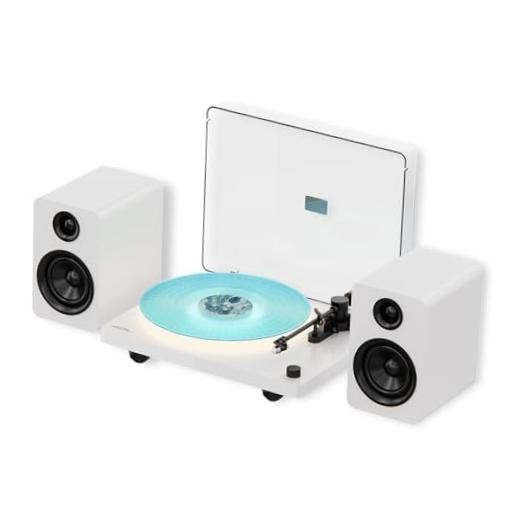 Vinyl Record Player with Bluetooth, Speakers and LED Lighting - Adjustable$367.49New · Last checked Nov 29, 2026View on eBay
Highlights
- Tonearm type separates durable decks from compromises: counterweighted aluminum tonearms with adjustable tracking force (2-4 g range) resist skipping; fixed plastic tonearms with ceramic cartridges cannot be tuned or upgraded.
- Drive architecture dictates speed stability: belt-drive with a DC servo motor isolates motor vibration and typically yields wow/flutter under 0.25%; direct-drive portable units offer faster start but transmit more rumble in lightweight chassis.
- Built-in speaker output is modest by physics: most portable units deliver 2-5 W per channel from 2-3 inch full-range drivers, so loudness and bass are limited regardless of cosmetic claims—line-out or Bluetooth output to external speakers is the real upgrade path.
- Power and connectivity tiers matter: USB-C rechargeable batteries (10-20 hr typical) with auto-off, plus Bluetooth 5.x and a 3.5 mm aux/line-out, determine real portability; AC-only or obsolete micro-USB models anchor you to a wall.
Best use cases
- Best fit: dorm rooms, apartments, and casual vinyl listeners who want one-box playback with Bluetooth out to a soundbar or powered speaker—pick a belt-drive unit with a counterweighted tonearm and USB-C charging.
- Best fit: travel, picnics, and patio use where the deck is carried often—choose a clamshell or briefcase-style model with latched lid, low-mass tonearm lock, and 10+ hr battery; expect modest volume and no deep bass.
- Wrong fit: critical listening or archiving—skip all-in-one portables and choose a separate turntable with a moving-magnet cartridge, adjustable anti-skate, and a dedicated phono stage and speakers.
- Wrong fit: loud party playback from built-in speakers—skip 2-3 W integrated drivers and pick a portable deck with line-out/Bluetooth to a powered PA or bookshelf system instead.
Buying tips
- Match platter and plinth mass to use: a heavier MDF or metal platter (1 kg+) and rubber mat reduce resonance and skipping; featherweight plastic platters are only acceptable for stationary, gentle playback.
- Confirm cartridge replaceability: standard half-inch mount or widely available moving-magnet cartridges (e.g., ATN3600L-family) allow stylus replacement; sealed ceramic cartridges mean the deck is disposable when the needle wears.
- Check speed and pitch controls: 33/45 rpm selection is mandatory for modern vinyl; a pitch-adjust slider and strobe or auto-speed servo indicate a more serious motor controller than a single-speed toy.
- Treat battery and output specs as the portability budget: USB-C input with 10+ hr runtime and a true line-out (not just headphone jack) let you scale sound to external speakers without replacing the deck.
Specs
| Drive Type | Belt-drive vs Direct-drive |
|---|---|
| Tonearm | Counterweighted vs Fixed plastic |
| Cartridge | Replaceable MM vs Sealed ceramic |
| Battery / Power | USB-C 10-20 hr vs AC-only |
Related searches
What to check before buying
- Measure your shelf or carrying space: closed-lid footprint typically runs 13-16 in wide and 10-13 in deep; confirm the lid latches and the tonearm locks for transport.
- Verify room acoustics and surface: place on a level, rigid surface away from speakers; built-in speakers vibrate the plinth, so keep volume moderate or output to external speakers.
- Confirm power standard for your region: 100-240 V AC adapters or USB-C 5 V input; check plug type and that the battery is user-replaceable or serviceable.
- Check companion parts: 45 rpm adapter, replacement stylus model number, RCA/3.5 mm line-out cable, and whether Bluetooth transmits (out) versus only receives (in).
FAQ
Data sources: eBay / Amazon listings and product attribute feeds. Updated Nov 29, 2026.
Some links on this page are affiliate links. If you buy after clicking one, we may earn a commission at no extra cost to you. This does not change which products appear here or their order. Affiliate disclosure.