
Photos from current listings. Actual item, color, and included accessories may vary.
Bluetooth Vinyl Record Player Buying Guide
Bluetooth vinyl record players combine a traditional tonearm and platter with a wireless transmitter, letting you send the cartridge signal to headphones or speakers without a cable. The core trade-off is between convenience (built-in preamp, Bluetooth codec support) and analog fidelity (tonearm bearings, platter isolation, cartridge quality). Choose a belt-drive model with a counterweighted tonearm and Bluetooth 5.x if you want wireless convenience without wrecking records; skip all-in-one briefcase players with ceramic cartridges and heavy tracking force.
Median $270.81 · New listings
Key takeaways
- Belt-drive with a counterweighted tonearm and anti-skate is the minimum for safe tracking; ceramic cartridges tracking above 4–5 g accelerate record wear.
- Bluetooth 5.0 or later with SBC/AAC support is standard; aptX or LDAC reduces latency and compression artifacts for critical listening over wireless.
- A built-in switchable phono preamp (MM) lets you use the turntable with powered speakers or a receiver's aux input without a separate phono stage.
At a glance
- Category
- Turntables & Record Players
- Last updated
- Nov 29, 2026
Current offers
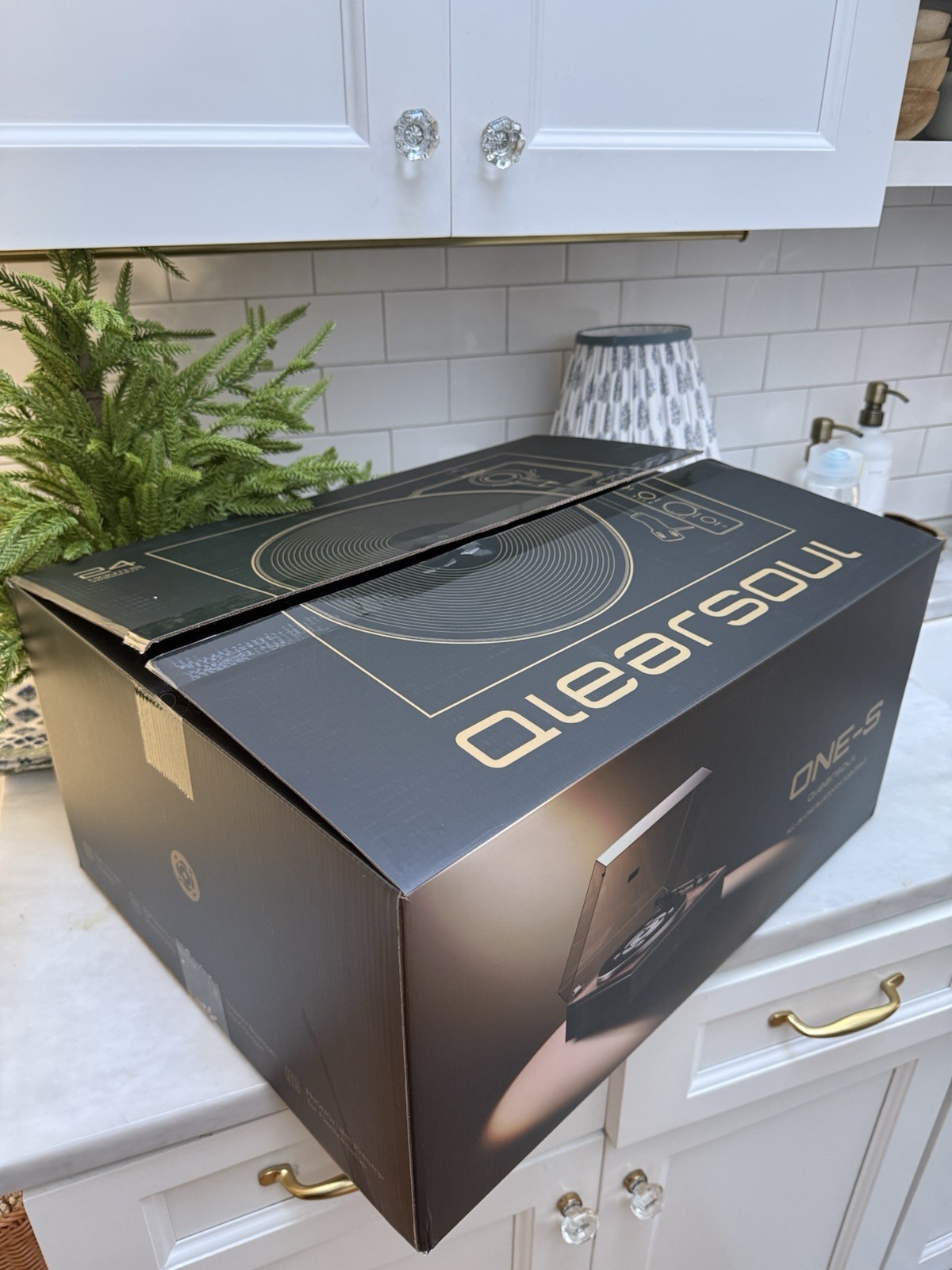 Qlearsoul ONE-S Vinyl Record Player with Bluetooth Input/Output, Al... Fast Ship$200.00New · Last checked Nov 29, 2026View on eBay
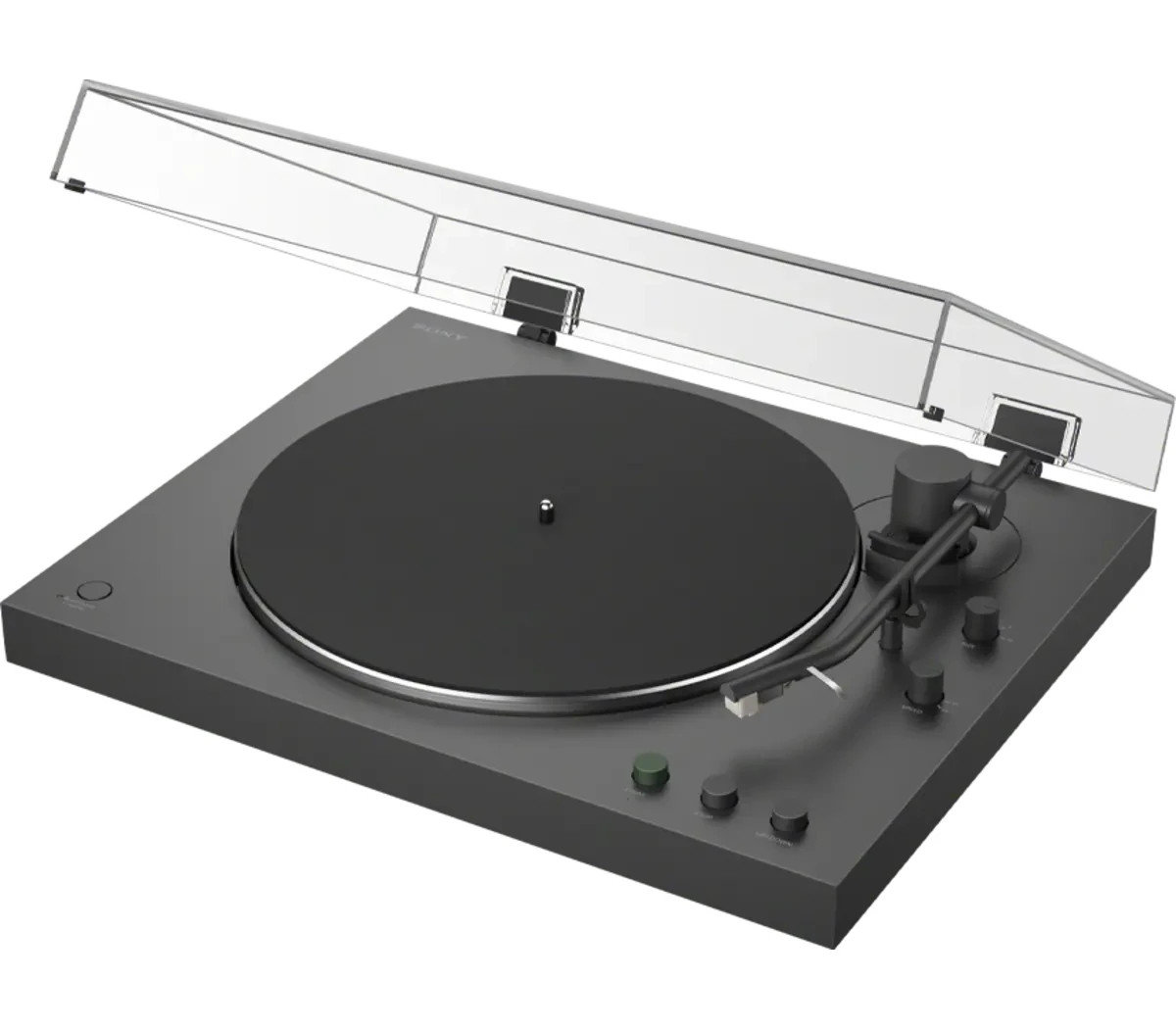 Sony PS-LX3BT Automatic Wireless Vinyl Record Player Bluetooth USB Turntable$219.00Last checked Nov 18, 2026View on eBay
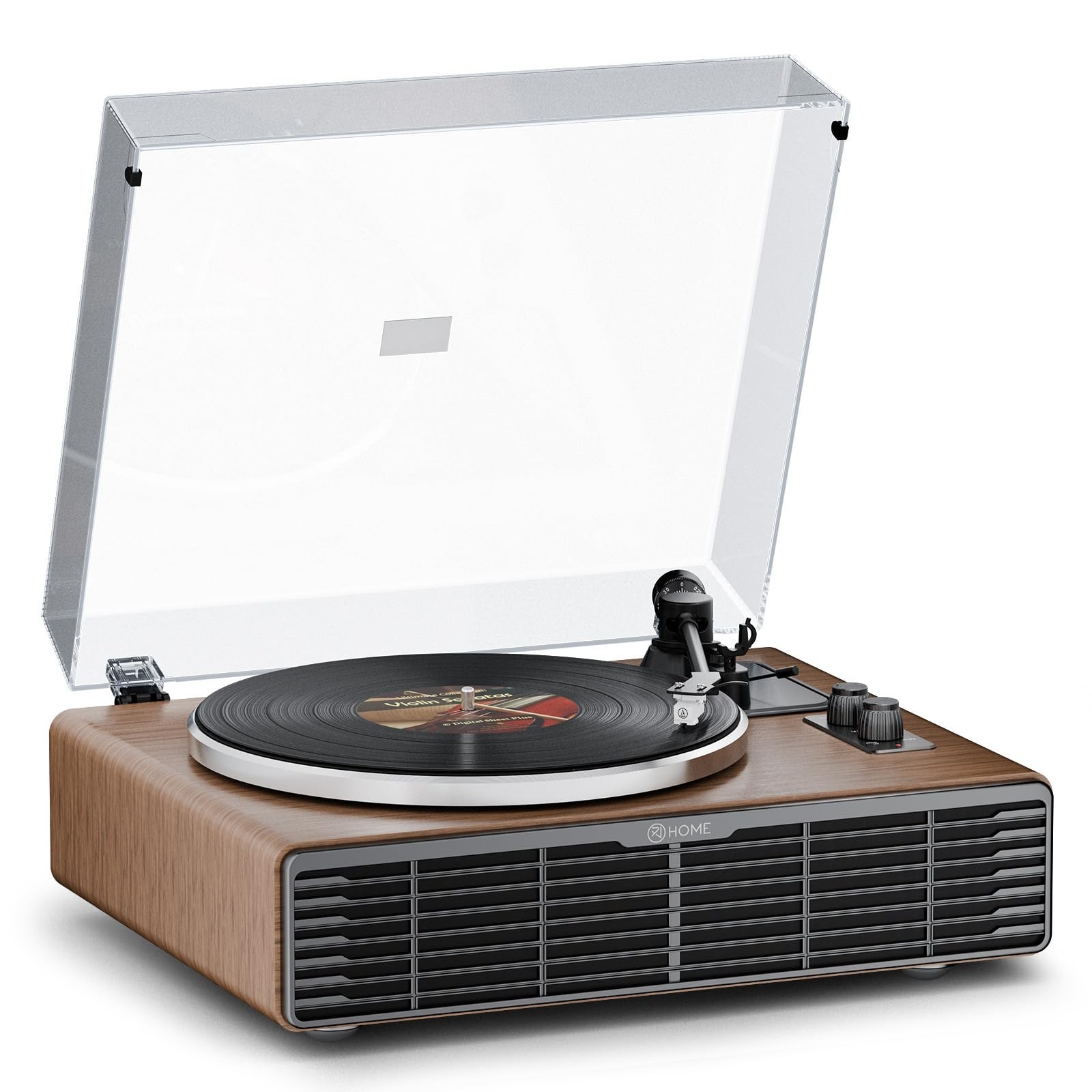 Vinyl Record Player with Speakers Bluetooth Turntable AT-3600L 33/45 RPM$270.73New · Last checked Nov 29, 2026View on eBay
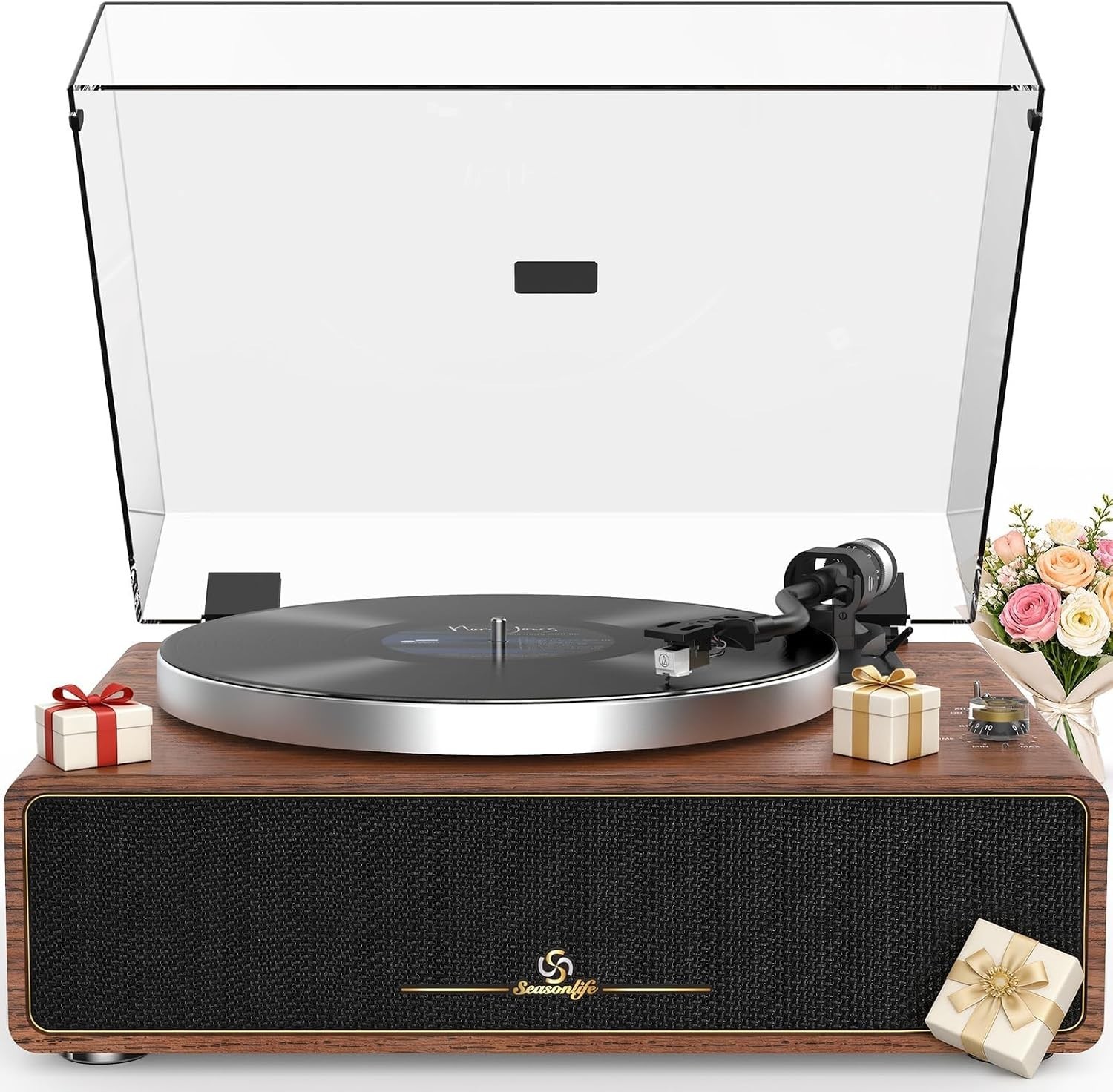 All-in-One Record Player with 4 Speakers & Bluetooth, Brown | Belt-Drive Vinyl P$270.88New · Last checked Nov 29, 2026View on eBay
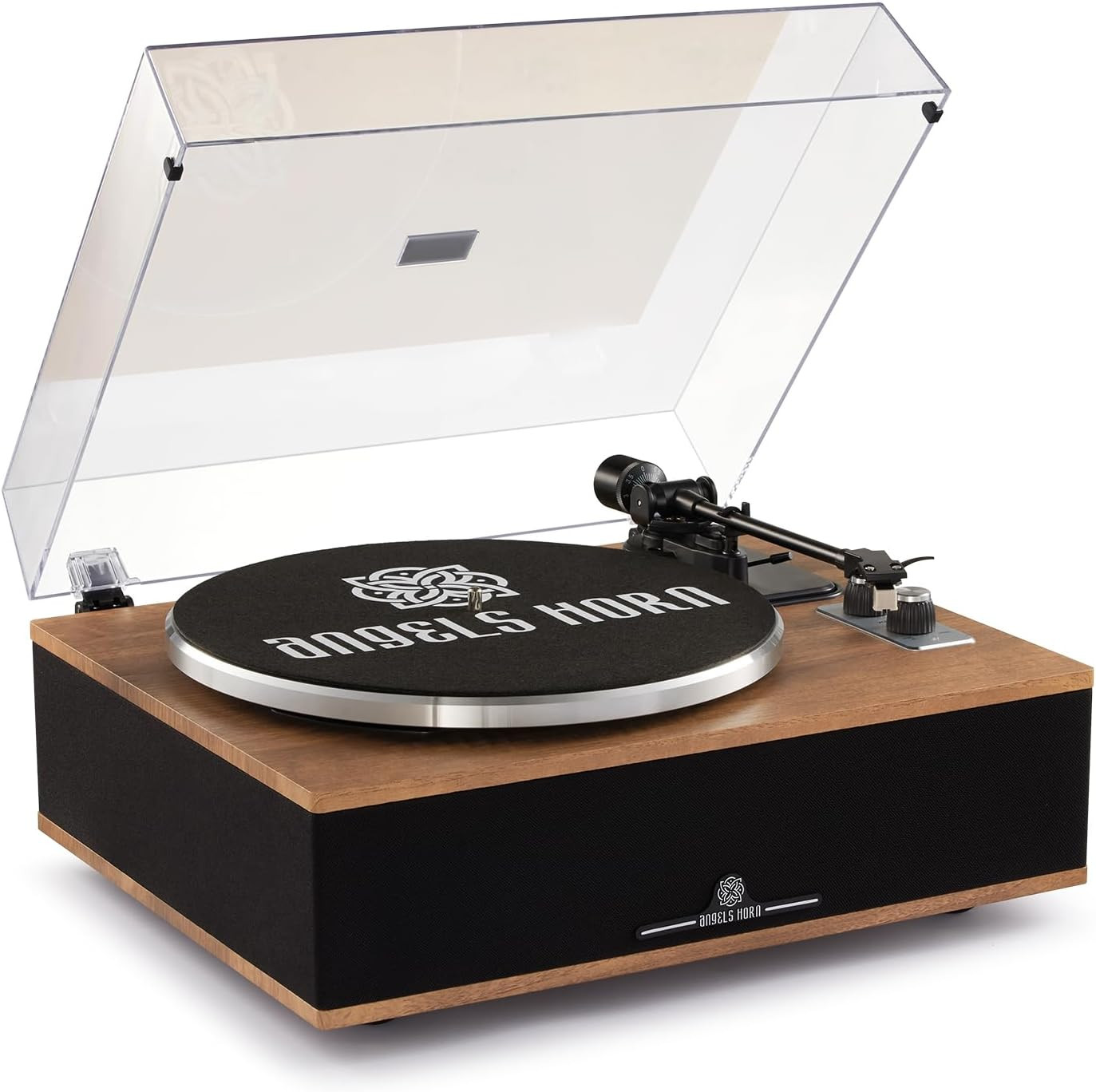 Vinyl Record Player, Bluetooth Turntable with Built in Speakers$279.97New · Last checked Nov 29, 2026View on eBay
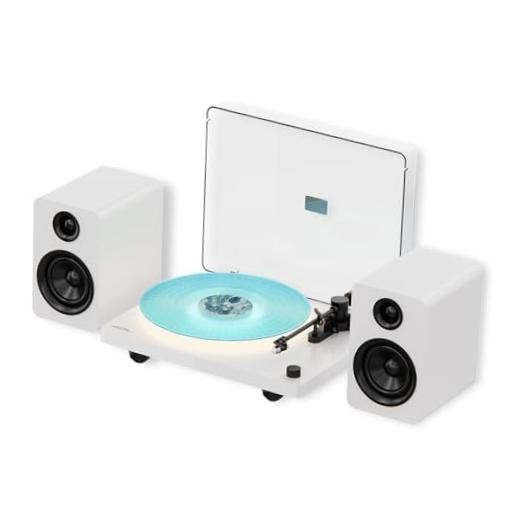 Vinyl Record Player with Bluetooth, Speakers and LED Lighting - Adjustable$367.49New · Last checked Nov 29, 2026View on eBay
Highlights
- Belt-drive with a counterweighted tonearm and anti-skate is the minimum for safe tracking; ceramic cartridges tracking above 4–5 g accelerate record wear.
- Bluetooth 5.0 or later with SBC/AAC support is standard; aptX or LDAC reduces latency and compression artifacts for critical listening over wireless.
- A built-in switchable phono preamp (MM) lets you use the turntable with powered speakers or a receiver's aux input without a separate phono stage.
- Automatic operation (auto-start/auto-return) uses optical or mechanical sensors to cue the tonearm; fully manual models require careful hand cueing.
Best use cases
- Best fit: wireless streaming to a Bluetooth speaker or headphones in a living room—pick a belt-drive model with Bluetooth 5.x, built-in preamp, and a replaceable MM cartridge.
- Wrong fit: critical vinyl archiving or DJ scratching—skip Bluetooth entirely and choose a direct-drive turntable with a quartz-locked platter and wired output.
- Best fit: compact spaces and casual listening—an automatic belt-drive with auto-return and a dust cover protects records with minimal setup.
- Wrong fit: connecting to a passive (unpowered) speaker pair—Bluetooth turntables output line-level or phono-level signal, so you still need an amplifier or powered speakers.
Buying tips
- Check the cartridge type: a replaceable moving-magnet (MM) cartridge with a standard 1/2-inch mount lets you upgrade the stylus; fixed ceramic cartridges cannot be upgraded and wear records faster.
- Match the tonearm's tracking force range to the cartridge spec (typically 1.5–3.0 g for MM); a tonearm without a counterweight relies on spring force and often tracks too heavy.
- For wireless range, Bluetooth 5.x gives roughly 10 m (30 ft) line-of-sight; walls and interference reduce this, so keep the turntable and speaker in the same room.
- Verify the output options: a switchable PHONO/LINE preamp plus Bluetooth covers wired and wireless; a USB output adds direct-to-computer recording at 16-bit/44.1 or 48 kHz.
Specs
| Drive Type | Belt-drive vs Direct-drive |
|---|---|
| Bluetooth Version | 5.0+ / SBC, AAC, aptX |
| Cartridge Mount | 1/2-inch MM vs ceramic |
| Preamp | Built-in switchable PHONO/LINE |
Related searches
What to check before buying
- Measure your shelf or stand: most belt-drive turntables with dust cover need at least 45 cm (18 in) width and 40 cm (16 in) depth, plus clearance to open the lid.
- Confirm your speaker or headphone input: Bluetooth turntables send either line-level (preamp on) or phono-level (preamp off) signal—powered speakers need line-level.
- Check the plug standard: models sold in North America use 120 V AC 60 Hz; verify the wall adapter matches your region's voltage and plug type.
- Ensure the turntable sits on a level, stable surface away from speaker vibrations; a lightweight shelf or shared surface with speakers can cause feedback and skipping.
FAQ
Data sources: eBay / Amazon listings and product attribute feeds. Updated Nov 29, 2026.
Some links on this page are affiliate links. If you buy after clicking one, we may earn a commission at no extra cost to you. This does not change which products appear here or their order. Affiliate disclosure.