
Photos from current listings. Actual item, color, and included accessories may vary.
Automatic Vinyl Player Buying Guide
An automatic vinyl player uses a servo or mechanical tonearm lift to start, return, and stop playback without manual cueing, trading some audiophile tuning flexibility for convenience and stylus safety. The primary trade-off is between belt-drive automatic decks with built-in preamps and direct-drive manual decks that offer better speed stability but require hand cueing. Choose an automatic model if you want push-button start/stop and Bluetooth streaming; choose a manual deck if you prioritize rumble figures and cartridge upgradability.
Median $268.87 · New listings
Key takeaways
- Automatic mechanisms use optical or mechanical sensors to detect lead-out grooves and lift the tonearm; servo-controlled belt-drive is the dominant architecture in consumer automatic decks.
- Belt-drive automatic tables typically quote wow-and-flutter around 0.15–0.25% WRMS, while direct-drive manual decks reach 0.025% or lower; the automatic mechanism adds negligible flutter but limits plinth rigidity.
- Built-in switchable phono preamps (MM-only, moving-magnet) are standard on Bluetooth automatic models; moving-coil cartridges require an external step-up or MC preamp.
At a glance
- Category
- Turntables & Record Players
- Last updated
- Nov 29, 2026
Current offers
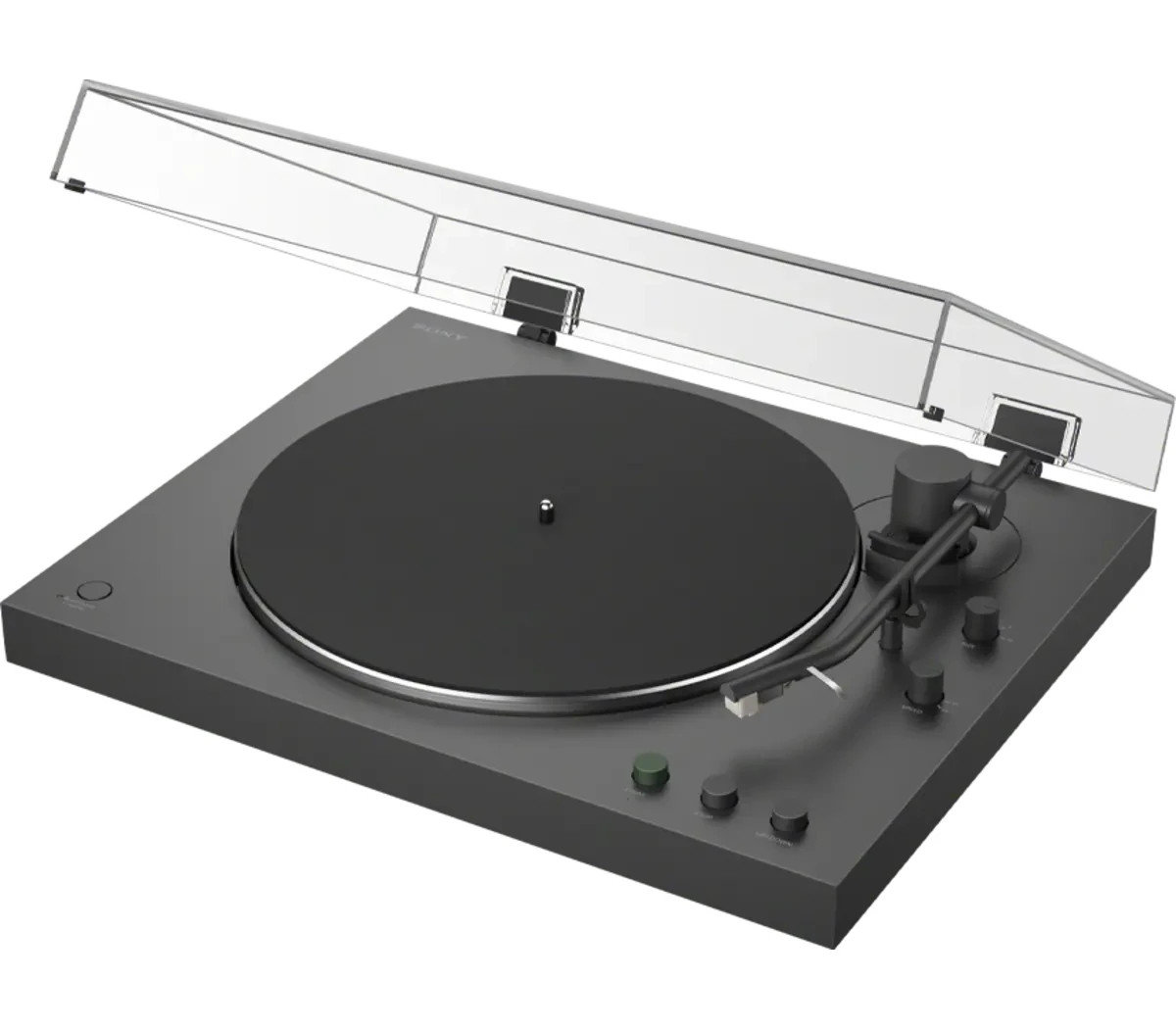 Sony PS-LX3BT Automatic Wireless Vinyl Record Player Bluetooth USB Turntable$219.00Last checked Nov 18, 2026View on eBay
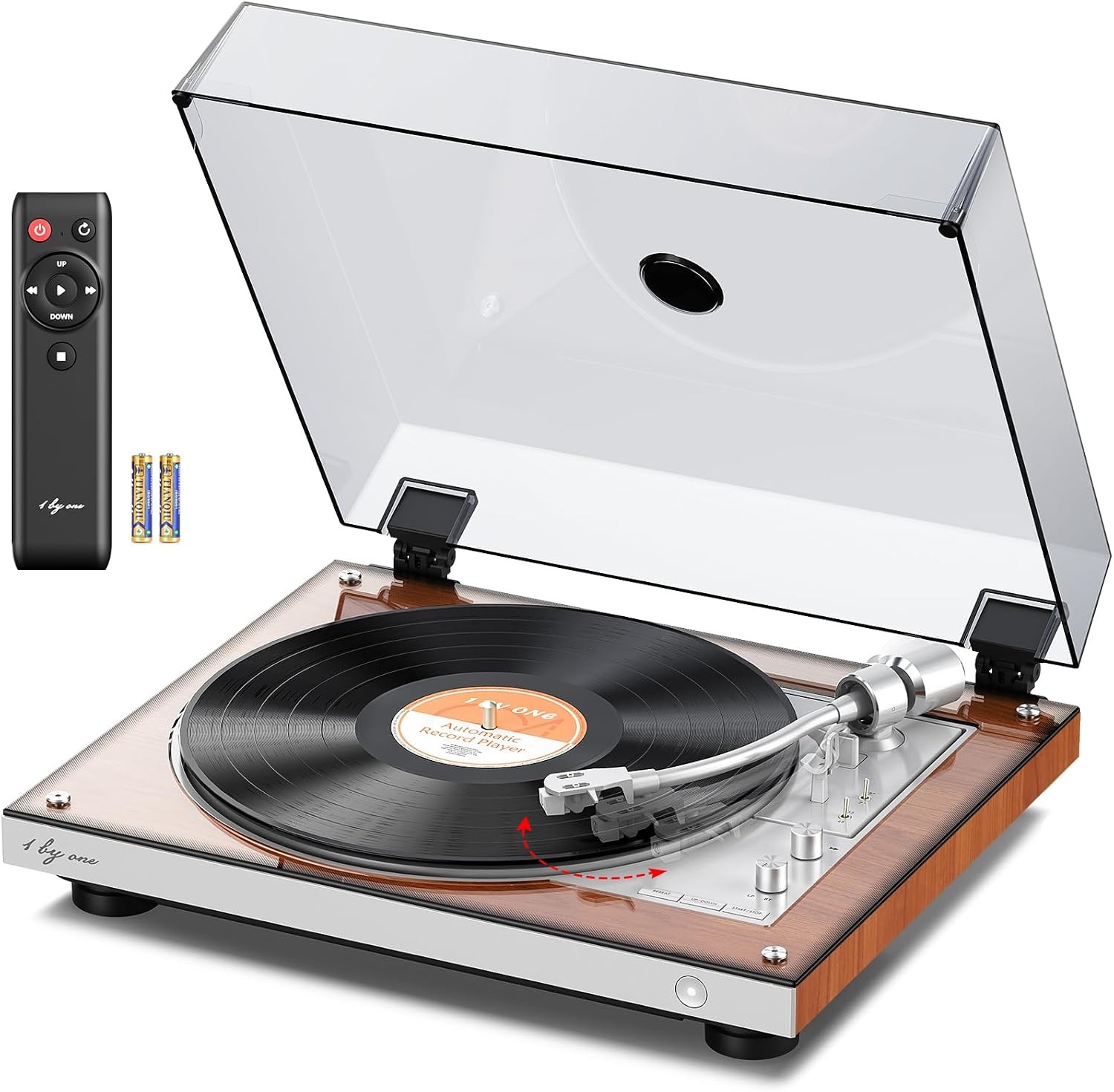 1 by ONE Fully Automatic Belt-Drive Turntable, Wireless Vinyl Record Player$266.69New · Last checked Nov 29, 2026View on eBay
- 1 by ONE Fully Automatic Belt-Drive Turntable, Wireless Vinyl Record Player$271.05New · Last checked Nov 29, 2026View on eBay
- 1 by ONE Fully Automatic Belt-Drive Turntable, Wireless Vinyl Record Player$273.27New · Last checked Nov 29, 2026View on eBay
Highlights
- Automatic mechanisms use optical or mechanical sensors to detect lead-out grooves and lift the tonearm; servo-controlled belt-drive is the dominant architecture in consumer automatic decks.
- Belt-drive automatic tables typically quote wow-and-flutter around 0.15–0.25% WRMS, while direct-drive manual decks reach 0.025% or lower; the automatic mechanism adds negligible flutter but limits plinth rigidity.
- Built-in switchable phono preamps (MM-only, moving-magnet) are standard on Bluetooth automatic models; moving-coil cartridges require an external step-up or MC preamp.
- Bluetooth output on automatic models typically uses SBC or aptX codecs and bypasses the wired RCA path; USB output is for digitizing to a computer at 44.1/48 kHz, not for audio playback.
Best use cases
- Best fit: casual listeners and multi-room setups — pick an automatic belt-drive deck with Bluetooth and a built-in MM preamp for push-button start and wireless streaming to a soundbar or smart speaker.
- Best fit: vinyl beginners worried about stylus damage — choose a fully automatic model with auto-return and auto-lift, which prevents needle drops and groove wear from forgetting to stop the record.
- Wrong fit: critical two-channel listening — skip automatic decks and choose a manual direct-drive table with a rigid plinth, adjustable VTA, and a removable headshell for cartridge upgrades.
- Wrong fit: DJ or scratching use — automatic tonearms lack the torque, start/stop speed, and slipmat control of direct-drive DJ tables; pick a high-torque direct-drive manual model instead.
Buying tips
- Match the cartridge to the preamp: automatic decks with built-in MM preamps work with moving-magnet cartridges only; budget for an external MC phono stage if you upgrade to moving-coil.
- Check tonearm effective mass against cartridge compliance: high-compliance MM cartridges (20+ µm/mN) need low-mass tonearms (under 10 g effective mass) to keep resonance in the 8–12 Hz safe zone.
- Verify the automatic mechanism type: servo/optical auto-return is more reliable than mechanical trip levers; fully automatic (auto-start and auto-return) is more convenient than auto-return-only.
- Confirm Bluetooth codec support: SBC is universal but lossy; aptX or aptX HD reduces latency and compression artifacts if your speaker or headphones support it.
Specs
| Drive Type | Belt-drive vs Direct-drive |
|---|---|
| Automation | Fully auto / Auto-return / Manual |
| Preamp | Built-in MM / External required |
| Wireless | Bluetooth SBC/aptX vs Wired-only |
Related searches
What to check before buying
- Measure your shelf or stand depth and height clearance: automatic tonearms need 3–5 cm of rear clearance for the lift mechanism, and dust covers add 8–12 cm of height.
- Confirm your amplifier or speaker has a phono input or that the turntable has a switchable line-level output; Bluetooth-only speakers skip the wired preamp requirement.
- Check voltage and plug standard: most consumer automatic decks are 100–240 V external-adapter models, but some are fixed 120 V or 230 V — match your region.
- Verify the stylus and cartridge are user-replaceable and that a replacement stylus is available for the fitted cartridge model before buying.
FAQ
Data sources: eBay / Amazon listings and product attribute feeds. Updated Nov 29, 2026.
Some links on this page are affiliate links. If you buy after clicking one, we may earn a commission at no extra cost to you. This does not change which products appear here or their order. Affiliate disclosure.