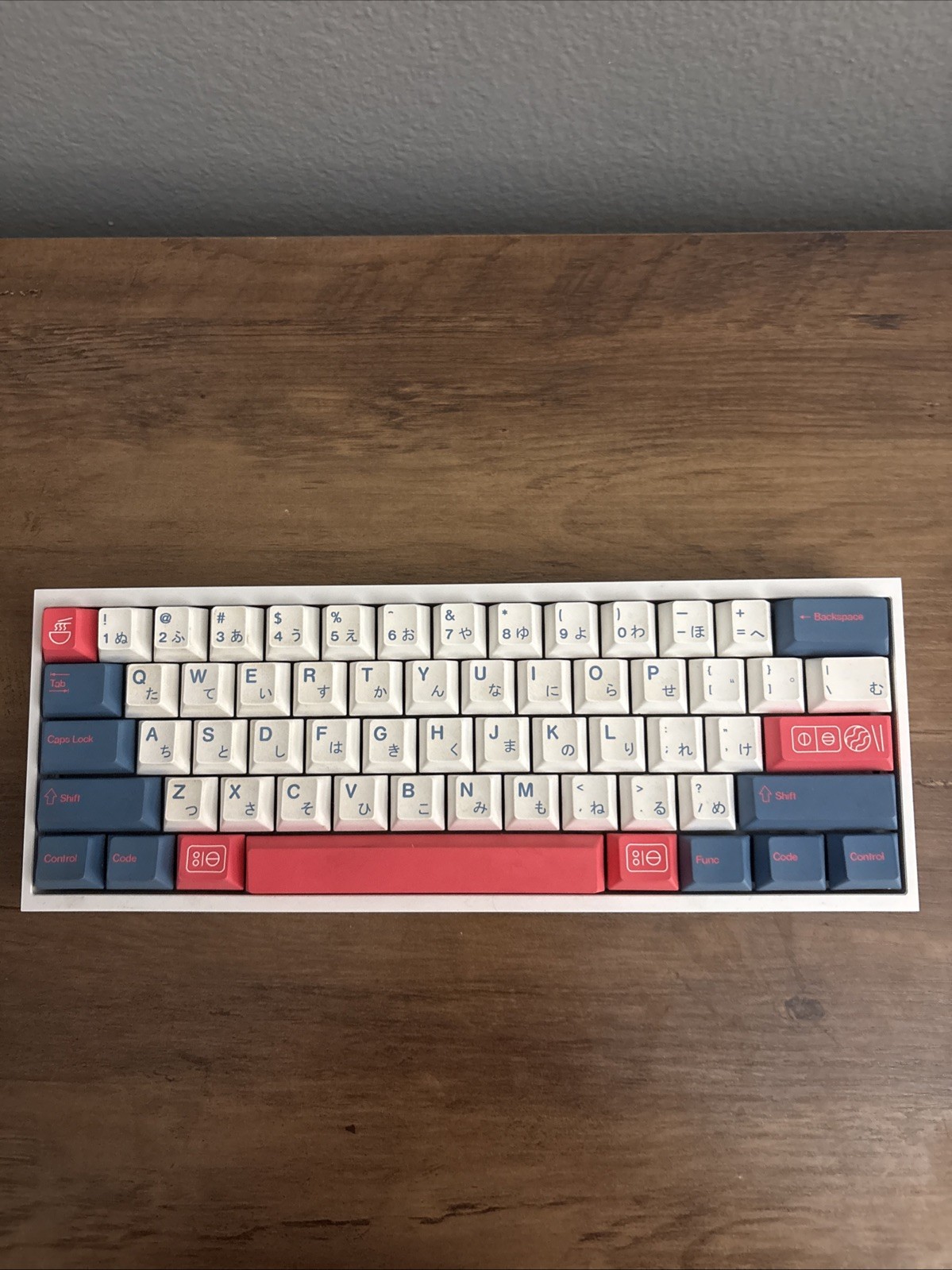

Photos from current listings. Actual item, color, and included accessories may vary.
Thocky Mechanical Keyboard Buying Guide
A thocky mechanical keyboard is a board tuned for deep, low-pitched, resonant keystrokes rather than sharp clicks or hollow clacks. The primary trade-off is sound versus feel: soft, gasket-mounted plates and thick PBT keycaps produce thock, while stiff trays, thin ABS caps, and loud switches kill it. The decision rule: prioritize a gasket mount, dense case material, and factory-lubed linear switches; skip any board that ships with an integrated steel plate and thin ABS keycaps.
Key takeaways
- Gasket mounting decouples the plate from the case, removing harsh tray resonance and producing the low-frequency thock that integrated steel plates cannot deliver.
- Keycap material dominates pitch: 1.5mm+ thick PBT caps damp highs and deepen tone, while 0.8–1.0mm ABS caps sound thin and clacky regardless of switch.
- Switch type sets the baseline: lubed linear switches (e.g., Gateron Yellow, Cherry MX Red) yield creamy thock, while click-bar switches and long-pole tactiles add high-frequency noise.
At a glance
- Category
- Mechanical Keyboards
- Last updated
- Nov 24, 2026
Current offers
Highlights
- Gasket mounting decouples the plate from the case, removing harsh tray resonance and producing the low-frequency thock that integrated steel plates cannot deliver.
- Keycap material dominates pitch: 1.5mm+ thick PBT caps damp highs and deepen tone, while 0.8–1.0mm ABS caps sound thin and clacky regardless of switch.
- Switch type sets the baseline: lubed linear switches (e.g., Gateron Yellow, Cherry MX Red) yield creamy thock, while click-bar switches and long-pole tactiles add high-frequency noise.
- Case mass and internal foam (poron or silicone) absorb vibration; aluminum or high-density polycarbonate cases with case foam produce deeper resonance than hollow plastic shells.
Best use cases
- Best fit: quiet office or shared living space — pick a gasket-mounted 65% or 75% with lubed linears and foam; skip clicky switches and hollow plastic trays.
- Best fit: deep-sound enthusiast build — choose a 75% aluminum board with gasket mount, PBT keycaps, and silicone case foam; skip pre-built boards with integrated steel plates.
- Wrong fit: competitive esports where lowest latency matters — skip thock-tuned boards with heavy foam and soft gaskets; choose a low-latency optical or magnetic board instead.
- Wrong fit: ultra-portable travel — skip full aluminum gasket boards above 1kg; choose a 60% polycarbonate board under 600g with a carry case.
Buying tips
- Match layout to desk math: 65% (68 keys) saves ~4cm vs TKL and keeps arrow keys; 75% adds a function row and knob but needs ~32cm width — measure your desk before choosing.
- Demand switch specs: factory-lubed linear switches with 45–55g actuation and 3.5–4.0mm travel produce thock; avoid 60g+ heavy springs and long-pole stems for pure deep sound.
- Verify keycap thickness: PBT at 1.5mm or thicker (often 1.6mm) is the threshold for deep tone; ABS below 1.2mm will sound thin no matter the switch.
- Check mount and foam: gasket mount with poron plate foam and case foam is the minimum for thock; integrated plate and hollow case are disqualifying.
Specs
| Mount Type | Gasket vs Integrated plate |
|---|---|
| Keycap Material | PBT 1.5mm+ vs ABS thin |
| Switch Type | Lubed linear vs clicky/tactile |
| Case Material | Aluminum/PC vs hollow ABS |
Related searches
What to check before buying
- Measure desk depth and width: a 65% board is ~30–32cm wide, 75% ~32–34cm; leave 10cm for cable clearance and wrist rest.
- Confirm host connection: USB-C wired or 2.4GHz/Bluetooth wireless — verify your device has USB-A or USB-C ports and that Bluetooth 5.0+ is supported for low-latency wireless.
- Check keycap and switch compatibility: hot-swap sockets must match switch pin count (3-pin or 5-pin); keycap sets must match layout (65% needs 1.75u right shift).
- Plan mod budget: budget for switch lube, foam sheets, and possibly a replacement plate if the stock board is integrated-plate; factor tools (switch puller, keycap puller).
FAQ
Data sources: eBay / Amazon listings and product attribute feeds. Updated Nov 24, 2026.
Some links on this page are affiliate links. If you buy after clicking one, we may earn a commission at no extra cost to you. This does not change which products appear here or their order. Affiliate disclosure.