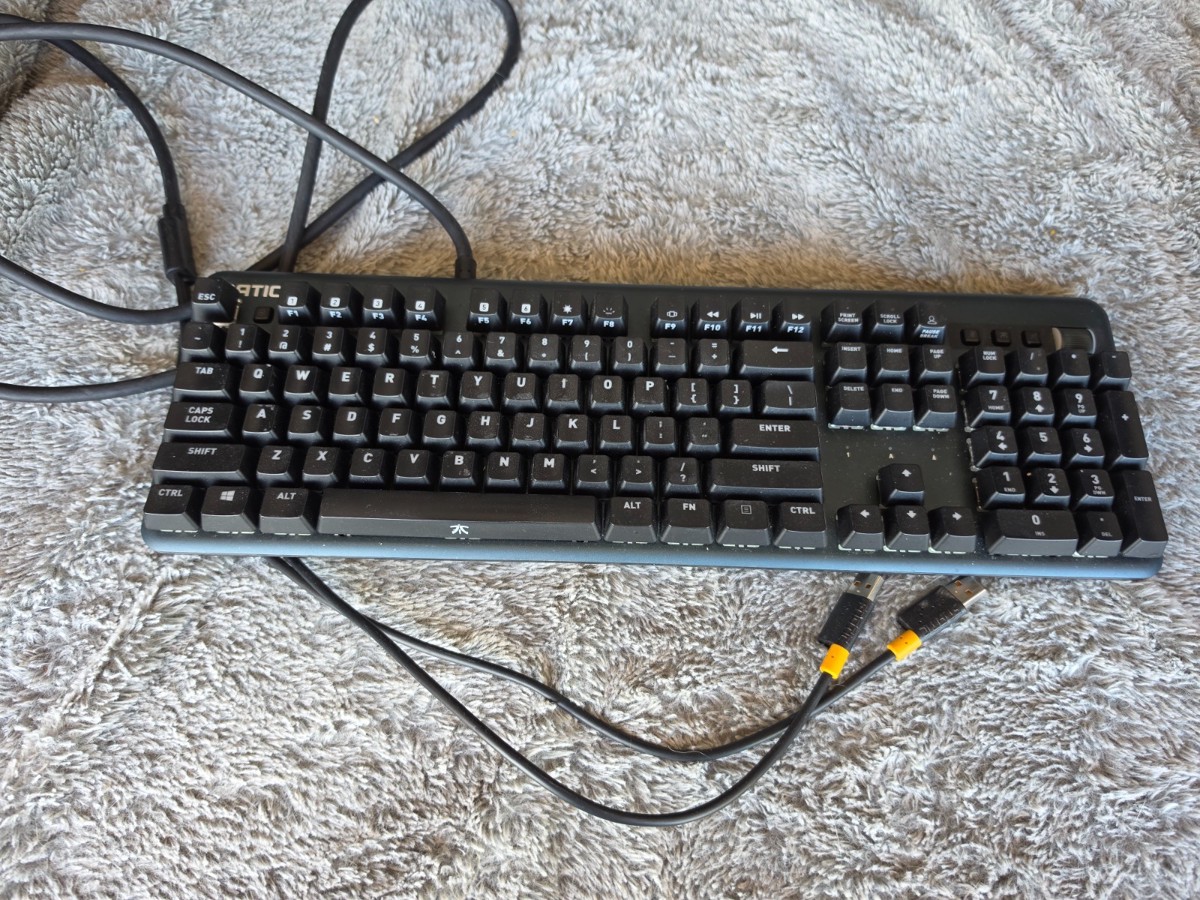

Photos from current listings. Actual item, color, and included accessories may vary.
Red Switch Keyboard Buying Guide
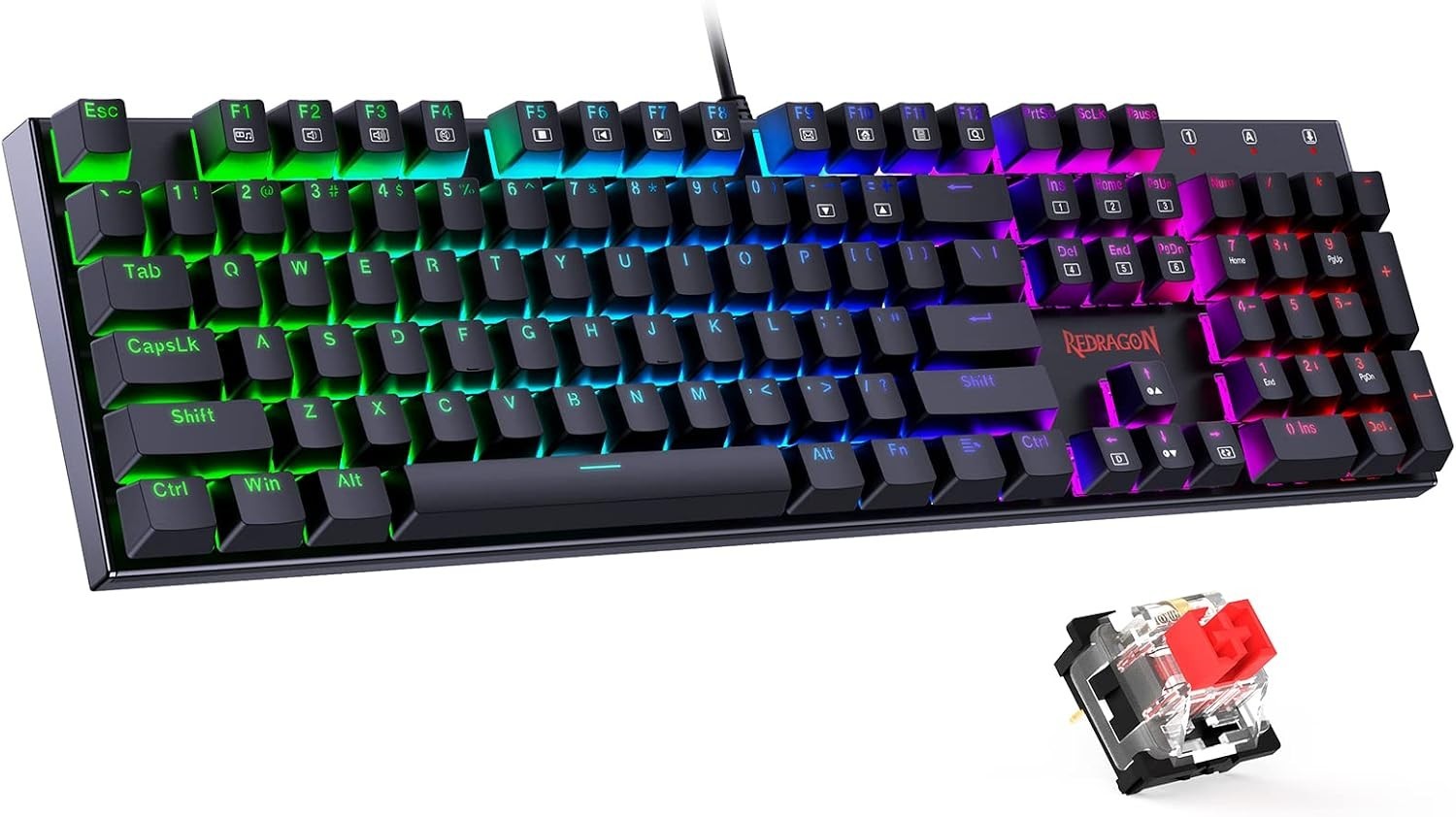
A red switch keyboard uses linear mechanical switches with no tactile bump or click, actuating around 45cN for fast, smooth, quiet-feeling keystrokes. The core trade-off is switch quality and build: entry boards use Outemu-style clones with ABS caps and plastic cases, while serious boards use Cherry MX Red or premium linears in aluminum or gasket-mounted chassis. Buy a hot-swappable board if you want to tune feel later; buy a fixed PCB only when the stock switch and plate already match your typing goal.
Median $55.64
Key takeaways
- Linear switch actuation is typically 45cN at 2.0mm with 4.0mm total travel, giving red switches faster bottom-out than tactile browns or clicky blues.
- Cherry MX Red specifies 50 million keystroke lifespan and gold-crosspoint contacts; Outemu Red clones rate similarly on paper but vary more in spring consistency and wobble.
- Hot-swap sockets accepting 3-pin and 5-pin switches let you replace red linears without soldering — fixed-PCB boards lock you to the stock switch forever.
At a glance
- Category
- Mechanical Keyboards
- Last updated
- Nov 24, 2026
Current offers
Highlights
- Linear switch actuation is typically 45cN at 2.0mm with 4.0mm total travel, giving red switches faster bottom-out than tactile browns or clicky blues.
- Cherry MX Red specifies 50 million keystroke lifespan and gold-crosspoint contacts; Outemu Red clones rate similarly on paper but vary more in spring consistency and wobble.
- Hot-swap sockets accepting 3-pin and 5-pin switches let you replace red linears without soldering — fixed-PCB boards lock you to the stock switch forever.
- Plate material drives sound and stiffness: steel and aluminum plates feel firm and loud, polycarbonate and FR4 flex for a softer, deeper linear typing feel.
Best use cases
- Fast-paced gaming and double-tap-heavy titles: pick a red switch board with 1000Hz polling and N-key rollover; skip clicky blues whose reset point lags your input.
- Shared offices, dorms, or late-night typing: red linears are the quietest mainstream mechanical option — pick them over tactile or clicky switches, and add o-ring dampeners if noise still matters.
- Typists who want feedback at actuation: skip red switches and choose browns or a tactile linear hybrid, because reds give no confirmation before bottom-out.
- Buyers planning to customize: choose a hot-swap red board so you can swap in heavier springs or lubed linears; skip soldered budget boards if modding is the plan.
Buying tips
- Match layout to desk space: full-size (104 keys) needs a numpad workflow, TKL (87 keys) frees mouse room, and 60–65% saves the most desk space at the cost of arrow and function keys.
- Check switch brand and pin count: Cherry MX Red and Gateron/Outemu Red are 3-pin or 5-pin — confirm your hot-swap PCB supports 5-pin if you plan to swap in plate-mount switches.
- Prioritize PBT keycaps at 1.4–1.5mm thickness over ABS; PBT resists shine and oil far better, which matters most on heavily used WASD clusters.
- For wireless use, pick 2.4GHz over Bluetooth for gaming latency; Bluetooth is fine for typing but adds wake and pairing delay that red-switch speed advantages cannot offset.
Specs
| Switch Type | Linear mechanical (red) |
|---|---|
| Actuation Force | ~45cN at 2.0mm travel |
| Switch Brand Tier | Cherry MX vs Gateron/Outemu clones |
| PCB Mount | Hot-swap 3/5-pin vs soldered |
Related searches
What to check before buying
- Measure desk depth and width: a full-size board runs about 17–18 inches wide, TKL about 14 inches, and 60% about 11–12 inches — confirm mouse clearance before choosing.
- Confirm connection standard: USB-A vs USB-C detachable cables, and whether the board supports 2.4GHz dongle, Bluetooth, or wired-only.
- Check plate and case material for sound expectations: steel plate plus plastic case resonates louder; aluminum case with gasket mount sounds deeper and feels softer.
- Verify keycap compatibility if replacing caps: standard bottom row and 1.25u modifiers fit most TKL and full-size boards, while 60% layouts often use nonstandard sizes.
FAQ
Data sources: eBay / Amazon listings and product attribute feeds. Updated Nov 24, 2026.
Some links on this page are affiliate links. If you buy after clicking one, we may earn a commission at no extra cost to you. This does not change which products appear here or their order. Affiliate disclosure.