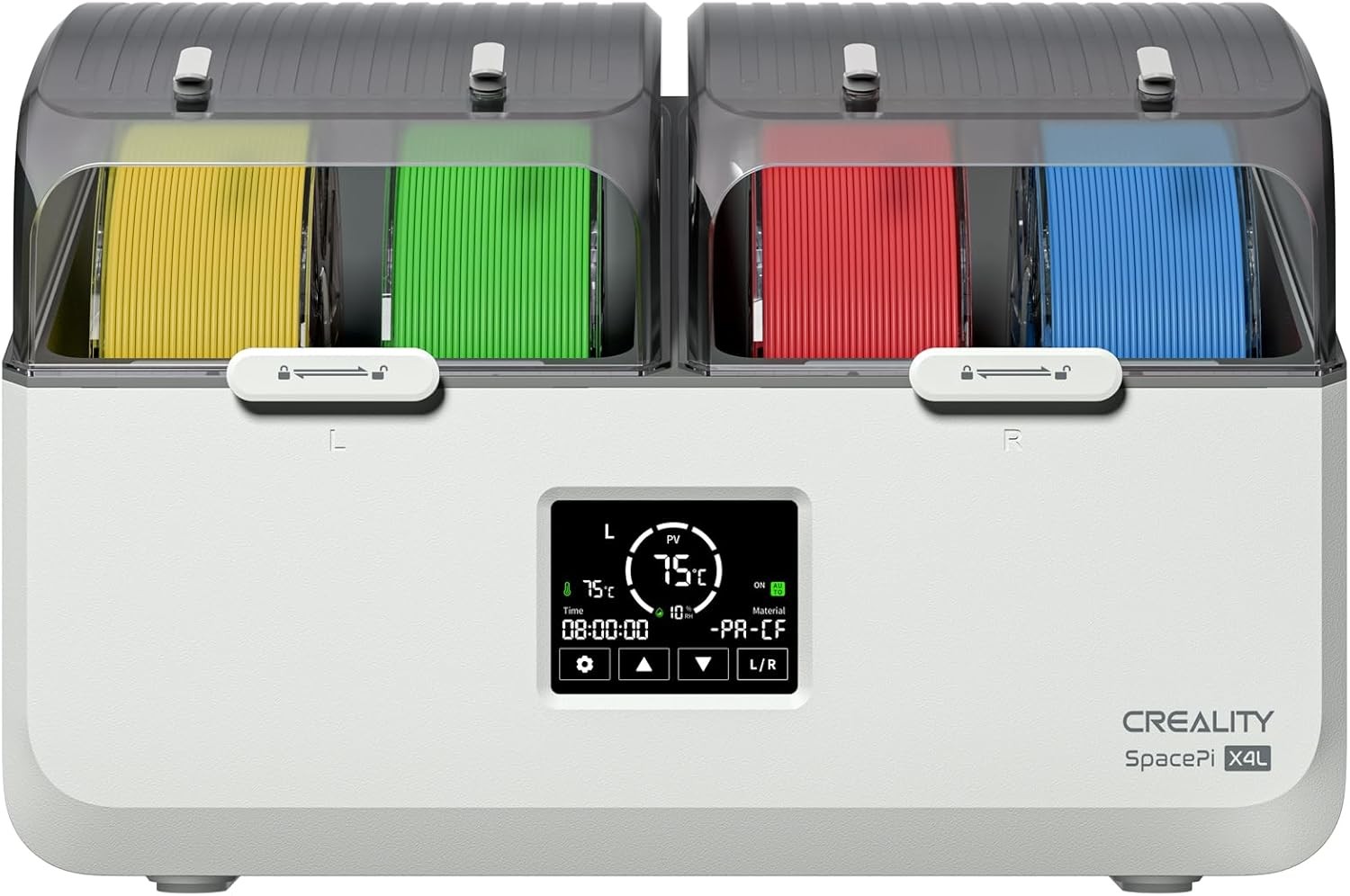

Photos from current listings. Actual item, color, and included accessories may vary.
Filament Storage Cabinet Buying Guide
A filament storage cabinet is an enclosed, often actively heated or dehumidified system that keeps 3D printer filament dry between prints; the core trade-off is passive sealed-box moisture control versus active heated drying with circulation, which determines how reliably you can rescue wet spools versus merely maintain dry ones. Choose a sealed cabinet with desiccant for long-term storage of already-dry filament, but step up to a heated dryer cabinet if you routinely open spools in humid rooms or need to recover saturated PETG, nylon, or TPU.
Median $209.00 · New listings
Key takeaways
- Heated dryer cabinets typically reach 70-85°C max, enough to dry PLA/PETG but not to anneal or dry high-temp engineering plastics safely
- Passive storage cabinets rely on gasket seals plus reusable silica gel; without a hygrometer you cannot confirm internal RH stays below 20%
- 4-spool heated units use PTC heating elements with low-power fans; dual-zone or independent-spool drying is reserved for higher-tier models
At a glance
- Category
- Filament Drying & Post-Processing
- Last updated
- Nov 28, 2026
Current offers
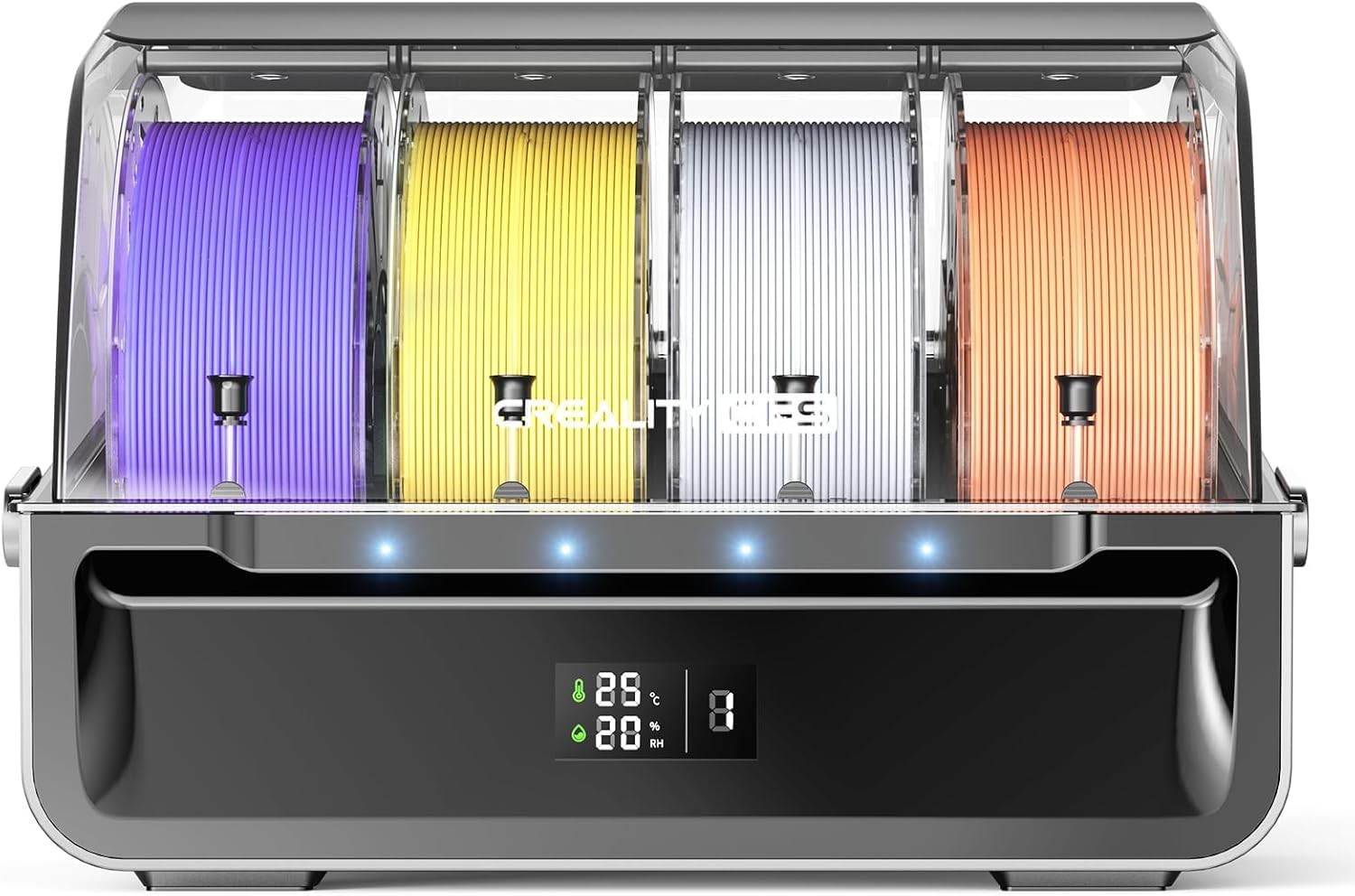
Highlights
- Heated dryer cabinets typically reach 70-85°C max, enough to dry PLA/PETG but not to anneal or dry high-temp engineering plastics safely
- Passive storage cabinets rely on gasket seals plus reusable silica gel; without a hygrometer you cannot confirm internal RH stays below 20%
- 4-spool heated units use PTC heating elements with low-power fans; dual-zone or independent-spool drying is reserved for higher-tier models
- Spool capacity is fixed by internal rack spacing; most 4-spool boxes accept 200mm diameter spools but reject 250mm or 1kg oversized hubs
Best use cases
- Best fit: a hobbyist printing PLA and PETG in a humid climate should pick a 4-spool heated dryer box with a built-in hygrometer and 70°C+ capability to dry spools before each long print.
- Best fit: a low-volume user in a dry room storing already-dry spools should choose a sealed passive cabinet with fresh desiccant and skip paying for heaters.
- Wrong fit: anyone drying nylon, polycarbonate, or PEEK needs a dedicated high-temp oven reaching 90-100°C+; a standard 85°C filament box will not fully condition these polymers.
- Wrong fit: a print farm running many spools per day should skip small 4-spool cabinets and use a larger rack-style dry storage system with continuous dehumidification.
Buying tips
- Match max temperature to your polymer: PLA needs 45-55°C, PETG 60-65°C, TPU 50-60°C; only choose an 80-85°C unit if you dry nylon or PC blends.
- Verify spool clearance: measure your largest spool diameter (standard 200mm, many 1kg spools 250mm) and confirm the cabinet's internal rack width and height exceed it by at least 5mm.
- Prefer cabinets with a digital hygrometer and reusable desiccant; a sealed box without humidity readout gives no feedback that the filament is actually dry.
- Check heating power and circulation: PTC heaters with a fan distribute heat evenly; passive heaterless cabinets depend entirely on desiccant recharge cycles.
Specs
| Drying Method | Passive desiccant vs heated PTC + fan |
|---|---|
| Max Temperature | 45-55°C PLA / 60-65°C PETG / 85°C max |
| Spool Capacity | 1-2 spool vs 4-spool vs rack-style |
| Humidity Monitoring | Analog hygrometer vs digital RH display |
Related searches
What to check before buying
- Measure your shelf or desk footprint and confirm the cabinet's external dimensions leave clearance for the door swing and power cable.
- Confirm your room's typical relative humidity; above 60% RH you need active heating or frequent desiccant changes, below 40% RH passive storage is sufficient.
- Check the plug and voltage standard for your region (US 120V vs EU 230V) and that the unit's wattage is safe for your outlet or power strip.
- Verify whether the cabinet includes spool holders, desiccant packs, and a hygrometer, or whether these are sold separately.
FAQ
Data sources: eBay / Amazon listings and product attribute feeds. Updated Nov 28, 2026.
Some links on this page are affiliate links. If you buy after clicking one, we may earn a commission at no extra cost to you. This does not change which products appear here or their order. Affiliate disclosure.