
Photos from current listings. Actual item, color, and included accessories may vary.
Filament Storage Buying Guide
Filament storage prevents moisture-induced printing defects like stringing, bubbling, and weak layer adhesion by keeping spools below 20% relative humidity. The core trade-off is between passive sealed containers with desiccant and active heated dryers that also function as storage, with the deciding factor being whether you need to dry wet filament or simply maintain dry spools. Choose active heated dryers for recovery of exposed filament and passive sealed boxes for long-term storage of already-dry material.
Median $166.30 · New listings
Key takeaways
- Active dryers reach 70-85°C to drive off absorbed moisture, while passive storage boxes rely on desiccant and sealed gaskets to maintain low humidity without heat.
- Multi-spool dryers accommodate 4 spools simultaneously with dual independent heating zones, enabling different temperature profiles per chamber for mixed material batches.
- Desiccant capacity determines maintenance interval: reusable silica gel with color indicator requires regeneration every 2-4 weeks in humid climates, versus molecular sieve beads lasting 2-3 months.
At a glance
- Category
- Filament Drying & Post-Processing
- Last updated
- Nov 28, 2026
Current offers
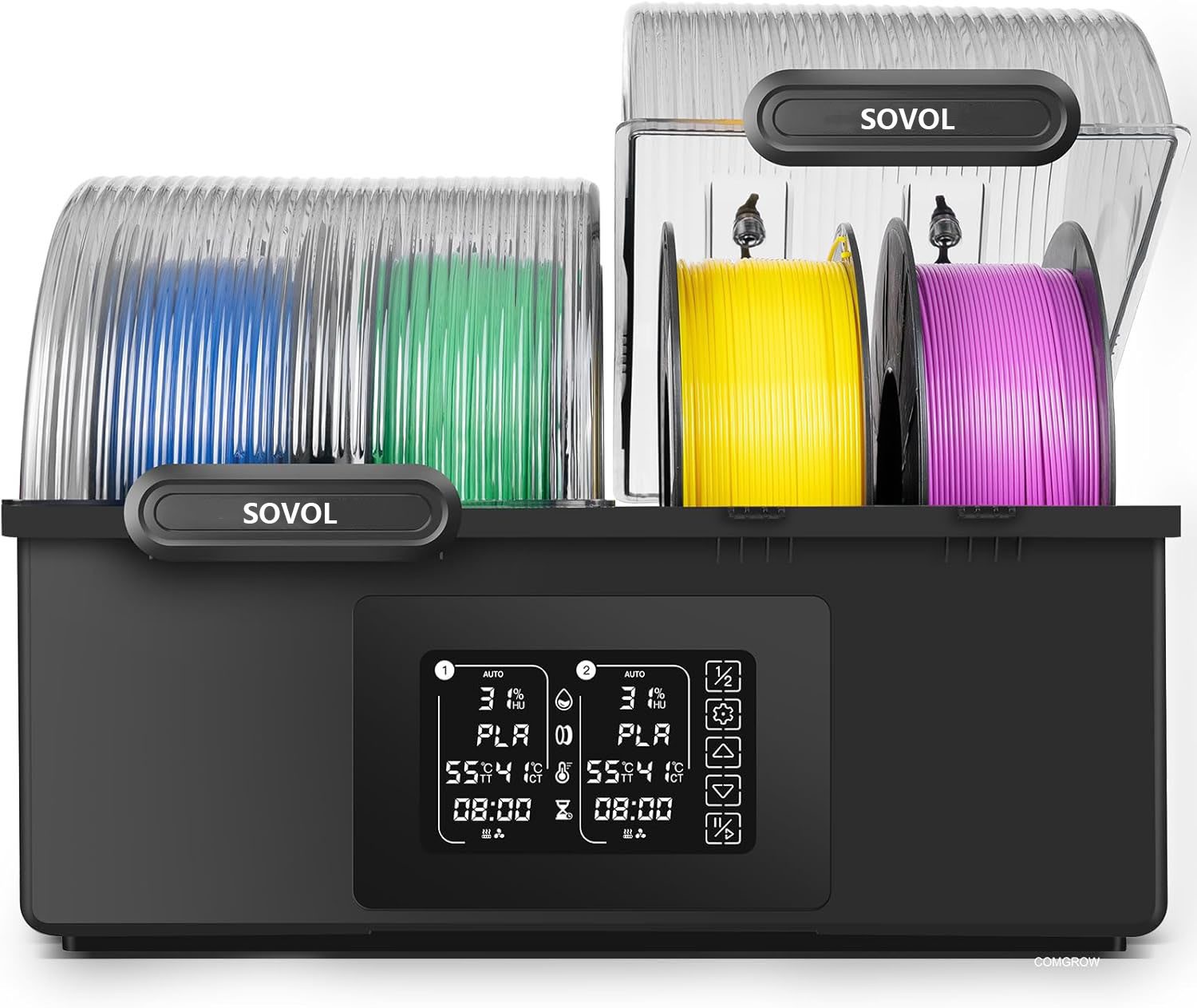 Sovol Filament Dryer 4 Spools SH03 Dry Box with 85℃ Max Temp Filament Storage US$115.00View on eBay
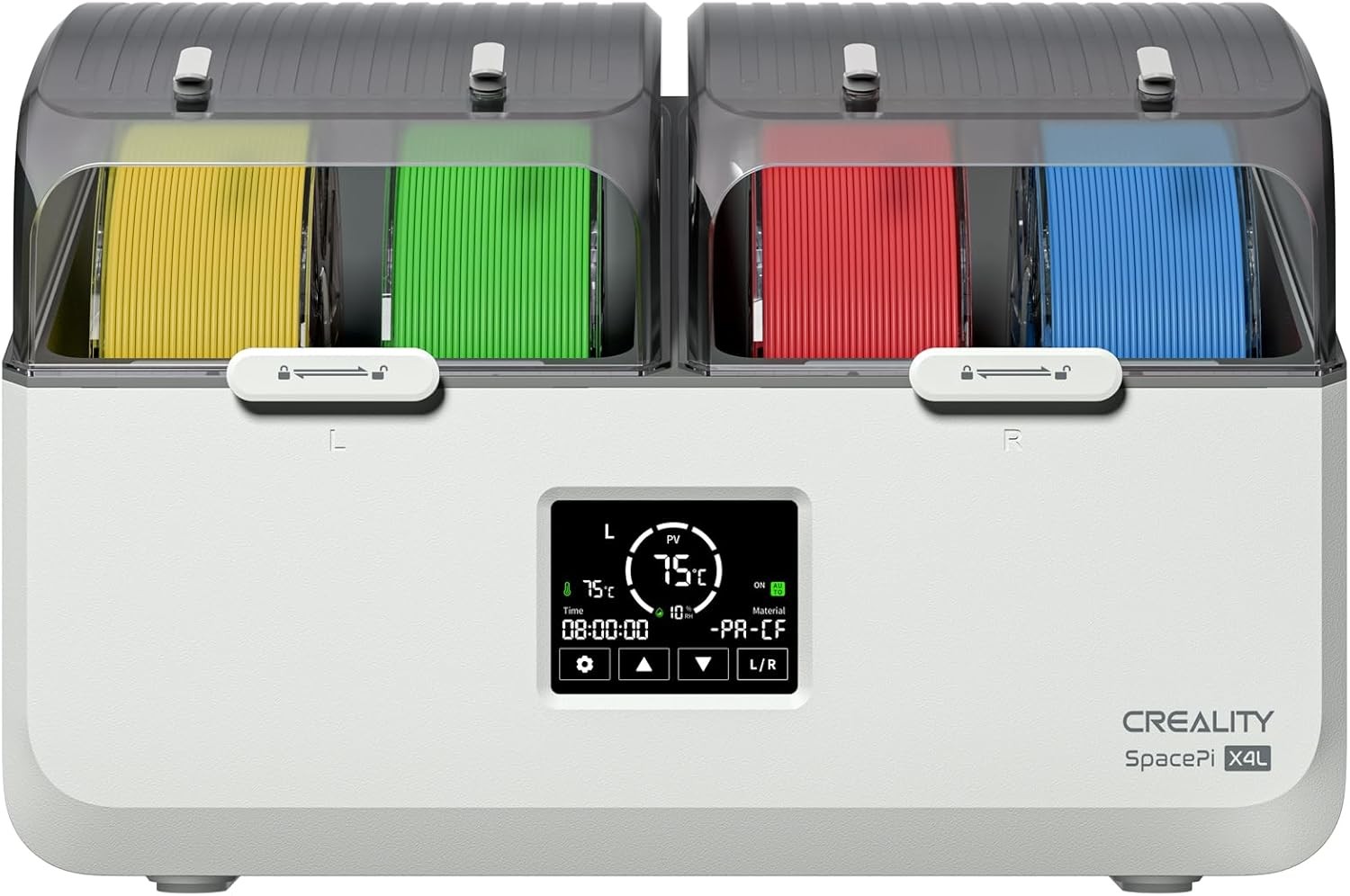 Creality Filament Dryer 4 Spools Space Pi X4 Lite Filament Storage Drying Box$119.00View on eBay
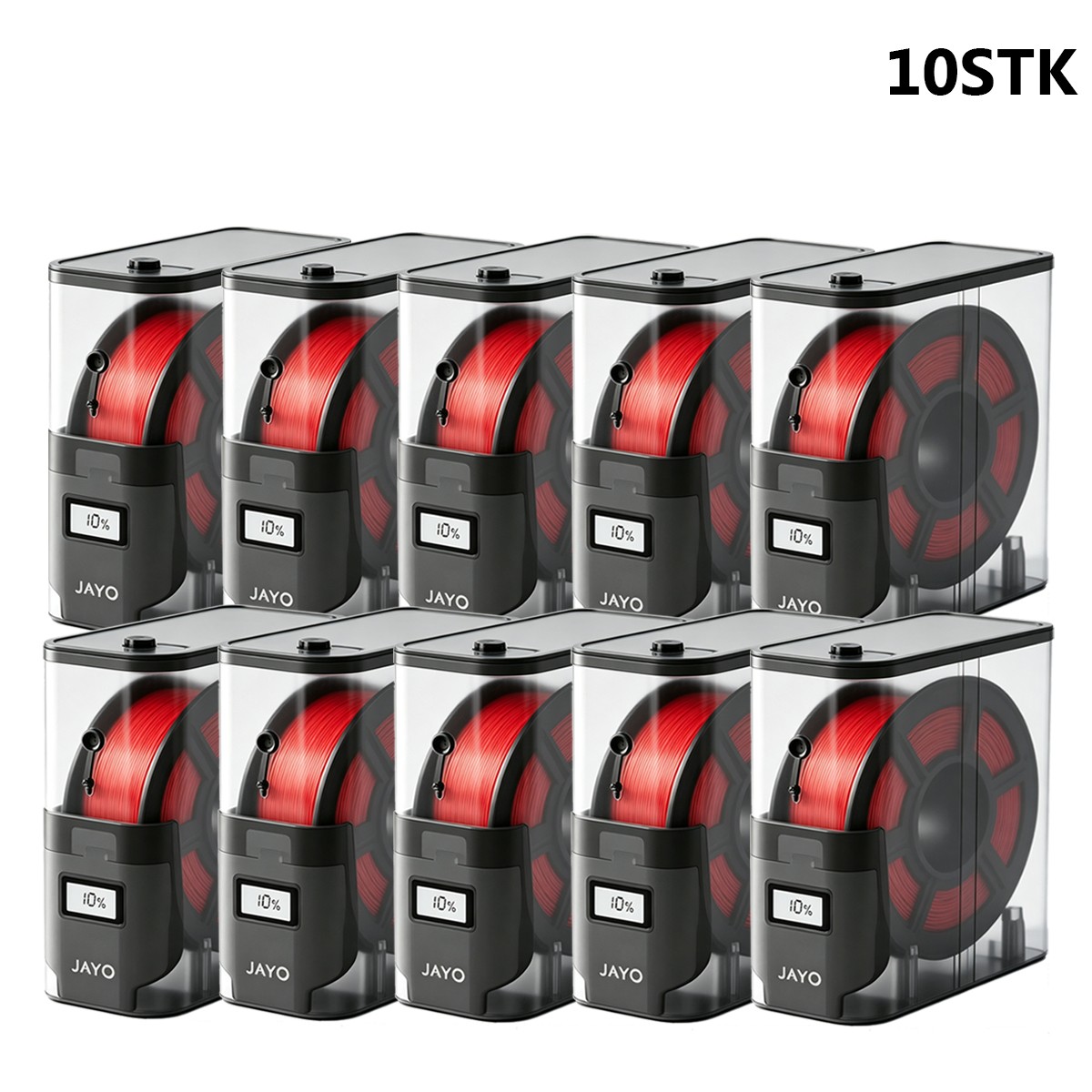 JAYO J1 3D Filament Dryer & Storage Chamber Split Design For 1.75mm PLA PETG LOT$213.59New · Last checked Nov 27, 2026View on eBay
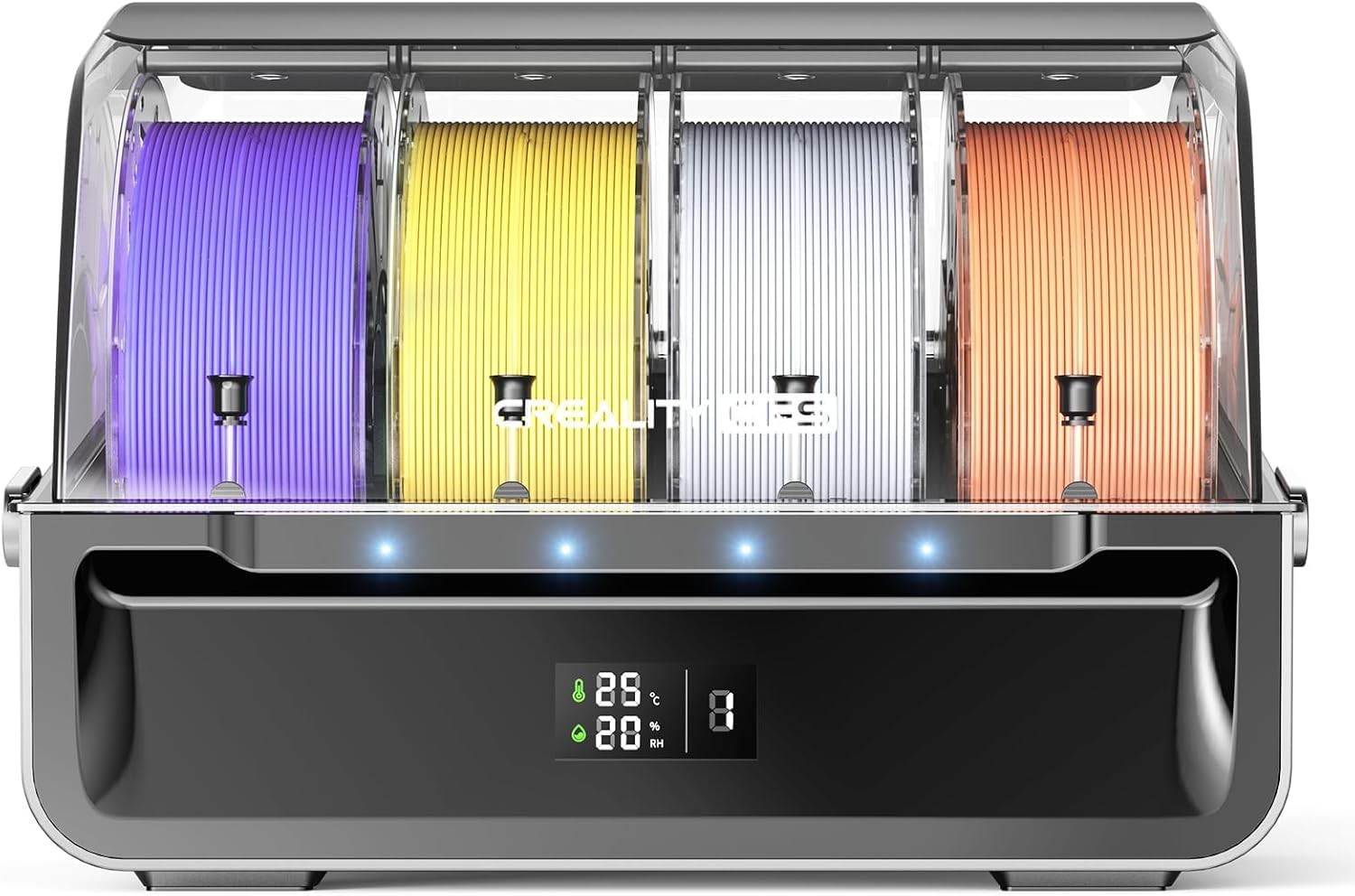 Creality Space Pi Filament Dryer 3D Printer Filament Dehydrator Storage Box Lot$299.00New · Last checked Nov 27, 2026View on eBay
Highlights
- Active dryers reach 70-85°C to drive off absorbed moisture, while passive storage boxes rely on desiccant and sealed gaskets to maintain low humidity without heat.
- Multi-spool dryers accommodate 4 spools simultaneously with dual independent heating zones, enabling different temperature profiles per chamber for mixed material batches.
- Desiccant capacity determines maintenance interval: reusable silica gel with color indicator requires regeneration every 2-4 weeks in humid climates, versus molecular sieve beads lasting 2-3 months.
- Sealed storage boxes with gasketed lids and hygrometer mounts maintain 10-20% RH when loaded with fresh desiccant, while unsealed containers equilibrate to ambient humidity within hours.
Best use cases
- Choose an active heated dryer if you regularly print PETG, TPU, or Nylon and need to recover spools exposed to ambient air for more than a week; skip passive boxes for this use case.
- Choose a passive sealed storage box with desiccant if you buy filament in bulk, keep spools sealed until use, and need long-term protection without power; skip heated dryers if all spools are already dry.
- Choose a 4-spool dryer with dual independent chambers if you print multiple material types simultaneously and need different drying temperatures; skip single-chamber units that force uniform temperature.
- Choose a split-design dryer with removable storage chamber if you need to dry spools while printing from a separate sealed box; skip fixed-chamber units that require unloading to access dried filament.
Buying tips
- Match dryer temperature range to your materials: PLA requires 45-55°C, PETG 65°C, and Nylon/PC 70-85°C; units maxing at 55°C cannot properly dry engineering filaments.
- Select storage containers sized for your spool diameter: standard 200mm spools fit most boxes, but 250mm and 300mm spools require larger chambers or adjustable dividers.
- Verify desiccant capacity by weight: use 100-200g of silica gel per 10 liters of container volume for effective humidity control below 20% RH.
- Choose units with digital hygrometers or RH sensors for real-time monitoring; analog hygrometers drift and require manual calibration against a salt reference.
Specs
| Dryer Max Temp | 45-85°C (material dependent) |
|---|---|
| Spool Capacity | 1-4 spools (200-250mm dia) |
| Desiccant Type | Silica gel / molecular sieve |
| Humidity Target | 10-20% RH sealed storage |
Related searches
What to check before buying
- Measure your spool diameter and width before buying: standard 1kg spools are 200mm diameter and 65-70mm wide, while 2-3kg spools exceed 250mm and require larger chambers.
- Confirm your workspace humidity level: above 60% RH ambient requires active drying or high-capacity desiccant, while below 40% RH allows passive storage with minimal maintenance.
- Check power requirements for active dryers: most units draw 50-150W and require a standard wall outlet; verify plug type matches your region if importing.
- Ensure you have a hygrometer or the storage unit includes one; without humidity monitoring, desiccant saturation goes undetected and protection fails silently.
FAQ
Data sources: eBay / Amazon listings and product attribute feeds. Updated Nov 28, 2026.
Some links on this page are affiliate links. If you buy after clicking one, we may earn a commission at no extra cost to you. This does not change which products appear here or their order. Affiliate disclosure.