
Photos from current listings. Actual item, color, and included accessories may vary.
3D Printer Filament Box Buying Guide
A 3D printer filament box is a sealed storage container—passive desiccant box or active heated dryer—that keeps hygroscopic filament below the ~20% RH threshold where PLA, PETG, TPU, and nylon start absorbing moisture and printing poorly. The core trade-off is passive silica storage versus active heated drying: passive boxes cost less and hold many spools but cannot reverse absorbed moisture, while heated dryers restore wet filament but add power, size, and spool-fit constraints. Buy passive only if you burn through spools within weeks; buy active if you print nylon/TPU, live in humid climates, or let spools sit for months.
Median $299.00 · New listings
Key takeaways
- Passive boxes rely on reusable silica gel (indicating orange-to-green beads) and must be resealed within minutes of opening; a 1 kg spool needs roughly 50–100 g of desiccant to hold low RH.
- Active dryers heat 40–70 °C; PLA/PETG dry at 45–55 °C, TPU at 40–50 °C, nylon/PC at 70 °C—buy a unit whose maximum temperature covers your most hygroscopic material, not just PLA.
- Sealed gasket construction (silicone or rubber O-ring) and a latch that compresses evenly determine whether a passive box actually holds RH; unsealed lids with desiccant are decorative.
At a glance
- Category
- Filament Drying & Post-Processing
- Last updated
- Nov 28, 2026
Current offers
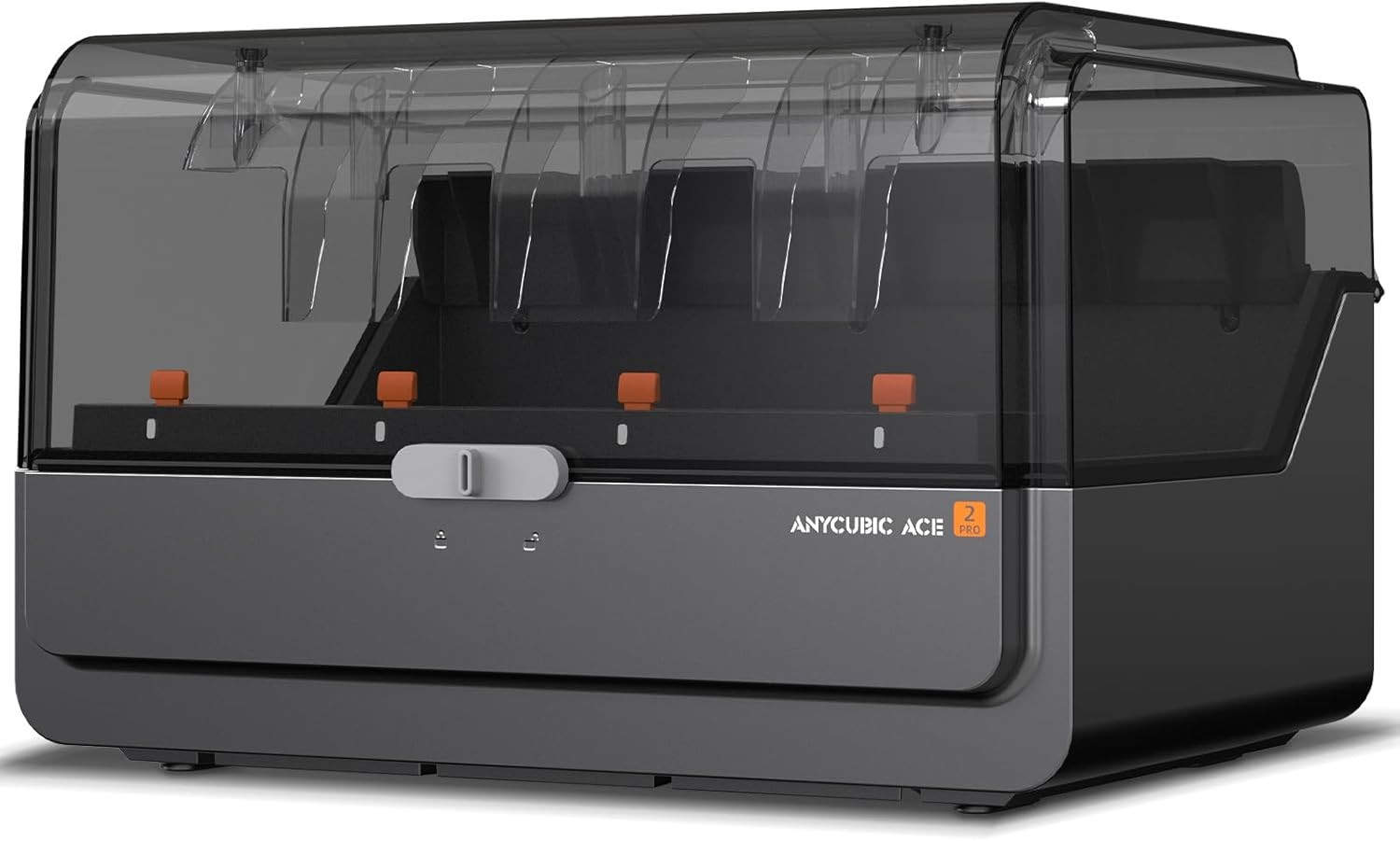 Anycubic ACE 2 Pro 3D Printer Filament Dryer Box, Compatible with Anycubic Kobra$294.39New · Last checked Nov 17, 2026View on eBay
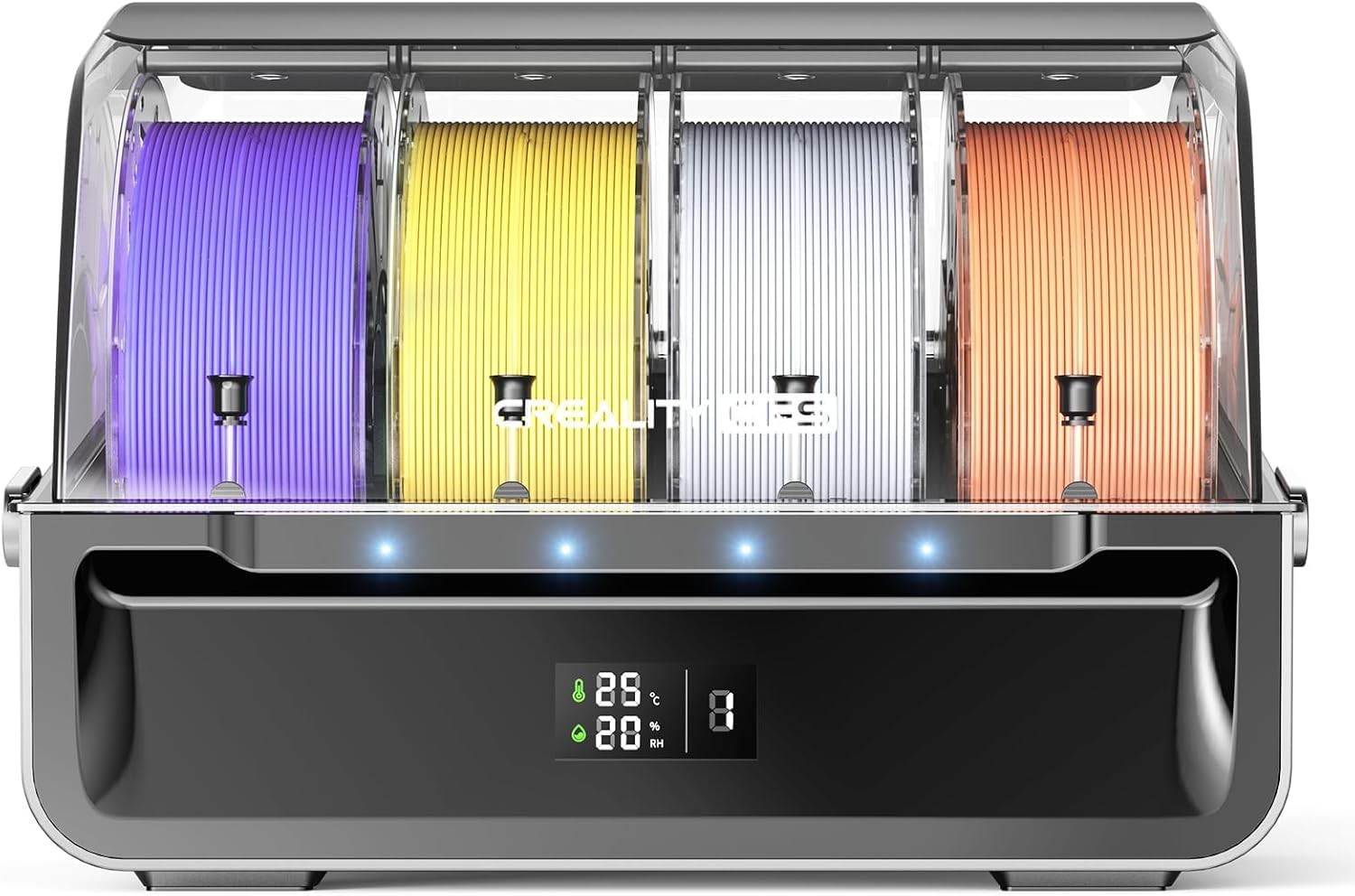 Creality Space Pi Filament Dryer 3D Printer Filament Dehydrator Storage Box Lot$299.00New · Last checked Nov 27, 2026View on eBay
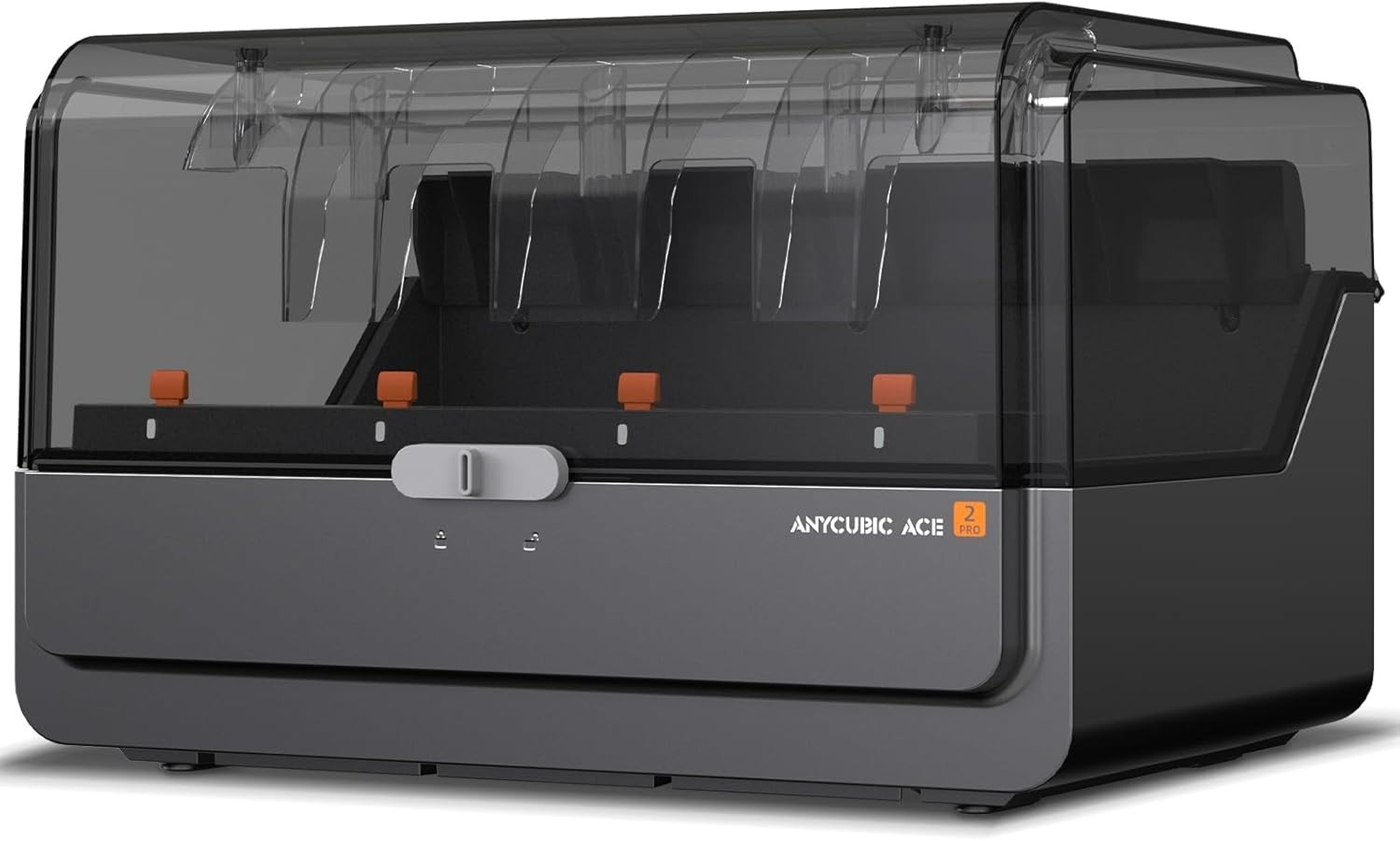 ACE 2 Pro 3D Printer Filament Dryer Box, Compatible with Anycubic Kobra S1 and K$415.99New · Last checked Nov 17, 2026View on eBay
Highlights
- Passive boxes rely on reusable silica gel (indicating orange-to-green beads) and must be resealed within minutes of opening; a 1 kg spool needs roughly 50–100 g of desiccant to hold low RH.
- Active dryers heat 40–70 °C; PLA/PETG dry at 45–55 °C, TPU at 40–50 °C, nylon/PC at 70 °C—buy a unit whose maximum temperature covers your most hygroscopic material, not just PLA.
- Sealed gasket construction (silicone or rubber O-ring) and a latch that compresses evenly determine whether a passive box actually holds RH; unsealed lids with desiccant are decorative.
- Heated dryers need a spool-fit check: most accept 200 mm OD spools, but 250 mm and 3 kg spools require wider chambers; check internal width and spindle diameter before buying.
Best use cases
- Best fit passive box: you print PLA/PETG weekly and need to keep 4–8 spools dry on a shelf; pick a gasketed box with a desiccant tray and hygrometer slot, and skip heated units.
- Best fit active dryer: you print nylon, PC, TPU, or PVA, or live in a climate above 60% RH; pick a single-spool heated dryer with 70 °C capability and a timer, and skip passive-only storage.
- Wrong fit: buying a passive box for already-wet filament—desiccant holds dry filament dry but cannot dry wet filament; use a heated dryer or oven first.
- Wrong fit: buying a large heated dryer for occasional PLA printing—the chamber volume, warm-up time, and power draw are wasted; a gasketed passive box plus fresh desiccant is the correct tier.
Buying tips
- Match dryer temperature to material: 45–55 °C covers PLA/PETG, 60–70 °C needed for nylon/PC/PVA; a 40 °C-only unit cannot restore engineering filaments.
- Size passive boxes by spool OD, not weight: standard 1 kg spools are ~200 mm diameter; confirm internal dimensions clear 210 mm and the lid gasket seats on a flat rim.
- Choose indicating silica gel (orange dry, green wet) so you know when to recharge; non-indicating beads give no visual cue and lead to printing with saturated desiccant.
- For heated dryers, prefer units with a removable spool holder and a sealed lid; a loose lid during drying lets humid room air back in and lengthens cycle time.
Specs
| Dryer Type | Passive desiccant vs active heated |
|---|---|
| Max Dry Temp | 40-70 °C (material dependent) |
| Spool Fit | Up to ~200-210 mm OD standard |
| Seal | Silicone/rubber gasket + latch |
Related searches
What to check before buying
- Measure your spool outside diameter and width—especially 3 kg or 250 mm spools—and compare to the box's internal clearance and lid height.
- Confirm your room's typical RH: above 60% RH demands an active heated dryer or frequent desiccant recharging; below 40% RH a sealed passive box is sufficient.
- Check power: heated dryers draw mains AC (regional plug standard) and should not be run unattended for long cycles; passive boxes need no power.
- Verify desiccant capacity and recharge method: reusable beads recharge in an oven or microwave; disposable packs must be replaced and add ongoing cost.
FAQ
Data sources: eBay / Amazon listings and product attribute feeds. Updated Nov 28, 2026.
Some links on this page are affiliate links. If you buy after clicking one, we may earn a commission at no extra cost to you. This does not change which products appear here or their order. Affiliate disclosure.