
Photos from current listings. Actual item, color, and included accessories may vary.
3D Printer Dryer Box Buying Guide
A 3D printer dryer box is an enclosed heated chamber that removes moisture from filament before printing, preventing steam-induced stringing, weak layer adhesion, and surface defects. The core trade-off is between passive desiccant-only boxes that stabilize already-dry filament and active heated dryers that restore wet spools to printable condition. Choose active heating with controlled temperature and airflow for restoration; choose sealed desiccant storage only for keeping dry filament dry during multi-day prints.
Median $299.00 · New listings
Key takeaways
- Active dryers use PTC or resistive heaters reaching 40-70°C; PTC self-regulates and is safer than bare resistive coils for plastic-walled enclosures.
- Filament moisture targets: PLA/PETG below 0.2-0.4% and nylon/PC below 0.1%; a dryer must sustain 55-70°C for 4-12 hours to hit these levels.
- Sealed desiccant boxes with silica gel or reusable beads maintain <10-15% RH but cannot dry wet filament; they are storage, not restoration.
At a glance
- Category
- Filament Drying & Post-Processing
- Last updated
- Nov 28, 2026
Current offers
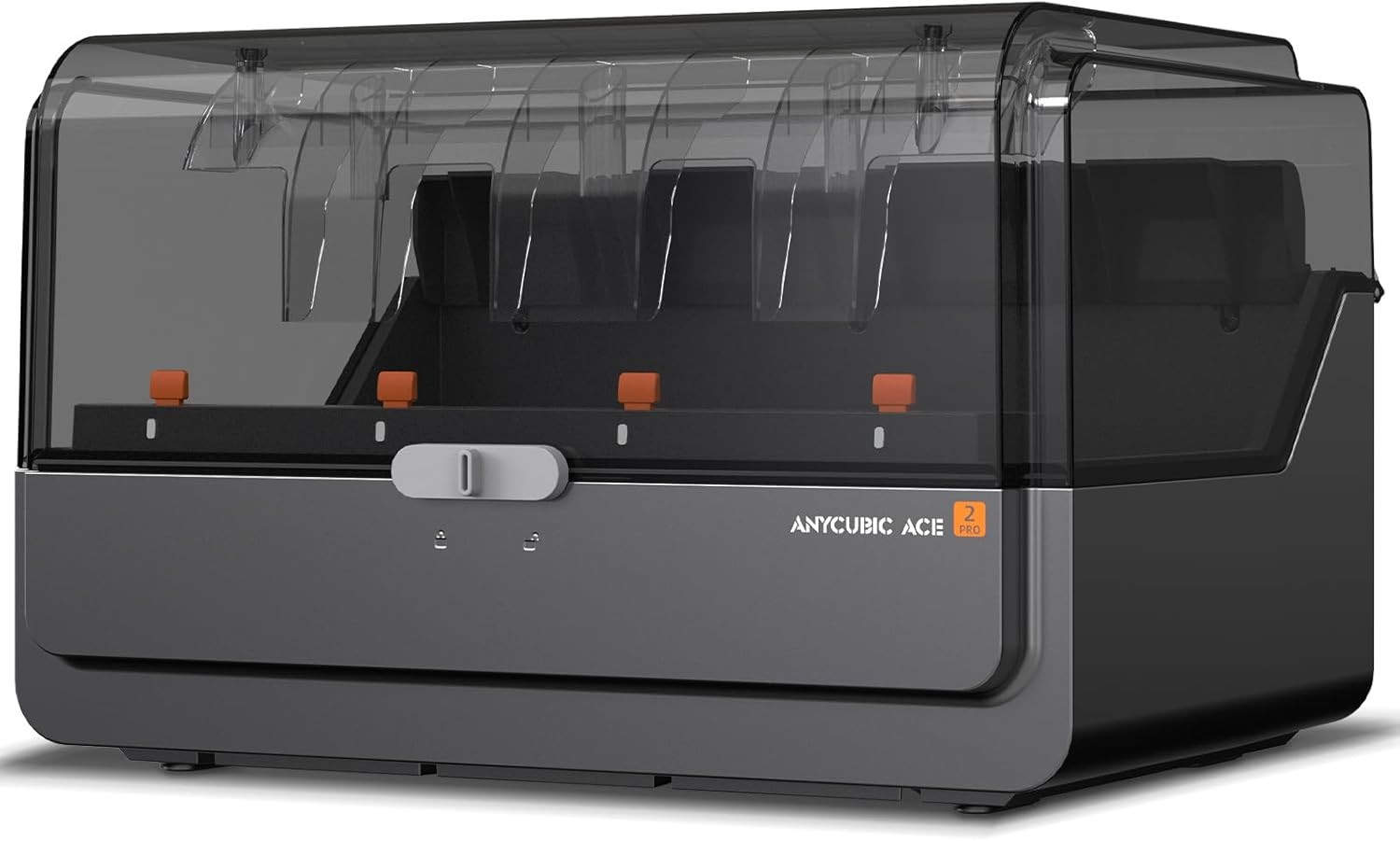 Anycubic ACE 2 Pro 3D Printer Filament Dryer Box, Compatible with Anycubic Kobra$294.39New · Last checked Nov 17, 2026View on eBay
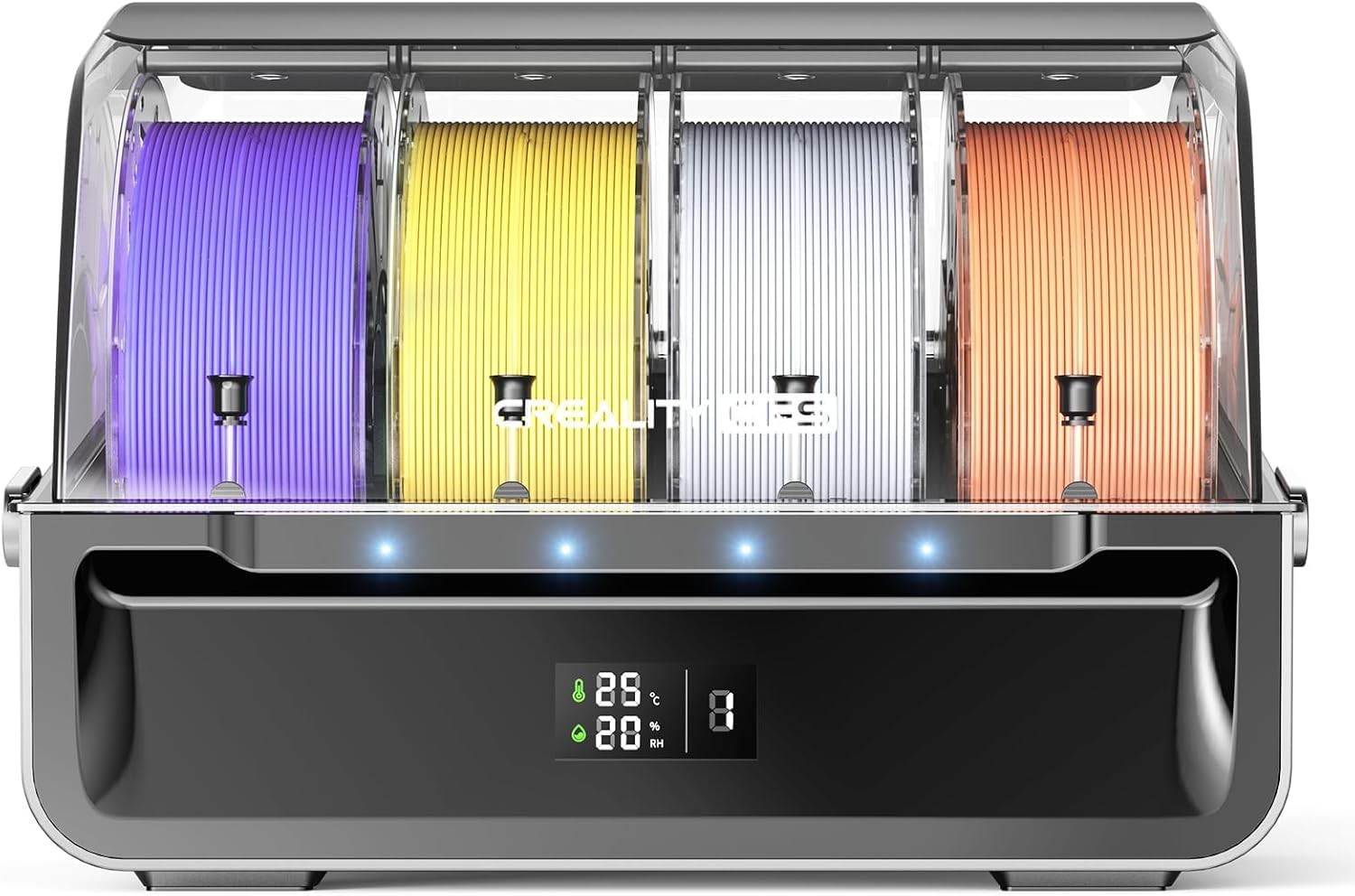 Creality Space Pi Filament Dryer 3D Printer Filament Dehydrator Storage Box Lot$299.00New · Last checked Nov 27, 2026View on eBay
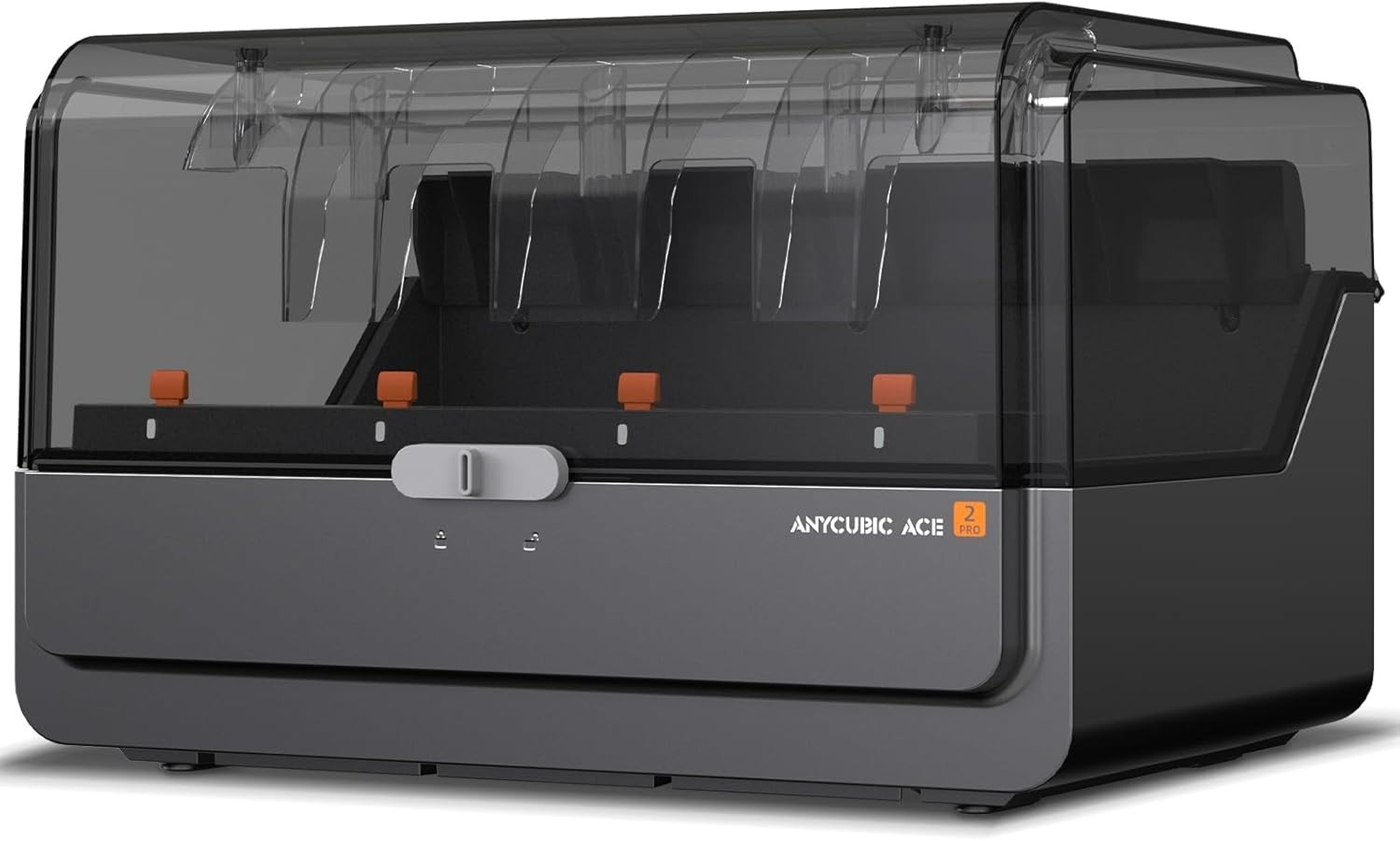 ACE 2 Pro 3D Printer Filament Dryer Box, Compatible with Anycubic Kobra S1 and K$415.99New · Last checked Nov 17, 2026View on eBay
Highlights
- Active dryers use PTC or resistive heaters reaching 40-70°C; PTC self-regulates and is safer than bare resistive coils for plastic-walled enclosures.
- Filament moisture targets: PLA/PETG below 0.2-0.4% and nylon/PC below 0.1%; a dryer must sustain 55-70°C for 4-12 hours to hit these levels.
- Sealed desiccant boxes with silica gel or reusable beads maintain <10-15% RH but cannot dry wet filament; they are storage, not restoration.
- Dual-spool heated dryers with internal circulation fans dry more evenly than single-spool static boxes; fanless designs leave cold spots and slow moisture release.
Best use cases
- Best fit active heated dryer: you print nylon, PC, TPU, or PETG in humid climates and see popping sounds, stringing, or weak parts—pick a 60°C+ unit with fan circulation and a spool capacity matching your typical spool diameter (200mm or 250mm).
- Best fit sealed desiccant box: your filament is already dry and you need dust and moisture protection during long prints or between spools—skip heating entirely and save cost.
- Wrong fit passive box for restoration: if a spool has absorbed moisture for weeks, a desiccant-only box will not recover it; you must use an active heated dryer.
- Wrong fit oversized heated dryer for occasional PLA: a single-spool 45-55°C dryer is sufficient for PLA and PETG; dual-spool 70°C units are overkill unless you print engineering polymers regularly.
Buying tips
- Match dryer temperature to polymer: PLA/PETG need 45-55°C, ABS/ASA 60-70°C, nylon/PC 70-80°C; a dryer maxing at 50°C cannot restore nylon.
- Check spool compatibility: standard 200mm diameter spools fit most dryers; 250mm and 300mm spools require wider chambers—measure your spool diameter before buying.
- Prefer dryers with a sealed lid gasket and internal fan: gaskets retain heat and humidity removal, fans cut drying time by circulating air across the filament surface.
- For desiccant boxes, use color-indicating silica gel with 2-3mm bead size and a sealed gasket; reusable beads regenerate at 120°C for 2 hours.
Specs
| Heating Type | PTC heater / resistive coil / passive |
|---|---|
| Max Temperature | 45-80°C by polymer tier |
| Spool Capacity | Single or dual 200-300mm spools |
| Air Circulation | Fan-assisted vs static passive |
Related searches
What to check before buying
- Measure your largest spool diameter and width; confirm the dryer chamber interior exceeds spool diameter by at least 10mm and width by 5mm.
- Verify your room humidity: above 60% RH year-round justifies an active heated dryer even for PLA; below 40% RH a sealed desiccant box suffices for storage.
- Confirm electrical plug standard and voltage for your region (120V US or 220-240V EU/UK) and that the dryer cord reaches your outlet without an extension.
- For heated dryers, ensure the unit has an external temperature display or adjustable thermostat; preset single-temperature units limit polymer compatibility.
FAQ
Data sources: eBay / Amazon listings and product attribute feeds. Updated Nov 28, 2026.
Some links on this page are affiliate links. If you buy after clicking one, we may earn a commission at no extra cost to you. This does not change which products appear here or their order. Affiliate disclosure.