UNO R3 vs ELEGOO ESP-32: Which Development Board Fits Your Projects?
A practical head-to-head comparing the UNO R3's board-focused Arduino setup with the ELEGOO ESP-32's tutorial-led starter kit, so you can match the hardware to your next electronics project.
Last updated Oct 7, 2026
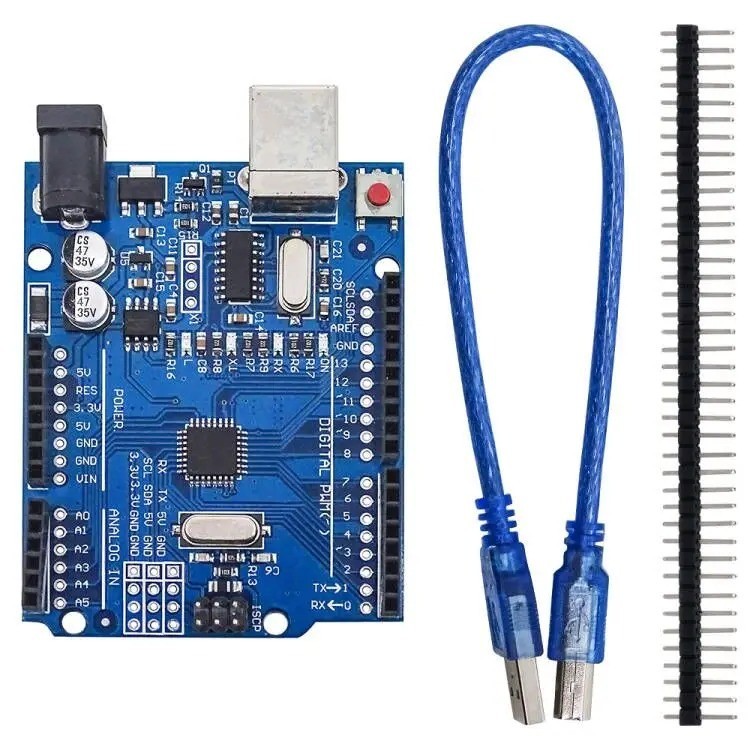
UNO R3 Board ATmega328P Development Board
$6.95Listed at review time
Affiliate disclosure: We may earn a commission if you buy through links on this page, at no extra cost to you. Confirm live price, stock, and return terms on the seller page. Affiliate disclosure.
Choosing between microcontrollers & dev boards often comes down to a simple tension: do you want a straightforward board for learning circuits, or a fuller kit that opens more project directions? The UNO R3 and ELEGOO ESP-32 take noticeably different approaches. One keeps the purchase centered on a development board, while the other combines a board with a guided starter-kit format and a wider connectivity list.
Quick verdict
The UNO R3 is the clearer match for a focused first project built around a development board and Arduino IDE work. ELEGOO is the clearer match when a broader kit format and connected project path matter. The listed-price gap is $42.79: $6.95 for UNO R3 versus $49.74 for ELEGOO. That spread makes the central question simple: do you need a board-centered start, or are the kit's added scope and interfaces part of the plan?
At a glance
| Product | Listed price | Key details | Best fit |
|---|---|---|---|
| UNO R3 Board | $6.95 | ATmega328P, USB, 5V and 3.3V DC output | Focused board projects |
| ELEGOO ESP-32 Super Starter Kit | $49.74 | Tutorial, 35-count unit total, Bluetooth, Wi-Fi, GPIO, I2C, USB | Bundled connected projects |
Where each product wins
- UNO R3: It wins for the beginner-oriented component projects named in its description, including LEDs, buzzers, buttons, and photoresistors. That makes its board-centered format easy to match to basic input and output experiments.
The seller page may include additional marketing claims. Treat this page as a shopping reference, then confirm fit, price, delivery, and returns on the seller page.
Product notes
UNO R3 Board
UNO R3 suits a first hands-on build when the goal is to work through LEDs, buzzers, buttons, or photoresistors without choosing a larger kit format. Its description also calls out a pin header and cable, plus a straightforward way to connect components with DuPont lines. That gives it a clear role as a focused board for learning basic input and output projects. The limitation is scope: the title identifies a development board with a USB cable, so it is not framed as the tutorial-led, multi-component package represented by the ELEGOO ESP-32 Super Starter Kit. Choose UNO R3 when a focused Arduino-style project brief is enough; choose ELEGOO when a kit-centered start or listed wireless connectivity is central.
ELEGOO ESP-32 Super Starter Kit
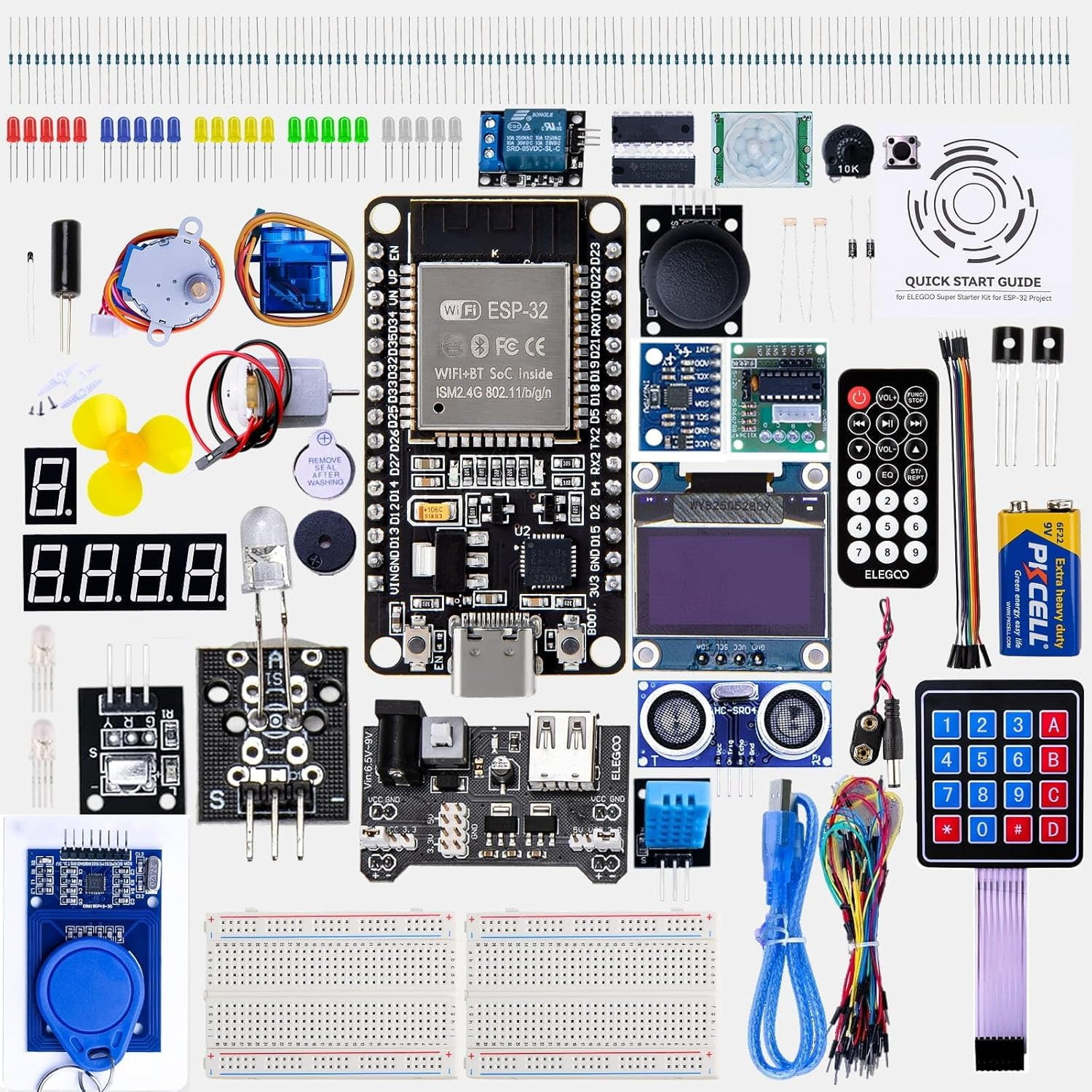
ELEGOO is aimed at the shopper who wants a project package rather than a board-only purchase. The title pairs the ESP-32 development board with a tutorial, while its listed connectivity spans Bluetooth, Wi-Fi, GPIO, I2C, and USB. That combination gives it a concrete role for experiments that may move between wireless and wired control, or for a learner who wants guidance alongside the board. The trade-off is the kit format itself: if your brief is limited to a basic Arduino project, the package covers a wider scope than you may need. Pick ELEGOO when the tutorial, bundled setup, or connectivity list directly matches the builds you have in mind.
Final choice by use case
- For a board-centered purchase and the listed 5V and 3.3V DC outputs: choose UNO R3 Board.
- For a kit-centered build involving wireless or bus interfaces: choose ELEGOO ESP-32 Super Starter Kit.
- For beginner component experiments: UNO R3's description names a direct path through LEDs, buzzers, buttons, and photoresistors.
- For guided, connected projects: ELEGOO's tutorial-led starter-kit format is the more closely matched choice.
In short, UNO R3 keeps the decision focused on a development board, while ELEGOO makes sense when the starter-kit format and broader interface list are part of the plan.