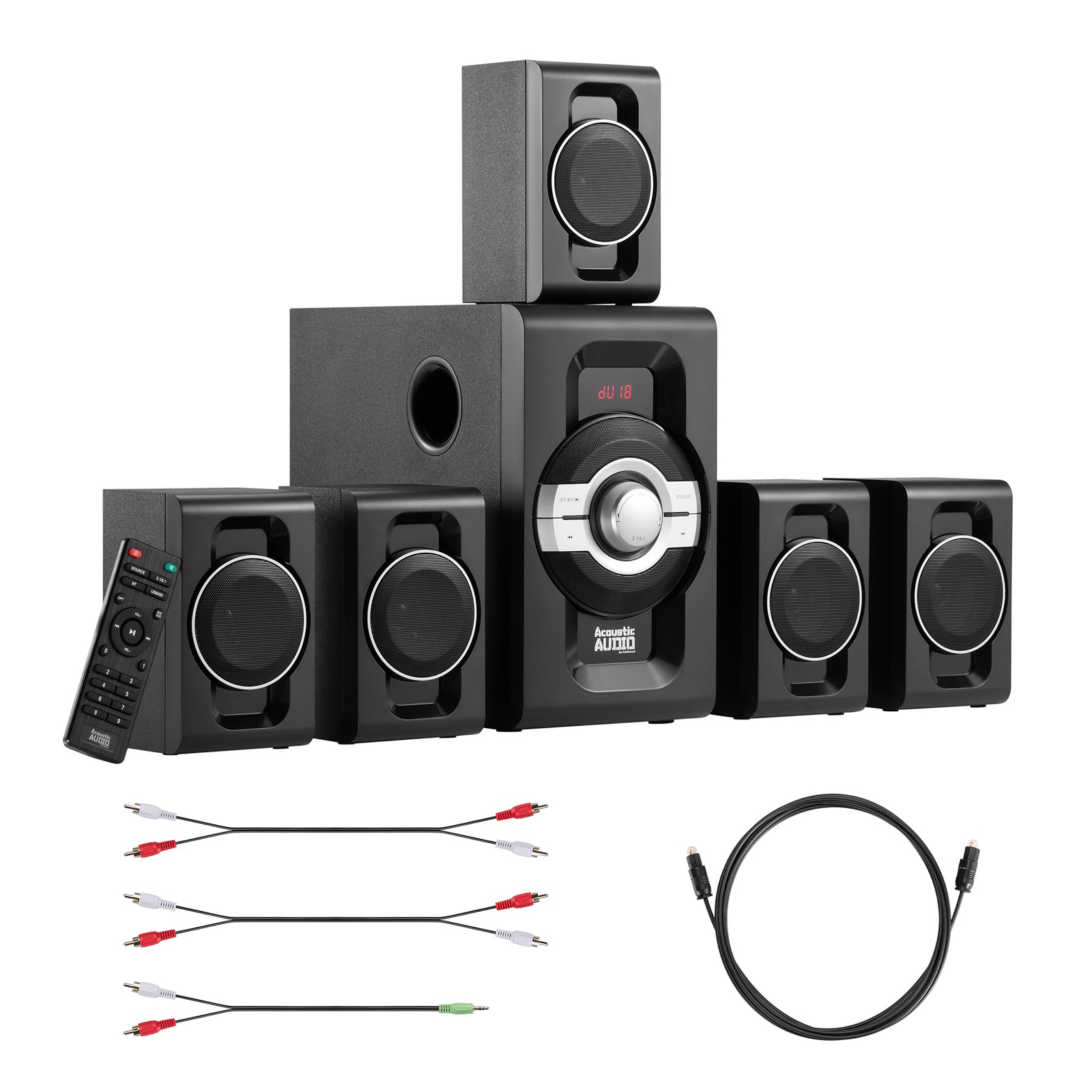

Photos from current listings. Actual item, color, and included accessories may vary.
Surround System Home Buying Guide
A home surround system is a multi-channel speaker package—typically 5.1 or 7.1—paired with an AVR or soundbar-style processor to create directional audio. The core trade-off is driver/channel count versus room size and amplifier headroom: undersized satellites and weak subwoofers collapse into distortion, while oversized towers overpower small rooms. Buy by matching channel layout, speaker sensitivity, and subwoofer capability to your room volume and AVR wattage—not by counting speakers alone.
Median $187.44
Key takeaways
- Channel layout determines decoding: 5.1 uses front L/R, center, two surrounds, and one sub; 7.1 adds two rear surrounds and requires an AVR with 7+ amplified channels.
- Satellite sensitivity below 85 dB (2.83V/1m) demands more AVR wattage per channel; 88–92 dB speakers reach reference levels with mid-tier receivers.
- Subwoofer driver size sets low-frequency extension: 8-inch subs roll off near 40 Hz, 10-inch near 35 Hz, and 12-inch near 30 Hz—small satellites cannot compensate.
At a glance
- Category
- Home Theater Speakers & Subwoofers
- Last updated
- Nov 28, 2026
Current offers
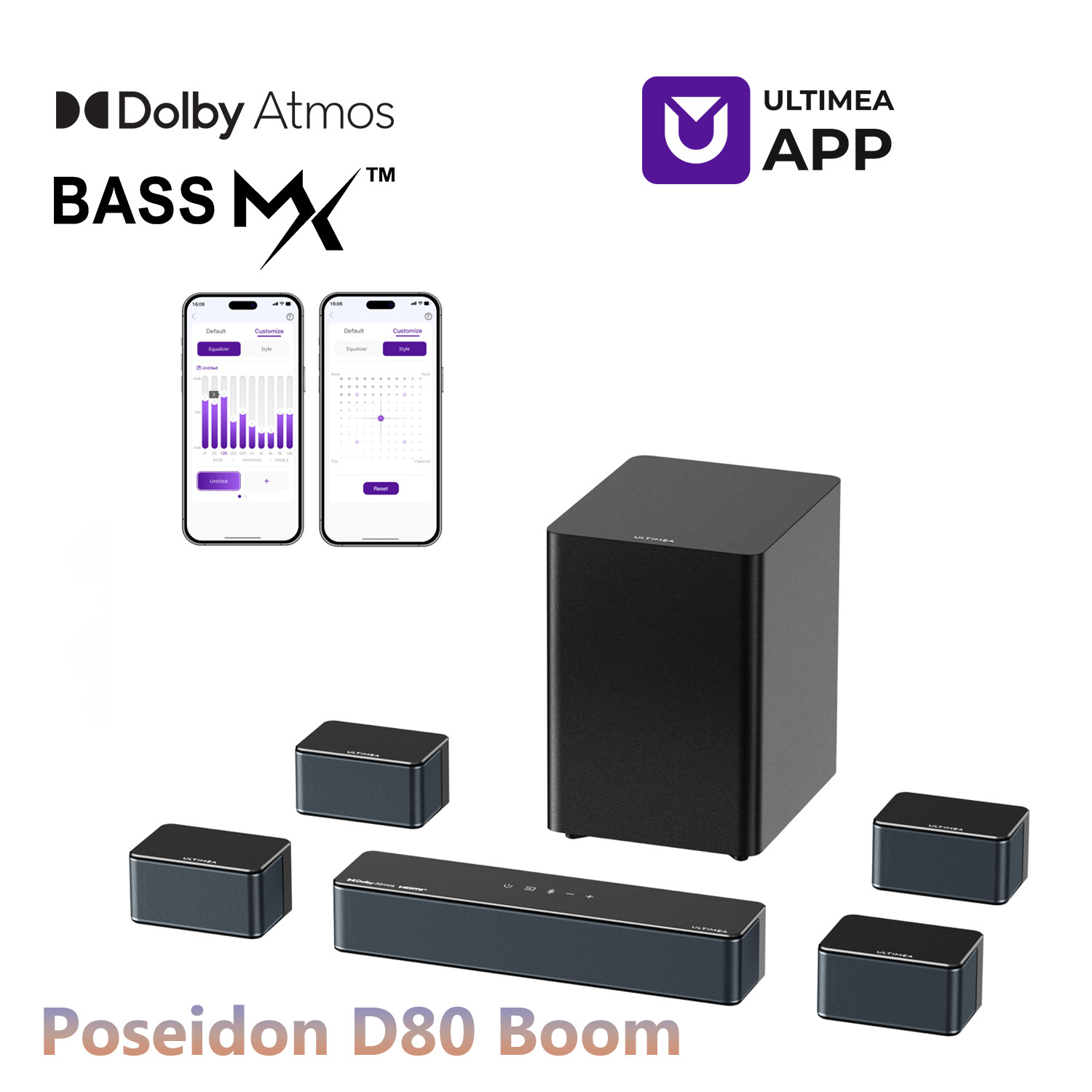
Highlights
- Channel layout determines decoding: 5.1 uses front L/R, center, two surrounds, and one sub; 7.1 adds two rear surrounds and requires an AVR with 7+ amplified channels.
- Satellite sensitivity below 85 dB (2.83V/1m) demands more AVR wattage per channel; 88–92 dB speakers reach reference levels with mid-tier receivers.
- Subwoofer driver size sets low-frequency extension: 8-inch subs roll off near 40 Hz, 10-inch near 35 Hz, and 12-inch near 30 Hz—small satellites cannot compensate.
- Dolby Atmos-enabled systems add upward-firing or ceiling modules for height channels; a standard 5.1 AVR cannot decode Atmos without height or up-firing speakers.
Best use cases
- Pick a 5.1 package with a 10–12 inch subwoofer for medium living rooms (roughly 150–300 sq ft) where space allows rear surround placement and the AVR delivers 80–100 W per channel.
- Choose a 7.1 or Atmos-enabled set only if your room is at least 12 ft deep behind the seating row—otherwise rear surrounds fire into the back wall and add no directional benefit.
- Skip tower-speaker bundles for apartments or bedrooms under 120 sq ft; compact satellites with a sealed 8-inch sub avoid boomy room gain and neighbor complaints.
- Avoid soundbar-plus-wireless-rear kits if you need true discrete center-channel dialogue anchoring; a dedicated 3-way center speaker handles dialogue far better than a bar's phantom center.
Buying tips
- Match AVR power to speaker impedance: 4-ohm speakers require AVRs rated for 4-ohm loads; 8-ohm speakers work with nearly all receivers and reduce overheating risk.
- Budget roughly 30–40% of total system cost for the subwoofer—a weak sub undermines the entire surround effect more than any other single component.
- Verify speaker binding posts accept banana plugs or bare wire at least 16 AWG; spring-clip terminals limit cable gauge and loosen over time.
- For wireless rear kits, confirm the transmitter uses 5.8 GHz or a dedicated channel rather than congested 2.4 GHz Wi-Fi to avoid dropout.
Specs
| Channel Layout | 5.1 / 7.1 / 5.1.2 Atmos |
|---|---|
| Subwoofer Driver | 8 / 10 / 12 inch |
| Speaker Sensitivity | 85–92 dB (2.83V/1m) |
| Amplifier Load | 4-ohm vs 8-ohm rated AVR |
Related searches
What to check before buying
- Measure room length, width, and seating distance; surrounds belong 60–110 degrees off-axis from the main listening position and at or slightly above ear height.
- Confirm an AC outlet near the AVR and subwoofer; most AVRs draw 300–500 W and subs 200–400 W peak—avoid sharing a single switched strip.
- Check ceiling height and wall construction for mounting surrounds; drywall anchors rated 25 lb handle most satellite speakers, but brick or plaster needs masonry fixings.
- Verify your TV or projector has HDMI ARC/eARC or optical output to feed the AVR; older displays may need a separate HDMI switcher.
FAQ
Data sources: eBay / Amazon listings and product attribute feeds. Updated Nov 28, 2026.
Some links on this page are affiliate links. If you buy after clicking one, we may earn a commission at no extra cost to you. This does not change which products appear here or their order. Affiliate disclosure.