

Photos from current listings. Actual item, color, and included accessories may vary.
Home Theater Speaker Buying Guide
Home theater speakers range from compact soundbars to discrete 5.1 component systems, with the core trade-off being physical driver/displacement realism versus wireless convenience and room fit. Durable options use dedicated amplification and specified impedance/crossover engineering; compromises hide behind vague wattage claims and single-unit 'surround' bars. The decision rule: buy a system with discrete channels and a real subwoofer for movie dynamics, or a 2.0/2.1 bar only when space and wiring are the hard constraints.
Median $84.95
Key takeaways
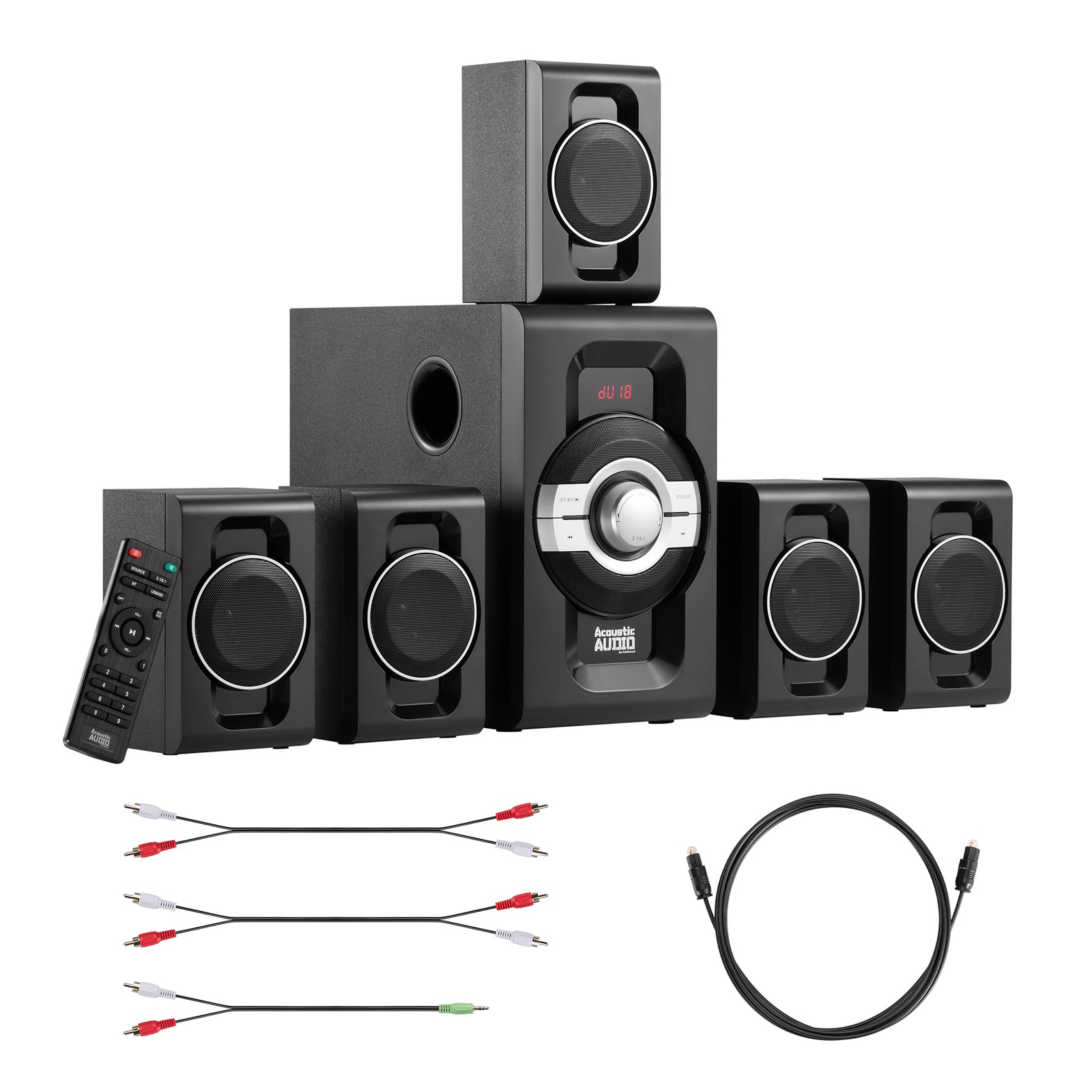
- Discrete 5.1 systems use five satellites plus a powered subwoofer with separate channel amplification, delivering true directional surround versus virtualized soundbar processing.
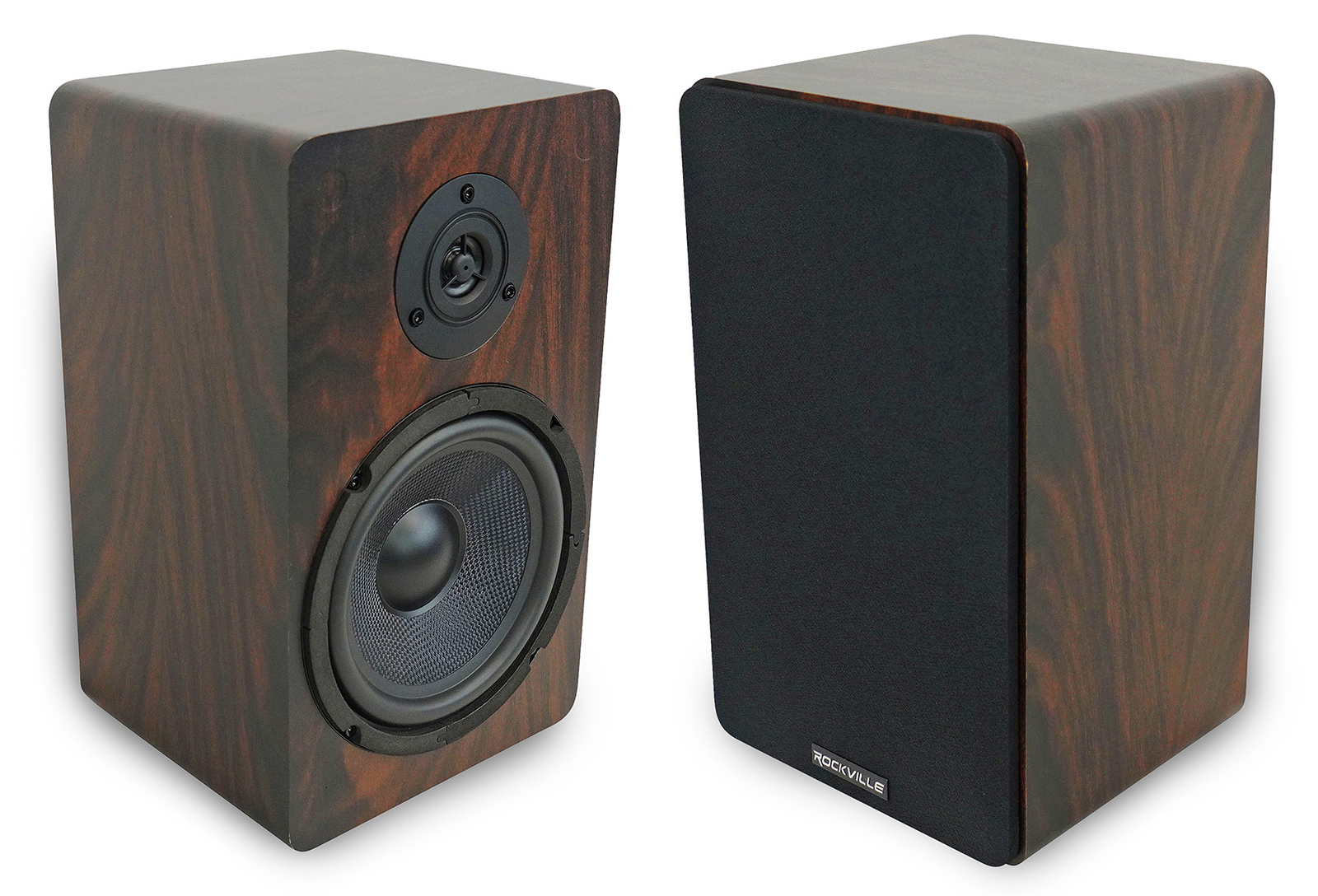
- Bookshelf speakers in the 6.5-inch class (e.g., Polk M10-style, Rockville RockShelf 68D) use woofer diameter and cabinet volume to set bass extension; pairs are typically 4-8 ohm and need an AV receiver.
- Soundbars in the 24-inch 2.0 class produce stereo only and rely on DSP virtualization; they cannot match a physical rear-channel or subwoofer setup for surround effects.
At a glance
- Category
- Home Theater Speakers & Subwoofers
- Last updated
- Nov 27, 2026
Current offers
Highlights
- Discrete 5.1 systems use five satellites plus a powered subwoofer with separate channel amplification, delivering true directional surround versus virtualized soundbar processing.
- Bookshelf speakers in the 6.5-inch class (e.g., Polk M10-style, Rockville RockShelf 68D) use woofer diameter and cabinet volume to set bass extension; pairs are typically 4-8 ohm and need an AV receiver.
- Soundbars in the 24-inch 2.0 class produce stereo only and rely on DSP virtualization; they cannot match a physical rear-channel or subwoofer setup for surround effects.
- In-ceiling/in-wall pairs use 8-inch 2-way flush-mount architecture with impedance matched to an amplifier; damp/humid-rated models suit covered patios and bathrooms, not just living rooms.
Best use cases
- Best fit: a dedicated movie room or living room with space behind the seating — choose a discrete 5.1 system with a powered subwoofer and an AV receiver for true surround.
- Best fit: a compact apartment or bedroom where wiring is impossible — choose a 2.0 or 2.1 soundbar with HDMI ARC or optical and a wireless subwoofer, accepting virtualized surround.
- Best fit: new construction or renovation with ceiling access — choose an 8-inch 2-way in-ceiling pair plus a matching amplifier for clean, wire-hidden theater audio.
- Wrong fit: expecting a 24-inch 2.0 soundbar to deliver rear-channel surround or deep sub-bass; skip it if cinematic immersion is the goal.
Buying tips
- Match speaker impedance to the amplifier: 8-ohm speakers pair safely with most AV receivers; 4-ohm models require a receiver rated for low-impedance loads.
- Budget amplifier power from speaker sensitivity: 85-90 dB sensitivity speakers need roughly 50-100W per channel for theater levels; low-sensitivity models demand more headroom.
- For a 5.1 layout, place surrounds at 90-110 degrees beside or slightly behind the listener and set the subwoofer crossover at 80 Hz for seamless handoff.
- Prefer systems specifying channel count, impedance, and frequency response over inflated 'peak watts' badges; continuous RMS ratings are the meaningful power figure.
Specs
| System Type | Soundbar / 5.1 / Bookshelf pair / In-ceiling |
|---|---|
| Channel Count | 2.0 / 2.1 / 5.1 discrete |
| Amplification | Passive (needs receiver) vs powered |
| Woofer Size | 3-4 in satellites / 6.5-8 in mains |
Related searches
What to check before buying
- Measure the listening room and seating distance: a 5.1 system needs roughly 6-10 feet to the surrounds and clear wall or stand space for each satellite.
- Confirm an AV receiver or amplifier is present or budgeted; passive bookshelf and in-ceiling speakers do not include amplification.
- Check ceiling joist spacing and cavity depth for in-ceiling 8-inch models; flush-mount frames require roughly 9-10 inches of cutout diameter.
- Verify voltage and plug standard for any powered subwoofer or amplified soundbar, and confirm HDMI ARC or optical output exists on the TV.
FAQ
Data sources: eBay / Amazon listings and product attribute feeds. Updated Nov 27, 2026.
Some links on this page are affiliate links. If you buy after clicking one, we may earn a commission at no extra cost to you. This does not change which products appear here or their order. Affiliate disclosure.