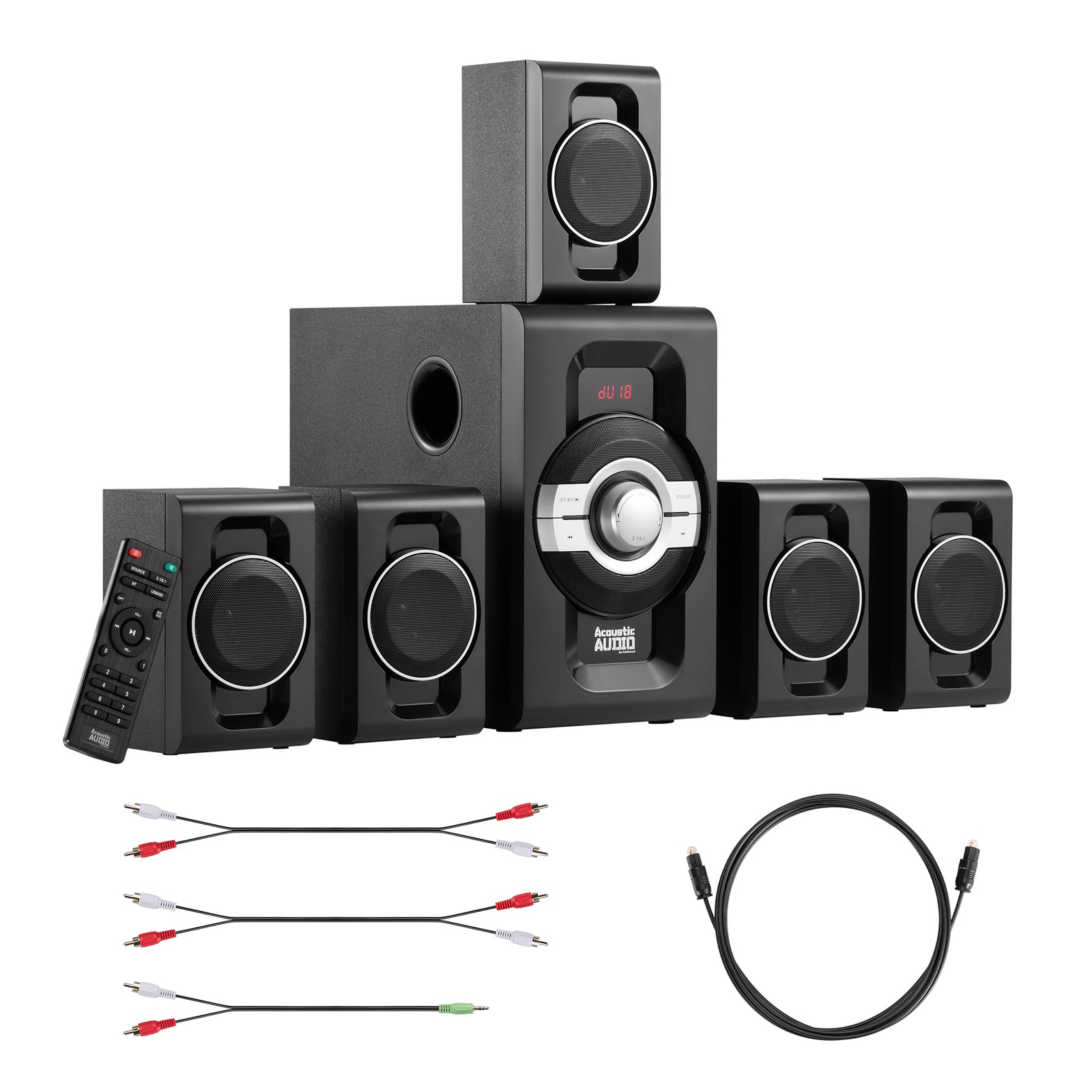

Photos from current listings. Actual item, color, and included accessories may vary.
Surround Speaker Buying Guide
Surround speakers cover everything from compact 2.0 soundbars to true 5.1.2 discrete systems, and the core trade-off is channel count versus room size and wiring reality. A real surround setup needs a dedicated center and rear channels; soundbars use virtualization and depend heavily on ceiling and wall reflections. Decide by seating geometry and whether you can run or charge rear speakers—not by marketing wattage.
Median $132.44
Key takeaways
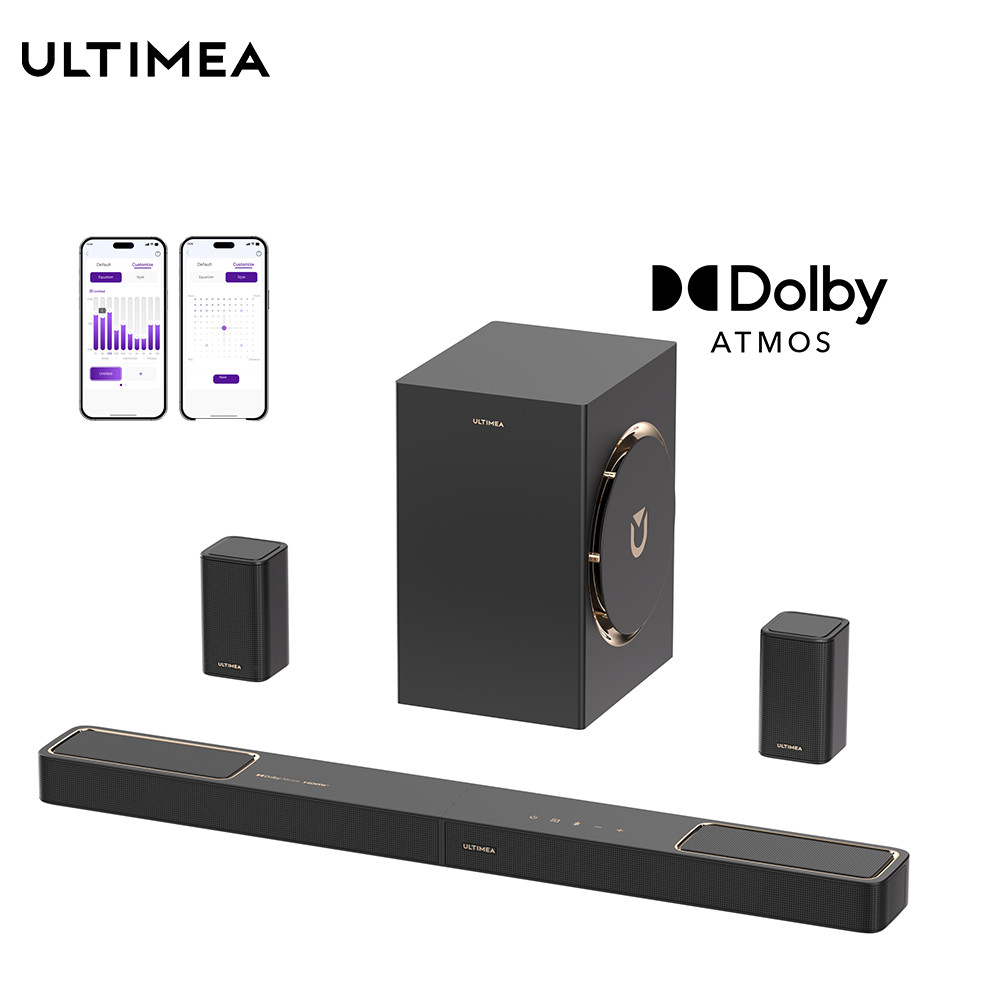
- True 5.1 needs six discrete channels: front L/R, center, sub, and two rear/side speakers; 5.1.2 adds two upward-firing height channels for Dolby Atmos.
- Standalone rear speakers require power (AC outlet or rechargeable battery), while passive surrounds need an AV receiver with 6-8 ohm speaker outputs; soundbar rears pair wirelessly to the bar.
- Soundbar surround virtualization works best in rectangular rooms with 8-10 ft flat ceilings and side walls; large open-plan spaces defeat reflected height cues.
At a glance
- Category
- Home Theater Speakers & Subwoofers
- Last updated
- Nov 28, 2026
Current offers
Highlights
- True 5.1 needs six discrete channels: front L/R, center, sub, and two rear/side speakers; 5.1.2 adds two upward-firing height channels for Dolby Atmos.
- Standalone rear speakers require power (AC outlet or rechargeable battery), while passive surrounds need an AV receiver with 6-8 ohm speaker outputs; soundbar rears pair wirelessly to the bar.
- Soundbar surround virtualization works best in rectangular rooms with 8-10 ft flat ceilings and side walls; large open-plan spaces defeat reflected height cues.
- Discrete 5.1 speaker sets use 3-6.5 inch mid-woofers and 1-inch tweeters per channel; plastic-cabinet soundbars rely on small drivers and DSP for bass management.
Best use cases
- Pick a 5.1.2 soundbar kit with wireless sub and rechargeable rears for a 12x15 ft living room with a flat ceiling and no in-wall wiring—best balance of Atmos height and simple install.
- Choose a discrete 6-speaker 5.1 set plus an AV receiver if you have a dedicated media room with a projector, can run speaker wire, and want lossless TrueHD/DTS-HD tracks.
- Skip a 24-32 inch 2.0 soundbar as a 'surround' solution for a large room—it is a stereo upgrade for a bedroom or projector setup, not a rear-channel system.
- Avoid wall-mounting down-firing height drivers if your ceiling is sloped or vaulted; use front-firing discrete speakers or a soundbar with dedicated up-firing drivers instead.
Buying tips
- Match total bar width to TV size: a 32-inch bar suits 40-50 inch TVs, a 36-42 inch bar suits 55-65 inch TVs; wider bars image better but can block a low TV stand's IR receiver.
- For 5.1, check that your AV receiver is rated at 6-8 ohms and delivers at least 50-80W per channel; low-impedance 4-ohm speaker sets can trigger receiver protection.
- Rear speaker placement: aim for 110-120 degrees behind the main seat, 2-3 ft above ear level, and within 30 ft of the soundbar/sub for reliable wireless pairing.
- Subwoofer output matters more than bar wattage: an 8-inch ported sub reaches 35-40 Hz, a 10-12 inch sub reaches 25-30 Hz; sealed 8-inch subs trade depth for tightness in small rooms.
Specs
| Channel Config | 2.0 / 5.1 / 5.1.2 Atmos |
|---|---|
| Rear Speaker Power | Wireless (AC/battery) vs passive wire |
| Subwoofer Size | 6.5-12 in; ported vs sealed |
| Connectivity | HDMI eARC / optical / Bluetooth |
Related searches
What to check before buying
- Measure TV stand width and height clearance: a 36-inch soundbar under a wall-mounted 65-inch TV needs the bar's top to sit below the screen edge, not covering the bottom bezel.
- Verify outlet and cable reach: wireless rears still need AC outlets or charged batteries, and the sub needs a nearby outlet; plan two rear power points or USB charging access.
- Check ceiling height and flatness: up-firing Atmos drivers need 8-10 ft flat ceilings; vaulted or beam-textured ceilings reduce height-channel accuracy.
- Confirm input standards: eARC/ARC HDMI for Dolby Atmos from the TV, optical for legacy sets, and Bluetooth only as a fallback for music—not for lip-synced surround.
FAQ
Data sources: eBay / Amazon listings and product attribute feeds. Updated Nov 28, 2026.
Some links on this page are affiliate links. If you buy after clicking one, we may earn a commission at no extra cost to you. This does not change which products appear here or their order. Affiliate disclosure.