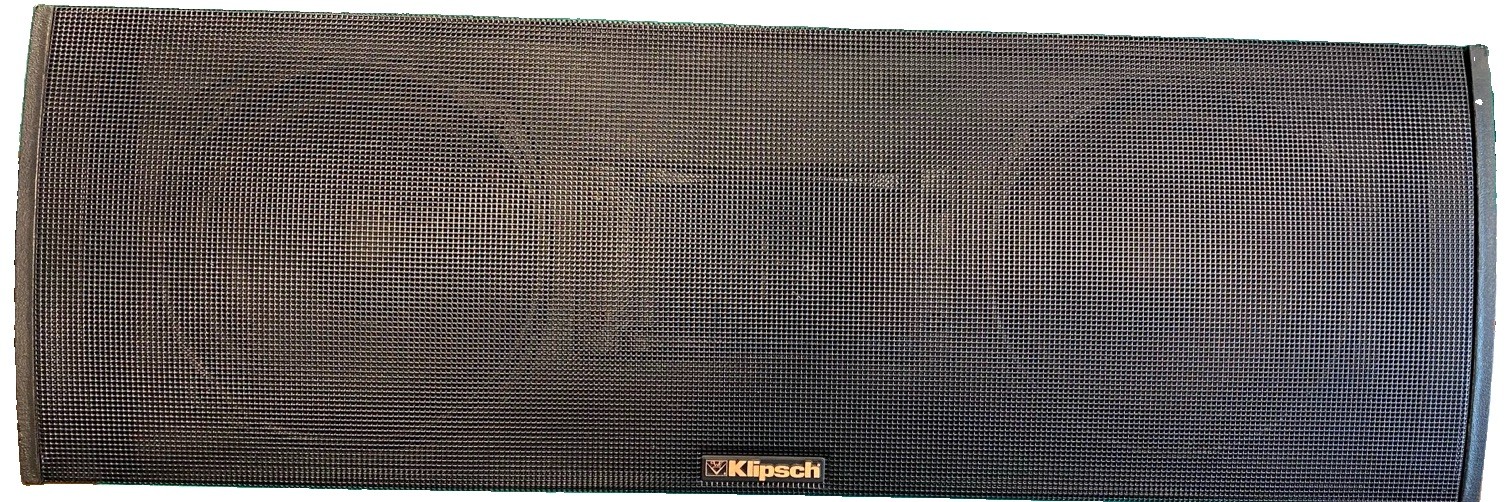

Photos from current listings. Actual item, color, and included accessories may vary.
Klipsch Center Speaker Buying Guide
Klipsch center speakers are horn-loaded, high-sensitivity center channels designed to anchor dialogue in a home theater system. The primary trade-off is horn efficiency and dynamics versus cabinet size and impedance compatibility with your AV receiver. The clear rule: buy a genuine Klipsch horn-loaded center rated 8 ohms and at least 95 dB sensitivity, and skip compact sealed centers with low sensitivity that force receiver strain.
Median $148.88
Key takeaways
- Tractrix horn-loaded tweeters deliver 95-99 dB sensitivity, letting low-power AV receivers drive reference-level dialogue without clipping
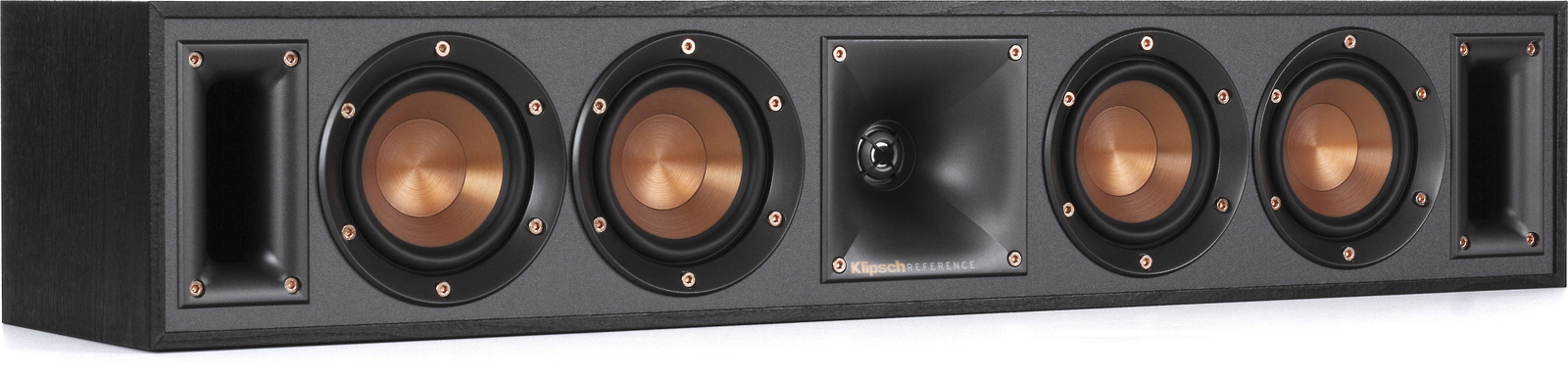
- Reference series uses 1-inch aluminum tweeters with 90x90 Tractrix horns; Premier series upgrades to titanium diaphragms and larger horn mouths
- 8-ohm nominal impedance across most models keeps receivers in their safe 4-8 ohm rated band; 4-ohm models demand receiver-rated 4-ohm stability
At a glance
- Category
- Home Theater Speakers & Subwoofers
- Last updated
- Nov 28, 2026
Current offers
Highlights
- Tractrix horn-loaded tweeters deliver 95-99 dB sensitivity, letting low-power AV receivers drive reference-level dialogue without clipping
- Reference series uses 1-inch aluminum tweeters with 90x90 Tractrix horns; Premier series upgrades to titanium diaphragms and larger horn mouths
- 8-ohm nominal impedance across most models keeps receivers in their safe 4-8 ohm rated band; 4-ohm models demand receiver-rated 4-ohm stability
- Cabinet depth and porting differ by tier: sealed R-34C fits shallow shelves while ported models need rear clearance for bass extension
Best use cases
- Best fit: pair an R-34C or RP-series center with Klipsch Reference or Premier towers and a receiver rated 8 ohms for seamless timbre matching.
- Wrong fit: skip a Klipsch center if your receiver is a budget 4-ohm-limited unit or if your cabinet shelf is under 8 inches deep.
- Best fit: choose a horn-loaded center for large rooms over 250 sq ft where dialogue must cut through at low volume.
- Wrong fit: skip high-sensitivity Klipsch centers in near-field desktop setups where horn dispersion causes harsh off-axis brightness.
Buying tips
- Match center sensitivity within 2 dB of your left/right speakers; Klipsch models at 95-99 dB pair poorly with 86 dB bookshelves.
- Confirm 8-ohm nominal impedance unless your AV receiver explicitly rates 4-ohm continuous output.
- Measure shelf depth: Klipsch centers range roughly 8-12 inches deep, and ported models need 2-3 inches rear clearance.
- Match the tweeter material to your mains: aluminum Reference tweeters pair with aluminum; titanium Premier pairs with titanium.
Specs
| Tweeter Type | Horn-loaded aluminum vs titanium |
|---|---|
| Sensitivity | 95-99 dB (horn) vs 86-89 dB |
| Impedance | 8 ohm nominal / 4 ohm select models |
| Cabinet Depth | 8-12 in; sealed vs rear-ported |
Related searches
What to check before buying
- Measure the center shelf width, depth, and height; verify at least 1 inch clearance above the tweeter horn.
- Confirm AV receiver impedance rating covers 8 ohms nominal and check power per channel at that load.
- Check that left/right speakers share Klipsch horn tweeter architecture for timbre matching.
- Verify room size and listening distance; horn centers suit rooms over 250 sq ft better than near-field spaces.
FAQ
Data sources: eBay / Amazon listings and product attribute feeds. Updated Nov 28, 2026.
Some links on this page are affiliate links. If you buy after clicking one, we may earn a commission at no extra cost to you. This does not change which products appear here or their order. Affiliate disclosure.