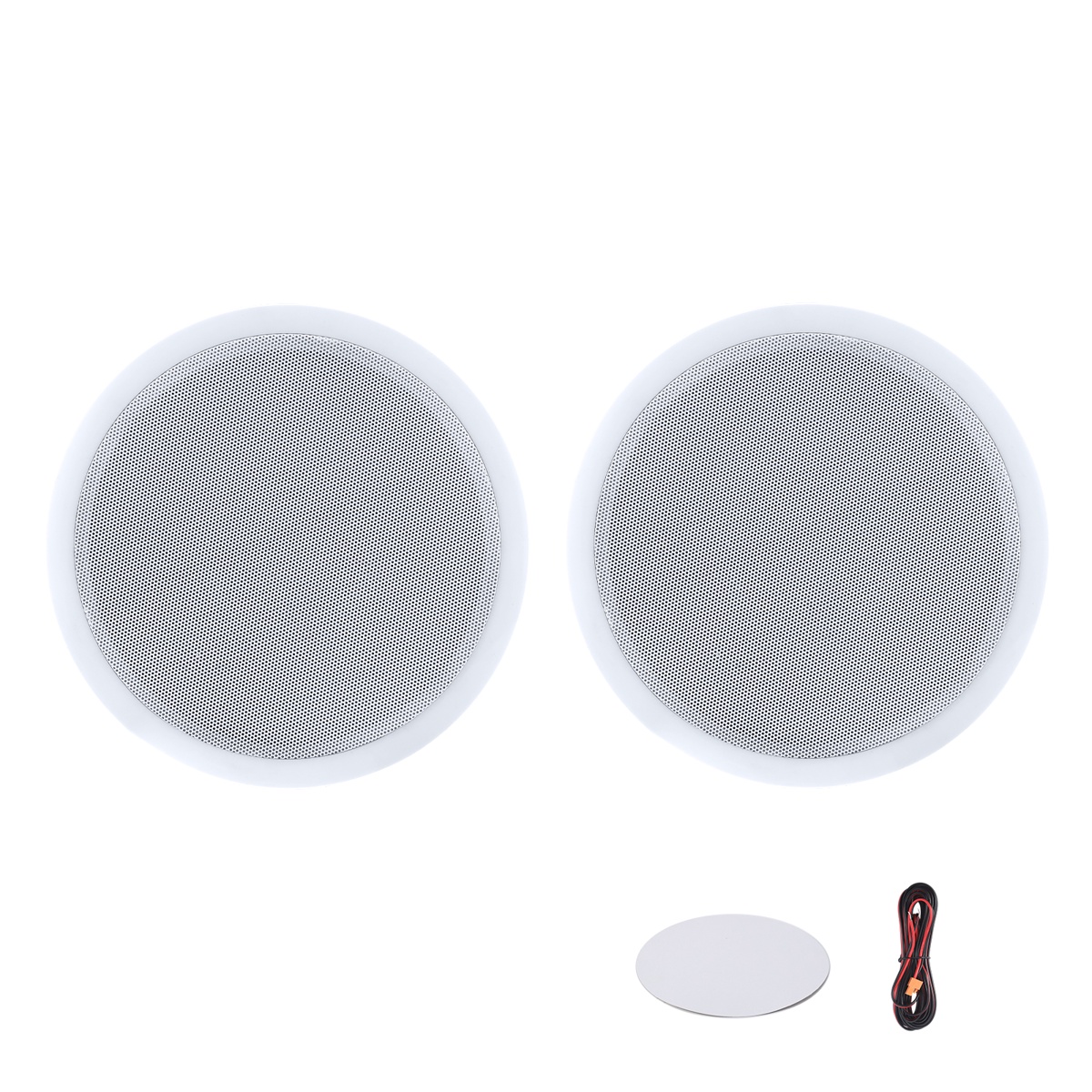

Photos from current listings. Actual item, color, and included accessories may vary.
Home Theater Speaker System Buying Guide
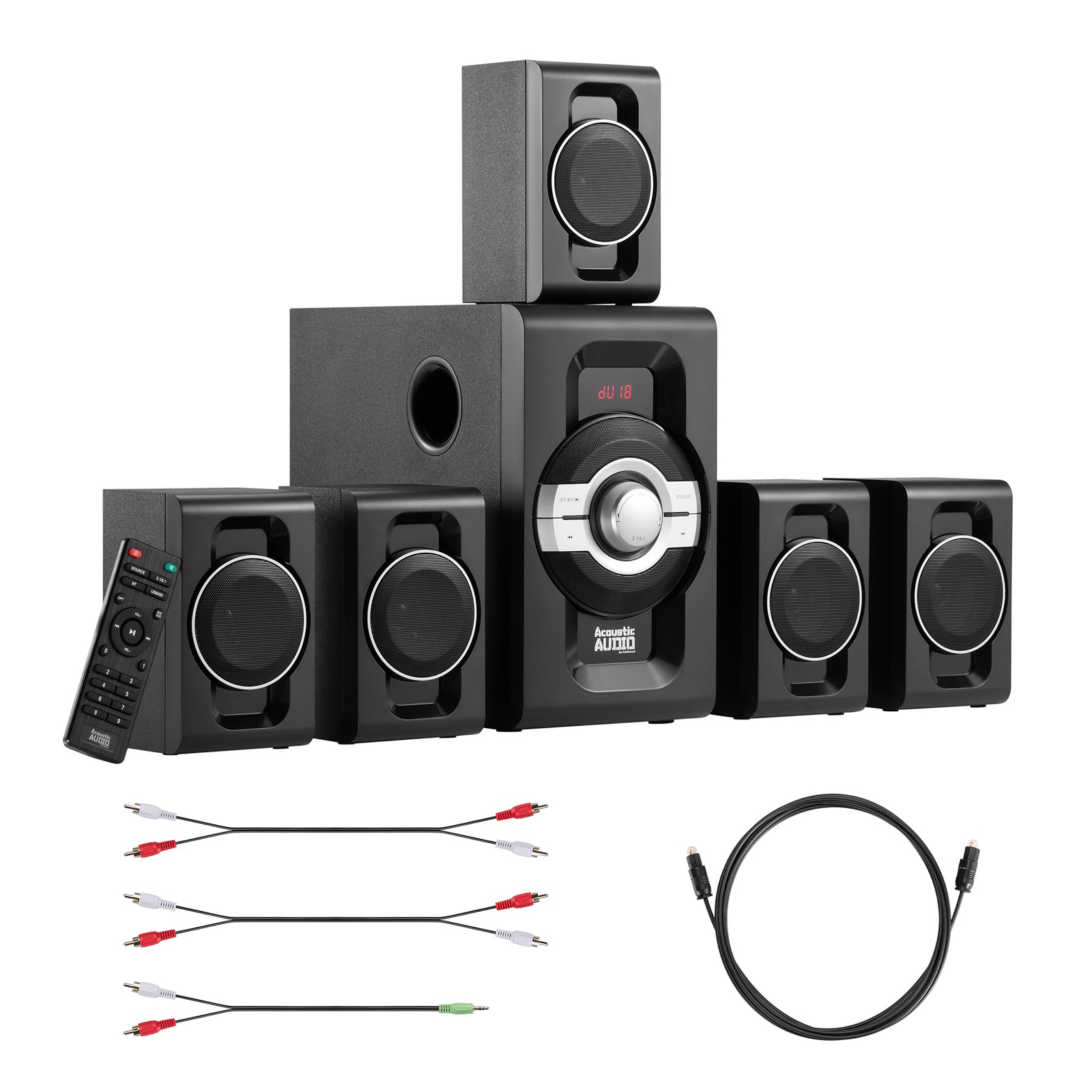
A home theater speaker system is the matched set of cabinets, drivers, and subwoofer that turns a TV or projector into room-filling surround sound. The core trade-off is between compact soundbar packages with virtual processing and true discrete-channel systems with physical rear speakers and a powered subwoofer. Buy a discrete 5.1 or better set if you can place rear speakers and want real directionality; choose a soundbar only when space or wiring makes rear channels impossible.
Median $89.94
Key takeaways
- Channel count defines immersion: 2.0/2.1 is front-only, 5.1 adds discrete surrounds, and 7.1/Atmos adds height or rear-back effects.
- Discrete systems use a powered subwoofer with its own amp and RCA/LFE input, while soundbars typically use a wireless sub with proprietary pairing.
- In-ceiling/in-wall models require 8-ohm impedance and 2-way drivers with moisture-rated cones for humid or covered outdoor placement.
At a glance
- Category
- Home Theater Speakers & Subwoofers
- Last updated
- Nov 28, 2026
Current offers
Highlights
- Channel count defines immersion: 2.0/2.1 is front-only, 5.1 adds discrete surrounds, and 7.1/Atmos adds height or rear-back effects.
- Discrete systems use a powered subwoofer with its own amp and RCA/LFE input, while soundbars typically use a wireless sub with proprietary pairing.
- In-ceiling/in-wall models require 8-ohm impedance and 2-way drivers with moisture-rated cones for humid or covered outdoor placement.
- Amplifier power should exceed speaker RMS by 20-30%; 80W-150W peak ratings on compact bars are sufficient only for small-to-mid rooms.
Best use cases
- Best fit: dedicated media room with seating 8-12 ft from the screen — choose a 5.1 discrete system with a powered sub and place surrounds at 90-110 degrees beside the seats.
- Best fit: apartment or bedroom with no rear-speaker wiring — choose a 2.0/2.1 soundbar with HDMI ARC and a wireless sub; skip discrete surrounds that need cable runs.
- Best fit: new-build or renovated living room where you can run cable before drywall — choose 8-inch in-ceiling/in-wall 2-way speakers plus an external amp and box subwoofer.
- Wrong fit: open-plan room with vaulted ceilings and hard floors — skip compact 80W bars and in-ceiling-only setups; use a sealed subwoofer and absorption or the bass will boom.
Buying tips
- Match subwoofer size to room volume: a 10-inch sub suits rooms under 1,500 cu ft, a 12-inch sub suits 1,500-3,000 cu ft, and dual subs smooth response in larger or odd-shaped rooms.
- For in-ceiling speakers, verify 8-ohm impedance, 2-way crossover, and a moisture-rated or poly cone if the space is humid; 150W peak handling is adequate for typical 20-30W-per-channel amps.
- Check HDMI ARC/eARC or optical input on the bar or AVR; Bluetooth-only bars introduce lip-sync latency that ruins dialog timing for movies.
- Keep speaker sensitivity at 85-90 dB and impedance at 8 ohms for compatibility with most AVRs; 4-ohm loads demand a receiver rated for low-impedance drive.
Specs
| Channel Configuration | 2.0 / 2.1 / 5.1 / 7.1 / Atmos |
|---|---|
| Subwoofer Type | Powered ported vs sealed / passive |
| Speaker Mount | Bookshelf / floorstanding / in-wall / in-ceiling |
| Connection Standard | HDMI ARC/eARC / optical / Bluetooth / RCA |
Related searches
What to check before buying
- Measure the TV width and console depth: a soundbar should be no wider than the TV and no deeper than the console top to avoid blocking the IR receiver.
- Confirm rear-speaker placement: surrounds need 2-3 ft behind or beside the main seats and a path for speaker wire or a power outlet for wireless rear modules.
- Check ceiling joist spacing and cavity depth before buying in-ceiling speakers; 8-inch models typically need 4-6 inches of depth and a 9-10 inch cutout.
- Verify room acoustics: hard floors and bare walls boost treble and bass boom, so budget for a rug and curtains if using a ported subwoofer.
FAQ
Data sources: eBay / Amazon listings and product attribute feeds. Updated Nov 28, 2026.
Some links on this page are affiliate links. If you buy after clicking one, we may earn a commission at no extra cost to you. This does not change which products appear here or their order. Affiliate disclosure.