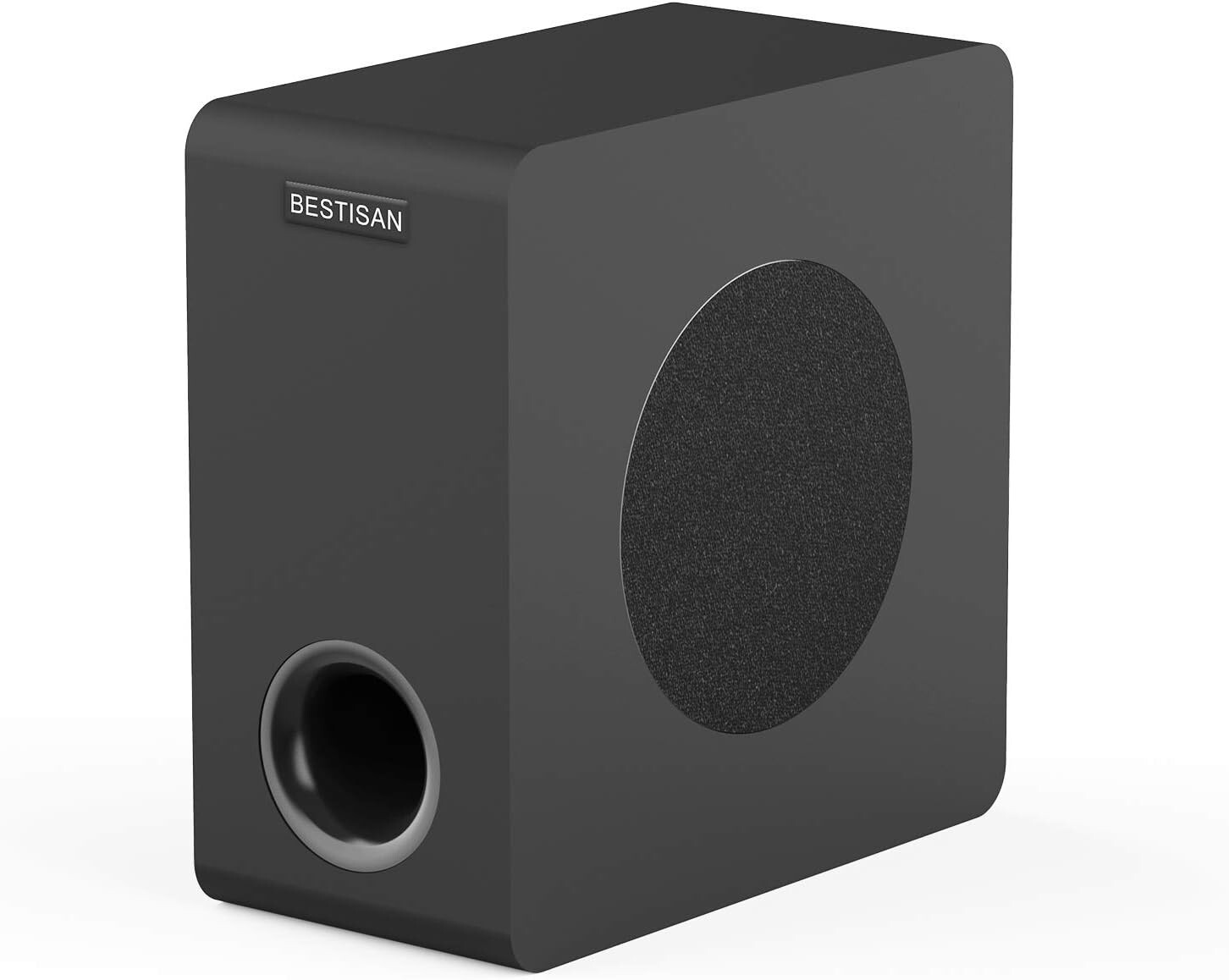

Photos from current listings. Actual item, color, and included accessories may vary.
Home Subwoofer Buying Guide
A home subwoofer is the dedicated low-frequency driver that adds physical depth to movies and music, and the core trade-off is cabinet size/driver diameter versus room integration and amplifier quality. Buyers must choose between sealed and ported alignments, and between a true powered subwoofer with line-level/LFE input and a soundbar bundle. The decision rule: buy a dedicated powered subwoofer with a crossover and LFE input for real home theater; skip passive or soundbar-bundled subs unless space and wiring are absolute constraints.
Median $131.44
Key takeaways
- Driver diameter sets displacement: 8-inch subs suit small rooms, 10-inch is the all-round sweet spot, and 12-inch models move roughly 2.25x the cone area of an 8-inch for deeper output.
- Ported (bass-reflex) cabinets deliver more output per watt around tuning frequency, while sealed cabinets roll off more gradually and integrate better with small rooms and music.
- Class D amplification dominates powered home subs for efficiency and low heat; continuous RMS power matters more than peak wattage claims on listings.
At a glance
- Category
- Home Theater Speakers & Subwoofers
- Last updated
- Nov 28, 2026
Current offers
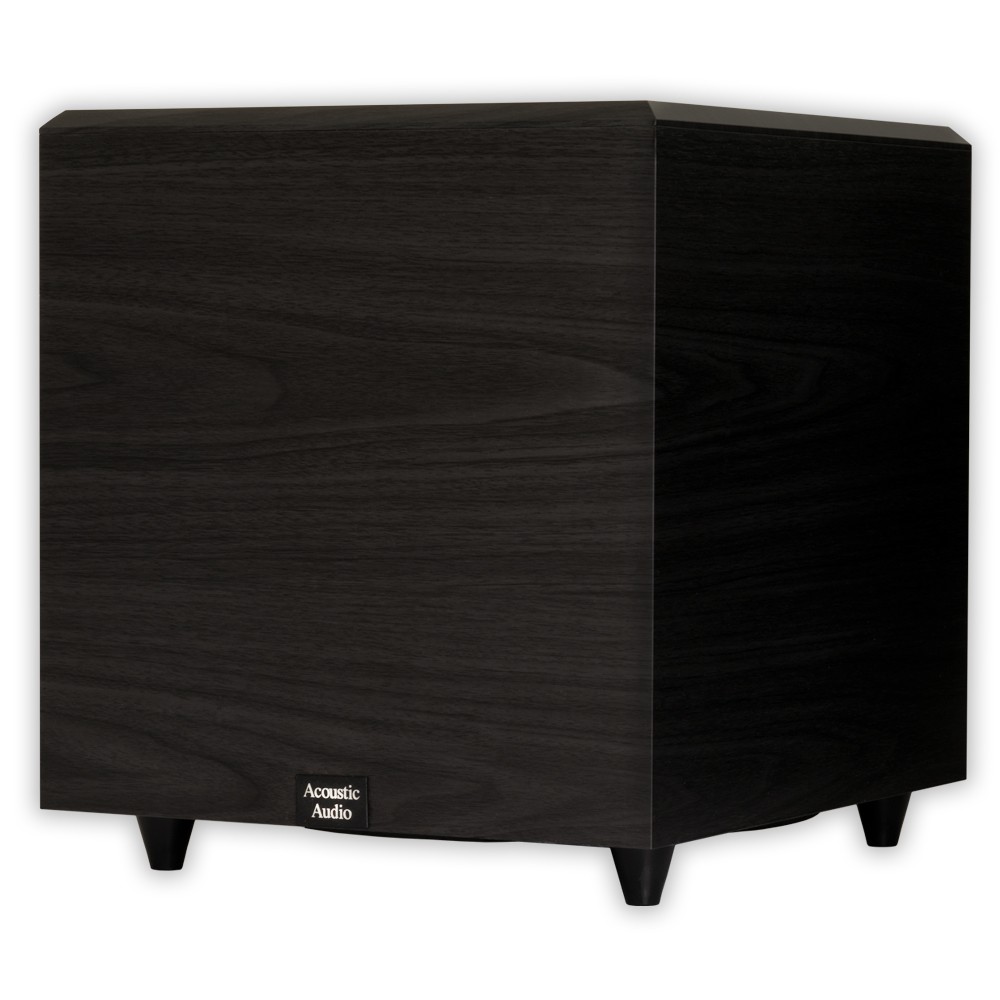
Highlights
- Driver diameter sets displacement: 8-inch subs suit small rooms, 10-inch is the all-round sweet spot, and 12-inch models move roughly 2.25x the cone area of an 8-inch for deeper output.
- Ported (bass-reflex) cabinets deliver more output per watt around tuning frequency, while sealed cabinets roll off more gradually and integrate better with small rooms and music.
- Class D amplification dominates powered home subs for efficiency and low heat; continuous RMS power matters more than peak wattage claims on listings.
- A variable low-pass crossover (typically 40-120 Hz) and a dedicated LFE input are the key connectivity features separating a real home theater sub from a basic add-on.
Best use cases
- Pick a 10-inch or 12-inch ported powered subwoofer for a dedicated movie room with an AV receiver; skip soundbar bundles, which rarely pressurize a large room below 40 Hz.
- Pick a sealed 8-inch or 10-inch powered subwoofer for an apartment or music-first setup where tight, accurate bass matters more than maximum output; skip 15-inch ported cabinets that overwhelm small spaces.
- Pick a soundbar-with-wireless-subwoofer bundle only for a secondary TV in a bedroom or small living area where running speaker cable and placing a separate sub is impractical.
- Skip passive subwoofers unless you already own an AV receiver with a powered subwoofer output; a passive sub needs external amplification and is not a plug-and-play upgrade.
Buying tips
- Match subwoofer size to room volume: 8-inch for under roughly 1,500 cubic feet, 10-inch for 1,500-3,000 cubic feet, and 12-inch or dual subs above that.
- Confirm the sub has both an LFE input and a variable crossover; an LFE-only input minus crossover limits integration with stereo gear.
- Check amplifier power as continuous RMS, not peak: a genuine 150-300W RMS Class D plate amp is typical for 10-12 inch home subs.
- Verify cabinet construction: MDF cabinets with internal bracing resist resonance; thin plastic enclosures flex and color the bass at high output.
Specs
| Driver Size | 8 / 10 / 12 / 15 inch |
|---|---|
| Amplifier Type | Powered Class D vs Passive |
| Cabinet Alignment | Sealed vs Ported (bass-reflex) |
| Connectivity | LFE / line-in + variable crossover |
Related searches
What to check before buying
- Measure the placement footprint and available depth from the wall; ported subs need several inches of clearance behind the port.
- Confirm your AV receiver or TV has a subwoofer pre-out or LFE output before buying a powered sub.
- Check the sub's voltage and plug standard matches your region (120V North America vs 230V Europe) and that the power cord reaches an outlet.
- For soundbar bundles, verify the wireless sub pairs with the specific bar model and that the bar has the HDMI ARC or optical input your TV provides.
FAQ
Data sources: eBay / Amazon listings and product attribute feeds. Updated Nov 28, 2026.
Some links on this page are affiliate links. If you buy after clicking one, we may earn a commission at no extra cost to you. This does not change which products appear here or their order. Affiliate disclosure.