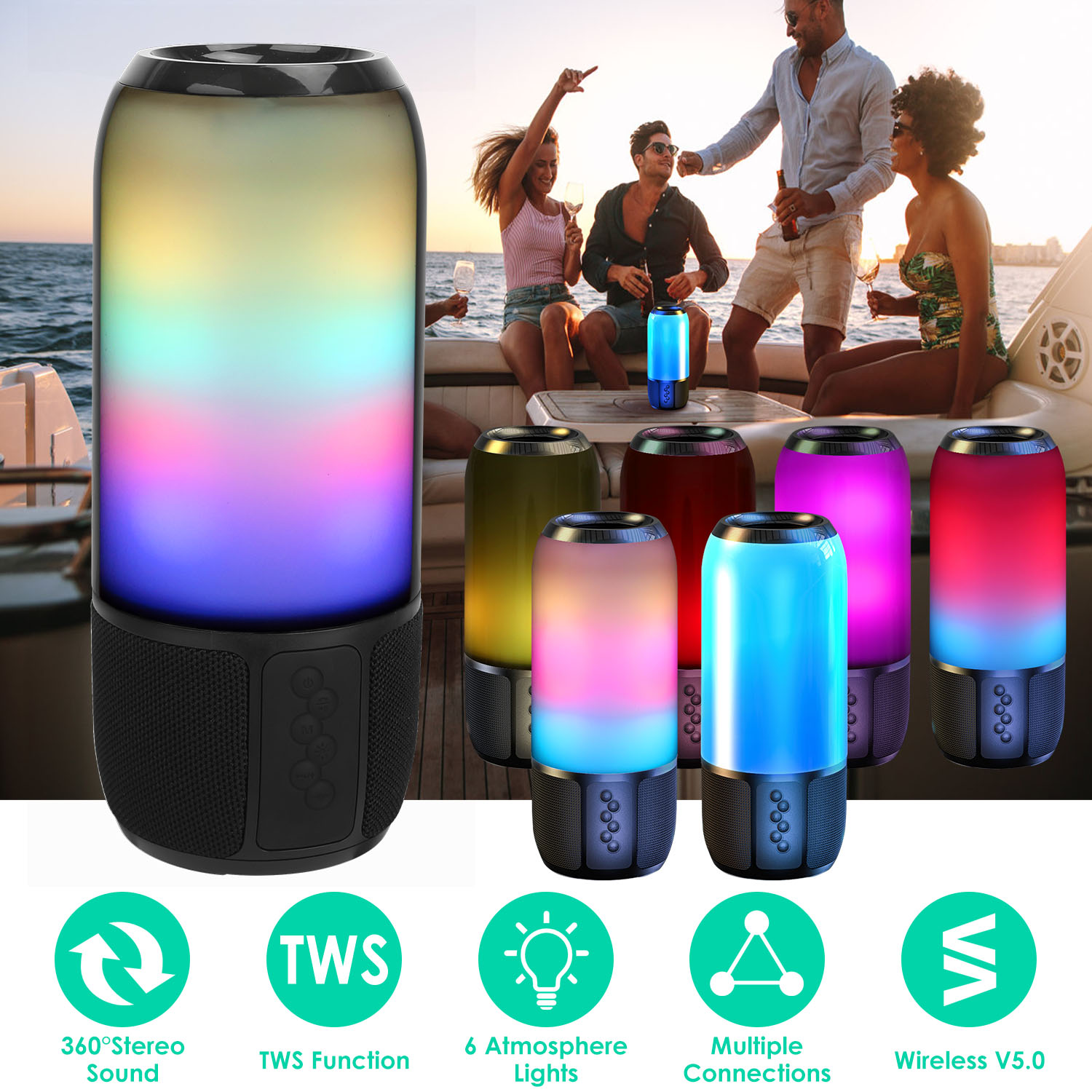

Photos from current listings. Actual item, color, and included accessories may vary.
Home Stereo Speaker Buying Guide
Home stereo speakers are passive or powered loudspeakers designed for two-channel music listening, where the decisive trade-off is cabinet rigidity and driver quality versus features like Bluetooth and RGB lighting. A true stereo pair uses matched left/right drivers with at least 1-inch tweeters and 5-inch woofers in rigid MDF cabinets; plastic-cased battery-powered party units with TWS are portable accessories, not stereo speakers. The decision rule: buy a matched passive pair plus an amplifier, or a powered pair with discrete tweeter/woofer drivers, and skip single-unit plastic Bluetooth boxes if stereo imaging and fidelity matter.
Key takeaways
- Driver complement determines clarity: a dedicated 1-inch silk or metal dome tweeter crossed over near 2-3 kHz outperforms full-range 3-inch drivers, which beam and distort at higher volumes.
- Cabinet material drives resonance: 15-18 mm MDF with internal bracing controls cabinet flex; thin plastic enclosures resonate audibly and suit portability, not critical listening.
- Power architecture splits into passive (4-8 ohm, needs 50-150 W per channel amplification) and active (built-in Class D, 2x15-2x50 W), with active pairs simplifying setup at the cost of upgrade paths.
At a glance
- Category
- Home Theater Speakers & Subwoofers
- Last updated
- Nov 28, 2026
Current offers
Highlights
- Driver complement determines clarity: a dedicated 1-inch silk or metal dome tweeter crossed over near 2-3 kHz outperforms full-range 3-inch drivers, which beam and distort at higher volumes.
- Cabinet material drives resonance: 15-18 mm MDF with internal bracing controls cabinet flex; thin plastic enclosures resonate audibly and suit portability, not critical listening.
- Power architecture splits into passive (4-8 ohm, needs 50-150 W per channel amplification) and active (built-in Class D, 2x15-2x50 W), with active pairs simplifying setup at the cost of upgrade paths.
- Connectivity tiers matter: balanced analog/RCA and optical/HDMI ARC inputs serve TV and hi-fi chains, while Bluetooth-only units cap fidelity at lossy codecs and add latency for video.
Best use cases
- Best for music-first living rooms: pick a matched passive bookshelf pair (5-6.5-inch woofer, 1-inch tweeter, 8 ohm) plus a 50-100 W stereo amp for the best fidelity per dollar.
- Best for desk/nearfield or apartment setups: choose powered 2-way monitors with 4-5-inch woofers and rear ports, placed 1-2 m apart, to avoid needing a separate amplifier.
- Wrong fit: single plastic Bluetooth party speakers with RGB lights are portable outdoor accessories; skip them for stereo imaging, vinyl, or TV dialogue clarity.
- Wrong fit: tower speakers in rooms under 12 square meters overload bass modes; use bookshelf speakers on stands instead of floorstanders.
Buying tips
- Match amplifier power to speaker sensitivity: 87-90 dB speakers need 50-100 W per channel; below 85 dB sensitivity, choose 100 W+ or high-current amplification.
- Keep impedance within amp rating: 8-ohm speakers suit nearly all receivers; 4-ohm loads demand amps rated for 4-ohm continuous output to avoid overheating.
- Size the woofer to the room: 4-5 inch drivers suit desks and small rooms; 6.5-inch and dual 6.5-inch towers fill 20-30 square meter rooms without a subwoofer.
- Insist on a matched pair with identical drivers and crossover; mismatched or single-unit 'stereo' boxes cannot produce a stable center image or accurate left-right panning.
Specs
| Speaker Type | Passive pair vs powered/active pair |
|---|---|
| Driver Complement | 1-inch tweeter + 5-6.5-inch woofer |
| Cabinet Material | 15-18 mm MDF vs plastic enclosure |
| Impedance / Power | 8 ohm, 50-150 W per channel |
Related searches
What to check before buying
- Measure placement width and wall distance: bookshelf pairs need 1.5-3 m spacing and 20-30 cm rear clearance for ported cabinets.
- Confirm amplifier or powered-speaker inputs match your source: RCA/optical for TV and DACs, 3.5 mm or USB for computers, Bluetooth only as a convenience.
- Check voltage and plug standard for powered models (100-240 V switching versus fixed 120 V) before importing.
- Verify stands or isolation pads and speaker cable gauge: 16 AWG for runs under 8 m, 14 AWG for longer runs; banana plugs require 4 mm binding posts.
FAQ
Data sources: eBay / Amazon listings and product attribute feeds. Updated Nov 28, 2026.
Some links on this page are affiliate links. If you buy after clicking one, we may earn a commission at no extra cost to you. This does not change which products appear here or their order. Affiliate disclosure.