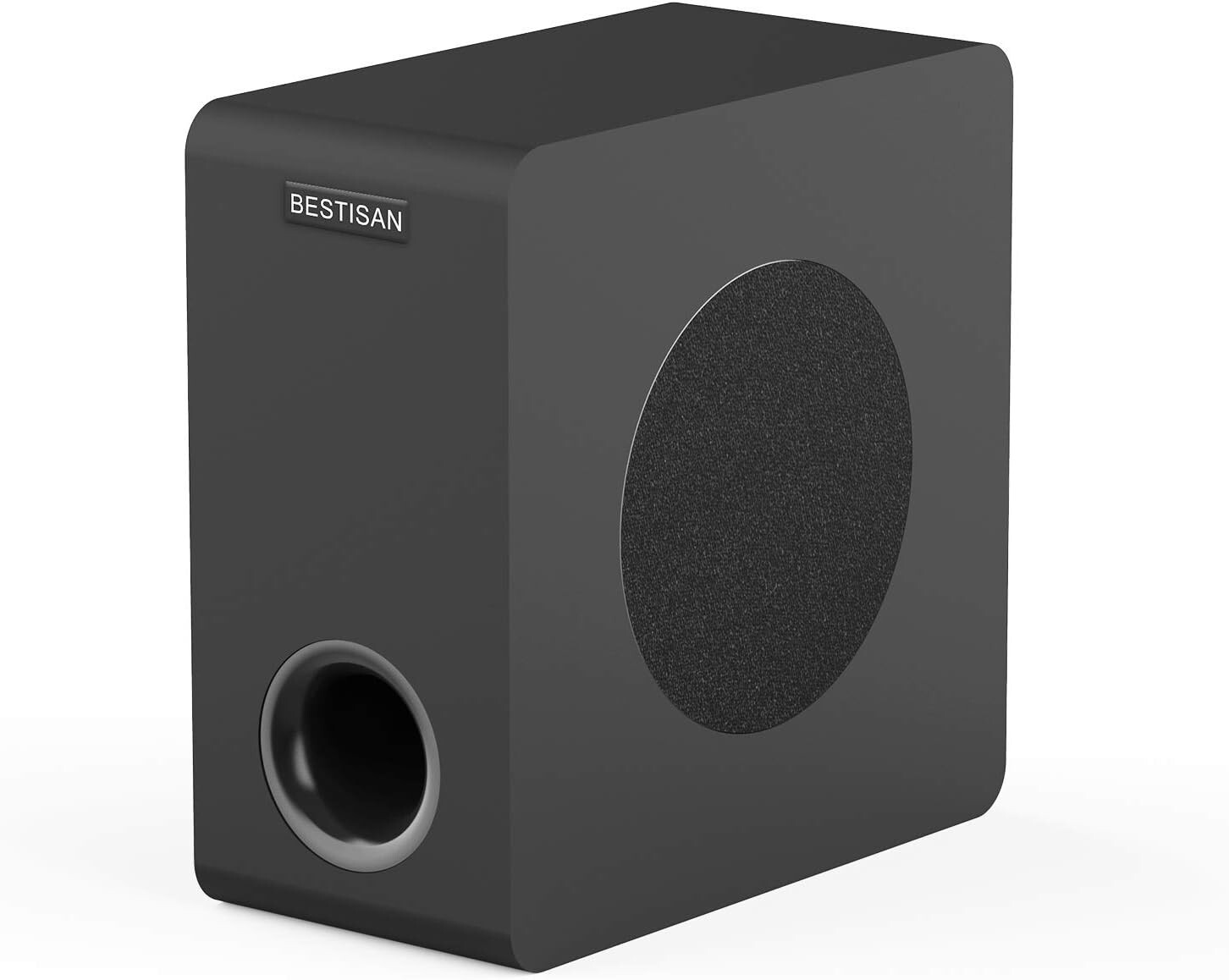

Photos from current listings. Actual item, color, and included accessories may vary.
Home Audio Subwoofer Buying Guide
A home audio subwoofer is the dedicated low-frequency channel that adds physical bass impact and .1 LFE information to a stereo or surround system. The core trade-off is driver size and cabinet volume versus amplifier power and room integration—bigger cones move more air but demand placement space and boundary management. Durable, decisive options pair a real plate amplifier (100W+ RMS) with a rigid MDF cabinet and line/LFE inputs; compromises use undersized amps, thin particleboard, or single-input designs that limit receiver and stereo compatibility.
Median $131.44
Key takeaways
- Driver size dictates displacement: 6.5-inch cones suit small rooms and desktop/nearfield systems, 10-inch is the home-theater sweet spot, and 12-inch models deliver the output and extension for medium-to-large rooms.
- Amplifier class matters more than peak wattage: Class D plate amps run cooler and more efficiently, while honest continuous/RMS ratings (not 'peak' or 'max') determine real output and distortion headroom.
- Connectivity separates tiers: LFE RCA plus stereo line-level inputs allow both AV receiver and integrated-amp use; speaker-level inputs are required only for amps lacking a subwoofer pre-out.
At a glance
- Category
- Home Theater Speakers & Subwoofers
- Last updated
- Nov 28, 2026
Current offers
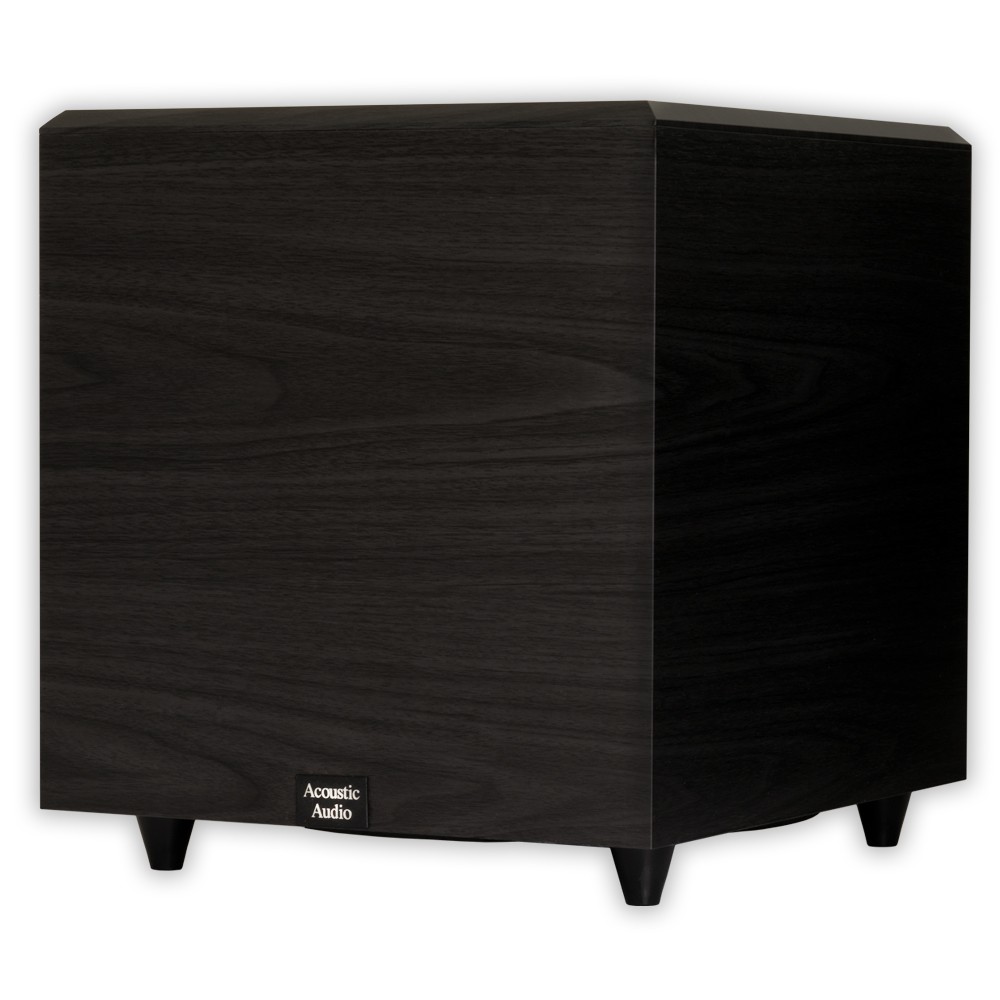
Highlights
- Driver size dictates displacement: 6.5-inch cones suit small rooms and desktop/nearfield systems, 10-inch is the home-theater sweet spot, and 12-inch models deliver the output and extension for medium-to-large rooms.
- Amplifier class matters more than peak wattage: Class D plate amps run cooler and more efficiently, while honest continuous/RMS ratings (not 'peak' or 'max') determine real output and distortion headroom.
- Connectivity separates tiers: LFE RCA plus stereo line-level inputs allow both AV receiver and integrated-amp use; speaker-level inputs are required only for amps lacking a subwoofer pre-out.
- Cabinet construction and tuning define sound quality: braced MDF with a rear or front port (or sealed alignment) controls resonance; thin particleboard and untuned ports produce boomy, one-note bass.
Best use cases
- Best fit for apartments and small bedrooms: a 6.5-inch to 8-inch front-ported sub with 50-150W RMS and LFE input, placed near a wall for boundary gain—skip 12-inch ported cabinets that overload the room.
- Best fit for dedicated home theater in a medium/large room: a 10-inch to 12-inch sub with 200-500W RMS, LFE input, and crossover bypass, ideally two units for even seat-to-seat response—skip undersized 6.5-inch models that bottom out on LFE peaks.
- Best fit for stereo/2.1 music systems: a sealed 8-inch to 10-inch sub with stereo line inputs and a variable low-pass (40-120Hz) for blending with bookshelf speakers—skip AV-only LFE inputs with fixed crossovers.
- Wrong fit: buying a passive subwoofer without checking that your receiver or amp has a powered subwoofer output—passive subs need an external amplifier and are not plug-and-play.
Buying tips
- Size the driver to room volume: up to ~1,500 cu ft use 6.5-8 inch; 1,500-3,000 cu ft use 10-12 inch; above 3,000 cu ft or open floor plans use 12-inch ported or dual subs.
- Match the sub's crossover range to your main speakers: mains with 5.25-inch woofers cross at 80-100Hz, 6.5-inch at 60-80Hz; confirm the sub's low-pass covers the needed setting.
- Prioritize RMS over peak power and insist on an LFE RCA input plus stereo line inputs for maximum receiver and stereo-amp compatibility.
- Prefer braced MDF cabinets with front or rear ports you can position freely; sealed designs offer tighter transient response but need more amplifier power for equal output.
Specs
| Driver Size | 6.5 / 8 / 10 / 12 inch |
|---|---|
| Amplifier Class | Class D plate / Class AB |
| Cabinet Alignment | Ported (front/rear) / Sealed |
| Inputs | LFE RCA / Stereo line / Speaker-level |
Related searches
What to check before buying
- Measure the placement footprint and available depth, including port clearance: rear-ported subs need 6-12 inches from the wall, front-ported models can sit closer.
- Confirm your receiver/amp has a subwoofer pre-out (RCA) or speaker-level outputs if the sub lacks line inputs—passive subs require a separate power amplifier.
- Check floor type and neighbors: down-firing or high-output ported subs transmit more vibration through wood floors; use isolation pads or choose sealed for apartments.
- Verify voltage and plug standard (120V US vs 230V EU) and that the sub ships with the correct power cable for your region.
FAQ
Data sources: eBay / Amazon listings and product attribute feeds. Updated Nov 28, 2026.
Some links on this page are affiliate links. If you buy after clicking one, we may earn a commission at no extra cost to you. This does not change which products appear here or their order. Affiliate disclosure.