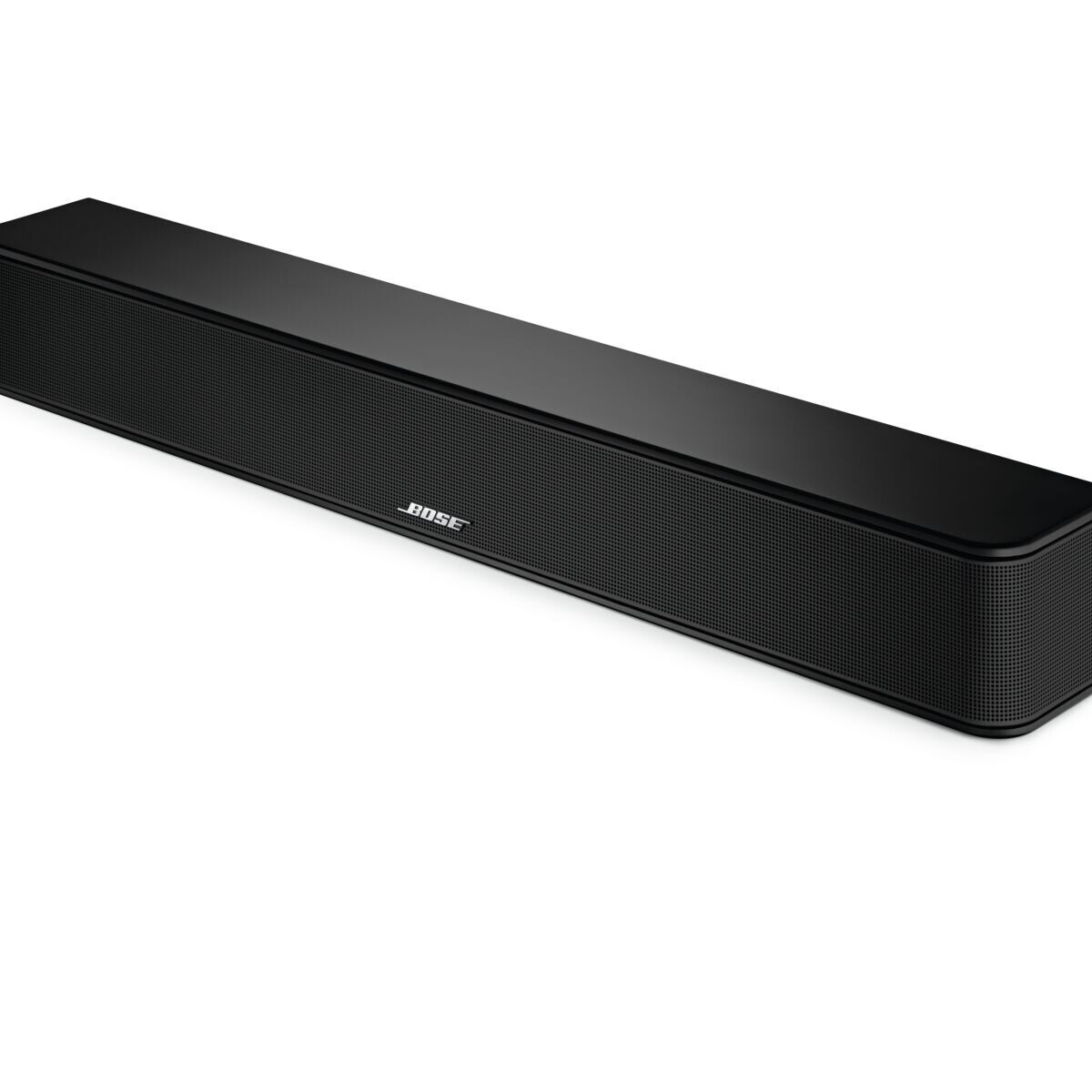

Photos from current listings. Actual item, color, and included accessories may vary.
Bose Speaker Buying Guide
Bose speakers span soundbars, compact satellite systems, and subwoofer-satellite packages, with the primary trade-off between proprietary DSP/room-calibration convenience and raw driver/amplifier headroom at a given size. Durable options use sealed or ported MDF cabinets with dedicated tweeters and a real subwoofer; compromises rely on single full-range drivers and plastic housings that limit output and bass extension. The decision rule: match the acoustic architecture (soundbar vs 2.1 vs 5.1) to room size and source gear, and skip any tier that cannot accept your TV's HDMI-eARC or optical output.
Key takeaways
- Bose soundbars split into Solo (2-channel, optical-only) and Smart (HDMI-eARC, Wi-Fi, app EQ) tiers—the Solo lacks HDMI and room calibration.
- Compact satellite systems use 2.5–3 inch full-range drivers in sealed plastic enclosures; adding the matching subwoofer module extends bass to roughly 40–50 Hz.
- Refurbished Bose units carry the same DSP tuning but may ship with older remote revisions; confirm the included cable set (optical, HDMI, power) before install.
At a glance
- Category
- Home Theater Speakers & Subwoofers
- Last updated
- Nov 28, 2026
Current offers
Highlights
- Bose soundbars split into Solo (2-channel, optical-only) and Smart (HDMI-eARC, Wi-Fi, app EQ) tiers—the Solo lacks HDMI and room calibration.
- Compact satellite systems use 2.5–3 inch full-range drivers in sealed plastic enclosures; adding the matching subwoofer module extends bass to roughly 40–50 Hz.
- Refurbished Bose units carry the same DSP tuning but may ship with older remote revisions; confirm the included cable set (optical, HDMI, power) before install.
- Subwoofer-satellite packages cross over around 200 Hz, so satellite placement near ear height matters more than subwoofer corner-loading for dialogue clarity.
Best use cases
- Choose a Solo-tier soundbar for a small bedroom TV with optical output only—skip it if your TV is HDMI-eARC-only and you want one-cable control.
- Pick a 2.1 soundbar-plus-subwoofer set for a 150–250 sq ft living room where dialogue clarity and modest bass matter more than surround channels.
- Select a satellite/subwoofer 5.1 package only if the room has rear-wall or side-wall mounting points; skip it for open-plan spaces with no rear boundary.
- Skip compact Bose speakers as a sole solution for a large 400+ sq ft room—they lack the cabinet volume and amplifier headroom for reference-level output.
Buying tips
- Match the soundbar width to your TV stand: a bar wider than the TV base overhangs visibly; measure the stand depth (typically 10–12 inches) before choosing.
- Confirm HDMI-eARC on both TV and bar for one-cable control; optical-only Solo-tier bars cannot pass Dolby Atmos or CEC power/volume commands.
- For satellite packages, budget speaker wire runs to rear positions—most Bose satellites use proprietary or spring-clip terminals, so pre-run 16–18 AWG wire.
- Refurbished units are viable when they include the original power adapter and remote; missing adapters are the most common failure point on older Solo models.
Specs
| Bar Architecture | 2.0 Solo vs 2.1/5.1 Smart |
|---|---|
| TV Connection | Optical-only vs HDMI-eARC |
| Satellite Driver Size | 2.5–3 in full-range |
| Subwoofer Crossover | ~200 Hz satellite-to-sub |
Related searches
What to check before buying
- Measure TV stand width and depth—soundbar must sit fully on the stand without blocking the TV's IR receiver or bottom bezel.
- Verify TV outputs: HDMI-eARC for Smart-tier bars, optical (TOSLINK) for Solo-tier, and check whether the TV passes Dolby Digital via optical.
- For 5.1 packages, confirm rear speaker mounting height (ear level at seated position) and that walls or stands exist within wire-run distance.
- Check room volume: under 150 sq ft suits compact bars; 150–300 sq ft suits 2.1; over 300 sq ft needs a dedicated subwoofer and larger satellites.
FAQ
Data sources: eBay / Amazon listings and product attribute feeds. Updated Nov 28, 2026.
Some links on this page are affiliate links. If you buy after clicking one, we may earn a commission at no extra cost to you. This does not change which products appear here or their order. Affiliate disclosure.