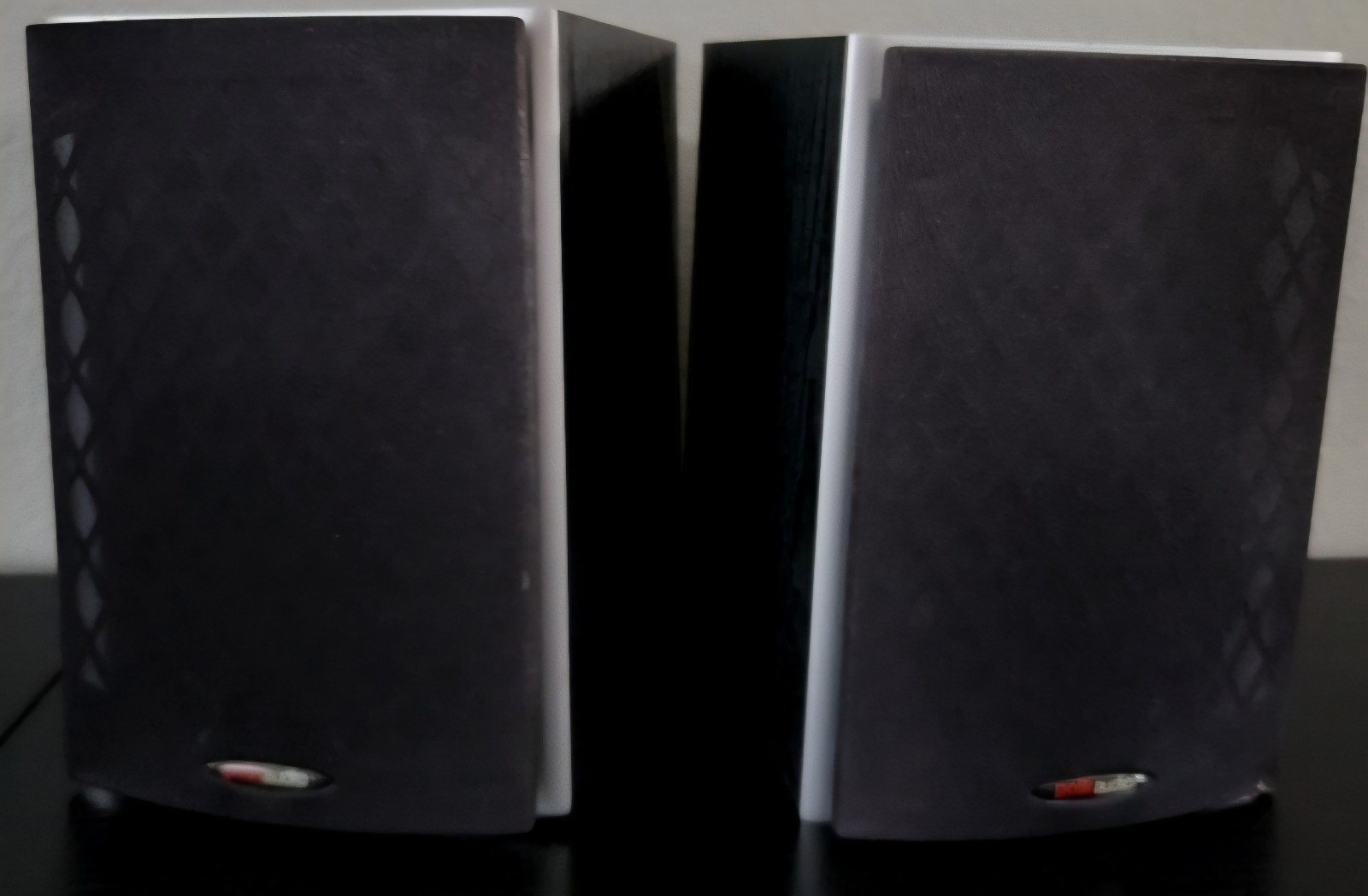

Photos from current listings. Actual item, color, and included accessories may vary.
Bookshelf Speaker Buying Guide
Bookshelf speakers are compact passive or powered two-way designs that trade deep bass extension and efficiency for placement flexibility and midrange accuracy. The primary engineering fork is acoustic suspension vs rear-ported bass alignment and paper/woofer vs poly/dome tweeter material; pick sealed cabinets for tight small-room bass and wall proximity, rear-ported models only with 12–18 inches of rear clearance. Durable options use 0.75-inch MDF or thicker cabinets, real crossover networks with film capacitors, and 5-way binding posts; compromises use 0.5-inch particleboard, single-capacitor tweeter protection, and spring-clip terminals.
Median $67.47
Key takeaways
- Cabinet material: 0.75-inch MDF with internal bracing damps resonance below 200 Hz; 0.5-inch particleboard rings audibly at high SPL.
- Bass alignment: sealed acoustic suspension rolls off gently at 12 dB/octave for wall-adjacent placement; rear ports add 3–6 dB output near tuning but demand 12–18 inches rear clearance.
- Woofer sizing: a 5.25-inch midwoofer crosses to a 1-inch tweeter near 2.5–3 kHz for smooth directivity; 6.5-inch models push crossover near 2 kHz but need 0.75-inch tweeter to avoid beaming.
At a glance
- Category
- Home Theater Speakers & Subwoofers
- Last updated
- Nov 28, 2026
Current offers
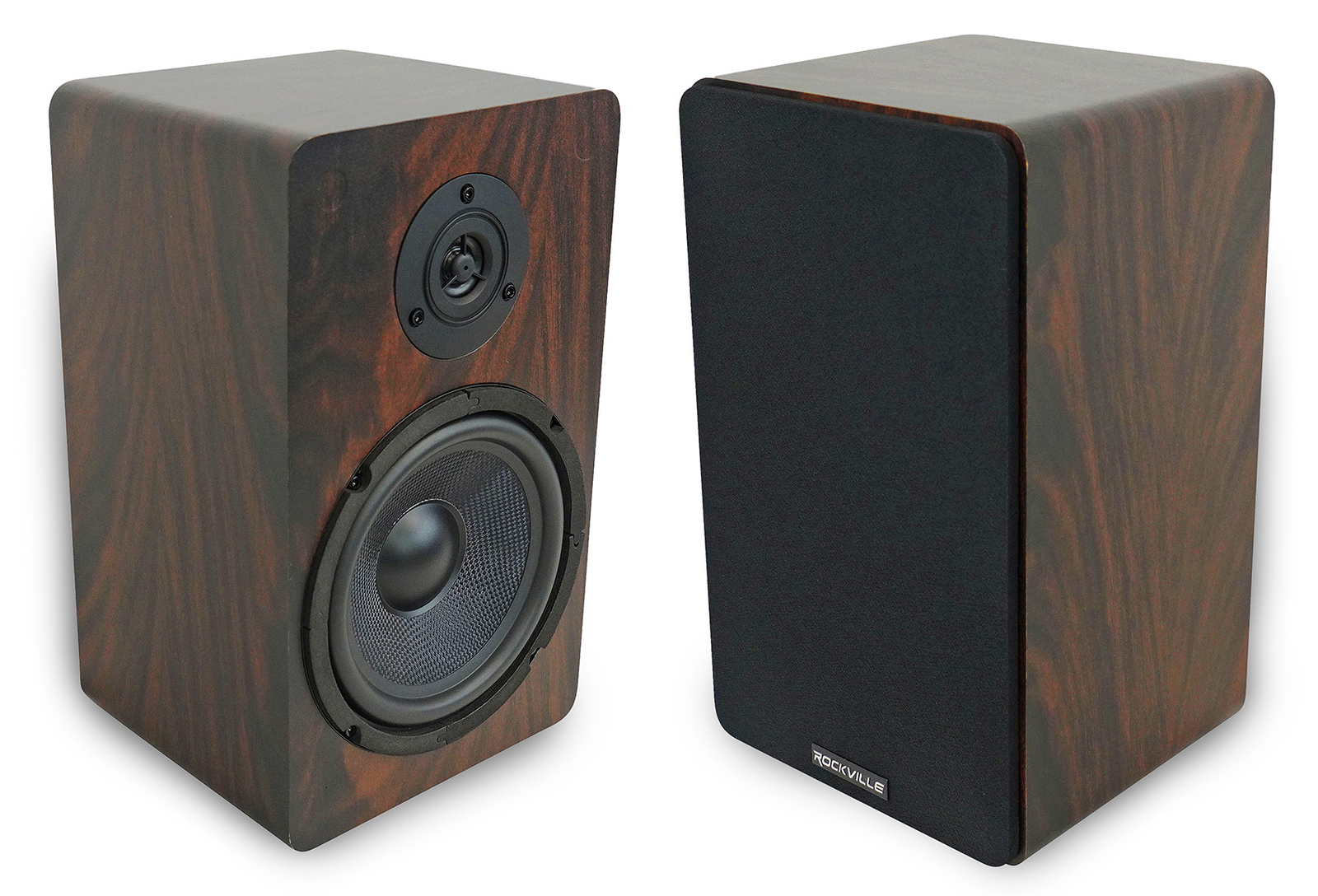
Highlights
- Cabinet material: 0.75-inch MDF with internal bracing damps resonance below 200 Hz; 0.5-inch particleboard rings audibly at high SPL.
- Bass alignment: sealed acoustic suspension rolls off gently at 12 dB/octave for wall-adjacent placement; rear ports add 3–6 dB output near tuning but demand 12–18 inches rear clearance.
- Woofer sizing: a 5.25-inch midwoofer crosses to a 1-inch tweeter near 2.5–3 kHz for smooth directivity; 6.5-inch models push crossover near 2 kHz but need 0.75-inch tweeter to avoid beaming.
- Impedance and sensitivity: 8-ohm nominal with 86–90 dB sensitivity works with 20–50 Wpc receivers; 4-ohm nominal with 84 dB or lower demands 100 Wpc stable amps.
Best use cases
- Vinyl-first two-channel: choose a sealed or front-ported 5.25–6.5-inch pair with 86–90 dB sensitivity and 8-ohm nominal so a 30–50 Wpc integrated phono amp drives cleanly; skip 4-ohm 84 dB models.
- Home theater L/R in a cabinet: pick sealed acoustic suspension with magnetic grilles and 12-inch max height to fit shelf depth; skip rear-ported models against a wall.
- Desktop nearfield at 3–4 feet: choose 4–5.25-inch woofers with front ports or sealed cabinets and 5-way binding posts; skip 6.5-inch rear-ported models that load the desk boundary.
- Large open room over 300 sq ft: step up to 6.5-inch 3-way or tower speakers with 100 Wpc amplification; bookshelf pairs alone will not deliver 35 Hz output.
Buying tips
- Measure shelf depth and height first: add 2 inches to speaker depth for rear ports and binding-post clearance; a 6.5-inch two-way is typically 13–15 inches tall and 9–11 inches deep.
- Match amplifier power to impedance: 8-ohm nominal with 86 dB needs 2× the power of 89 dB for the same SPL; 4-ohm nominal below 84 dB needs an amp rated 100 Wpc into 4 ohms.
- Keep rear-ported cabinets 12–18 inches from the front wall; sealed cabinets can sit 2–6 inches from the wall with minimal bass boom.
- Use stands or isolation pads to raise tweeters to ear height (typically 36–40 inches seated); decouple with rubber or foam pads to reduce desk and shelf resonance.
Specs
| Cabinet Build | 0.75-in MDF vs 0.5-in particleboard |
|---|---|
| Bass Alignment | Sealed acoustic vs rear-ported |
| Woofer Size | 4-in / 5.25-in / 6.5-in two-way |
| Impedance / Sensitivity | 8 ohm 86-90 dB / 4 ohm 84 dB |
Related searches
What to check before buying
- Shelf or stand footprint: confirm width, depth, and height with 2 inches rear clearance for ports and 4 inches above the tweeter for boundary-free treble.
- Amplifier compatibility: verify 4-ohm stability and continuous power per channel at 8 ohms; a 20 Wpc tube amp pairs only with 8-ohm 88 dB+ speakers.
- Room acoustics: hard floors and bare walls need sealed cabinets and front-ported designs; carpeted rooms tolerate rear ports with 18-inch clearance.
- Connection standard: confirm 5-way binding posts accept banana plugs, spade lugs, or bare 14–16 AWG wire; spring clips limit cable gauge and bi-wiring.
FAQ
Data sources: eBay / Amazon listings and product attribute feeds. Updated Nov 28, 2026.
Some links on this page are affiliate links. If you buy after clicking one, we may earn a commission at no extra cost to you. This does not change which products appear here or their order. Affiliate disclosure.