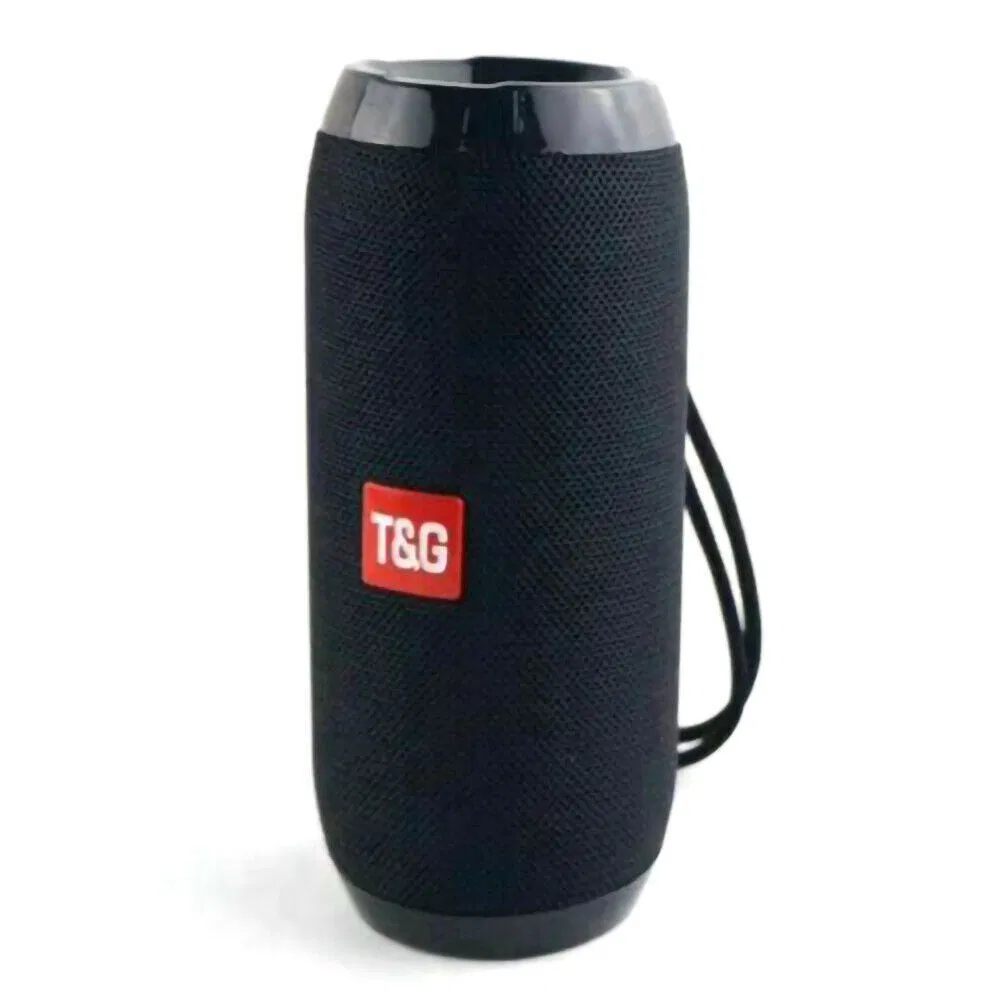

Photos from current listings. Actual item, color, and included accessories may vary.
Bass Bluetooth Speaker Buying Guide
A bass Bluetooth speaker is a portable, battery-powered audio system engineered to reproduce low frequencies below roughly 200 Hz with enough authority to be felt, not just heard. The core trade-off is size and driver excursion versus portability and battery life: physics dictates that deeper bass requires more air movement, which means larger cabinets, bigger drivers, and more amplifier power. The decision rule is simple: buy a model that specifies driver diameter (at least 50mm woofer or passive radiator) and honest power figures; skip any listing that promises 'super deep bass' without stating driver size, enclosure volume, or frequency response.
Median $72.99
Key takeaways
- Bass output is governed by total driver surface area and cabinet volume: a single 50mm driver cannot move as much air as dual 70mm drivers or a dedicated passive radiator, so check driver count and diameter before trusting 'deep bass' claims.
- Passive radiators (drone cones) extend low-frequency response in sealed portable cabinets without port noise, and are the most reliable indicator of genuine bass tuning in a battery speaker under 2kg.
- Peak power ratings on portable speakers are marketing figures measured at 10% THD; continuous RMS power is typically 30-50% of peak, so a '200W peak' unit often delivers 60-100W RMS across all drivers.
At a glance
- Category
- Home Theater Speakers & Subwoofers
- Last updated
- Nov 28, 2026
Current offers
Highlights
- Bass output is governed by total driver surface area and cabinet volume: a single 50mm driver cannot move as much air as dual 70mm drivers or a dedicated passive radiator, so check driver count and diameter before trusting 'deep bass' claims.
- Passive radiators (drone cones) extend low-frequency response in sealed portable cabinets without port noise, and are the most reliable indicator of genuine bass tuning in a battery speaker under 2kg.
- Peak power ratings on portable speakers are marketing figures measured at 10% THD; continuous RMS power is typically 30-50% of peak, so a '200W peak' unit often delivers 60-100W RMS across all drivers.
- IPX7 waterproofing requires sealed gaskets and waterproof driver cones, which can stiffen suspension and slightly reduce low-frequency extension compared to non-waterproof versions of the same driver.
Best use cases
- Best fit: outdoor gatherings and patio use — pick an IPX7-rated model with a passive radiator and at least 20W RMS, because wind and open air swallow bass and waterproofing prevents rain damage.
- Best fit: indoor room filling — choose a mains-powered or large-cabinet Bluetooth speaker with a 4-inch or larger woofer; battery portables under 1kg physically cannot pressurize a medium room below 60 Hz.
- Wrong fit: critical listening or home theater LFE duty — Bluetooth codecs (SBC/AAC) and small drivers cannot replace a wired subwoofer; skip portables entirely and buy a powered subwoofer with line-level input.
- Wrong fit: backpacking and cycling — bass-tuned speakers are heavy (often 1-3kg) and large; choose an ultralight IPX5+ clip-on speaker instead and accept reduced low-end.
Buying tips
- Require a stated frequency response lower limit of 60 Hz or below for meaningful bass; anything rated 80 Hz+ will sound thin regardless of 'bass boost' EQ modes.
- Match amplifier power to driver size: a 50mm driver handles roughly 5-10W RMS safely, while 70-100mm woofers need 20-40W RMS; overdriven small drivers distort before they produce deep bass.
- Prefer Bluetooth 5.0 or later for stable range and lower latency, and check for AAC or aptX support if you stream from iOS or Android respectively; SBC-only is acceptable for casual use.
- Verify battery capacity in Wh or mAh alongside playtime claims: a 2000mAh cell at moderate volume yields roughly 8-12 hours, so '24-hour' ratings usually assume 50% volume with bass boost off.
Specs
| Driver Configuration | Single 50mm to dual 70mm + radiator |
|---|---|
| Frequency Response | 60 Hz-20 kHz typical; 80 Hz+ = thin bass |
| Continuous Power (RMS) | 10-40W RMS; peak is 2-3x RMS |
| Waterproof Rating | IPX5 splash to IPX7 submersion |
Related searches
What to check before buying
- Measure your transport space (backpack pocket, bike bottle cage, car cup holder) and compare against the speaker's stated dimensions and weight — bass cabinets are typically 18-25cm tall and 1-3kg.
- Confirm the charging standard: USB-C is now standard, but some budget models still use micro-USB or proprietary barrel plugs; match to your existing cables and power banks.
- Check IP rating against your environment: IPX5 handles splashes and light rain, IPX7 survives 30-minute submersion; poolside and beach use demand IPX7.
- Verify wired input options (3.5mm aux, USB-C audio, TF card) if you plan to use the speaker with a TV, laptop, or non-Bluetooth source.
FAQ
Data sources: eBay / Amazon listings and product attribute feeds. Updated Nov 28, 2026.
Some links on this page are affiliate links. If you buy after clicking one, we may earn a commission at no extra cost to you. This does not change which products appear here or their order. Affiliate disclosure.