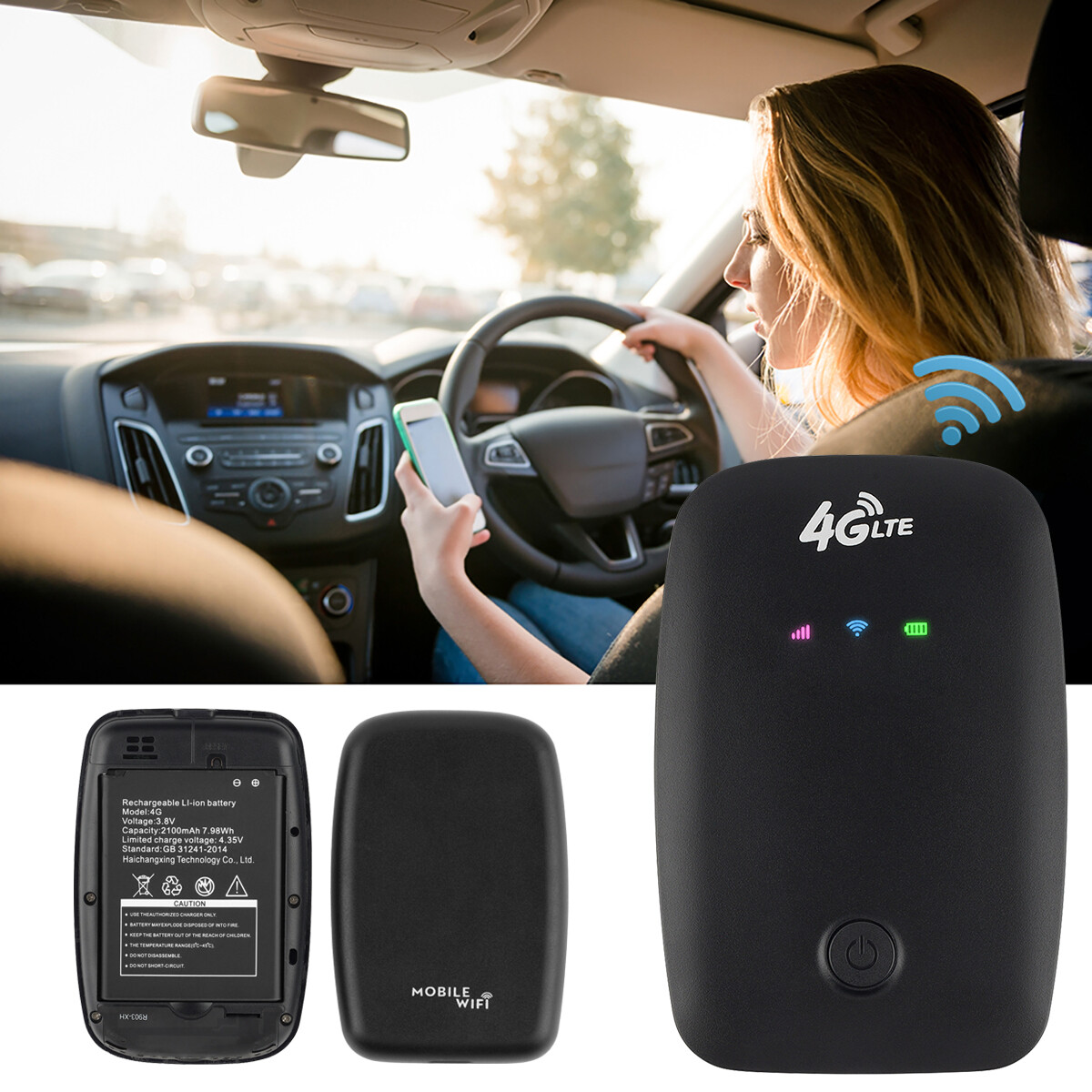

Photos from current listings. Actual item, color, and included accessories may vary.
Portable Wireless Router Buying Guide
A portable wireless router is a battery-powered or USB-powered device that creates a Wi-Fi hotspot from a cellular SIM, Ethernet jack, or hotel Wi-Fi uplink. The core trade-off is between integrated cellular modems (LTE/5G with carrier-band support) and travel-routers that rebroadcast an existing wired/Wi-Fi source—each with different power, security, and compatibility demands. Choose a model with explicit band certification for your region and a removable/replaceable power source; skip sealed, carrier-locked units with vague band lists.
Key takeaways
- Cellular hotspots use LTE Cat4 (150 Mbps) through Cat20/5G NR modems; Cat4 is adequate for email and SD video, while 5G NR is needed for multi-user HD streaming.
- Travel routers without a modem rely on 802.11ac (Wi-Fi 5) or 802.11ax (Wi-Fi 6) radios and a WAN uplink—Ethernet, USB tethering, or Wi-Fi repeater mode—to share a single connection.
- Battery capacity in the 2000–5000 mAh range yields roughly 4–12 hours of active hotspot use; USB-C PD input and pass-through charging determine whether the unit can run continuously from a wall outlet.
At a glance
- Category
- Network Switches, Routers & Firewalls
- Last updated
- Nov 28, 2026
Current offers
Highlights
- Cellular hotspots use LTE Cat4 (150 Mbps) through Cat20/5G NR modems; Cat4 is adequate for email and SD video, while 5G NR is needed for multi-user HD streaming.
- Travel routers without a modem rely on 802.11ac (Wi-Fi 5) or 802.11ax (Wi-Fi 6) radios and a WAN uplink—Ethernet, USB tethering, or Wi-Fi repeater mode—to share a single connection.
- Battery capacity in the 2000–5000 mAh range yields roughly 4–12 hours of active hotspot use; USB-C PD input and pass-through charging determine whether the unit can run continuously from a wall outlet.
- Unlocked SIM slots require matching FDD/TDD LTE bands (e.g., B2/B4/B5/B12/B13/B66 for North America) or the device will fall back to slower or no service; carrier-locked units are restricted to one operator.
Best use cases
- Best fit: frequent solo travelers who need secure Wi-Fi for a laptop and phone—pick an unlocked LTE Cat4+ hotspot with a 3000 mAh or larger battery, USB-C charging, and verified band support for your carrier.
- Best fit: hotel or dorm rooms with a single Ethernet jack—choose a compact travel router with WAN/LAN Ethernet, Wi-Fi 5 or 6, and repeater mode instead of a cellular hotspot.
- Wrong fit: home office or multi-device 4K streaming—skip battery hotspots and use a mains-powered 4G/5G router with external antenna ports and Gigabit Ethernet.
- Wrong fit: rural areas with weak signal—a pocket hotspot without antenna connectors will underperform; select a model with TS9/SMA external antenna ports or a higher-gain directional antenna.
Buying tips
- Match LTE bands to your carrier before buying: North American carriers rely on B2/B4/B5/B12/B13/B66/B71; a device missing these bands will drop to 3G or lose service entirely.
- For multi-device use, require 802.11ac (Wi-Fi 5) or 802.11ax (Wi-Fi 6) and at least 2x2 MIMO; older 802.11n 1x1 radios cap real throughput well below the cellular link.
- Prefer USB-C PD input with pass-through charging and a battery of 3000 mAh or more; sealed batteries degrade and cannot be swapped on long trips.
- Check SIM format (Nano-SIM vs eSIM) and whether the device supports manual APN entry; eSIM-only models limit carrier flexibility, while manual APN is required for MVNOs.
Specs
| Modem Type | LTE Cat4 to Cat20 / 5G NR / None |
|---|---|
| Wi-Fi Standard | 802.11n / ac (Wi-Fi 5) / ax (Wi-Fi 6) |
| Battery / Power | 2000–5000 mAh; USB-C PD pass-through |
| SIM & Bands | Unlocked Nano-SIM/eSIM; regional LTE bands |
Related searches
What to check before buying
- Confirm your carrier's LTE/5G bands and whether the device is sold unlocked; locked units only work on the original operator's network.
- Measure the space and power situation: pocket hotspots need 3–4 inches of clearance and USB-C or micro-USB charging; travel routers need an Ethernet cable and wall outlet.
- Verify the plug/voltage standard for the charger (100–240 V input with regional plug) if traveling internationally.
- Check companion parts: SIM ejector, USB-C cable, and—if signal is weak—an external antenna with the correct TS9 or SMA connector.
FAQ
Data sources: eBay / Amazon listings and product attribute feeds. Updated Nov 28, 2026.
Some links on this page are affiliate links. If you buy after clicking one, we may earn a commission at no extra cost to you. This does not change which products appear here or their order. Affiliate disclosure.