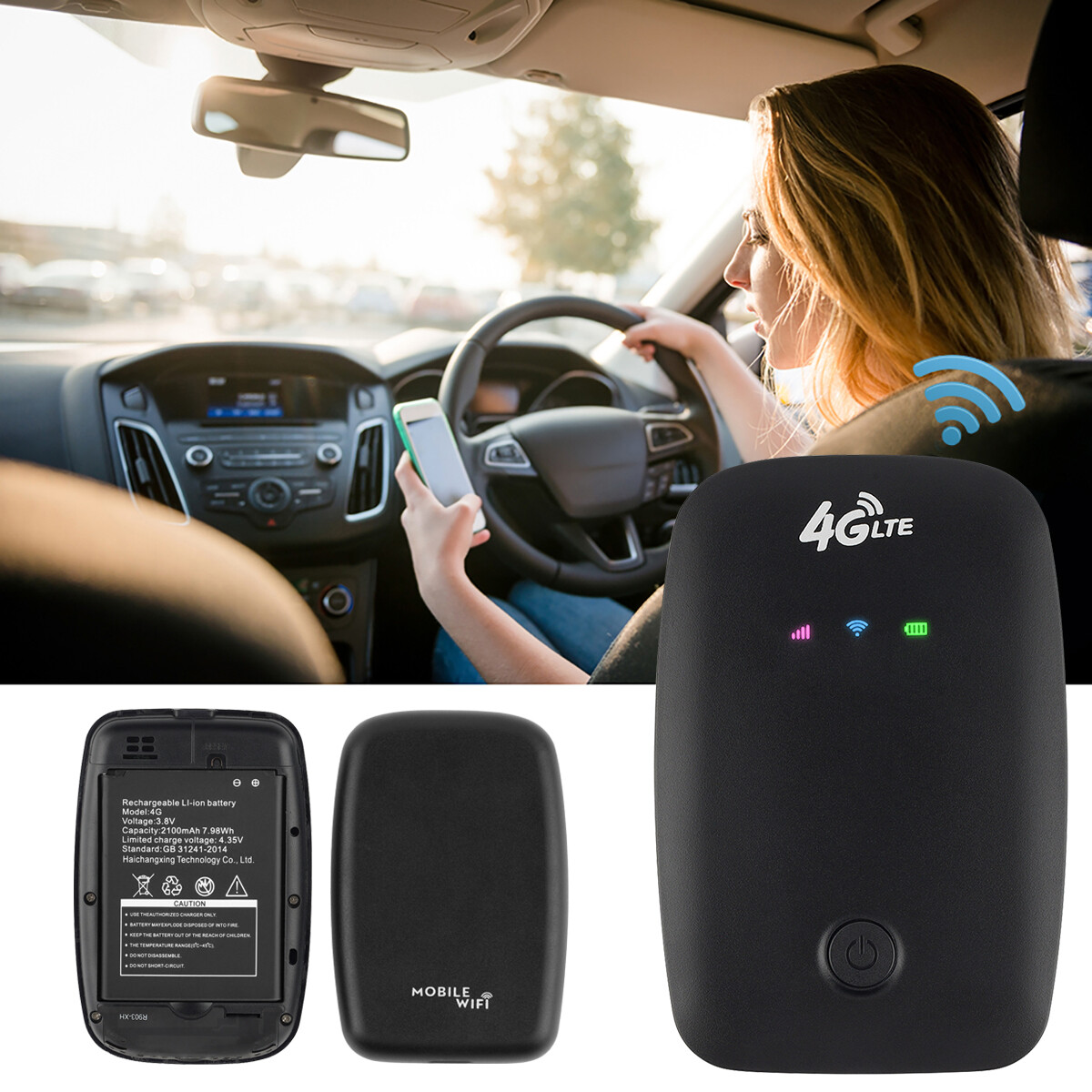

Photos from current listings. Actual item, color, and included accessories may vary.
Mobile Broadband Router Buying Guide
A mobile broadband router combines a cellular modem (4G LTE or 5G) with Wi-Fi to create a portable or failover internet connection where wired broadband is unavailable. The core trade-off is modem category and carrier certification versus battery capacity and Wi-Fi throughput—uncertified or Cat4-only units bottleneck real-world speeds regardless of advertised Wi-Fi numbers. The decision rule: buy a carrier-certified or universally unlocked Cat6+ modem with an Ethernet port or USB-C tethering, and skip single-band Cat4 hotspots that lack band support for your region.
Key takeaways
- Modem category drives real throughput: Cat4 caps at 150 Mbps down/50 up, Cat6 at 300/50, Cat12+ enables 600+ Mbps via carrier aggregation and 4x4 MIMO.
- Carrier certification and band support (LTE B2/B4/B5/B12/B13/B41/B66/B71) determine whether the router locks to your SIM's network or falls back to 3G/No Service.
- Battery capacity and pass-through charging separate true portables (3000–5000 mAh, 8–12 hr) from plug-in failover routers that require constant USB-C PD power.
At a glance
- Category
- Network Switches, Routers & Firewalls
- Last updated
- Nov 28, 2026
Current offers
Highlights
- Modem category drives real throughput: Cat4 caps at 150 Mbps down/50 up, Cat6 at 300/50, Cat12+ enables 600+ Mbps via carrier aggregation and 4x4 MIMO.
- Carrier certification and band support (LTE B2/B4/B5/B12/B13/B41/B66/B71) determine whether the router locks to your SIM's network or falls back to 3G/No Service.
- Battery capacity and pass-through charging separate true portables (3000–5000 mAh, 8–12 hr) from plug-in failover routers that require constant USB-C PD power.
- Wi-Fi generation and antenna design matter less than modem headroom: Wi-Fi 5 dual-band with 2x2 MIMO is sufficient because cellular backhaul rarely exceeds 300 Mbps in mobile use.
Best use cases
- Best fit: remote work or RV/travel where you need a battery-powered Cat6+ hotspot with Ethernet for a laptop—pick an unlocked unit with B12/B71 support for US carriers.
- Best fit: home or small-office failover—choose a plug-in 4G/5G router with Ethernet WAN/LAN and external antenna ports rather than a battery hotspot.
- Wrong fit: fixed suburban broadband replacement—skip Cat4 single-band hotspots; they cannot sustain streaming or multi-device loads and lack carrier aggregation.
- Wrong fit: international travel without band verification—avoid carrier-locked units; require an unlocked modem covering the destination's LTE bands (e.g., B3/B7/B20 for Europe).
Buying tips
- Match modem category to your plan: Cat4 for email/light browsing, Cat6 for HD streaming and video calls, Cat12+ only where the carrier provides 4x4 MIMO and >100 Mbps.
- Confirm LTE band support against your carrier's primary bands—US Verizon needs B13/B66, AT&T B2/B12/B14, T-Mobile B2/B4/B12/B41/B71; missing bands cause dropouts.
- For portable use, require USB-C PD input and at least 4000 mAh battery; for fixed failover, prioritize Gigabit Ethernet LAN and external TS9/SMA antenna ports.
- Prefer unlocked units with a SIM slot supporting Nano-SIM and eSIM; carrier-locked firmware can block APN edits and tethering even with a valid SIM.
Specs
| Modem Category | Cat4 / Cat6 / Cat12+ LTE |
|---|---|
| Carrier Support | Unlocked multi-band / carrier-locked |
| Power & Battery | USB-C PD / 3000–5000 mAh |
| Ports & Wi-Fi | Ethernet LAN / Wi-Fi 5 dual-band |
Related searches
What to check before buying
- Verify your carrier's primary LTE/5G bands and confirm the router lists them in its spec sheet before purchase.
- Measure placement: battery hotspots need ventilation and line-of-sight to windows; plug-in routers need a nearby outlet and Ethernet run to the failover switch.
- Confirm power input standard—USB-C PD 5V/3A for portables, 12V DC barrel for fixed units—and that included accessories match your region's plug type.
- Check device limits: most portable hotspots support 10–32 concurrent clients; fixed routers support 64+; count phones, laptops, and IoT devices before choosing.
FAQ
Data sources: eBay / Amazon listings and product attribute feeds. Updated Nov 28, 2026.
Some links on this page are affiliate links. If you buy after clicking one, we may earn a commission at no extra cost to you. This does not change which products appear here or their order. Affiliate disclosure.