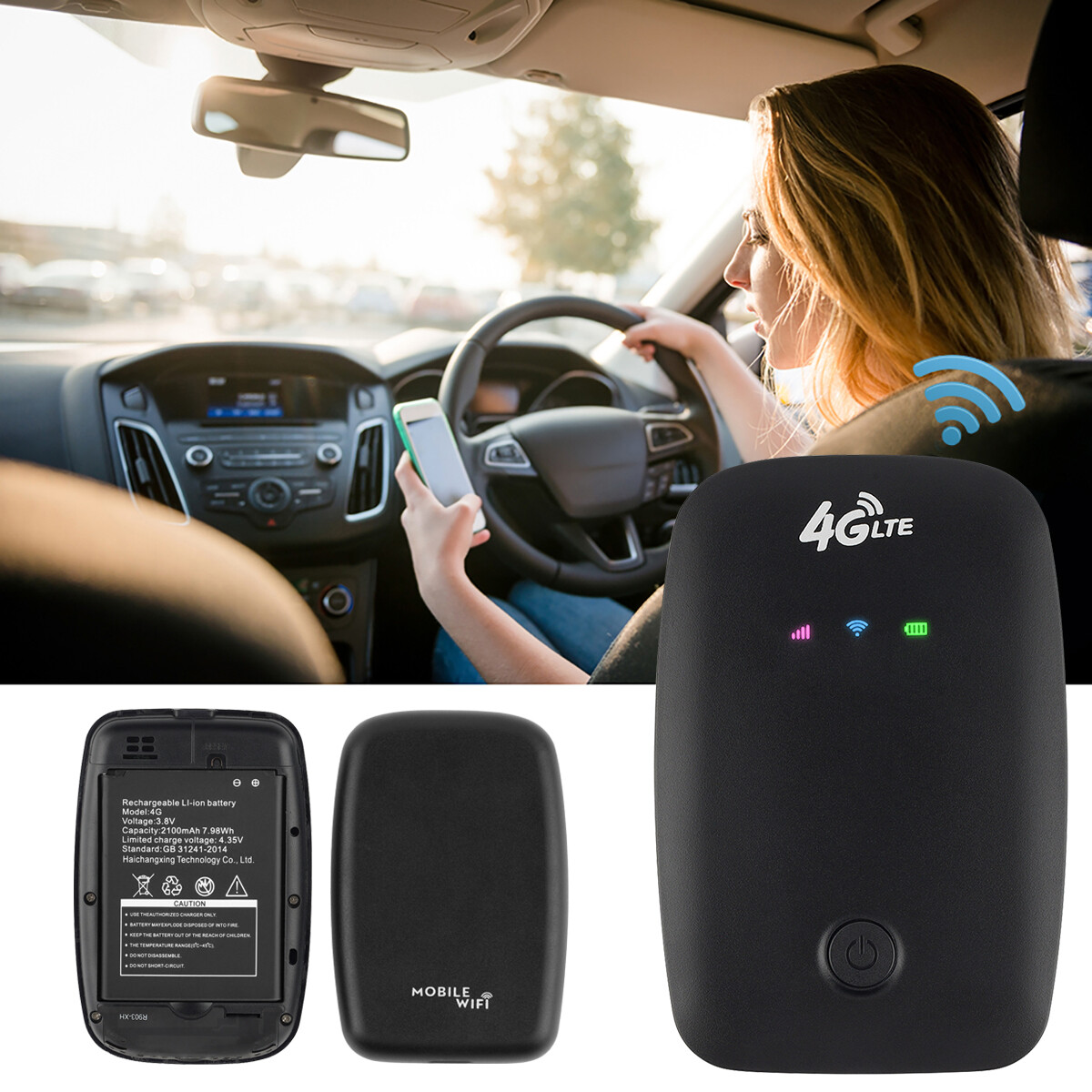

Photos from current listings. Actual item, color, and included accessories may vary.
LTE WiFi Router Buying Guide
An LTE Wi-Fi router uses a cellular SIM to create a local wireless network, eliminating the need for a fixed-line ISP. The core trade-off is between CAT modem speed and antenna quality versus battery capacity and portability. Choose a CAT6+ unit with external antenna ports for home or office use; choose a CAT4 pocket hotspot only for travel where size and battery life matter more than throughput.
Key takeaways
- CAT4 modems cap at 150 Mbps down / 50 Mbps up; CAT6 reaches 300 Mbps via 2x2 MIMO; CAT12+ adds carrier aggregation for 600 Mbps+ real-world peaks.
- External TS9 or SMA antenna ports and 2x2 MIMO support determine signal stability in weak coverage; internal antennas lose 3-6 dB in fringe areas.
- Unlocked units must support the carrier's LTE bands (e.g., B2/B4/B5/B12/B13/B17 for US; B1/B3/B7/B20 for EU) or data will fall back to 3G/UMTS.
At a glance
- Category
- Network Switches, Routers & Firewalls
- Last updated
- Nov 28, 2026
Current offers
Highlights
- CAT4 modems cap at 150 Mbps down / 50 Mbps up; CAT6 reaches 300 Mbps via 2x2 MIMO; CAT12+ adds carrier aggregation for 600 Mbps+ real-world peaks.
- External TS9 or SMA antenna ports and 2x2 MIMO support determine signal stability in weak coverage; internal antennas lose 3-6 dB in fringe areas.
- Unlocked units must support the carrier's LTE bands (e.g., B2/B4/B5/B12/B13/B17 for US; B1/B3/B7/B20 for EU) or data will fall back to 3G/UMTS.
- Battery-powered pocket routers typically carry 2000-5000 mAh cells yielding 6-12 hours; plug-in home routers have no battery and require continuous USB-C or DC power.
Best use cases
- Best fit: home/office primary internet where no fiber exists — pick a CAT6+ router with 2x2 MIMO, Ethernet LAN ports, and external antenna connectors; skip CAT4 pocket units.
- Best fit: travel and temporary setups — pick a pocket hotspot with a 3000+ mAh battery and USB-C charging; skip desktop routers that need a wall outlet.
- Best fit: remote CCTV or IoT backhaul — pick an unlocked CAT4/CAT6 router with LAN port and VPN passthrough; skip battery hotspots that lack wired Ethernet.
- Wrong fit: online gaming or 4K streaming households — LTE latency (30-80 ms) and data caps make this a stopgap; choose fixed broadband where available.
Buying tips
- Match LTE bands to your carrier before buying: a router missing your carrier's primary band will drop to slower fallback frequencies.
- For signal below -100 dBm RSRP, choose a unit with dual TS9/SMA external antenna ports and add a 5-7 dBi antenna; internal-only designs cannot improve.
- Data-cap math: a 100 GB monthly plan supports roughly 2-3 hours of HD streaming daily; 4K streaming consumes 7 GB/hour, exhausting caps quickly.
- Prefer CAT6 or higher over CAT4 for multi-user homes: CAT4's single-antenna 150 Mbps ceiling is shared across all connected devices.
Specs
| LTE Category | CAT4 (150 Mbps) / CAT6 (300 Mbps) / CAT12+ |
|---|---|
| Antenna Design | Internal only vs TS9/SMA external ports |
| Power Source | Battery (2000-5000 mAh) vs DC/USB-C plug-in |
| Ethernet Ports | None (hotspot) vs 1-4x RJ45 LAN |
Related searches
What to check before buying
- Confirm your carrier's LTE band list and verify the router's spec sheet lists those bands explicitly — not just '4G LTE compatible'.
- Measure your coverage: check phone RSRP in the intended location; below -110 dBm requires external antenna support.
- Count wired devices: if you need LAN for a PC, TV, or NVR, confirm the router has at least one RJ45 Ethernet port.
- Check power input: plug-in routers need a USB-C PD or 12V DC adapter; battery hotspots charge via micro-USB or USB-C.
FAQ
Data sources: eBay / Amazon listings and product attribute feeds. Updated Nov 28, 2026.
Some links on this page are affiliate links. If you buy after clicking one, we may earn a commission at no extra cost to you. This does not change which products appear here or their order. Affiliate disclosure.