
Photos from current listings. Actual item, color, and included accessories may vary.
PLA Filament Buying Guide
PLA filament is a polylactic-acid thermoplastic for FDM printers, prized for low warping, easy adhesion, and sharp detail at low cost. The core trade-off is between standard PLA (easy, brittle) and PLA+ / Silk / High-Speed variants that trade some printability for toughness, gloss, or flow rate. Durable picks share 1.75 mm diameter tolerance of ±0.02 mm, vacuum-sealed desiccant packaging, and a full 1 kg net spool; compromises skimp on diameter consistency or ship loosely wound spools that tangle.
Median $225.89 · New listings
Key takeaways
- Standard PLA prints at 190-220°C with a 60°C bed; PLA+ adds impact modifiers and prints 205-230°C with better layer adhesion.
- Silk PLA uses a gloss-enhancing additive that raises melt viscosity — print 215-230°C and slow to 30-50 mm/s or risk nozzle clogs and poor interlayer bonding.
- High-Speed PLA (HS) formulations flow at 300-600 mm/s on modern CoreXY printers, but require 220-240°C and a hardened nozzle for abrasive pigments.
At a glance
- Category
- 3D Printing Filament & Resin
- Last updated
- Nov 24, 2026
Current offers
 【Buy 5 Get 5 Free!Add 10】GEEETECH 1KG PLA ABS+ PETG TPU ASA 3D Printer Filament$27.99View on eBay
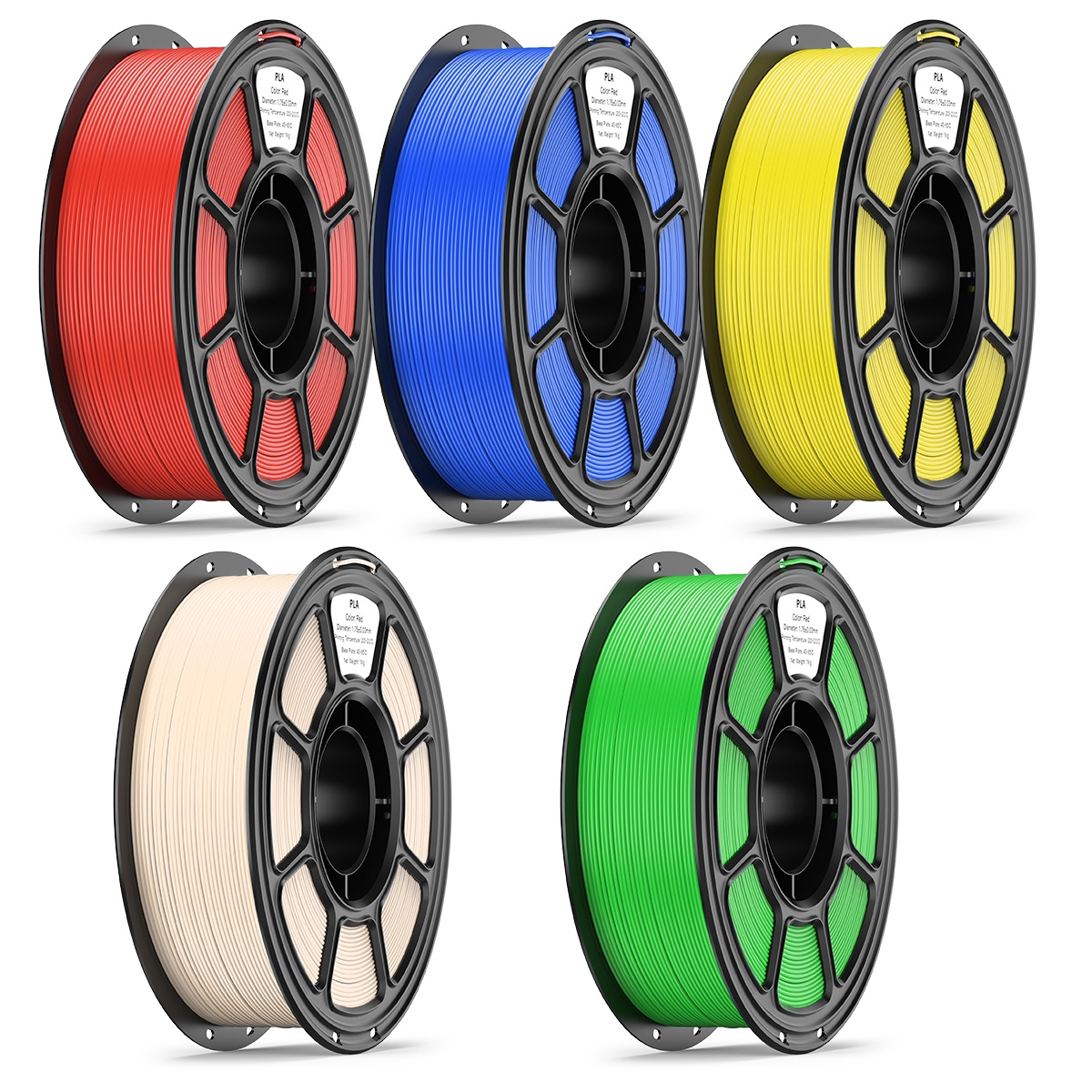 PLA 5 Pack 3D Printer Filament, 1.75mm PLA Bundle, 5 Rolls Set For FDM 3D Printers, Smooth Printing, Low Warping, Easy To Print, Multi Color For DIY, Prototyping, Model Making & Crea$78.99View on Mallflare
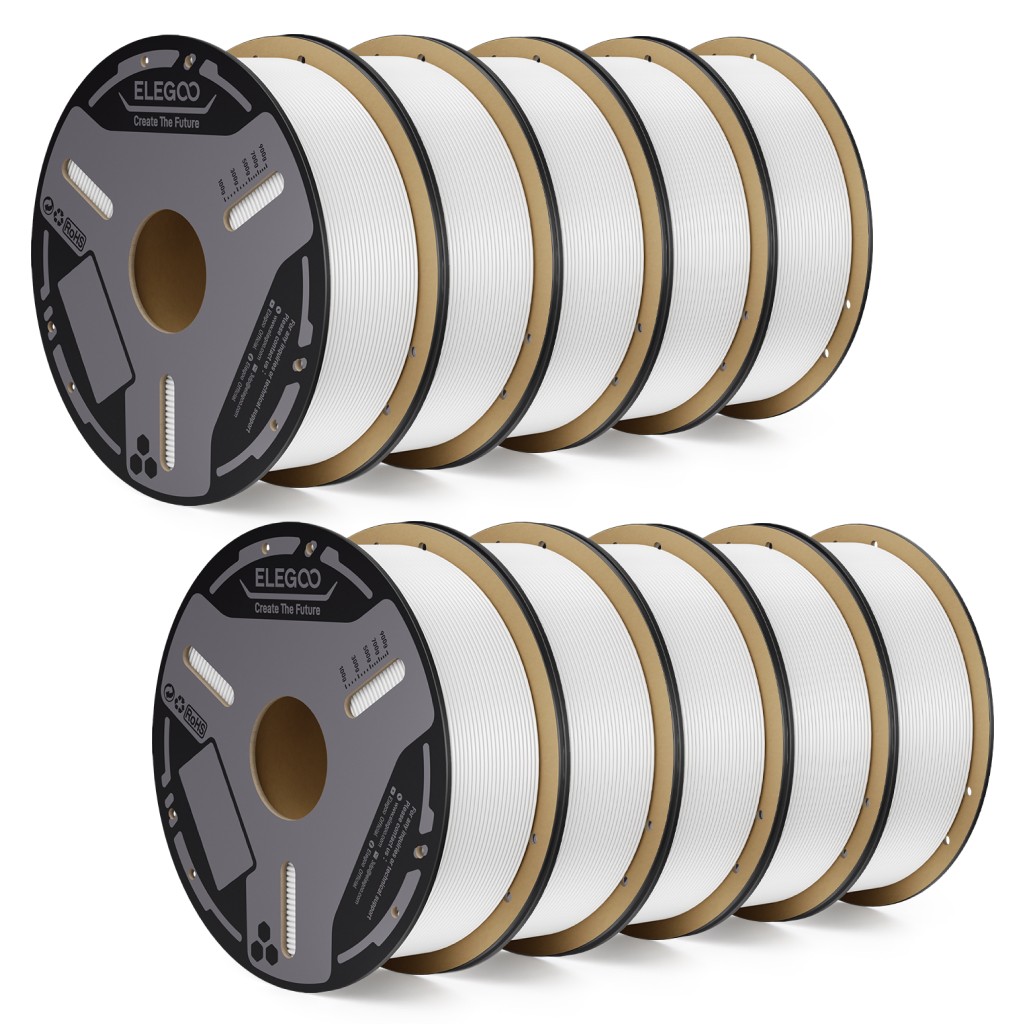 ELEGOO 10KG 3D Printer Filament PLA PETG Matte 1.75 mm FDM Bundle 1KG/Spool$209.00New · Last checked Nov 21, 2026View on eBay
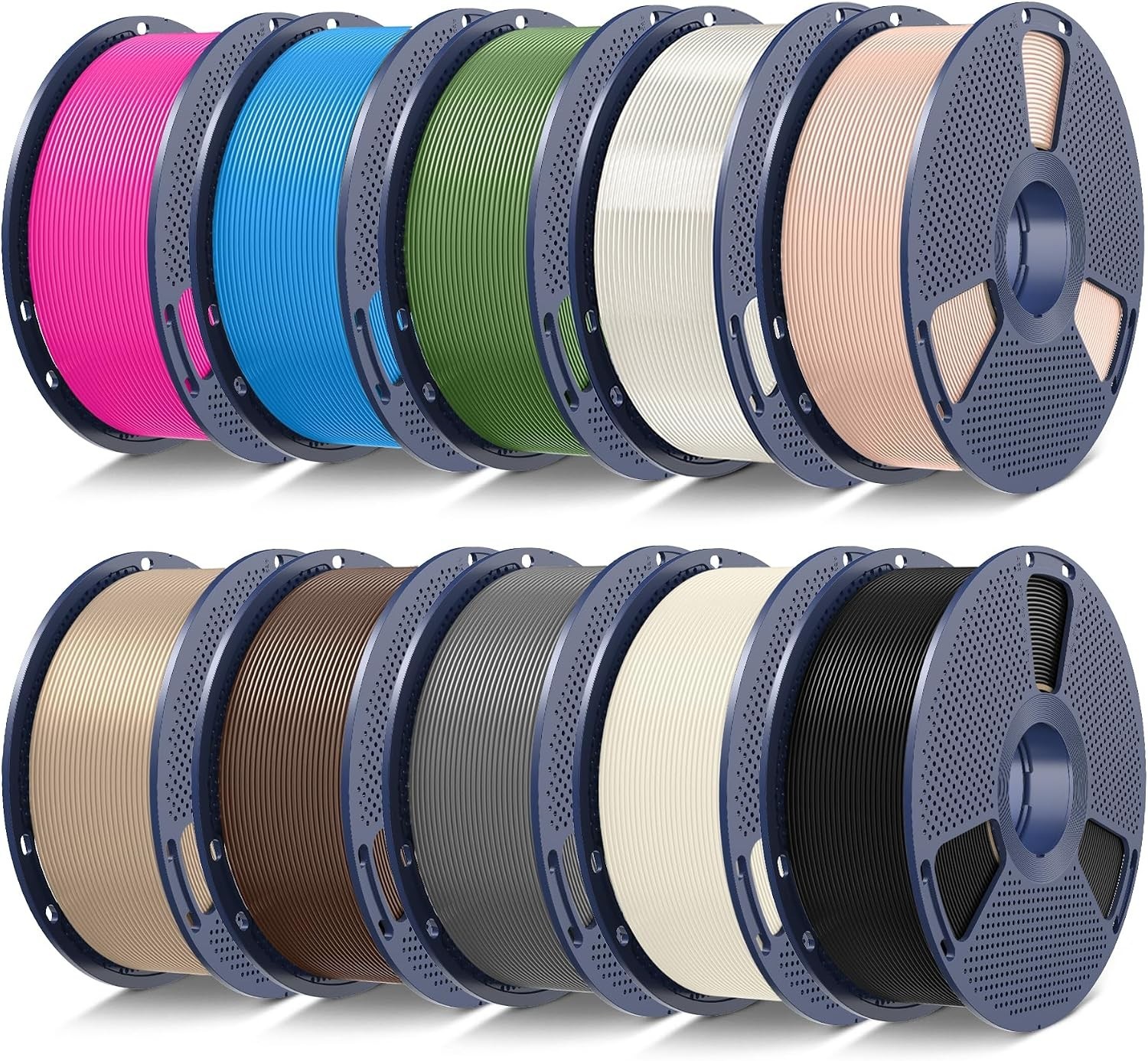 PLA 3D Printer Filament, Multicolor, 10-Pack, 10KG Total Black+Bone White+Grey+$219.95New · Last checked Nov 21, 2026View on eBay
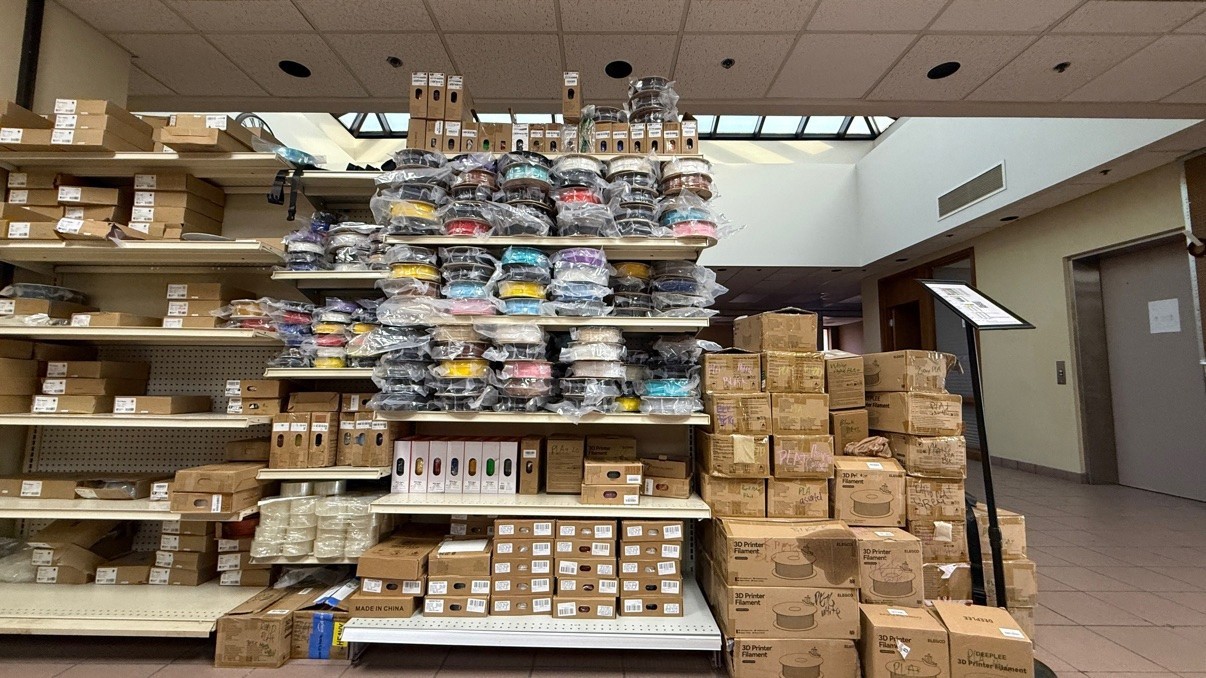 【Bulk Lot Deal】 Elegoo Filament 1.75mm 3D Printing PLA PETG ASA Filament Spools$231.84New · Last checked Nov 21, 2026View on eBay
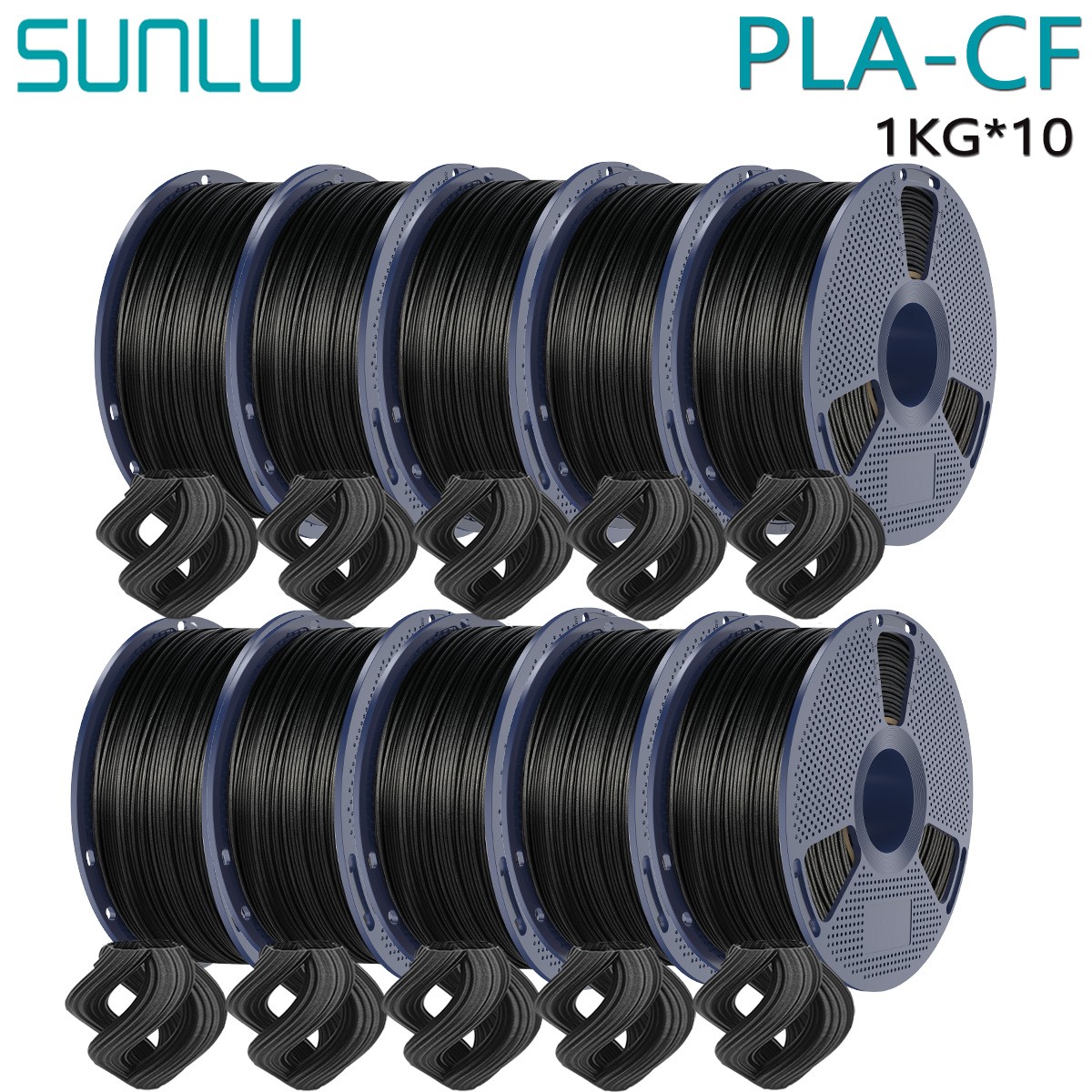 SUNLU 10KG PLA PLA+ ASA SILK PETG2.0 ABS 3D Printer Filament 1.75mm 1KG/Spool$232.69New · Last checked Nov 21, 2026View on eBay
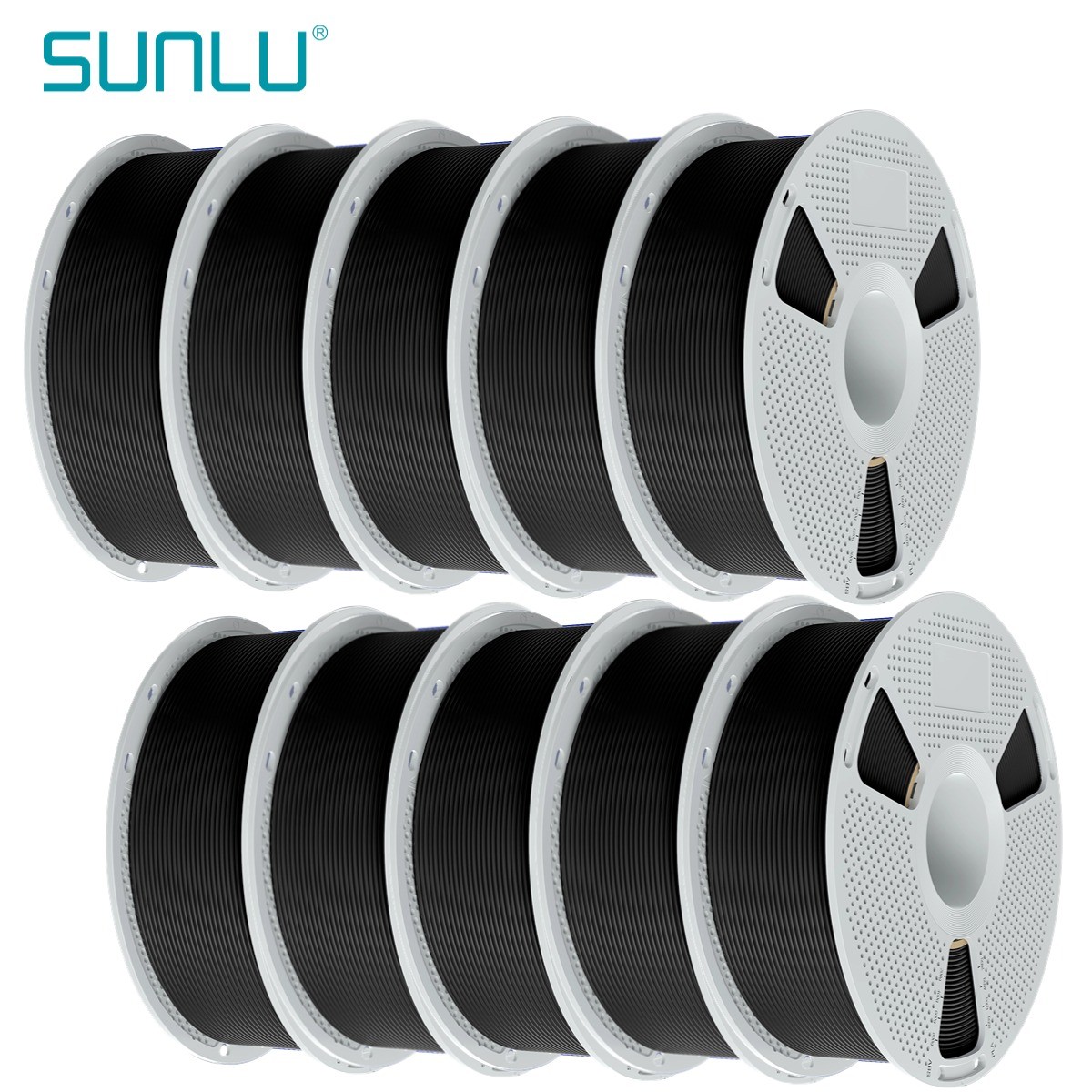 10×1KG SUNLU PLA Matte Meta PLA+ PETG SILK ABS TPU95A 1KG 3D Printer Filament$278.94New · Last checked Nov 21, 2026View on eBay
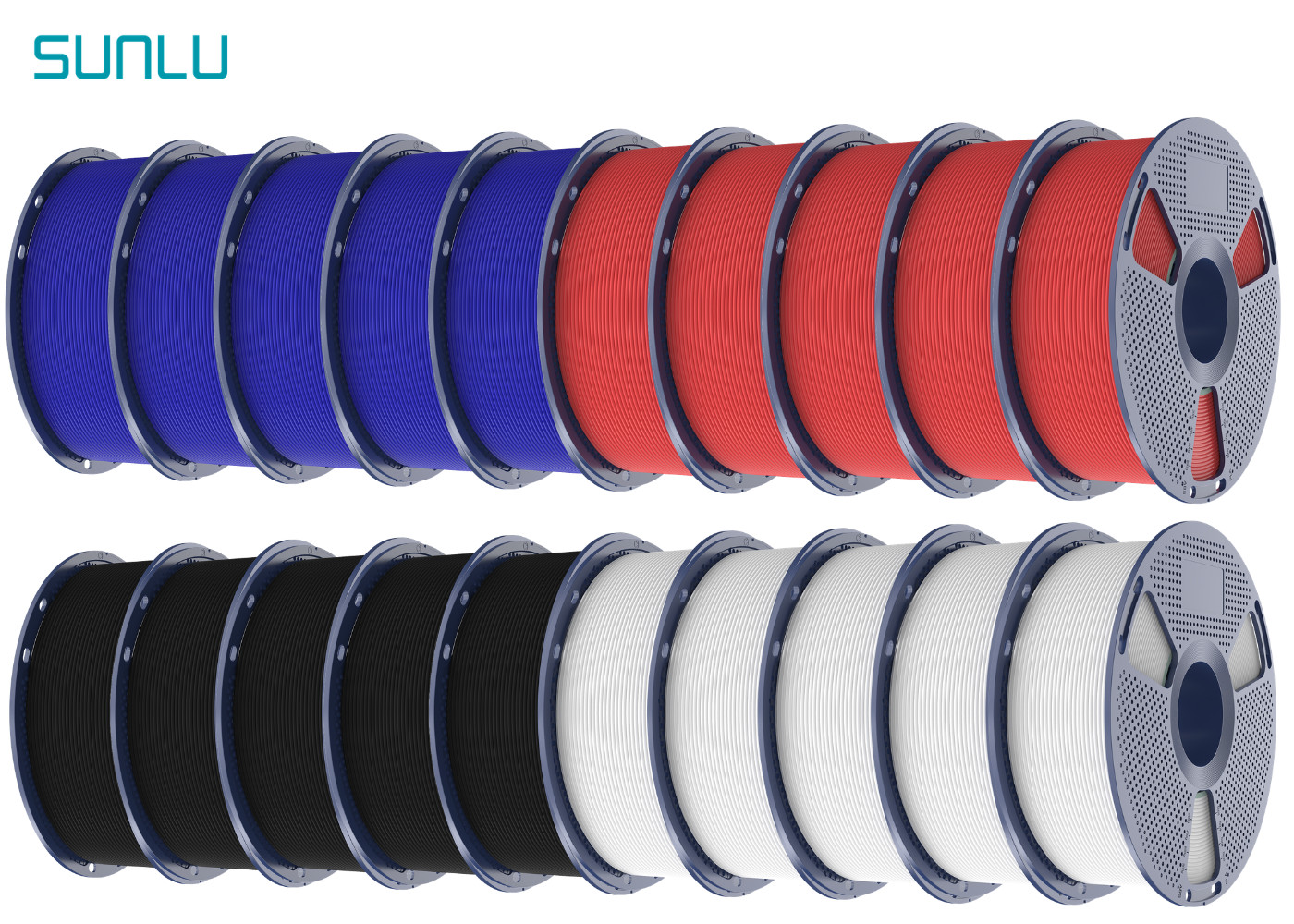 10KG/20KG SUNLU ASA PETG PLA PLA+2.0 PLA-Matte PLA-Meta SILK ABS Filament$348.21New · Last checked Nov 21, 2026View on eBay
Highlights
- Standard PLA prints at 190-220°C with a 60°C bed; PLA+ adds impact modifiers and prints 205-230°C with better layer adhesion.
- Silk PLA uses a gloss-enhancing additive that raises melt viscosity — print 215-230°C and slow to 30-50 mm/s or risk nozzle clogs and poor interlayer bonding.
- High-Speed PLA (HS) formulations flow at 300-600 mm/s on modern CoreXY printers, but require 220-240°C and a hardened nozzle for abrasive pigments.
- 1.75 mm diameter with ±0.02 mm tolerance is the FDM standard; 2.85 mm spools only fit Bowden printers designed for that gauge and are not interchangeable.
Best use cases
- Pick standard PLA for display models, prototypes, and low-stress parts — it delivers the crispest overhangs and lowest warp at the lowest cost.
- Choose PLA+ for functional brackets, tool holders, and kids' toys that need impact resistance; skip standard PLA where parts will be dropped or flexed.
- Buy Silk PLA only for decorative vases, figurines, and cosplay shells at slow speeds; do not use it for load-bearing or snap-fit parts.
- Select High-Speed PLA when running a CoreXY or bedslinger at 250 mm/s or faster for production runs; skip it on stock Ender-class hotends limited to ~80 mm/s.
Buying tips
- 1 kg of 1.75 mm PLA yields roughly 330-340 m of filament — enough for about 60-80 small models; 5-pack bundles cut per-spool cost but only if you will use all colors.
- Demand ±0.02 mm diameter tolerance and vacuum-sealed spools with desiccant; out-of-round filament causes under-extrusion and jams in direct-drive extruders.
- Cardboard spools are recyclable but can shed fibers and warp in humid rooms; plastic spools hold tension better for long storage and AMS-style multi-feed systems.
- PLA softens near 55-60°C — never leave printed parts in a hot car or use PLA for outdoor fixtures; choose PETG or ASA for heat or UV exposure.
Specs
| Filament Diameter | 1.75 mm (±0.02 mm) / 2.85 mm |
|---|---|
| Print Temp | 190-220°C (PLA+) / 215-230°C (Silk) |
| Spool Net Weight | 1 kg (330-340 m) / 5-pack bundles |
| Tensile Strength | ~50 MPa standard / ~60 MPa PLA+ |
Related searches
What to check before buying
- Confirm your printer's filament diameter: 1.75 mm is universal on modern FDM; only older Ultimaker-style machines take 2.85 mm.
- Measure spool outer diameter and hub bore — many auto-feed systems (AMS, MMS) require 200 mm OD and 50-55 mm hub with clean edges.
- Check nozzle compatibility: glow, matte, and metallic PLA pigments are abrasive and need a hardened steel nozzle; brass wears out in a few spools.
- Verify storage environment: PLA absorbs moisture above 60% RH; plan a sealed box with desiccant or a dry box to prevent popping and stringing.
FAQ
Data sources: eBay / Amazon listings and product attribute feeds. Updated Nov 24, 2026.
Some links on this page are affiliate links. If you buy after clicking one, we may earn a commission at no extra cost to you. This does not change which products appear here or their order. Affiliate disclosure.