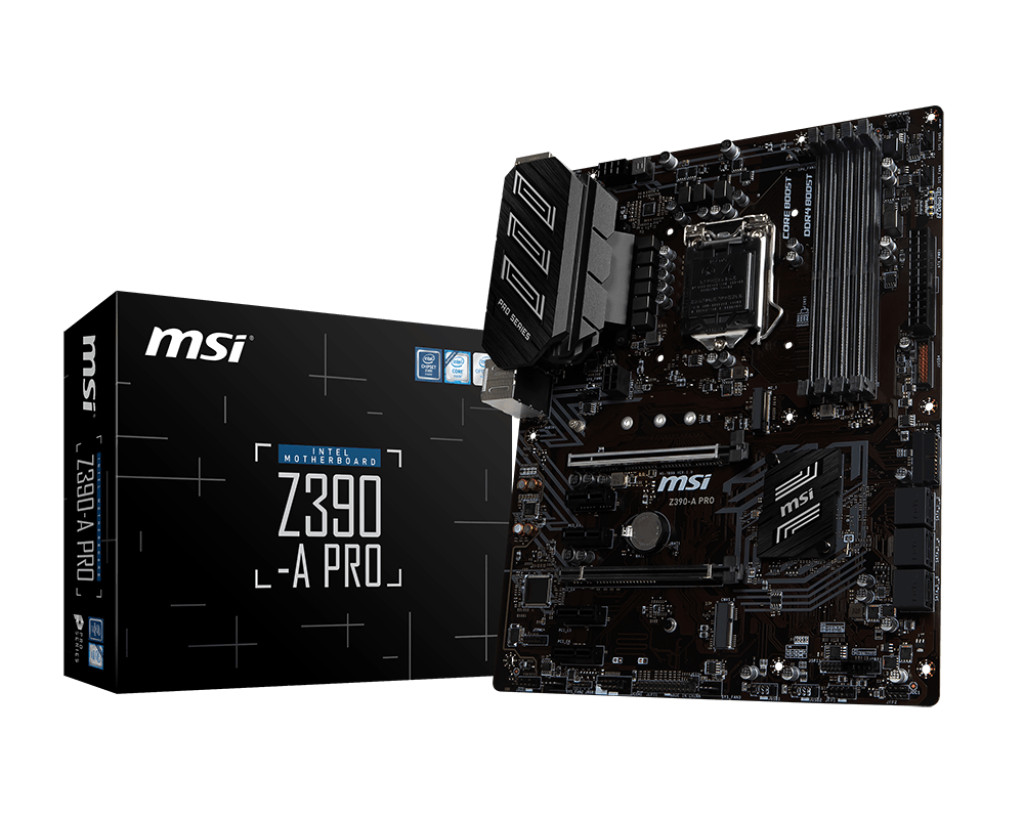

Photos from current listings. Actual item, color, and included accessories may vary.
Lga 2011 Motherboard Buying Guide
LGA 2011 motherboards are the foundation for Intel's X79 (Sandy/Ivy Bridge-E) and X99 (Haswell/Broadwell-E) HEDT platforms, offering quad-channel DDR3 or DDR4 memory and 40 PCIe lanes for multi-GPU or high-speed storage builds. The core trade-off is chipset generation and CPU compatibility: X79 boards use DDR3 and older 32nm CPUs, while X99 boards use DDR4 and support newer 14nm chips with more NVMe and USB 3.0. The clear decision rule is to match the board's socket keying and chipset to your exact CPU generation, then verify VRM quality and memory topology before buying any used or budget board.
Key takeaways
- Socket LGA 2011-3 (X99) is physically keyed differently from LGA 2011-0 (X79); a CPU from one generation will not fit the other without force and will not POST.
- X99 chipsets provide native PCIe 3.0 lanes and DDR4 quad-channel support, while X79 is PCIe 3.0 with DDR3 quad-channel and lacks native USB 3.0 in early revisions.
- Most LGA 2011 boards use a narrow ILM (80mm) or square ILM (56mm) mounting pattern; CPU coolers must match the ILM type or use an adapter bracket.
At a glance
- Category
- CPUs, Motherboards & Memory
- Last updated
- Nov 23, 2026
Current offers
Highlights
- Socket LGA 2011-3 (X99) is physically keyed differently from LGA 2011-0 (X79); a CPU from one generation will not fit the other without force and will not POST.
- X99 chipsets provide native PCIe 3.0 lanes and DDR4 quad-channel support, while X79 is PCIe 3.0 with DDR3 quad-channel and lacks native USB 3.0 in early revisions.
- Most LGA 2011 boards use a narrow ILM (80mm) or square ILM (56mm) mounting pattern; CPU coolers must match the ILM type or use an adapter bracket.
- VRM phase count and heatsink size vary widely: entry X79 boards often use 4+1 phases with small heatsinks, while enthusiast X99 boards use 8+ phases with finned heatsinks for stable overclocking.
Best use cases
- Best fit: Building a budget multi-core workstation for rendering or VMs—choose an X99 board with an 8+ phase VRM and four DDR4 DIMM slots to run a Xeon E5-2600 v3/v4 or Core i7-6800K.
- Wrong fit: Gaming with a modern GPU and NVMe drive—skip LGA 2011 entirely; a current LGA 1700 or AM5 board delivers higher IPC, PCIe 4.0/5.0, and native USB 3.2.
- Best fit: Repurposing a legacy X79 CPU (i7-3930K/4930K) for a home server—pick a board with at least six SATA ports and ECC DDR3 support if using a Xeon.
- Wrong fit: Small-form-factor builds—most LGA 2011 boards are ATX or larger, and mATX/ITX options are rare and expensive; choose a modern SFF platform instead.
Buying tips
- Confirm the CPU socket keying: LGA 2011-0 (X79) has a different notch pattern than LGA 2011-3 (X99); match the board label to your CPU's specification exactly.
- Check DIMM slot count: quad-channel requires four or eight slots; boards with only two slots are dual-channel only and halve memory bandwidth.
- For X99, prefer boards with at least one M.2 slot supporting PCIe 3.0 x4; early X99 boards may route M.2 through SATA or lack it entirely.
- Inspect VRM heatsinks and phase count on used boards; 4+1 phase designs with bare aluminum sinks are unsuitable for overclocked 140W+ CPUs.
Specs
| Socket Keying | LGA 2011-0 (X79) vs 2011-3 (X99) |
|---|---|
| Memory Type | DDR3 quad-channel (X79) / DDR4 (X99) |
| PCIe Lanes (CPU) | 28 or 40 lanes, PCIe 3.0 |
| Form Factor | ATX / E-ATX / mATX (rare) |
Related searches
What to check before buying
- Measure your case for ATX (12 × 9.6 in) or E-ATX (12 × 10.5 in) clearance and confirm standoff positions match the board's mounting holes.
- Verify your CPU cooler supports LGA 2011 narrow ILM (80mm) or square ILM (56mm); many coolers include only one bracket.
- Confirm your power supply has an 8-pin EPS CPU connector (some boards require 8+4 or 8+8 for high-wattage CPUs) and a 24-pin ATX connector.
- Check that your memory kit is DDR3 for X79 or DDR4 for X99 and installed in the correct quad-channel slots per the board manual.
FAQ
Data sources: eBay / Amazon listings and product attribute feeds. Updated Nov 23, 2026.
Some links on this page are affiliate links. If you buy after clicking one, we may earn a commission at no extra cost to you. This does not change which products appear here or their order. Affiliate disclosure.