
Photos from current listings. Actual item, color, and included accessories may vary.
Compressed Air Buying Guide
Compressed air for electronics splits into two real architectures: disposable canned refrigerant gas and rechargeable electric dusters built around brushless DC motors. The core trade-off is sustained airflow versus cost and portability—canned air delivers cold, dry blasts but depletes and can spray propellant, while electric units trade peak pressure for reusable, cordless convenience. The clear decision rule: pick electric brushless with at least 100,000 RPM and a 10,000 mAh-class battery for repeated PC cleaning; reserve canned air only for travel or one-off precision jobs.
Median $93.99
Key takeaways
- Brushless DC motors in electric dusters spin 100,000–250,000 RPM; brushed motors top out lower, wear faster, and are the main durability differentiator.
- Higher RPM tiers (130,000 vs 250,000) increase air velocity but drain battery faster—stepless variable speed lets you match output to fragile components.
- Battery capacity in the 10,000 mAh class supports multiple full cleaning sessions; smaller cells force mid-job recharges, a real workflow compromise.
At a glance
- Category
- Computers & Peripherals
- Last updated
- Nov 27, 2026
Current offers
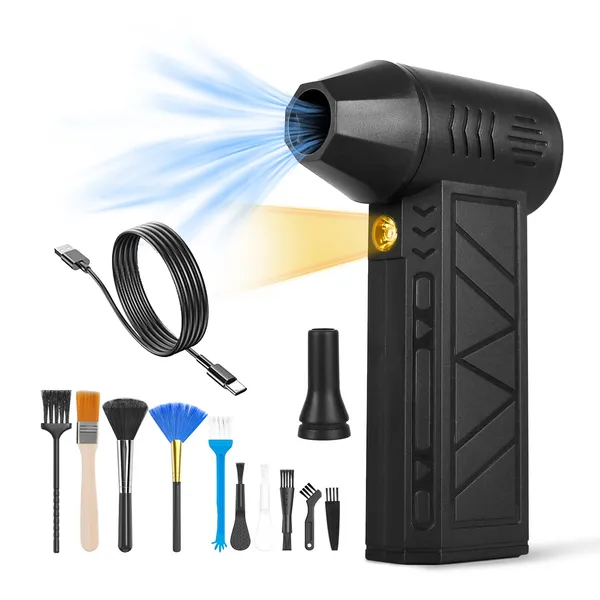 Compressed Air Duster With LED Light Up To 150000RPM Speed For PC Keyboard Cleaning High Rechargeable Cordless Air Blower 4 Speeds For Home Car Outdoor$48.99View on Mallflare
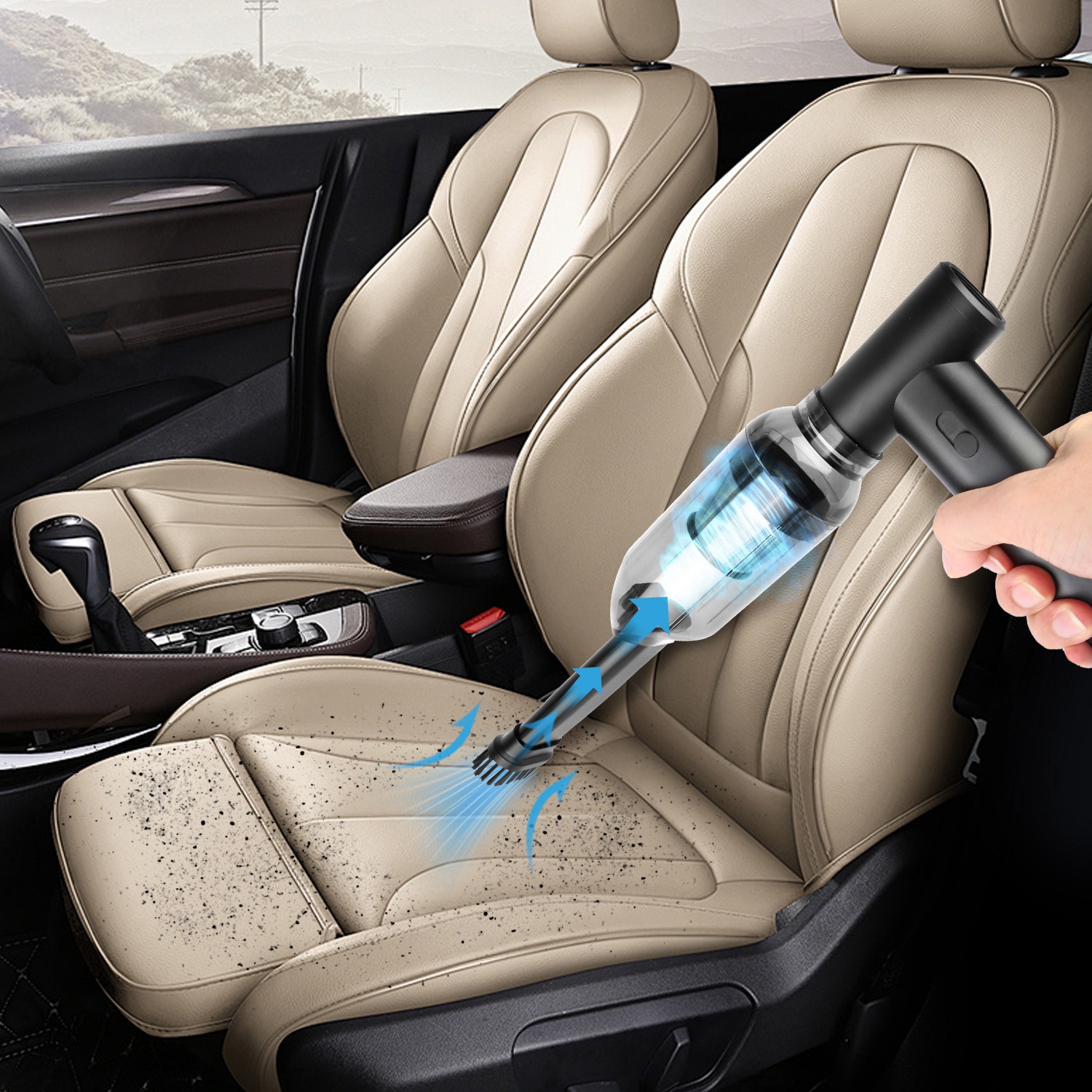 Pro Type Compressed Air Duster Brushless Motor 130000RPM Stepless Variable Speed 1WmAh Battery Cordless Dust Blower Vacuum Cleaner Portable Jet Dry For PC Keyboard Car Home$93.99View on Mallflare
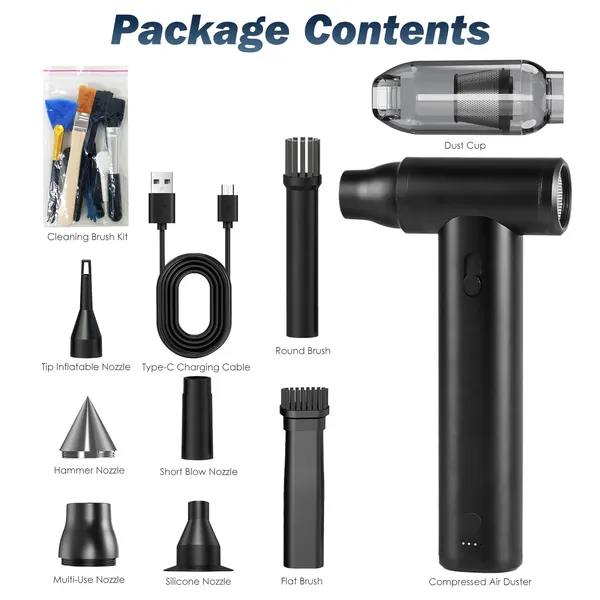 Compressed Air Duster Brushless Motor 250000RPM Stepless Variable Speed 10000mAh Battery Cordless Dust Blower Vacuum Cleaner Portable Jet Dry For PC Keyboard Car Home$99.99View on Mallflare
Highlights
- Brushless DC motors in electric dusters spin 100,000–250,000 RPM; brushed motors top out lower, wear faster, and are the main durability differentiator.
- Higher RPM tiers (130,000 vs 250,000) increase air velocity but drain battery faster—stepless variable speed lets you match output to fragile components.
- Battery capacity in the 10,000 mAh class supports multiple full cleaning sessions; smaller cells force mid-job recharges, a real workflow compromise.
- Canned air uses liquefied refrigerant that can spit propellant and condensation; electric dusters avoid chemical residue but need charging discipline.
Best use cases
- Best fit: PC, keyboard, and console cleaning—pick an electric brushless duster with stepless speed and 10,000 mAh battery for repeatable, cordless sessions.
- Best fit: travel or quick one-off jobs—canned air is lighter and needs no charging, but skip it for heavy recurring use where cost and propellant spray add up.
- Wrong fit: cleaning delicate optical sensors or wet surfaces—high-RPM electric blasts can dislodge parts; use a lower speed setting or a manual blower instead.
- Wrong fit: large outdoor or car detailing jobs—dusters lack sustained volume; choose a corded blower or shop air compressor for that scale.
Buying tips
- Choose brushless over brushed motors every time; brushless units last longer and maintain RPM under load, which matters for repeated PC cleaning.
- Match RPM to task: 100,000–130,000 RPM is ample for keyboards and vents; 250,000 RPM suits stubborn dust but drains battery faster.
- Prioritize 10,000 mAh-class batteries and USB-C charging; smaller cells mean shorter runs and more downtime between cleanings.
- Stepless variable speed beats fixed 4-speed presets for controlling airflow around fans, heatsinks, and delicate connectors.
Specs
| Motor Type | Brushless DC vs brushed |
|---|---|
| Max Speed | 100,000–250,000 RPM |
| Battery Class | 10,000 mAh USB-C rechargeable |
| Speed Control | Stepless variable vs 4-speed |
Related searches
What to check before buying
- Measure your PC case and keyboard gaps; confirm the duster nozzle and body fit into tight vents and fan shrouds without disassembly.
- Check battery runtime and charge time; ensure the unit completes a full cleaning session on one charge for your routine.
- Verify USB-C or included charger compatibility with your existing cables and wall adapters to avoid slow charging.
- Confirm the nozzle type and any included brush attachments suit delicate components and tight heatsink fins.
FAQ
Data sources: eBay / Amazon listings and product attribute feeds. Updated Nov 27, 2026.
Some links on this page are affiliate links. If you buy after clicking one, we may earn a commission at no extra cost to you. This does not change which products appear here or their order. Affiliate disclosure.