
Photos from current listings. Actual item, color, and included accessories may vary.
Bluetooth Amplifier Buying Guide
A Bluetooth amplifier is a power amp with built-in wireless streaming, bridging passive speakers and your phone or TV without a separate receiver. The core trade-off is honest Class D power vs inflated peak wattage claims, plus whether the amp includes a proper power supply and protection circuitry. Buy by continuous RMS power per channel at your speaker's impedance, not by the box's peak number.
Median $149.99
Key takeaways
- Class D amps deliver 80-90% efficiency in compact chassis; Class AB runs hotter and heavier but suits budget analog stages.
- Real power is RMS at 8 or 4 ohms with the included supply; peak figures like 3600W reflect bridged, 2-ohm, momentary bursts.
- Bluetooth 5.0+ with aptX or LDAC cuts latency and codec loss; plain 4.2 SBC adds audible delay for video.
At a glance
- Category
- AV Receivers & Amplifiers
- Last updated
- Nov 24, 2026
Current offers
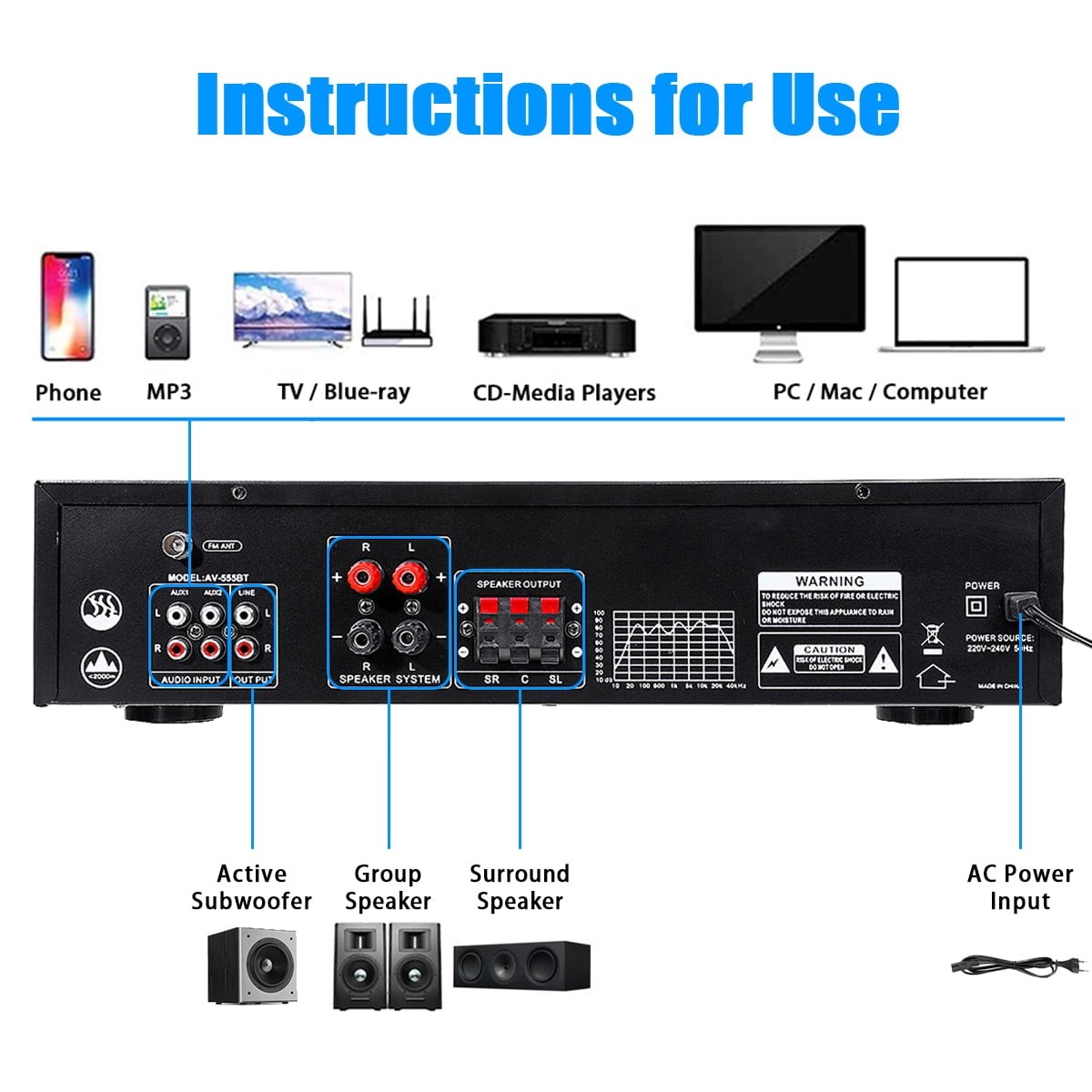 800W Surround Sound Bluetooth Audio Power Amplifier Receiver Home Theater Stereo$117.49View on eBay
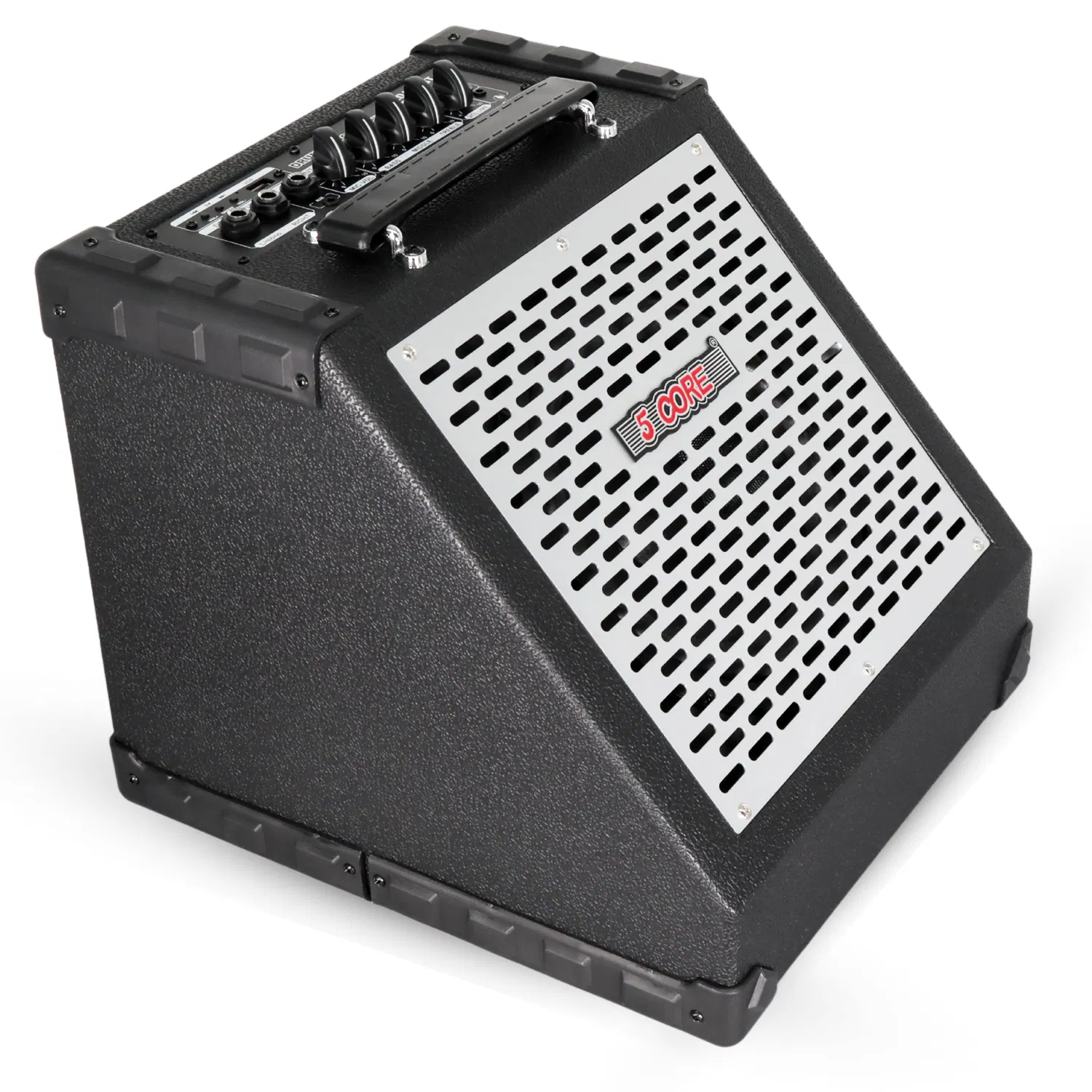 5 Core Electric Drum Amplifier 80W Professional Bluetooth Drumming Amp w 8' Speaker w 3 Band EQ$149.99View on Mallflare
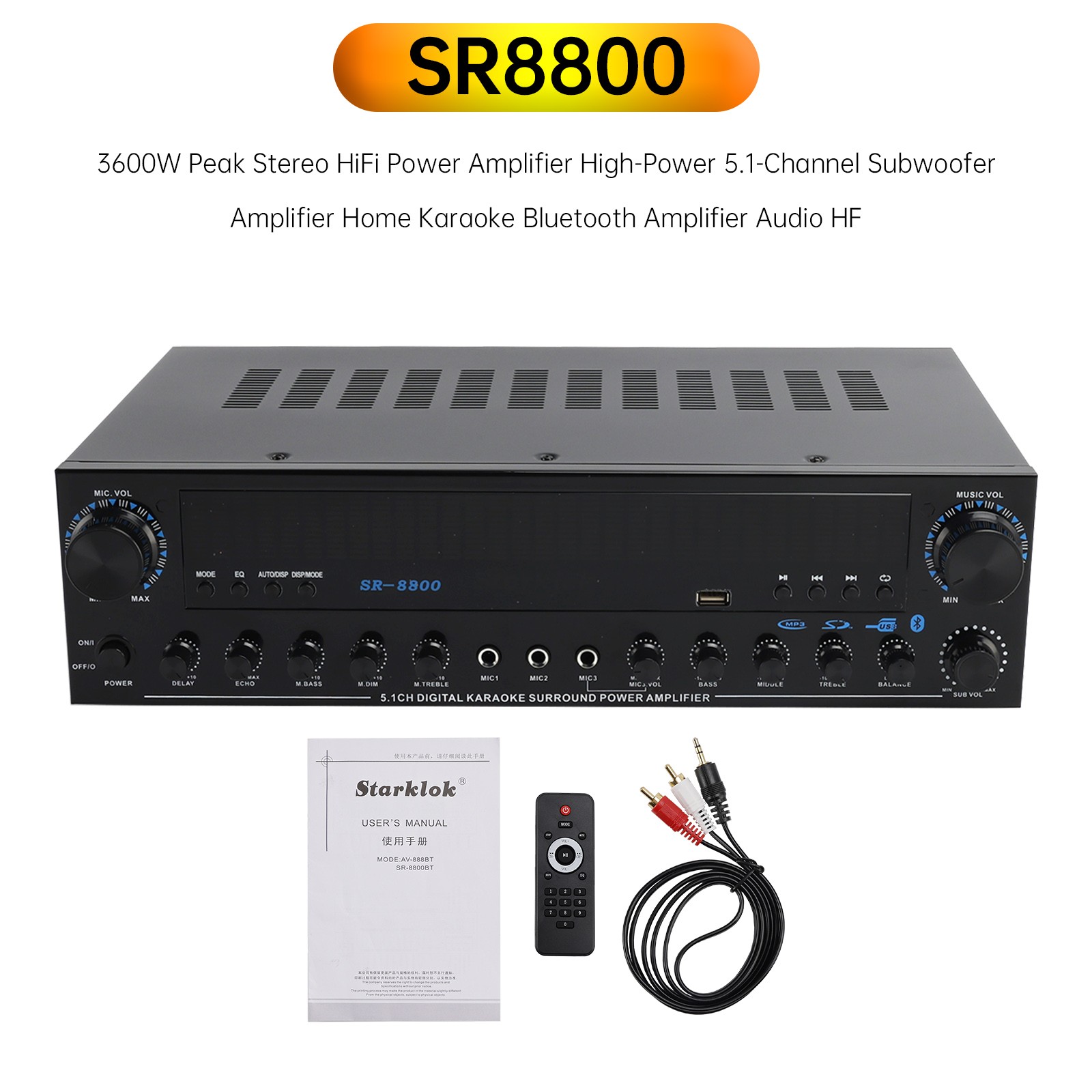 3600W Peak Stereo HiFi Power Bluetooth Amplifier High-Power 5.1 Subwoofer Home$319.55Last checked Nov 18, 2026View on eBay
Highlights
- Class D amps deliver 80-90% efficiency in compact chassis; Class AB runs hotter and heavier but suits budget analog stages.
- Real power is RMS at 8 or 4 ohms with the included supply; peak figures like 3600W reflect bridged, 2-ohm, momentary bursts.
- Bluetooth 5.0+ with aptX or LDAC cuts latency and codec loss; plain 4.2 SBC adds audible delay for video.
- 5.1 surround amps need discrete channel amplification and bass management; stereo-only units cannot decode center or surround channels.
Best use cases
- Pick a 2-channel Class D amp at 50-100W RMS per channel for bookshelf or patio speakers; skip 5.1 chassis if you only run two speakers.
- Choose a 5.1 Bluetooth receiver with HDMI ARC and subwoofer pre-out for TV and movie duty; stereo amps leave dialogue anchored to the center channel.
- Use a compact 80W combo amp with 3-band EQ for drum, keyboard, or practice monitoring; skip high-wattage home amps for instrument duty.
- For whole-home ceiling speakers, pick a multi-zone amp rated at 4-ohm stability; bridged single-zone amps overheat driving parallel loads.
Buying tips
- Match amp RMS to speaker RMS within 1.5x; a 100W RMS speaker pairs with 70-150W per channel, while a 30W amp clips and risks tweeter damage.
- Check the bundled power brick: a 24V/4A supply caps realistic output near 50W per channel at 8 ohms regardless of marketing wattage.
- Confirm 4-ohm stability before wiring two 8-ohm speakers in parallel per channel; each channel then sees 4 ohms and demands double the current.
- For TV use, require HDMI ARC or optical input; Bluetooth alone introduces 100-200ms lip-sync delay even on low-latency codecs.
Specs
| Amp Class | Class D vs Class AB |
|---|---|
| Power Rating | 20-150W RMS per channel |
| Bluetooth Codec | SBC / AAC / aptX / LDAC |
| Channel Config | Stereo 2.0 / 5.1 surround |
Related searches
What to check before buying
- Measure speaker impedance (4, 6, or 8 ohms) and continuous wattage before choosing the amp's per-channel RMS tier.
- Verify shelf or rack depth for a 430x110x246mm chassis and leave 50mm clearance above vents for Class D heat dissipation.
- Confirm your region's mains voltage (120V or 230V) and plug type; many budget amps ship with one fixed voltage supply.
- Plan input cables: RCA, 3.5mm, optical, or HDMI ARC on the amp must match your TV, turntable preamp, or phone output.
FAQ
Data sources: eBay / Amazon listings and product attribute feeds. Updated Nov 24, 2026.
Some links on this page are affiliate links. If you buy after clicking one, we may earn a commission at no extra cost to you. This does not change which products appear here or their order. Affiliate disclosure.