
Photos from current listings. Actual item, color, and included accessories may vary.
Av Receiver Buying Guide
An AV receiver is the switching and amplification hub of a home theater, decoding surround formats and driving all speakers from one chassis. The core trade-off is channel count and HDMI generation versus amplifier power and room correction—entry models cut corners on binding posts, phono stages, and room EQ. The decision rule: buy for your speaker impedance and HDMI 2.1 needs first, then step up in amplification only if your room exceeds roughly 2,500 cubic feet.
Median $149.95
Key takeaways
- HDMI tier: HDMI 2.0 handles 4K/60; HDMI 2.1 adds 8K/60, 4K/120, VRR, and ALLM—mandatory for PS5/Xbox Series X and RTX 30/40 GPUs.
- Channel math: 5.2 covers a basic surround setup; 7.2 adds two back or height channels; Dolby Atmos/DTS:X requires at least 5.1.2 (height or up-firing modules).
- Amplifier class: Class AB dominates AVRs for clean high-current output; slimline Class D models run cooler but usually spec lower 2-channel wattage into 8 ohms.
At a glance
- Category
- AV Receivers & Amplifiers
- Last updated
- Nov 24, 2026
Current offers
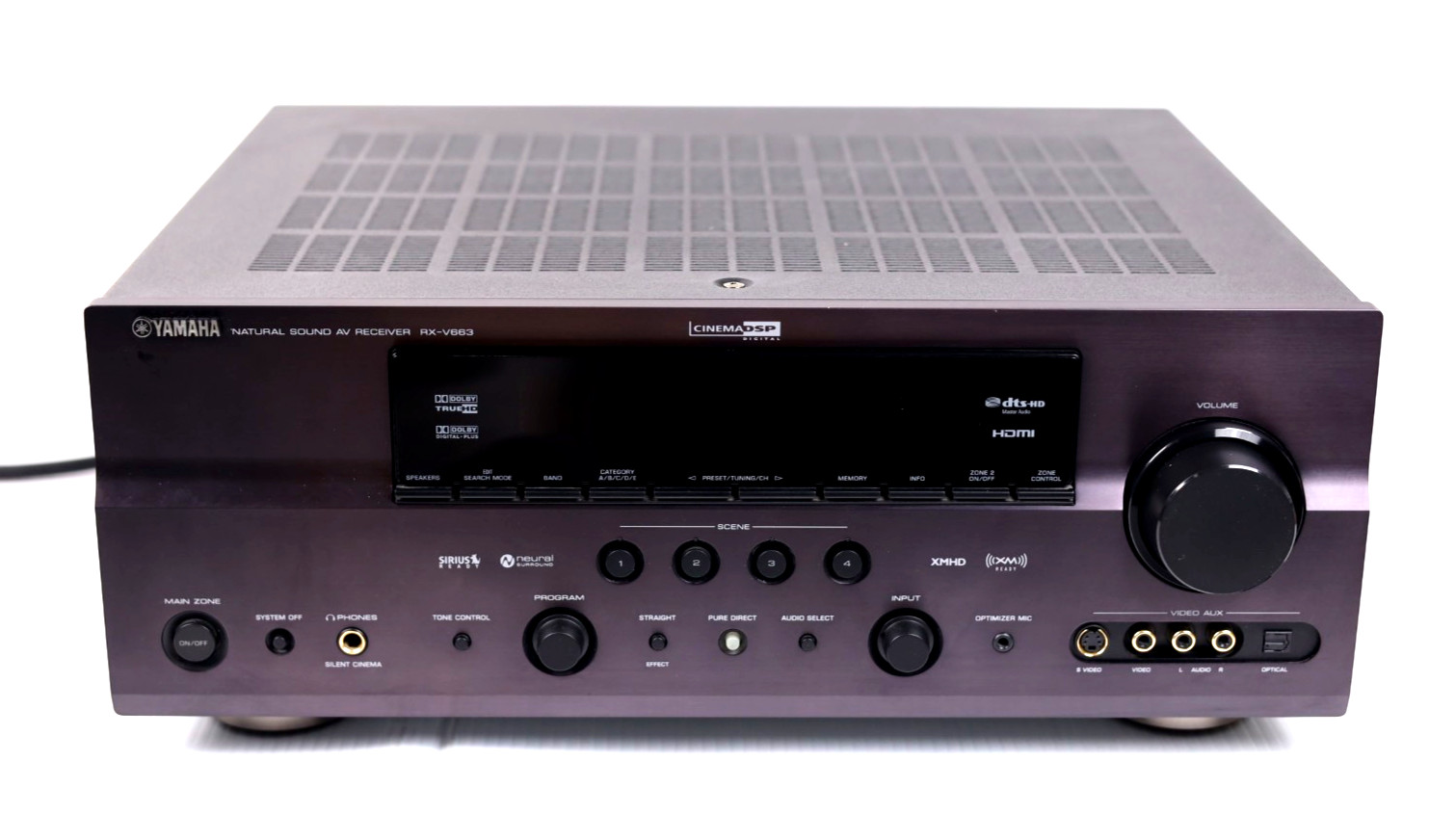 Yamaha RX-V663 AV Surround Receiver w719$59.99View on eBay
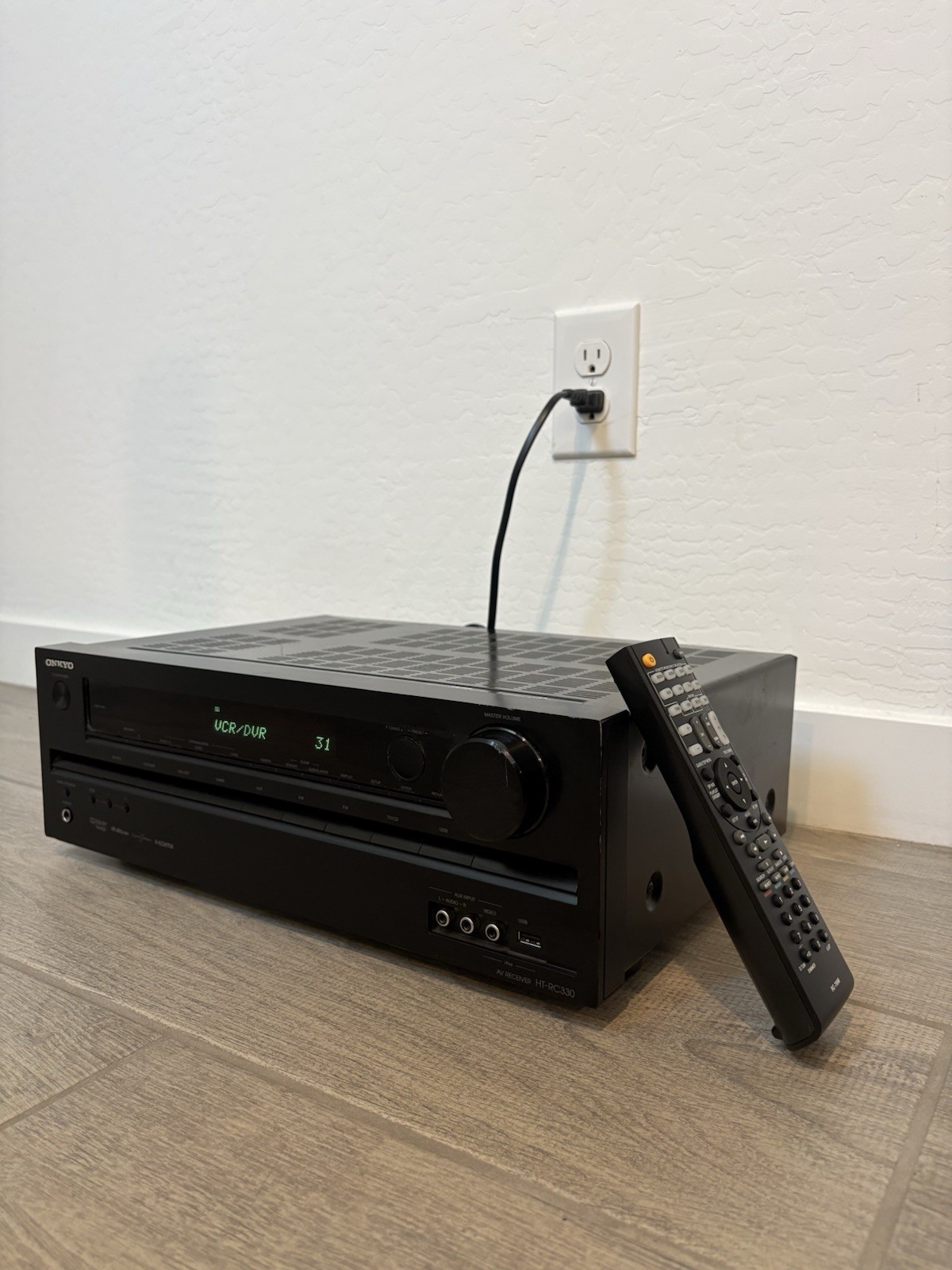 Onkyo HT-RC330 Home Theater AV Receiver 5.1 HDMI Surround Sound TEST VIDEO$110.00View on eBay
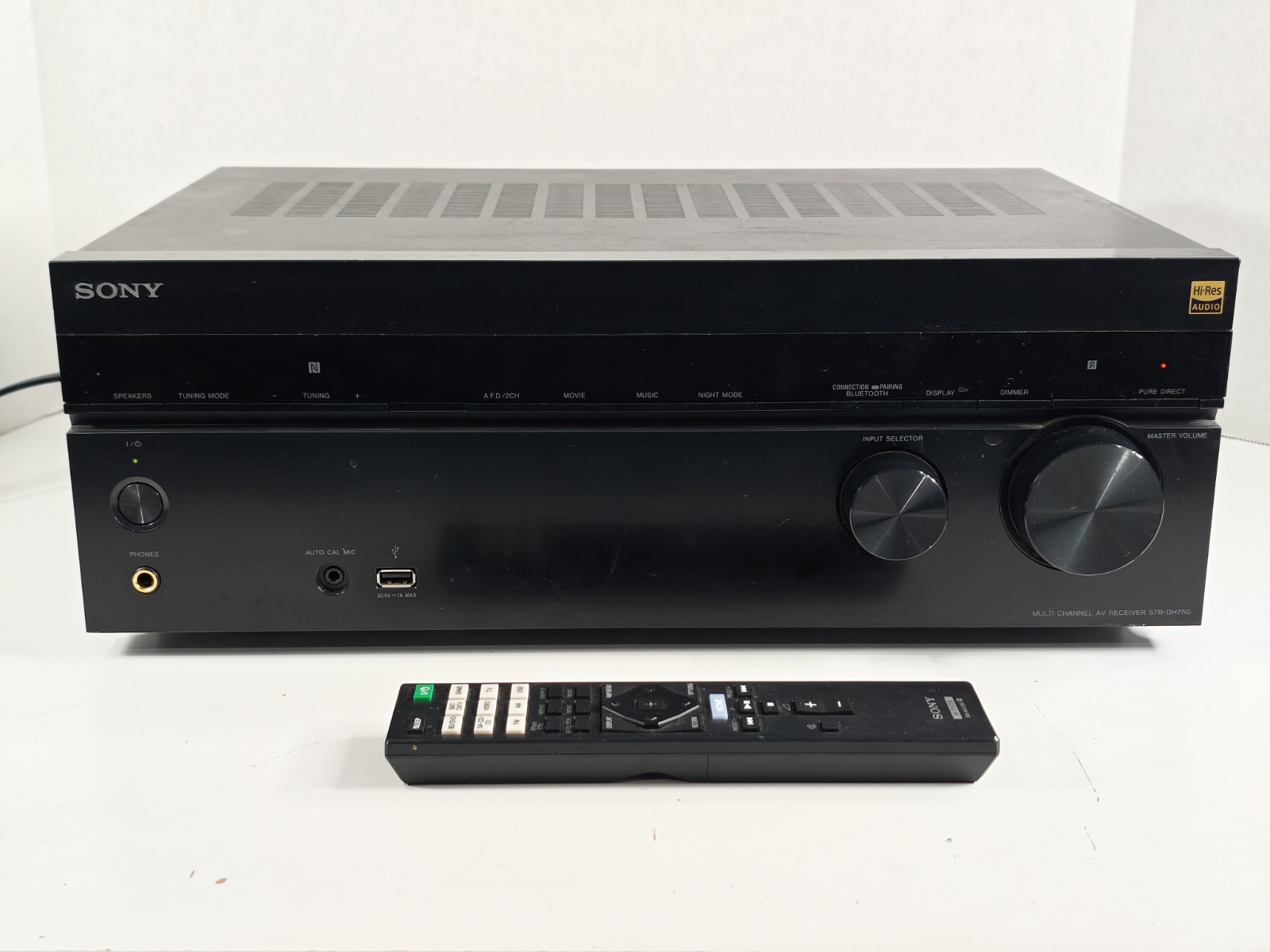 Sony STR-DH750 7.2 Channel Home Theater Bluetooth AV Stereo Receiver TESTED!$149.95View on eBay
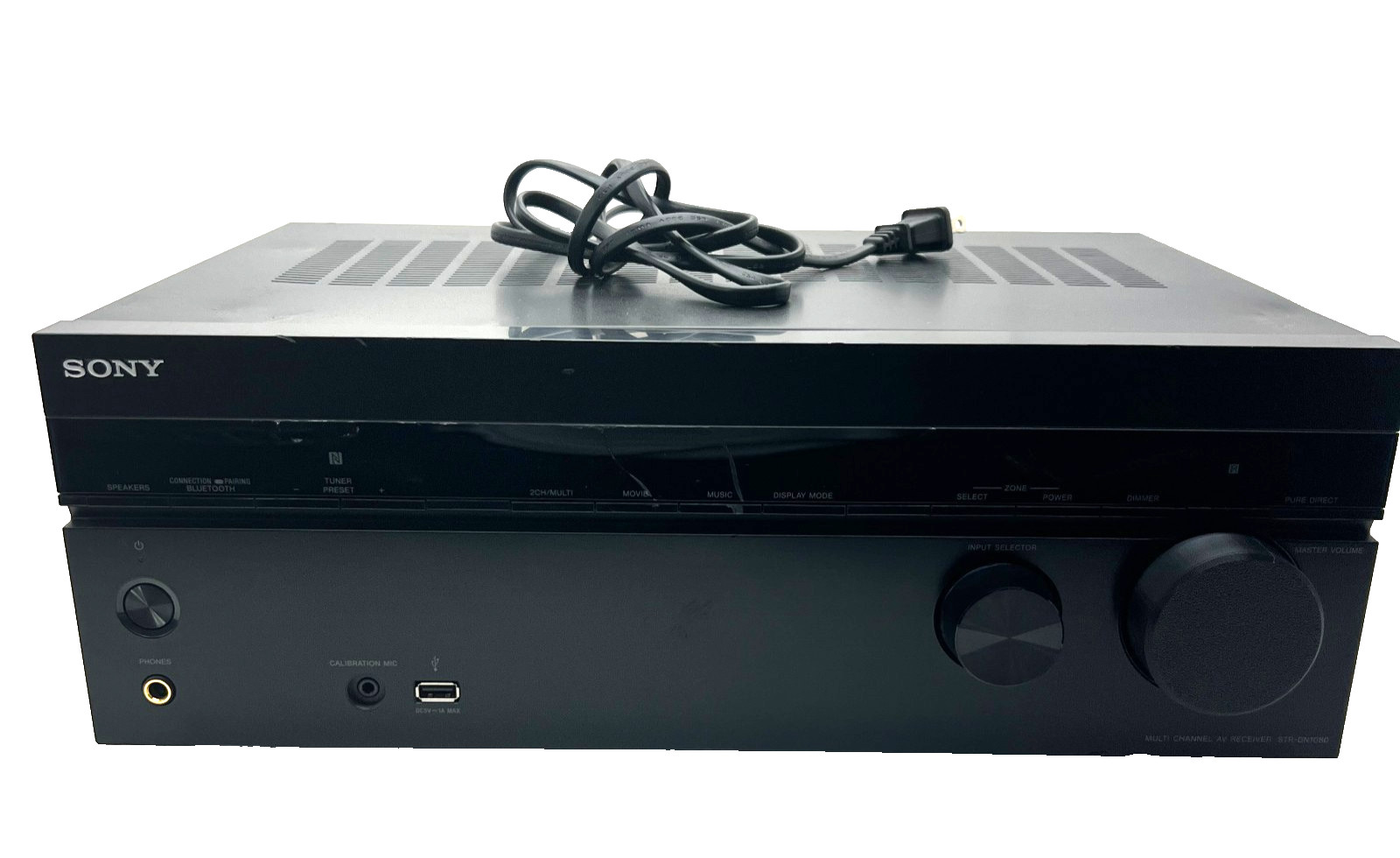 Sony STR-DN1080 Dolby Atmos Home Theater Multi Channel AV Receiver Bluetooth$169.99View on eBay
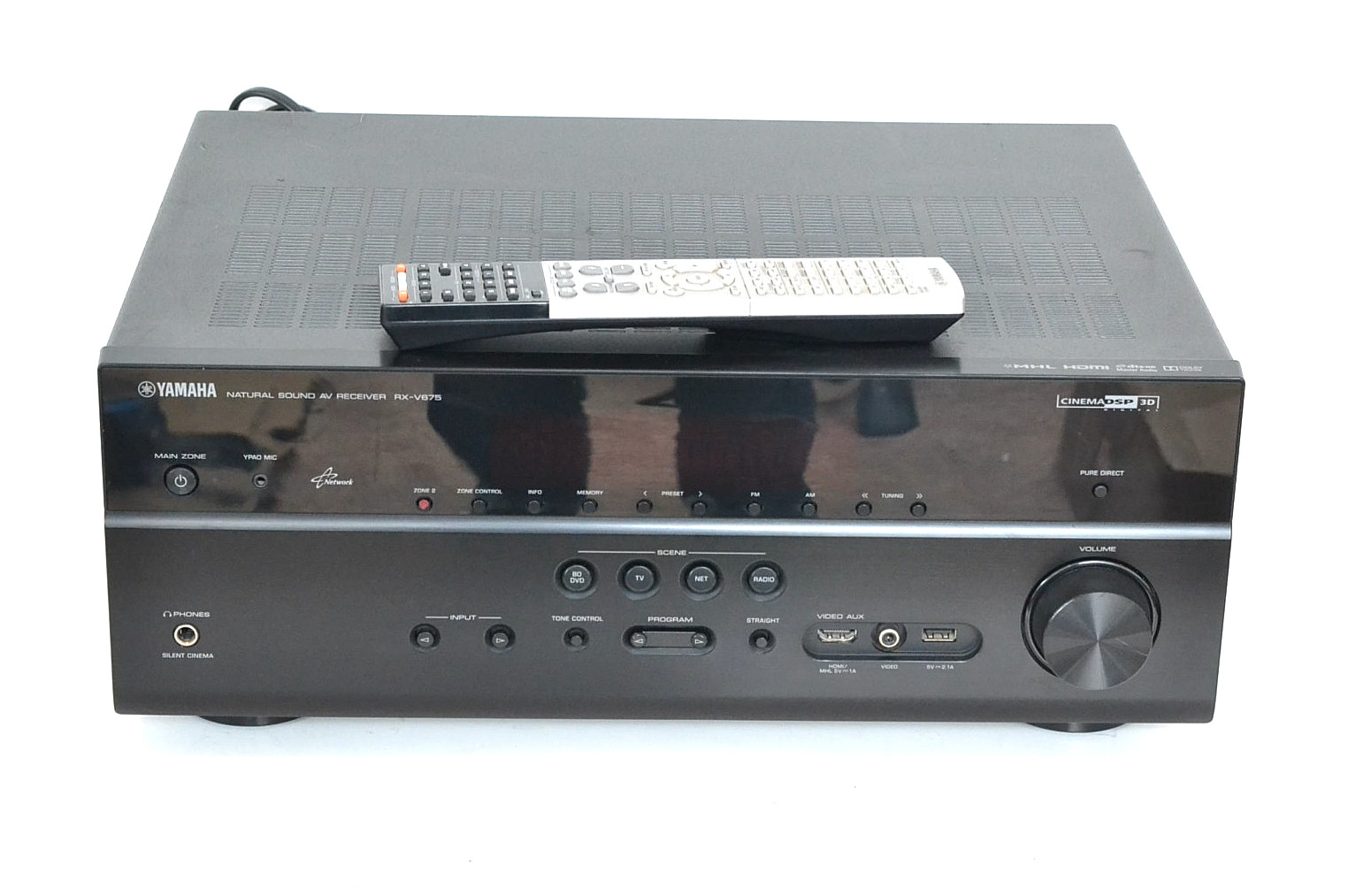 Yamaha RX-V675 7.2 Channel AV Receiver Multi-Zone w/Remote Bundle Tested Working$198.00View on eBay
Highlights
- HDMI tier: HDMI 2.0 handles 4K/60; HDMI 2.1 adds 8K/60, 4K/120, VRR, and ALLM—mandatory for PS5/Xbox Series X and RTX 30/40 GPUs.
- Channel math: 5.2 covers a basic surround setup; 7.2 adds two back or height channels; Dolby Atmos/DTS:X requires at least 5.1.2 (height or up-firing modules).
- Amplifier class: Class AB dominates AVRs for clean high-current output; slimline Class D models run cooler but usually spec lower 2-channel wattage into 8 ohms.
- Room correction: Audyssey MultEQ (Denon/Marantz), YPAO (Yamaha), and Dirac Live (Onkyo/Pioneer/Integra) differ sharply—Dirac and MultEQ XT32 are the top tiers for bass management.
Best use cases
- Pick a 5.2 HDMI 2.0 model (Yamaha RX-V4A class) for a living-room 4K TV with five speakers and no console gaming—skip 7.2 and 8K to save budget.
- Pick a 7.2 HDMI 2.1 model (Denon AVR-X1600H or Yamaha TSR-7850 tier) for a dedicated room with Atmos height speakers and a PS5/Xbox Series X—skip 5.2 if you want 4K/120 passthrough.
- Pick a 7.2 multi-zone model (Yamaha RX-V675 or RX-V663 tier) only if you need powered Zone 2 speakers in another room; skip multi-zone amps for single-room setups since they add cost without benefit.
- Avoid legacy 5.1 HDMI 1.4 receivers (Onkyo HT-RC330, Adcom GTP-500) unless driving older 1080p gear—they cannot pass 4K HDR or Dolby Atmos.
Buying tips
- Match amplifier power to speaker sensitivity: 88 dB+ speakers need only 50 W/ch; below 86 dB or 4-ohm loads demand 100 W/ch and a receiver rated for 4-ohm operation.
- Confirm HDMI 2.1 ports are 40 Gbps (not 24 Gbps) on models labeled 8K—24 Gbps limits 4K/120 to 4:2:0 chroma on some 2021–2022 receivers.
- For turntables, require a built-in phono MM stage; many slimline and budget AVRs omit it, forcing an external preamp.
- Check binding posts: spring clips indicate entry-tier amplification; five-way binding posts with banana plugs signal a step-up chassis with better heat sinks.
Specs
| Channels | 5.2 / 7.2 / 9.2 |
|---|---|
| HDMI Version | 2.0 (4K/60) vs 2.1 (8K/120) |
| Power per Channel | 50–150 W (8 ohm, 2ch) |
| Room Correction | Audyssey / YPAO / Dirac Live |
Related searches
What to check before buying
- Measure room volume: under 1,500 cu ft needs 50–80 W/ch; 1,500–3,000 cu ft needs 80–100 W/ch; above 3,000 cu ft consider 100 W/ch+ or external amplification.
- Count speakers and confirm impedance (4, 6, or 8 ohm) against the receiver's rated load—most budget AVRs are 6–8 ohm only.
- Verify TV and console HDMI version; if either is HDMI 2.1 (4K/120), the receiver must also be HDMI 2.1 with eARC.
- Measure cabinet depth and clearance: full-size AVRs run 13–17 inches deep and need 4+ inches of top/side ventilation.
FAQ
Data sources: eBay / Amazon listings and product attribute feeds. Updated Nov 24, 2026.
Some links on this page are affiliate links. If you buy after clicking one, we may earn a commission at no extra cost to you. This does not change which products appear here or their order. Affiliate disclosure.