
Photos from current listings. Actual item, color, and included accessories may vary.
Amplifier Buying Guide
A speaker amplifier is the power engine that drives passive speakers or headphones, bridging source signals to the drivers. The core trade-off is honest continuous power (watts per channel at a stated impedance and distortion) versus inflated peak or bridged numbers that cannot sustain real loads. Durable amplifiers specify FTC or IEC continuous output at 8/4 ohms with low THD and adequate heatsinking; compromises advertise peak wattage without impedance or distortion context.
Median $234.77 · Pre-owned listings
Key takeaways
- Continuous power matters: look for watts per channel at 8 ohms and 4 ohms, 20Hz–20kHz, with THD below 0.1% (FTC labeling). Peak or 'max' wattage is a transient marketing figure, not a sustained output standard.
- Class AB delivers robust linear power with heatsink mass; Class D runs cooler and lighter but needs a quality switching supply to avoid load-dependent power drops below 4 ohms.
- Hybrid tube amplifiers (e.g., Dayton HTA200) use a tube preamp stage for warmth and a solid-state output stage for current, unlike pure tube amps that require output-transformer matching to speaker impedance.
At a glance
- Category
- AV Receivers & Amplifiers
- Last updated
- Nov 24, 2026
Current offers
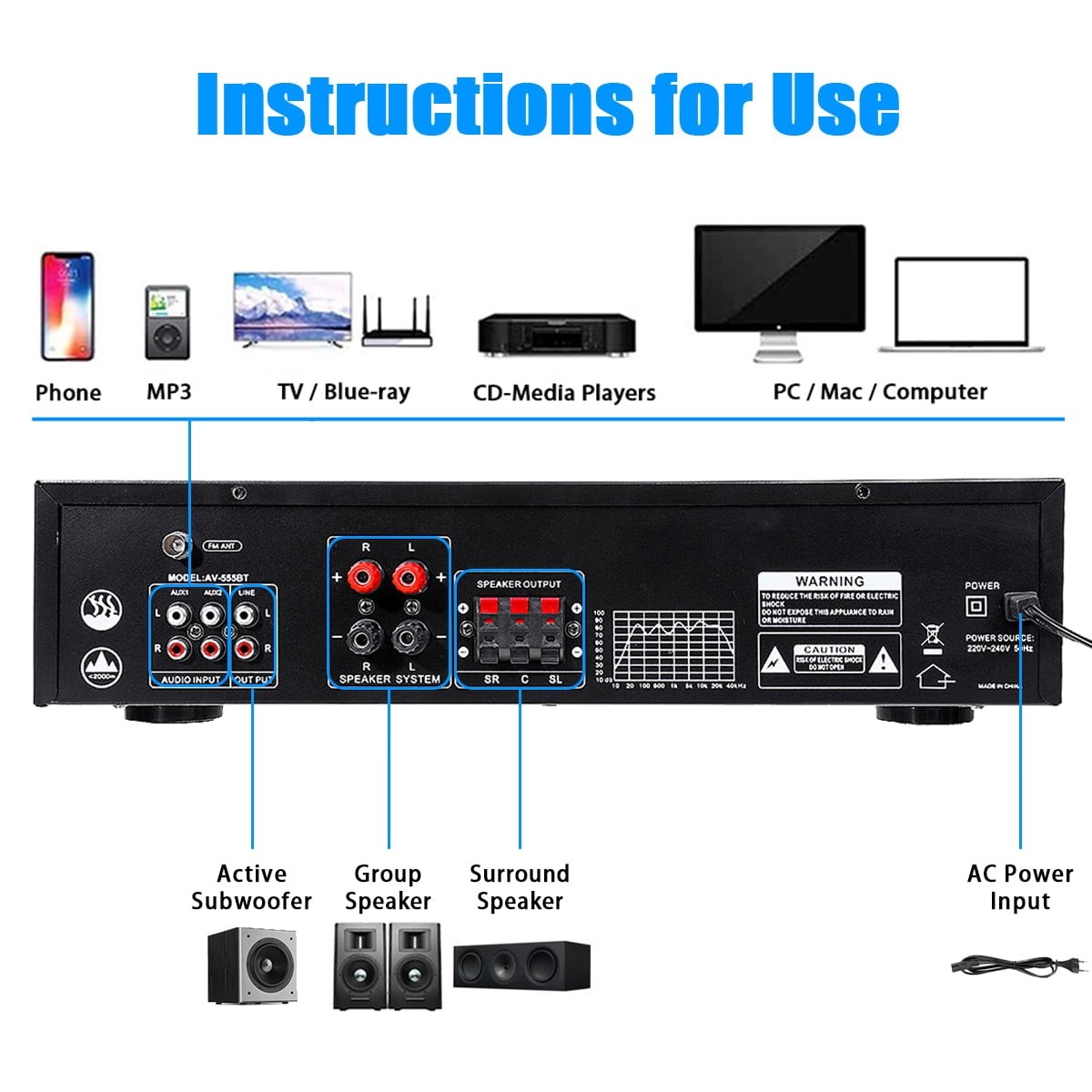 800W Surround Sound Bluetooth Audio Power Amplifier Receiver Home Theater Stereo$117.49View on eBay
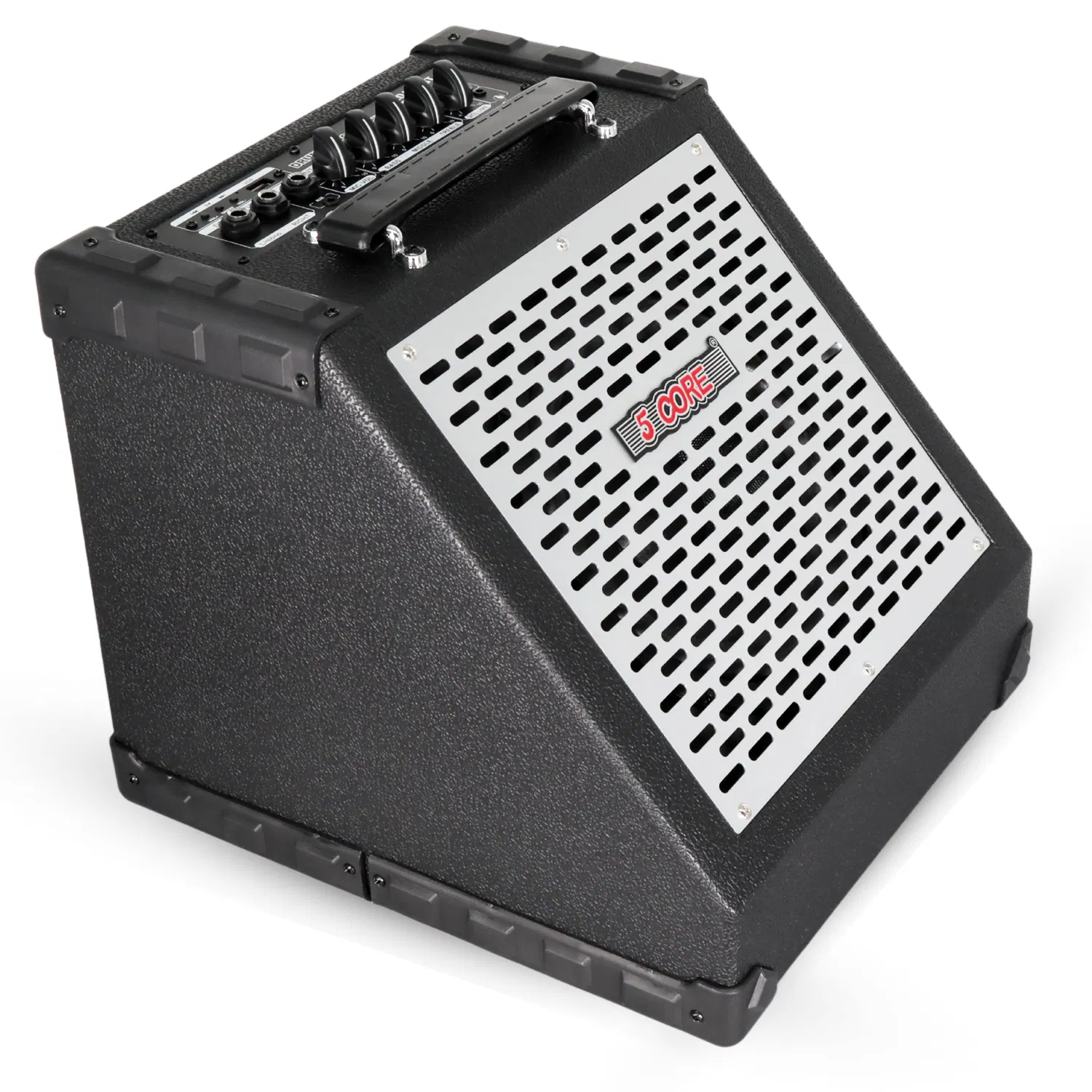 5 Core Electric Drum Amplifier 80W Professional Bluetooth Drumming Amp w 8' Speaker w 3 Band EQ$149.99View on Mallflare
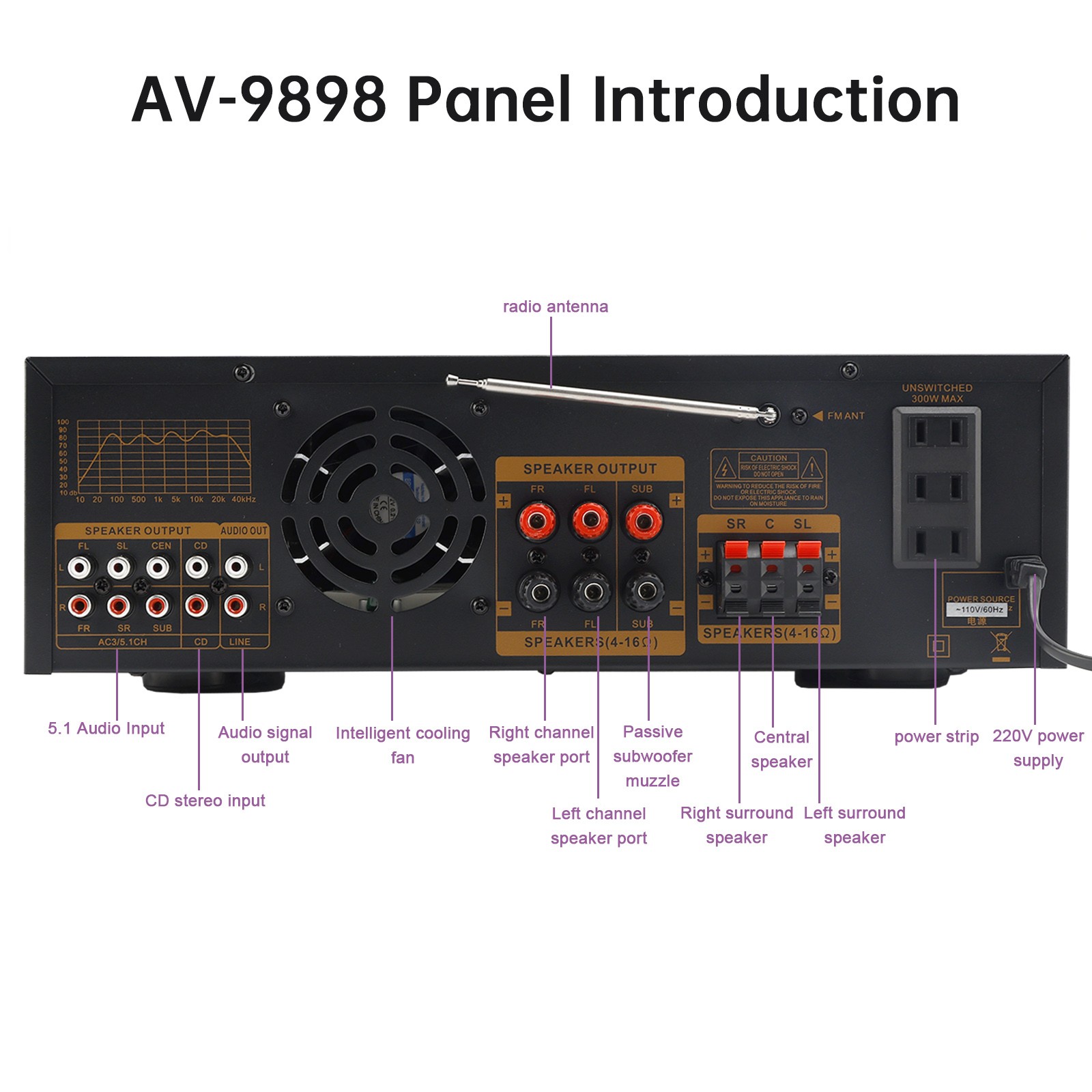 3000W Peak Stereo HiFi Power Amplifier High-Power 5.1Channel Subwoofer Amplifier$119.45View on eBay
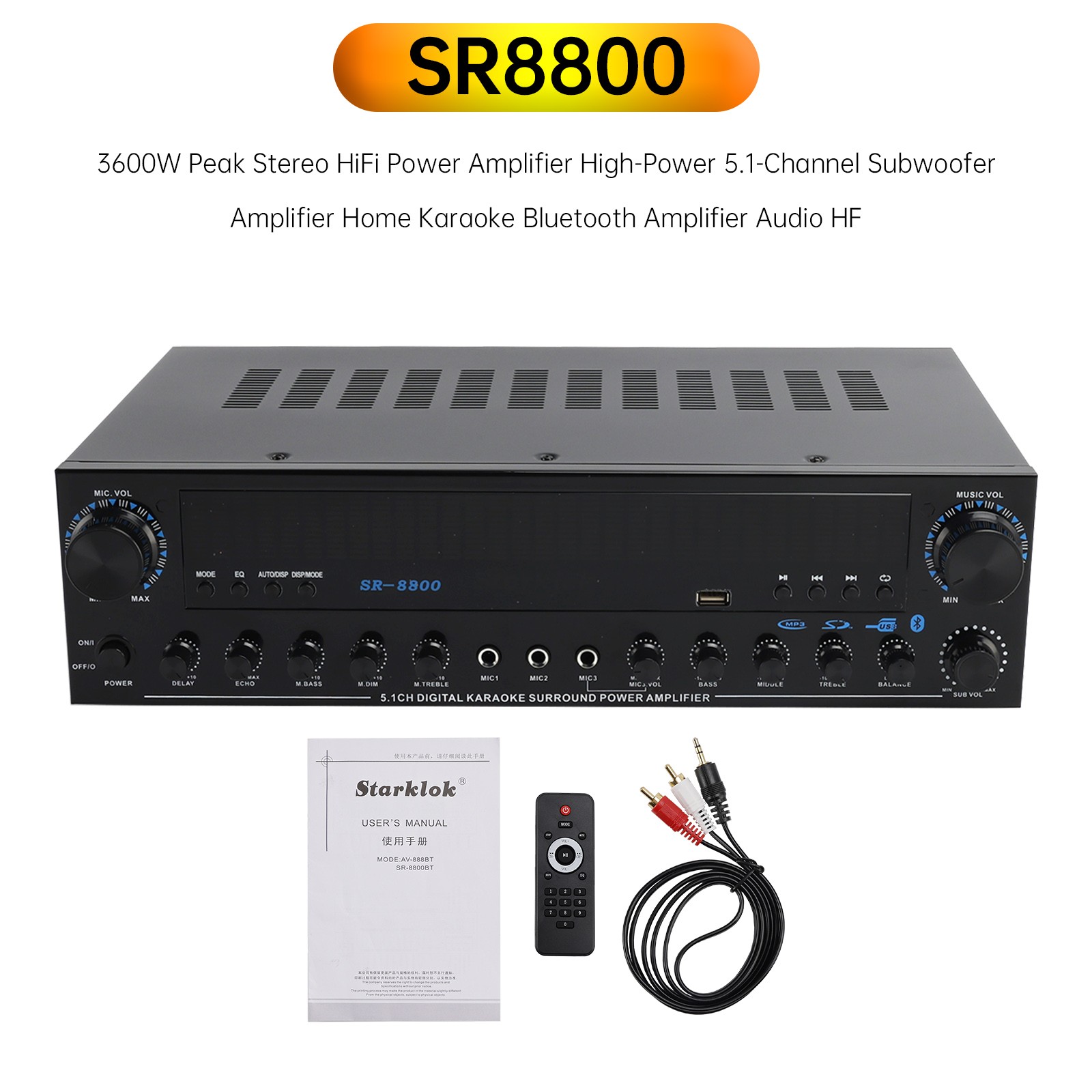 3600W Peak Stereo HiFi Power Bluetooth Amplifier High-Power 5.1 Subwoofer Home$319.55Last checked Nov 18, 2026View on eBay
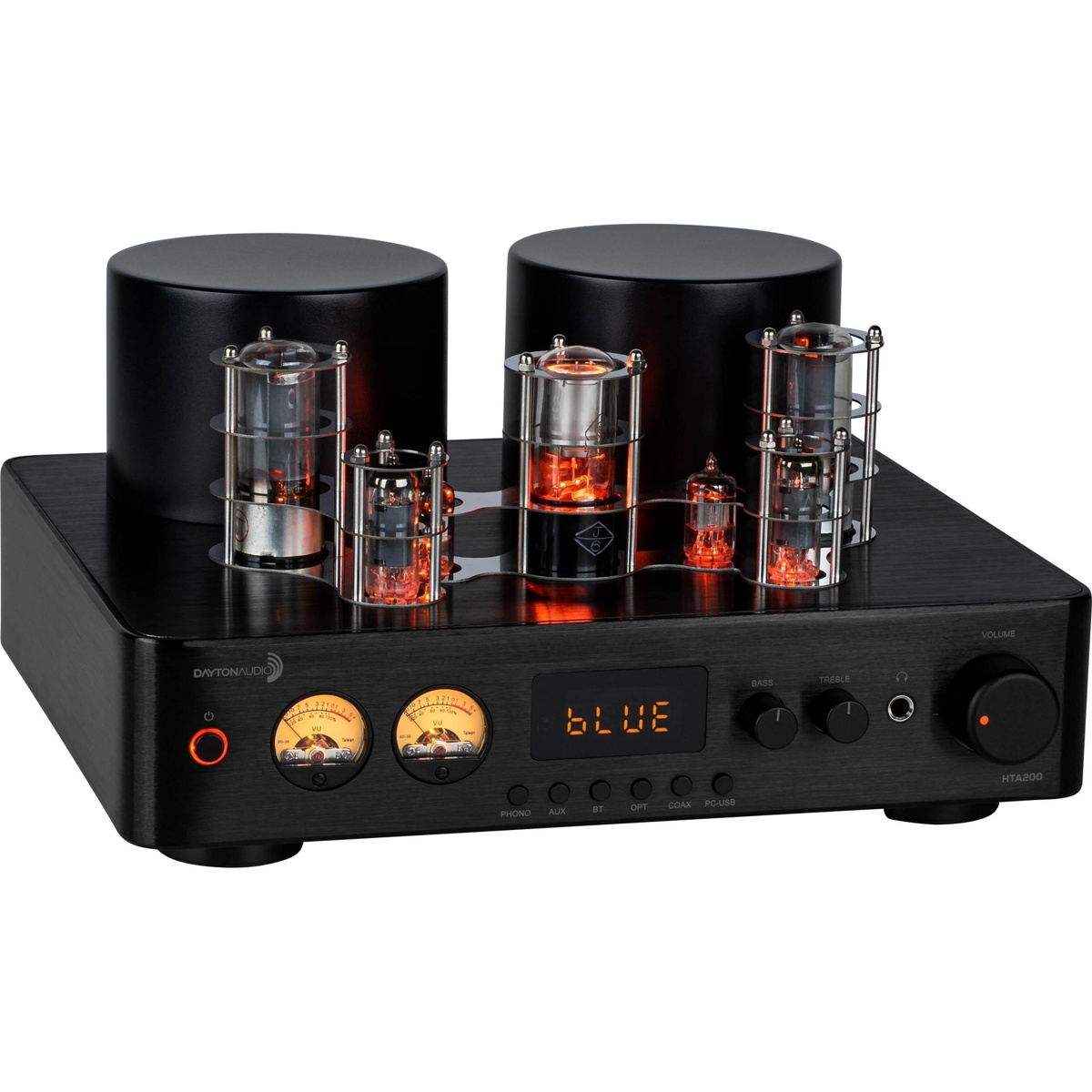 Dayton Audio HTA200 Integrated Stereo Hybrid Tube Amplifier 200 Watts$359.99Last checked Nov 18, 2026View on eBay
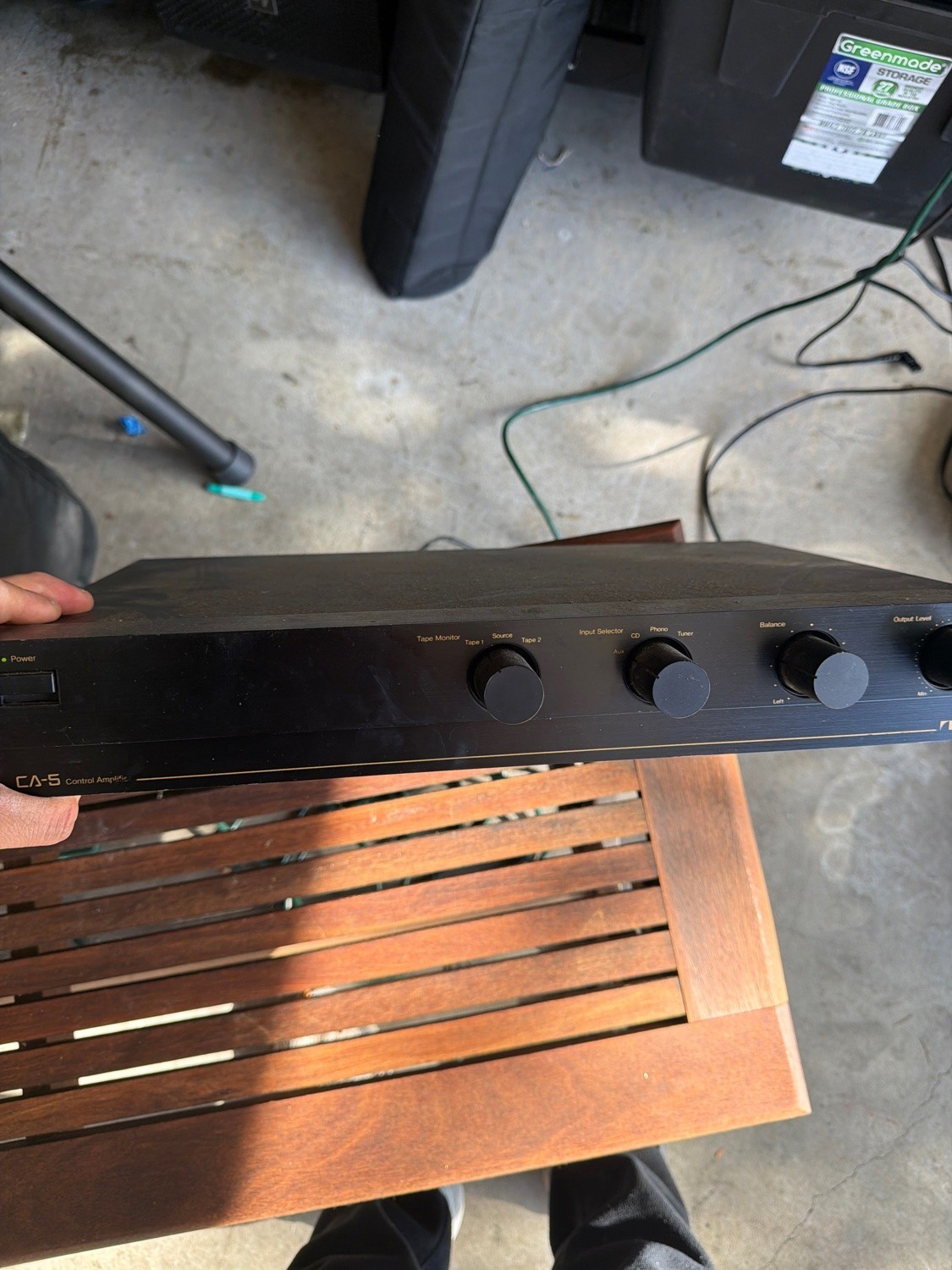 Nakamichi CA-5 Control Amplifier Stereo Preamp - Works Great$475.00Used · Last checked Nov 20, 2026View on eBay
Highlights
- Continuous power matters: look for watts per channel at 8 ohms and 4 ohms, 20Hz–20kHz, with THD below 0.1% (FTC labeling). Peak or 'max' wattage is a transient marketing figure, not a sustained output standard.
- Class AB delivers robust linear power with heatsink mass; Class D runs cooler and lighter but needs a quality switching supply to avoid load-dependent power drops below 4 ohms.
- Hybrid tube amplifiers (e.g., Dayton HTA200) use a tube preamp stage for warmth and a solid-state output stage for current, unlike pure tube amps that require output-transformer matching to speaker impedance.
- Phono stages matter for turntables: moving-magnet (MM) input with 47kΩ/100pF loading and 40–46 dB gain is standard; moving-coil (MC) needs 60+ dB gain or a step-up transformer, which most budget amplifiers omit.
Best use cases
- Best fit: bookshelf or tower speakers with 86–90 dB sensitivity in a small-to-medium room — choose a Class AB or Class D integrated amp rated 50–100W per channel at 8 ohms with a built-in phono stage if vinyl is primary.
- Wrong fit: driving 4-ohm low-sensitivity (below 85 dB) speakers with a lightweight Class D amp rated only at 8 ohms — the supply sags and protection circuits trip; step up to a high-current amp with 4-ohm continuous ratings.
- Best fit: turntable-only vinyl setup — an integrated amp with a dedicated MM phono input avoids an external preamp and ground-loop noise; skip AV receivers whose phono stages are often afterthoughts.
- Wrong fit: home-theater surround from a stereo amplifier — a 5.1 AV receiver is required for multichannel decoding; a 2-channel amp only handles front L/R or zone-2 duty.
Buying tips
- Match amplifier continuous power to speaker sensitivity: 86 dB speakers need roughly 2× the wattage of 89 dB speakers for the same SPL; aim for 50–100W per channel at 8 ohms for typical 87–90 dB bookshelves.
- Check 4-ohm capability explicitly: many budget amps rate only at 8 ohms; if your speakers dip to 4 ohms, pick an amp with a published 4-ohm continuous rating and at least 200 VA of transformer or supply headroom per channel.
- For turntables, confirm a moving-magnet phono input (47kΩ, ~40 dB gain) and a ground lug; if you own a moving-coil cartridge, budget for a standalone MC preamp rather than expecting it built in.
- Ignore peak wattage badges like 3000W or 3600W on budget listings — they reflect momentary bridged bursts; compare only FTC/IEC continuous watts per channel at 8 and 4 ohms with THD specified.
Specs
| Amplifier Class | Class AB / Class D / Hybrid tube |
|---|---|
| Continuous Power | 20–200 W/ch (8Ω, <0.1% THD) |
| Speaker Impedance | 4–8Ω nominal, check 4Ω rating |
| Phono Input | MM 47kΩ ~40 dB / none |
Related searches
What to check before buying
- Measure your speaker impedance (nominal 4, 6, or 8 ohms) and sensitivity (dB/2.83V/1m) from the spec sheet; note any minimum impedance dip below nominal.
- Confirm amplifier dimensions and heatsink clearance for your shelf or rack — compact 380×120×230 mm chassis need 10 cm open air above; full-width 430 mm units need a standard 19-inch rack or wide shelf.
- Verify input complement: RCA line, Bluetooth version, optical/coaxial DAC if digital sources are used, and a phono input with ground terminal for turntables.
- Check mains voltage (120V or 230V) and plug type for your region, plus whether the amplifier has a detachable IEC power cable or captive cord.
FAQ
Data sources: eBay / Amazon listings and product attribute feeds. Updated Nov 24, 2026.
Some links on this page are affiliate links. If you buy after clicking one, we may earn a commission at no extra cost to you. This does not change which products appear here or their order. Affiliate disclosure.