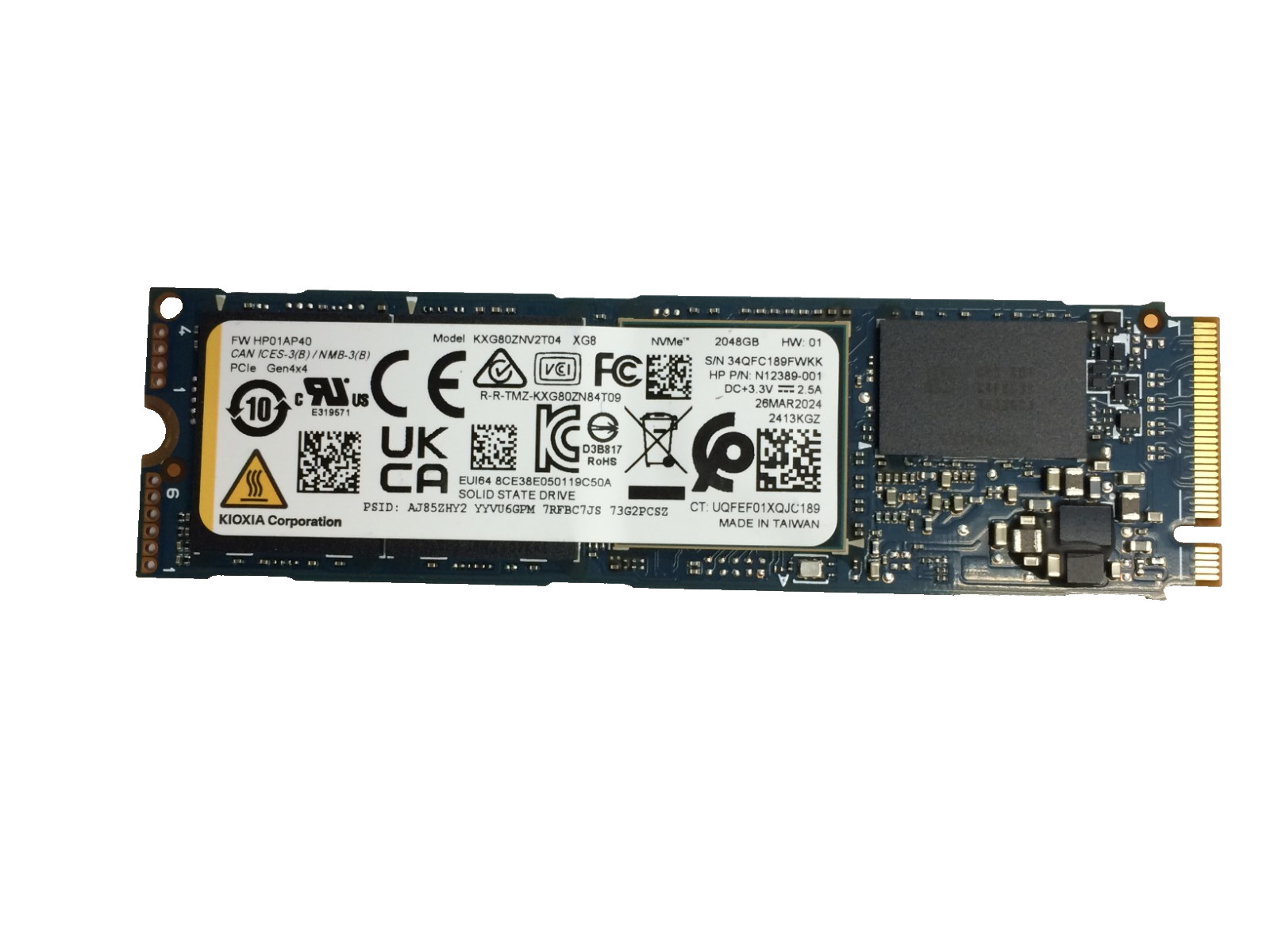

Photos from current listings. Actual item, color, and included accessories may vary.
Internal SSD With Heatsink Buying Guide
An internal SSD with a heatsink is a PCIe NVMe drive factory-fitted with a metal or graphene heat spreader to prevent thermal throttling under sustained writes. The primary trade-off is heatsink height and thermal mass versus motherboard, laptop, and console clearance—plus whether the drive uses TLC or QLC NAND. The decision rule: buy a heatsinked drive only when your slot has ≥8 mm clearance and you sustain large writes; otherwise pick a bare TLC drive and use the motherboard's own heatsink.
Key takeaways
- PCIe 4.0 drives run hotter than PCIe 3.0; a heatsink becomes mandatory for sustained writes above ~5 GB/s, where bare drives throttle near 70–80°C.
- Heatsink profiles split into low-profile (~5–8 mm, laptop/PS5-slim compatible) and full-height (~10–25 mm, desktop only); PS5 requires ≤11.25 mm total thickness including both sides.
- NAND type dominates endurance: TLC delivers roughly 600–1,000 TBW per 2 TB versus 300–500 TBW for QLC, and QLC also slows sharply once its SLC cache empties.
At a glance
- Category
- PC Storage Upgrades
- Last updated
- Nov 28, 2026
Current offers
Highlights
- PCIe 4.0 drives run hotter than PCIe 3.0; a heatsink becomes mandatory for sustained writes above ~5 GB/s, where bare drives throttle near 70–80°C.
- Heatsink profiles split into low-profile (~5–8 mm, laptop/PS5-slim compatible) and full-height (~10–25 mm, desktop only); PS5 requires ≤11.25 mm total thickness including both sides.
- NAND type dominates endurance: TLC delivers roughly 600–1,000 TBW per 2 TB versus 300–500 TBW for QLC, and QLC also slows sharply once its SLC cache empties.
- DRAM-less drives rely on Host Memory Buffer and degrade more under heavy random writes; DRAM-equipped controllers with a heatsink hold speed far better in sustained workloads.
Best use cases
- Best fit: desktop PCIe 4.0/5.0 builds doing video editing, game installs, or large transfers—pick a full-height aluminum heatsink with a DRAM-equipped TLC drive.
- Best fit: PlayStation 5 expansion—pick a low-profile heatsinked Gen4 drive no thicker than 11.25 mm total and confirm read speed meets Sony's minimum.
- Wrong fit: thin laptops and Steam Deck—skip heatsinked drives entirely; a bare 2280 or 2230 drive with a graphene pad is the only reliable fit.
- Wrong fit: boards with integrated M.2 shields—skip the factory heatsink and buy a bare drive, since stacking heatsinks traps heat rather than dissipating it.
Buying tips
- Measure slot clearance first: full-height heatsinks need ~10–25 mm above the drive, while low-profile (~5–8 mm) units fit PS5 and slim desktops.
- Match PCIe generation: a Gen4 drive in a Gen3 slot runs at Gen3 speed but cooler; a Gen5 drive needs a Gen5 slot and robust airflow to avoid throttling.
- For endurance, require TLC NAND and a DRAM cache on drives 2 TB and larger; QLC with HMB is acceptable only for read-mostly game libraries.
- Check total thickness for consoles: PS5 accepts 22–30 mm wide, 30–110 mm long drives up to 11.25 mm thick with heatsink fitted.
Specs
| Interface | PCIe 3.0 / 4.0 / 5.0 x4 NVMe |
|---|---|
| Heatsink Profile | Low-profile ≤8 mm / Full-height 10–25 mm |
| NAND & DRAM | TLC w/ DRAM vs QLC w/ HMB |
| Form Factor | M.2 2280 / 2230 |
Related searches
What to check before buying
- Confirm your M.2 slot length (2280 vs 2230) and whether a motherboard shield already covers the slot.
- Verify physical clearance above the slot: GPU backplate, laptop bottom panel, or console bay must clear the heatsink height.
- Ensure the drive's heatsink is pre-installed and warranty-safe; self-applied pads can void coverage if thickness is wrong.
- Check PSU and airflow: Gen5 drives can pull 10–12 W and need case airflow; a passive heatsink in a sealed case still throttles.
FAQ
Data sources: eBay / Amazon listings and product attribute feeds. Updated Nov 28, 2026.
Some links on this page are affiliate links. If you buy after clicking one, we may earn a commission at no extra cost to you. This does not change which products appear here or their order. Affiliate disclosure.