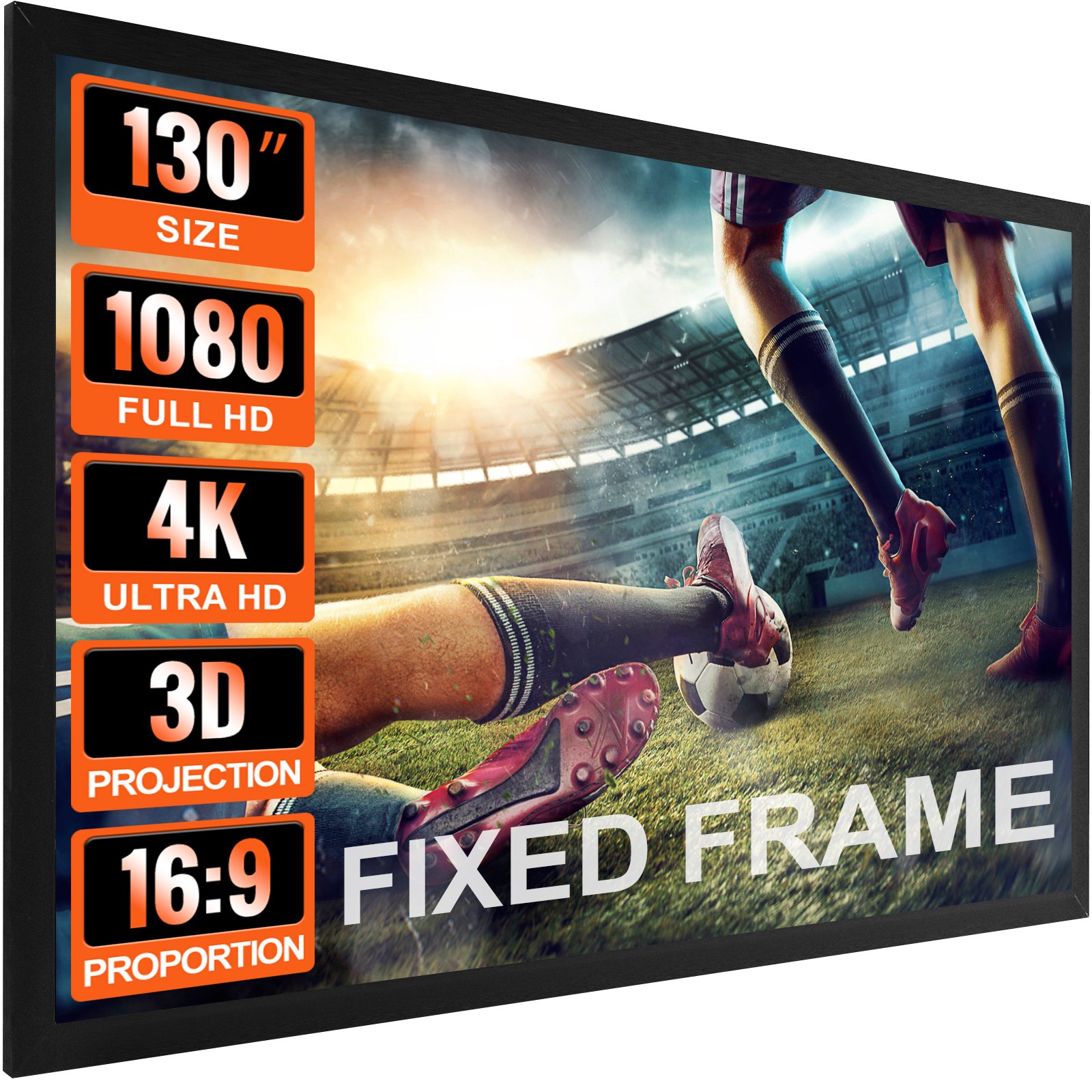

Photos from current listings. Actual item, color, and included accessories may vary.
Wall Mounted Projector Screen Buying Guide
A wall-mounted projector screen is a fixed-frame or tensioned fabric surface permanently attached to a wall, and the core trade-off is between a rigid aluminum fixed frame (best flatness and uniformity) versus a roll-up or tab-tensioned mechanism (flexibility at the cost of edge curl). Buy a fixed-frame aluminum screen when you have a dedicated wall and want maximum image geometry; choose a tab-tensioned or manual pull-down only if the screen must retract or share wall space.
Median $200.49
Key takeaways
- Fixed-frame screens use 1.5–3 mm extruded aluminum frames with velvet-wrapped borders to absorb overshoot light; thinner 0.8 mm frames flex and show ripples on large diagonals.
- For 16:9 screens, image height is diagonal × 0.4903 and width is diagonal × 0.8716 — a 130-inch screen is roughly 113.3 × 63.7 inches, so wall width plus 4–8 inches of frame clearance is the real fit number.
- Gain 1.0–1.1 matte white PVC or woven fabric is the reference standard for dark-room home theater; gray 0.8–0.9 gain screens improve perceived contrast only in rooms with ambient light.
At a glance
- Category
- Projectors & Screens
- Last updated
- Nov 28, 2026
Current offers
Highlights
- Fixed-frame screens use 1.5–3 mm extruded aluminum frames with velvet-wrapped borders to absorb overshoot light; thinner 0.8 mm frames flex and show ripples on large diagonals.
- For 16:9 screens, image height is diagonal × 0.4903 and width is diagonal × 0.8716 — a 130-inch screen is roughly 113.3 × 63.7 inches, so wall width plus 4–8 inches of frame clearance is the real fit number.
- Gain 1.0–1.1 matte white PVC or woven fabric is the reference standard for dark-room home theater; gray 0.8–0.9 gain screens improve perceived contrast only in rooms with ambient light.
- Tab-tensioned drop-down models hold edge flatness via side tension cords; non-tensioned pull-downs develop V-shaped waves within a few cycles, especially above 100 inches diagonal.
Best use cases
- Dedicated dark media room with a free wall: pick a fixed-frame aluminum 16:9 screen at 100–155 inches diagonal with matte white gain 1.0 — flatness and border light absorption beat any retractable at the same size.
- Multipurpose living room where the screen must disappear: choose a tab-tensioned electric or manual pull-down in 16:9; skip non-tensioned pull-downs above 100 inches because edge curl becomes visible.
- Office or classroom with a whiteboard wall: a fixed-frame screen in 16:10 or 4:3 matches presentation sources better than 16:9, which letterboxes slide decks.
- Ultra-short-throw projector owner: skip standard matte white fixed frames and use an ALR/CLR screen with black border — a standard screen will wash out under UST geometry.
Buying tips
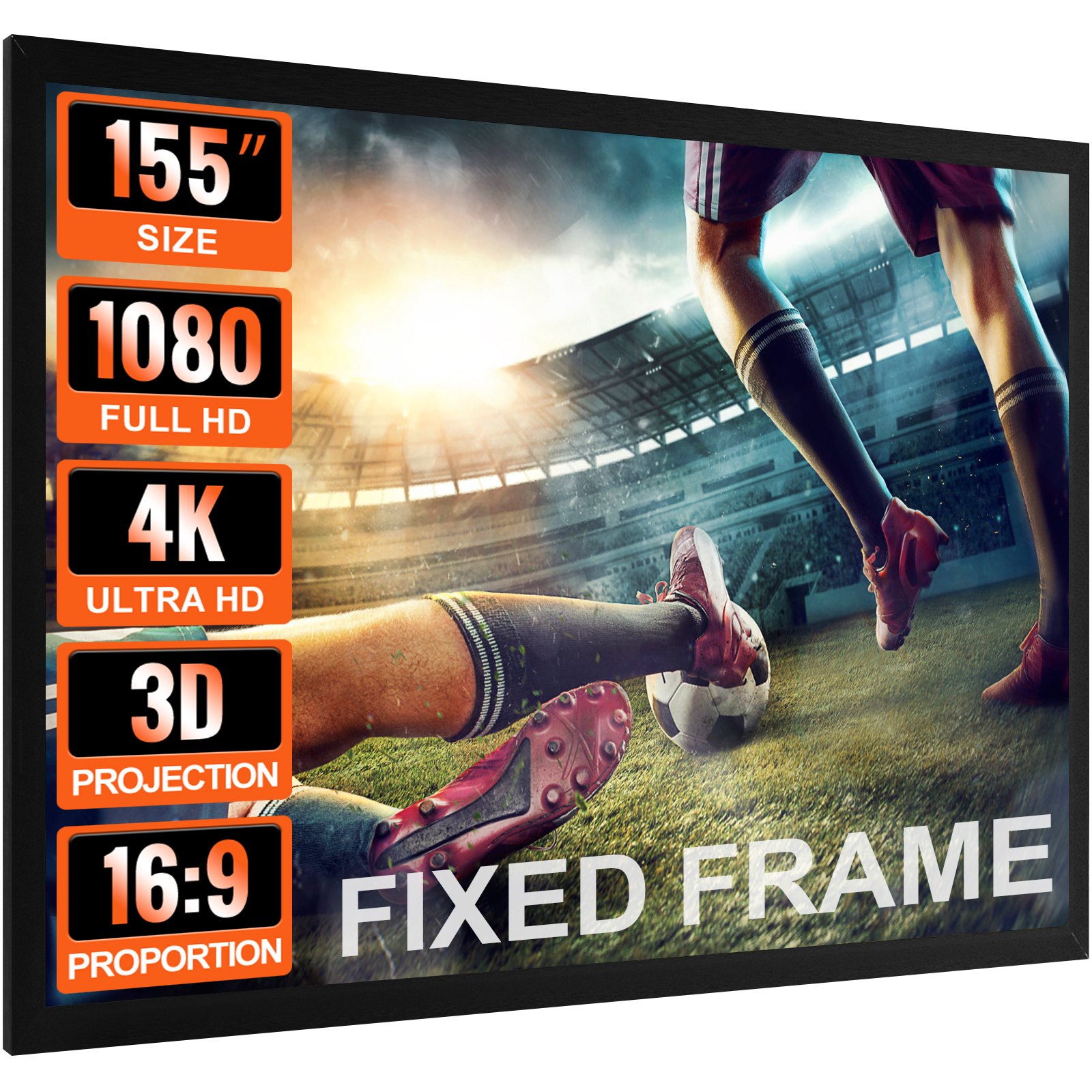
- Compute wall fit first: image width = diagonal × 0.8716 for 16:9, then add 4–8 inches for the frame; a 155-inch screen needs about 135 inches of clear wall width.
- Match screen gain to room light: gain 1.0 matte white for controlled light, gain 0.8–0.9 gray for some ambient light, and ALR only for ultra-short-throw projectors.
- Check projector throw ratio against screen width, not diagonal: throw distance = throw ratio × image width, so a 1.5 ratio projector needs 170 inches to fill a 113-inch-wide 130-inch screen.
- Choose at least 1.5 mm aluminum frame extrusion and velvet-wrapped borders on fixed frames; thinner frames and uncoated borders cause ripple and light spill.
Specs
| Mount Type | Fixed frame / tab-tensioned / manual |
|---|---|
| Aspect Ratio | 16:9 / 16:10 / 4:3 |
| Screen Material Gain | Matte white 1.0 / gray 0.8–0.9 / ALR |
| Frame Build | Aluminum 1.5–3 mm, velvet border |
Related searches
What to check before buying
- Measure clear wall width and height including frame: 16:9 image width = diagonal × 0.8716, image height = diagonal × 0.4903, plus 2–4 inches per side for frame.
- Confirm wall construction and stud locations — fixed-frame screens above 120 inches need anchors into studs or masonry, not drywall plugs alone.
- Verify projector brightness and throw ratio: 1.0-gain screens need roughly 15–20 ft-L target; calculate throw distance from ratio × image width.
- Check ceiling height and viewing distance: seating distance roughly 1.2–1.5 × image height for 16:9 immersive viewing.
FAQ
Data sources: eBay / Amazon listings and product attribute feeds. Updated Nov 28, 2026.
Some links on this page are affiliate links. If you buy after clicking one, we may earn a commission at no extra cost to you. This does not change which products appear here or their order. Affiliate disclosure.