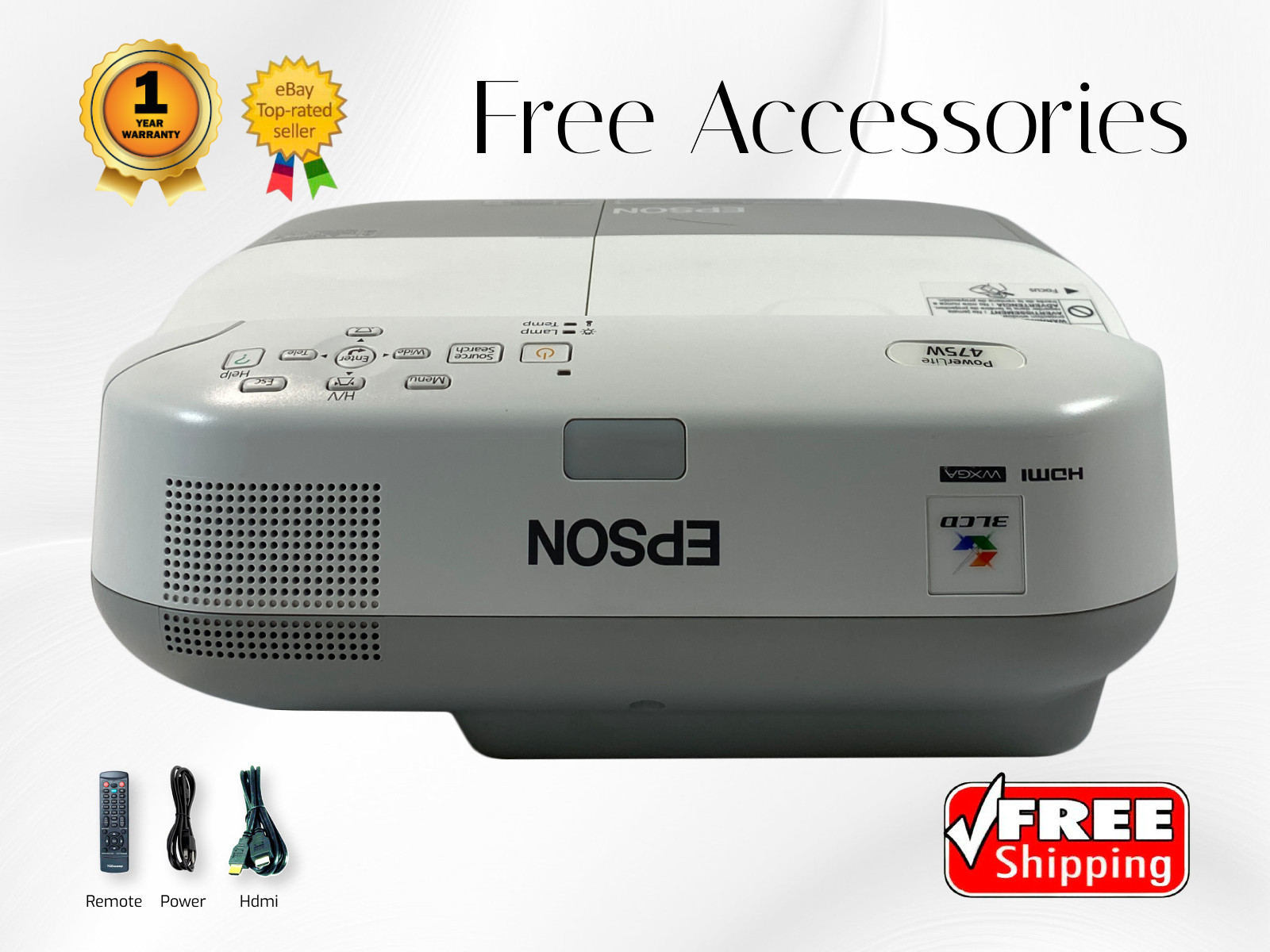

Photos from current listings. Actual item, color, and included accessories may vary.
Short Throw Projector Buying Guide
Short throw projectors (and ultra-short throw models) place the lens close to the wall or screen, eliminating cable runs across the room and shadow interference. The primary trade-off is optical design: short-throw lenses require tighter tolerances, and ultra-short models use aspherical elements that raise cost but cut throw distance to inches. The clear decision rule: if your room depth prevents a standard throw, buy a true short-throw or UST projector; a standard projector with a short-throw lens accessory is a compromise that only works if the lens is matched to the projector's chip and mount.
Median $161.44
Key takeaways
- Throw ratio is the defining spec: short throw is typically 0.4–1.0:1, ultra-short throw is below 0.4:1; a 0.3:1 UST fills a 100-inch screen from about 2 feet.
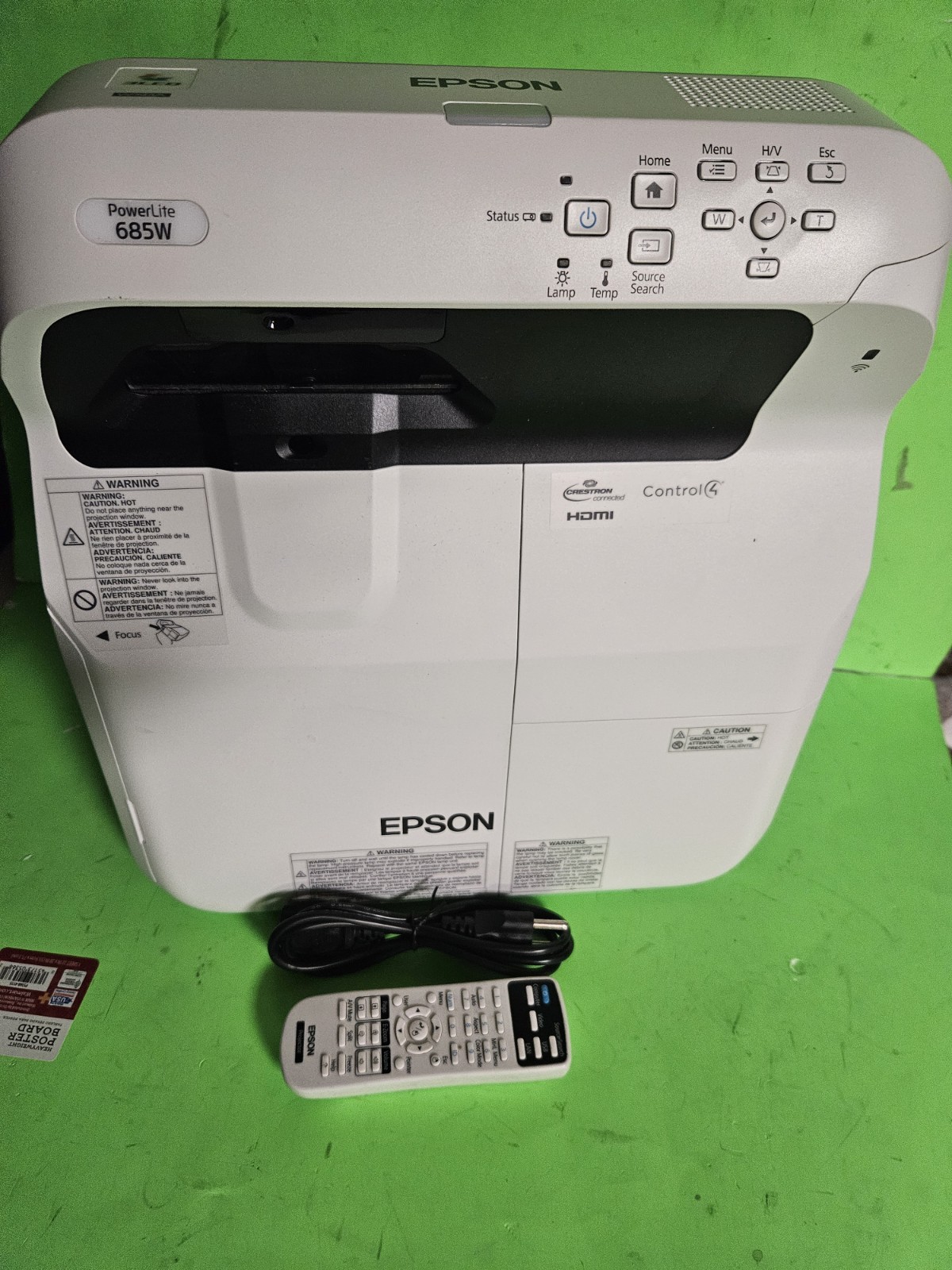
- Epson's PowerLite 475W and 685W are 3LCD ultra-short throw models rated at 2600–3500 lumens; the 685W adds a brighter lamp and slightly longer lamp life for classrooms.
- Short-throw lens accessories like the Epson ELPLW06 (V12H004W06) are model-specific motorized zoom lenses; they only fit compatible Epson Pro L-series bodies and cannot be adapted to other brands.
At a glance
- Category
- Projectors & Screens
- Last updated
- Nov 28, 2026
Current offers
Highlights
- Throw ratio is the defining spec: short throw is typically 0.4–1.0:1, ultra-short throw is below 0.4:1; a 0.3:1 UST fills a 100-inch screen from about 2 feet.
- Epson's PowerLite 475W and 685W are 3LCD ultra-short throw models rated at 2600–3500 lumens; the 685W adds a brighter lamp and slightly longer lamp life for classrooms.
- Short-throw lens accessories like the Epson ELPLW06 (V12H004W06) are model-specific motorized zoom lenses; they only fit compatible Epson Pro L-series bodies and cannot be adapted to other brands.
- Ultra-short throw projectors use aspherical lens elements and often include a wall mount with fine-throw adjustment; short-throw (non-ultra) models use conventional glass optics and are cheaper but need more distance.
Best use cases
- Best fit: small apartments or bedrooms where the projector sits 3–5 feet from the wall — choose a short-throw model with a 0.5–0.8:1 ratio and at least 2000 lumens.
- Best fit: classroom or conference room with a fixed whiteboard or screen — choose an ultra-short throw model (0.3:1 or lower) with a wall mount and at least 3000 lumens for ambient light.
- Wrong fit: a large dedicated theater room with 12+ feet of depth — skip short throw and buy a standard-throw projector; you get more brightness per dollar and easier lens compatibility.
- Wrong fit: a portable outdoor setup where the projector must sit on a table behind viewers — skip ultra-short throw (it needs a wall directly in front) and choose a standard or short-throw model with vertical keystone.
Buying tips
- Calculate throw distance first: multiply screen width by the throw ratio. For a 100-inch diagonal (87-inch wide) screen, a 0.4:1 UST needs about 35 inches; a 0.8:1 short throw needs about 70 inches.
- Match the lens to the projector body: Epson ELPLW06 and similar accessory lenses are motorized and model-specific; buying a lens without the matching projector body is a non-starter.
- For bright rooms, prioritize lumens over contrast: ultra-short throw models at 3000+ lumens handle daylight better, while 2000-lumen short-throw units are best in controlled lighting.
- Check the mount and adjustment range: UST projectors require a rigid wall mount with horizontal and vertical lens shift; short-throw models often use standard ceiling mounts with keystone correction only.
Specs
| Throw Ratio | Short: 0.4–1.0:1 / UST: <0.4:1 |
|---|---|
| Light Source | Lamp vs laser (20k+ hr) |
| Resolution Tier | 1080p / 4K enhancement |
| Mount Type | Wall mount (UST) / ceiling |
Related searches
What to check before buying
- Measure the distance from your wall to your planned projector position and the desired screen width; divide distance by width to get the required throw ratio (must be 1.0 or lower for short throw).
- Confirm the wall or screen is flat and vertical: ultra-short throw projectors are sensitive to surface flatness and need a rigid screen or painted flat wall, not a textured or curved surface.
- Verify voltage and plug standard for your region: most Epson PowerLite models are 100–240V auto-switching with a standard IEC cable, but imported units may ship with a non-local plug.
- Ensure you have the companion parts: UST models usually include or require a dedicated wall mount; short-throw lens accessories require the exact projector model and often a motorized lens mount.
FAQ
Data sources: eBay / Amazon listings and product attribute feeds. Updated Nov 28, 2026.
Some links on this page are affiliate links. If you buy after clicking one, we may earn a commission at no extra cost to you. This does not change which products appear here or their order. Affiliate disclosure.