
Photos from current listings. Actual item, color, and included accessories may vary.
Video Projector Buying Guide
A video projector is an optical display that throws a large image onto a screen or wall, and the primary trade-off is light-source architecture versus image quality: cheap single-LCD panels with inflated lumen claims, DLP engines with real ANSI ratings, or 3LCD units with accurate color. The decision rule is simple — buy a projector rated in true ANSI lumens with a native 1080p or 4K DMD/panel and a lamp/filter replacement path rather than a 'support' or 'compatible' resolution badge on a white-label box.
Median $70.96
Key takeaways
- Lumen ratings separate real specs from marketing: ANSI/ISO lumens are measured white-light output, while 'LMS' or 'Lumens' on budget boxes are peak single-color figures that overstate visible brightness two to four times.
- Imaging engines differ fundamentally: single-LCD panels produce soft, low-contrast images with poor color uniformity; DLP uses a color wheel and micromirror DMD for sharper motion; 3LCD delivers equal color and white brightness with no rainbow effect.
- Native resolution is the panel or DMD chip resolution — 1920x1080 Full HD or 3840x2160 4K — while 'supports 1080P/4K' only means the input scaler accepts the signal and downconverts it.
At a glance
- Category
- Projectors & Screens
- Last updated
- Nov 28, 2026
Current offers
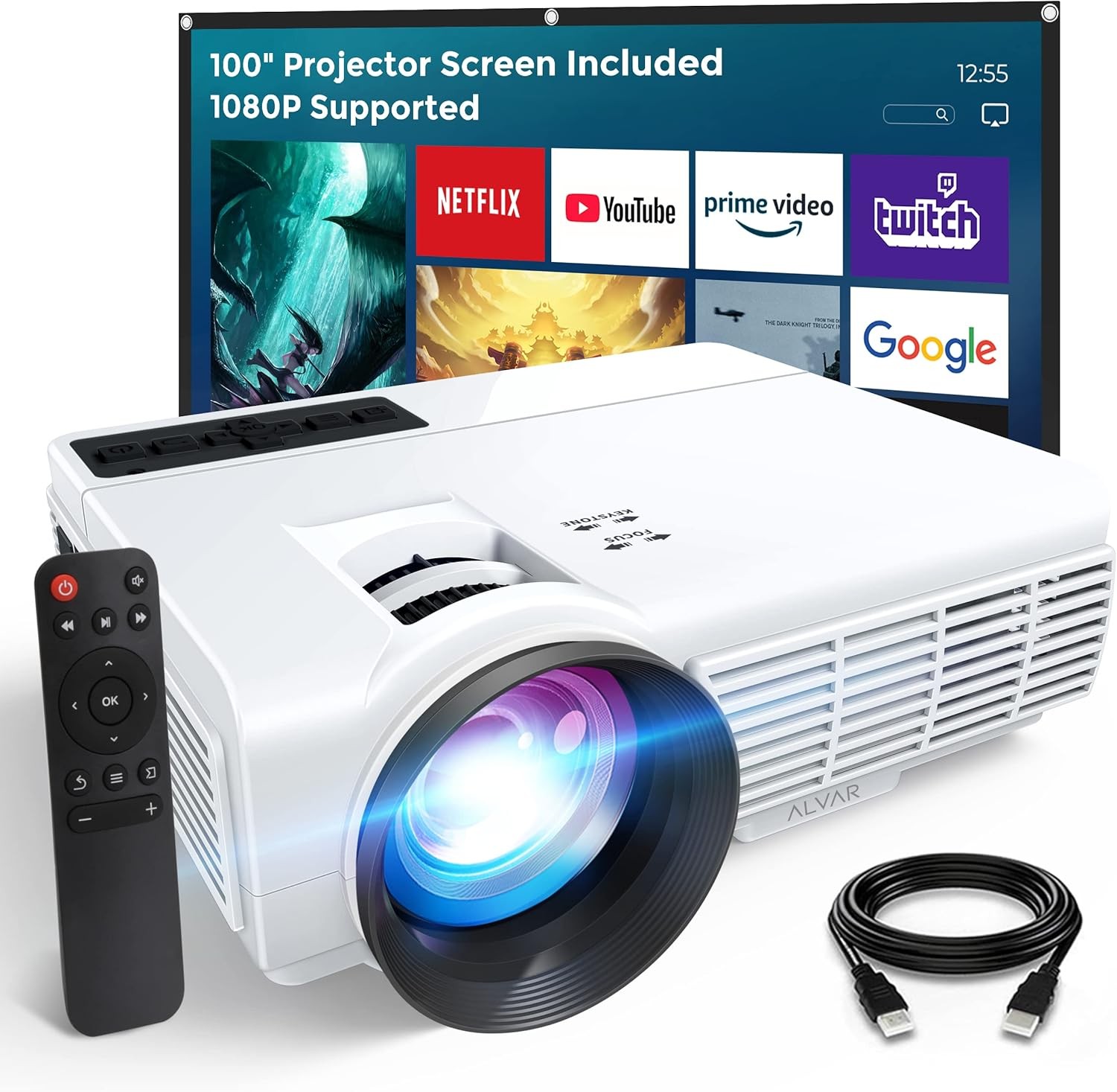 1080P HD Bluetooth Video Projector 8000Lumens Movie Home Theater w/ 100'' Screen$21.89View on eBay
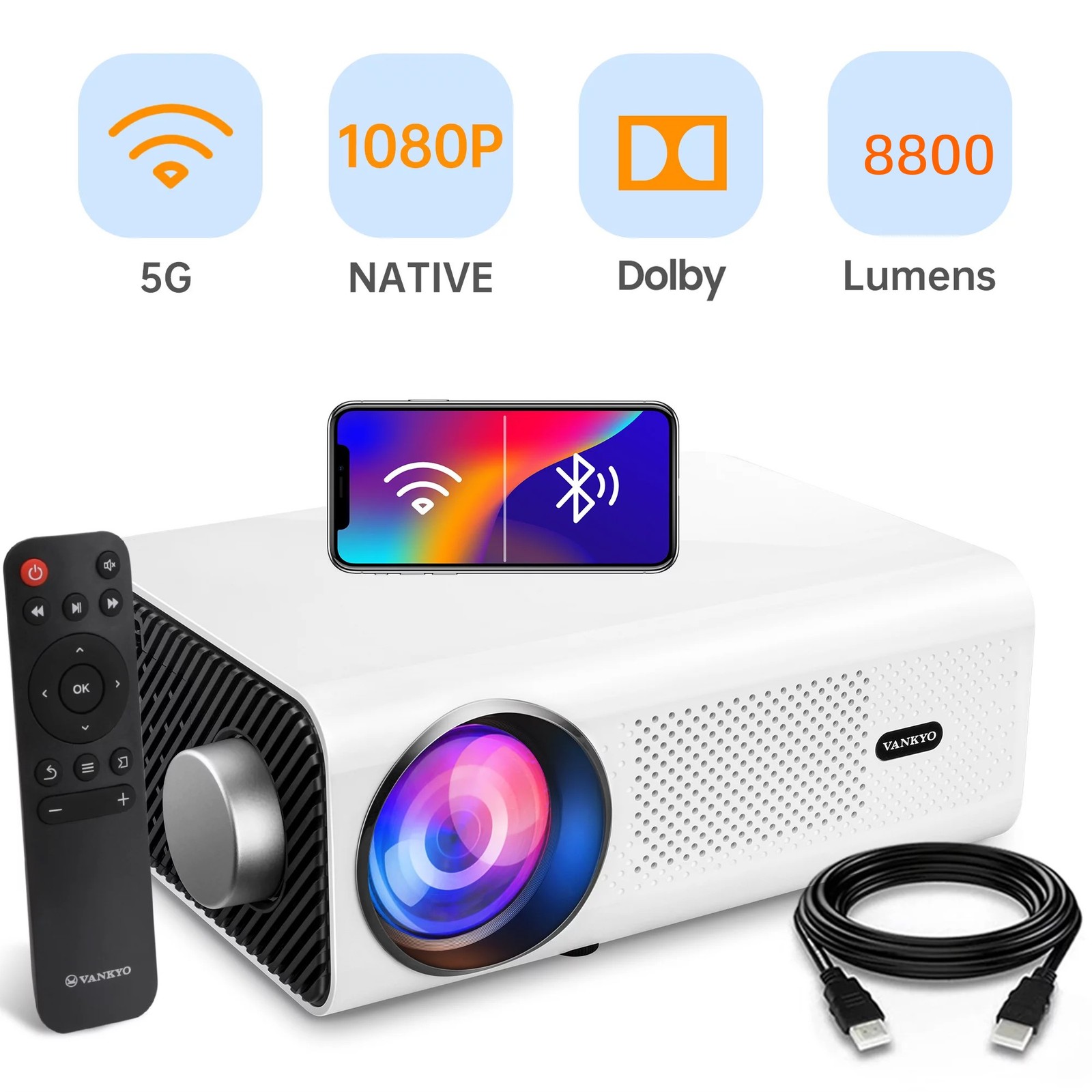 VANKYO 4K Projector DoIby 45000LMS 1080P HD 5G WiFi Bluetooth Video Home Theater$32.69View on eBay
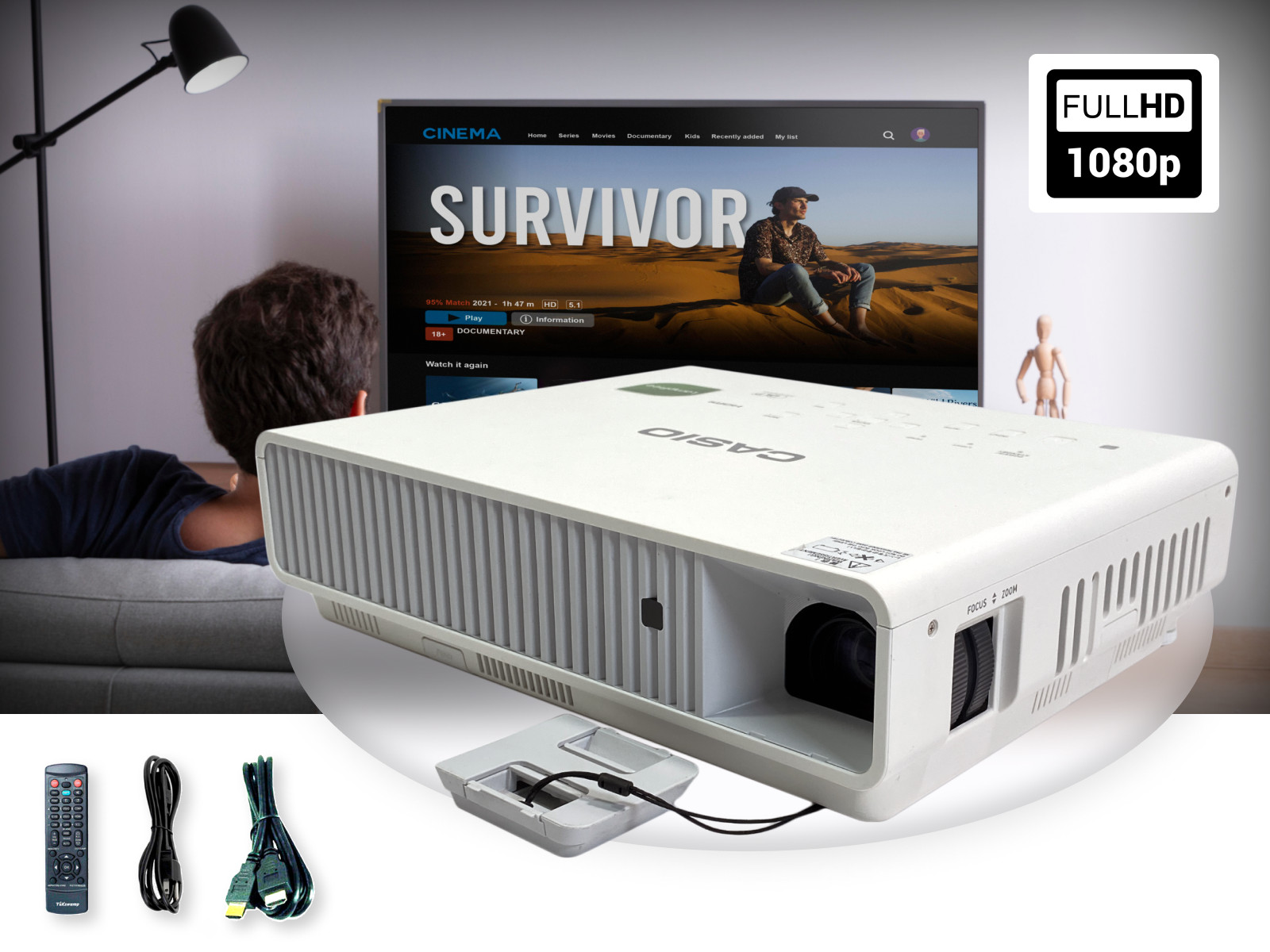 2500 ANSI DLP Projector for Home Theater Movie Lovers Cinema TV Video Full HD 3D$109.23Last checked Nov 28, 2026View on eBay
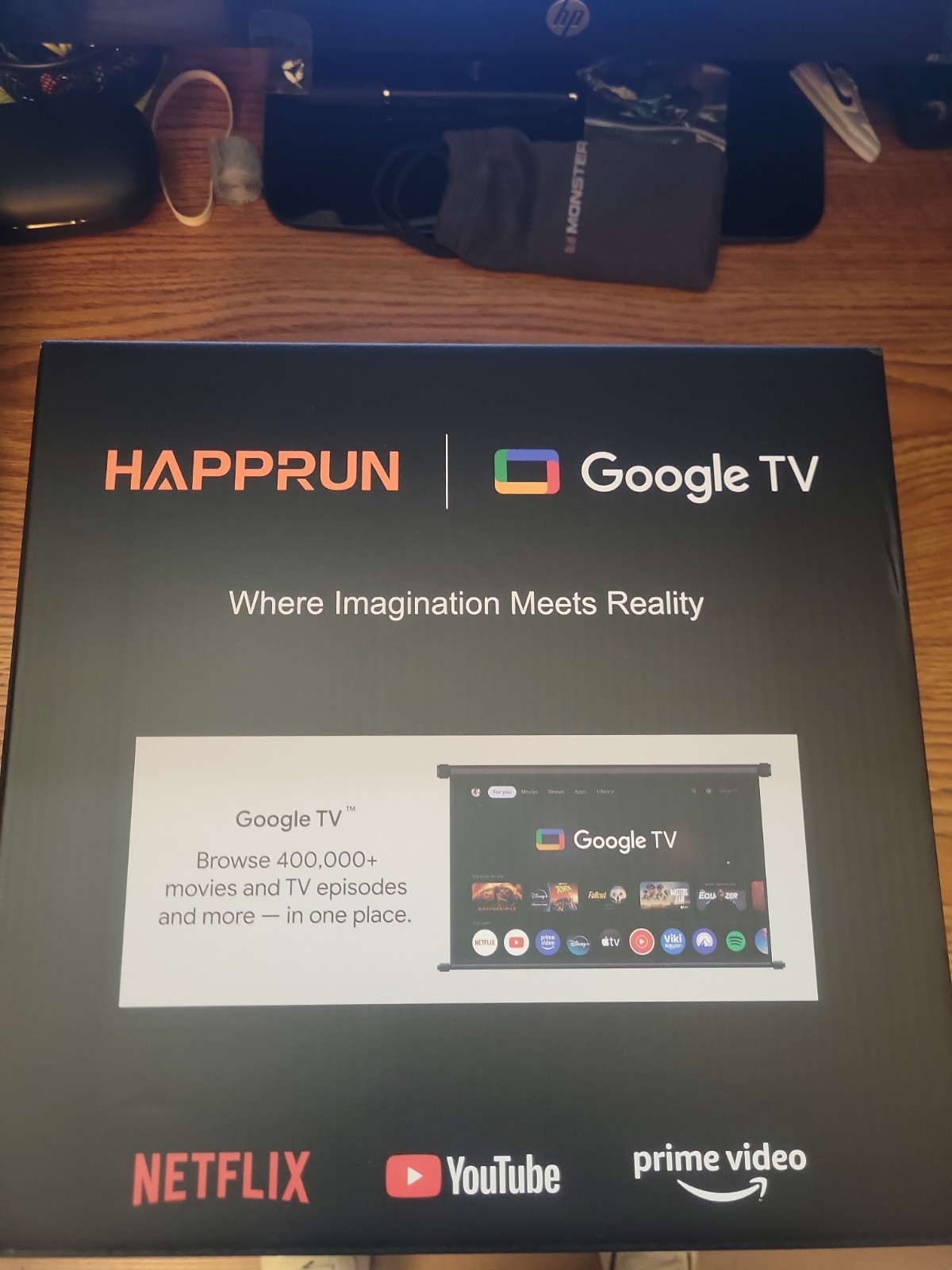 HAPPRUN Google TV Video Projector$149.99View on eBay
Highlights
- Lumen ratings separate real specs from marketing: ANSI/ISO lumens are measured white-light output, while 'LMS' or 'Lumens' on budget boxes are peak single-color figures that overstate visible brightness two to four times.
- Imaging engines differ fundamentally: single-LCD panels produce soft, low-contrast images with poor color uniformity; DLP uses a color wheel and micromirror DMD for sharper motion; 3LCD delivers equal color and white brightness with no rainbow effect.
- Native resolution is the panel or DMD chip resolution — 1920x1080 Full HD or 3840x2160 4K — while 'supports 1080P/4K' only means the input scaler accepts the signal and downconverts it.
- Light source determines lifespan and maintenance: LED engines run 20,000-30,000 hours with no lamp changes, laser phosphor reaches 20,000+ hours at higher brightness, and traditional UHP lamps need replacement every 3,000-6,000 hours.
Best use cases
- Dedicated dark home theater: pick a DLP or 3LCD model with at least 2,000 ANSI lumens, native 1080p or 4K, and a throw ratio matched to your room — skip battery-powered pico units that cannot fill a 100-inch screen.
- Living-room or ambient-light viewing: choose 3,000+ ANSI lumens or a laser model and pair it with an ALR screen; a 300-500 'lumen' single-LCD projector will wash out completely in daylight.
- Portable outdoor movie nights: select an LED projector with built-in battery, auto keystone, and HDMI/USB-C input; skip lamp-based office projectors that need AC power and weigh over 5 pounds.
- Gaming and sports: prioritize low input lag (under 30 ms) and DLP's fast pixel response; avoid budget single-LCD panels with 50 ms+ lag and visible motion smearing.
Buying tips
- Calculate throw distance before buying: throw ratio = distance ÷ screen width. A 1.2:1 projector needs 2.6 m for a 2.2 m-wide 100-inch image; short-throw 0.5:1 units sit under 1.1 m from the wall.
- Demand an ANSI lumen figure — 1,500-2,500 ANSI is adequate for a dark room, 3,000+ for controlled ambient light, and treat '8000 Lumens' or '45000LMS' claims as peak-color marketing numbers.
- Match the light engine to usage: LED for 20,000+ hour maintenance-free portable use, laser for high-brightness long-life installs, UHP lamp only when high brightness per dollar matters and you accept lamp swaps.
- Verify native resolution on the spec sheet (1920x1080 or 3840x2160) and confirm HDCP 2.2 on HDMI inputs if you plan to feed 4K streaming sticks or consoles.
Specs
| Imaging Engine | Single-LCD / DLP / 3LCD |
|---|---|
| Brightness Rating | ANSI lumens: 500-5,000+ |
| Native Resolution | 720p / 1080p / 4K UHD |
| Light Source Life | LED 20k-30k hr / Lamp 3k-6k hr |
Related searches
What to check before buying
- Measure the wall width available and the seating distance, then compute required throw ratio and screen size — a 100-inch 16:9 image is 87 inches wide and 49 inches tall.
- Confirm ceiling height, mount position, and lens offset or vertical lens shift; most budget DLP units have fixed offset and rely on digital keystone that crops resolution.
- Check room light control and wall color — dark matte walls or a dedicated screen are required for contrast; white walls in bright rooms demand 3,000+ ANSI lumens.
- Verify inputs and power: HDMI count, USB-C or Bluetooth for streaming, and 100-240V compatibility for imported units, plus speaker/RCA outputs for legacy sources.
FAQ
Data sources: eBay / Amazon listings and product attribute feeds. Updated Nov 28, 2026.
Some links on this page are affiliate links. If you buy after clicking one, we may earn a commission at no extra cost to you. This does not change which products appear here or their order. Affiliate disclosure.