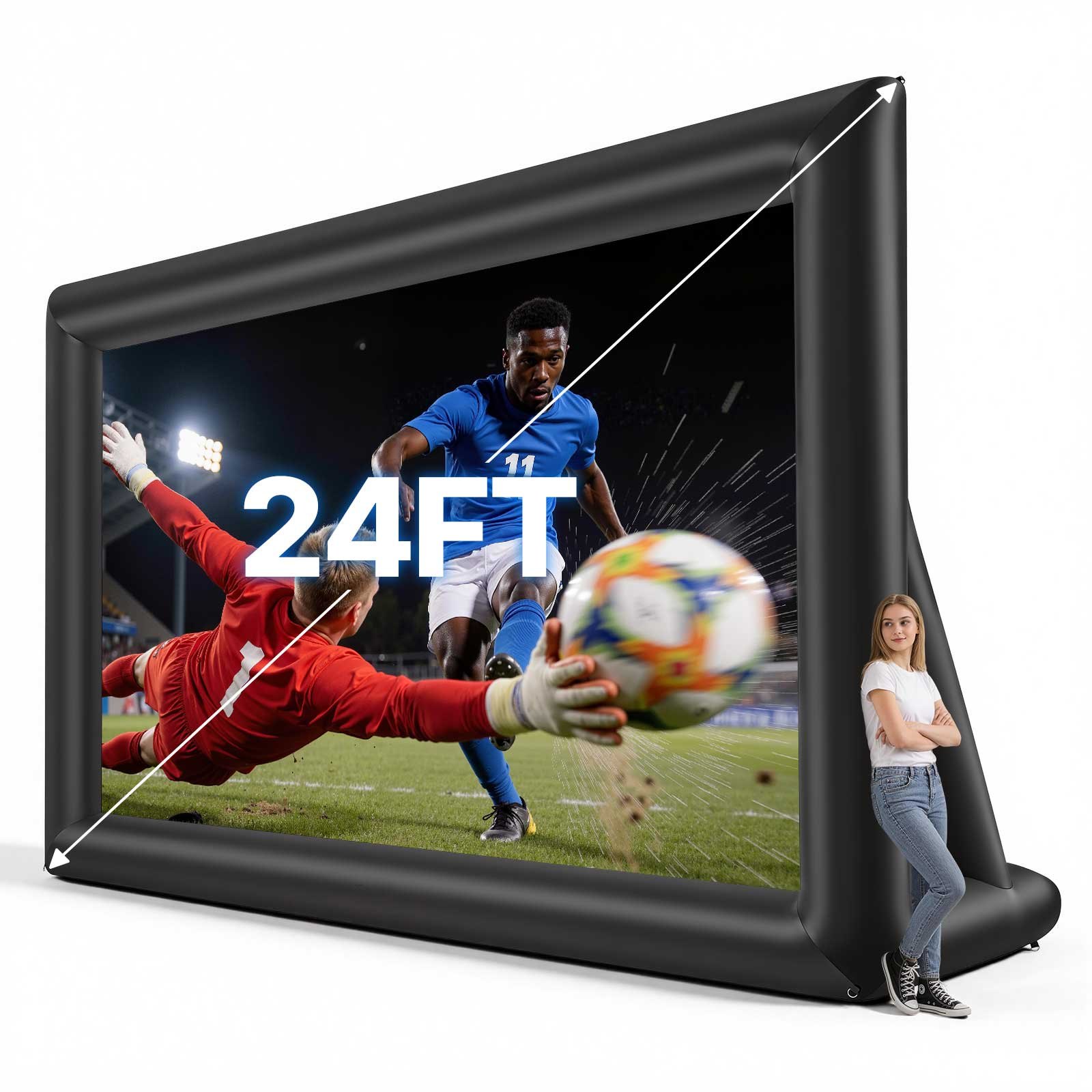

Photos from current listings. Actual item, color, and included accessories may vary.
Rear Projection Screen Buying Guide
Rear projection screens are specialized surfaces that display a projected image from behind the screen rather than reflecting it from the front, enabling space-saving setups and unobstructed viewing. The critical trade-off is between rear-screen gain (brightness) and ambient-light rejection, with fabric or plastic surfaces dictating durability and image uniformity. Choose a dedicated rear-projection material with a proven gain and viewing angle for permanent installs; compromise only with dual-sided front/rear screens if portability or budget limits your setup.
Key takeaways
- Rear projection relies on light diffusion through the screen, so surface gain (typically 0.8–1.5) and viewing half-angle (often 30–60°) directly dictate brightness and hotspot severity.
- Dual-sided front/rear screens use a neutral grey or white PVC-fabric laminate; single-purpose rear films are thinner and prone to creasing if not tensioned.
- Inflatable rear screens use Oxford fabric with a blower for rapid outdoor setup, but blower noise and fabric wrinkles reduce image sharpness compared to rigid-frame tensioned screens.
At a glance
- Category
- Projectors & Screens
- Last updated
- Nov 28, 2026
Current offers
Highlights
- Rear projection relies on light diffusion through the screen, so surface gain (typically 0.8–1.5) and viewing half-angle (often 30–60°) directly dictate brightness and hotspot severity.
- Dual-sided front/rear screens use a neutral grey or white PVC-fabric laminate; single-purpose rear films are thinner and prone to creasing if not tensioned.
- Inflatable rear screens use Oxford fabric with a blower for rapid outdoor setup, but blower noise and fabric wrinkles reduce image sharpness compared to rigid-frame tensioned screens.
- Fixed-frame rear screens with aluminum extrusion and tensioned vinyl outperform tripod or stake-mounted fabric screens in flatness, edge focus, and long-term durability.
Best use cases
- Best fit: Permanent home theater with controlled lighting — choose a fixed-frame rear screen with 1.0–1.2 gain and black backing to prevent light spill.
- Best fit: Backyard movie nights — pick an inflatable Oxford-fabric screen with included blower and rear projection capability, accepting minor wrinkles for portability.
- Wrong fit: Daylight living rooms — rear projection loses contrast under ambient light; use a front-projection ALR screen instead.
- Wrong fit: Ultra-short-throw projectors — rear screens are incompatible with UST optics; select a dedicated UST front screen.
Buying tips
- Match screen gain to projector lumens: 0.8–1.0 gain for 3000+ lumen projectors avoids overblown highlights; 1.2–1.5 gain suits 1500–2500 lumen models.
- Verify viewing angle: a 60° half-angle supports wide seating; 30° half-angle screens hotspot severely for off-axis viewers.
- For outdoor use, specify Oxford fabric with a minimum 210D denier and a blower rated for continuous duty; thinner 150D fabric tears at stake points.
- Check rear-projection compatibility explicitly: many dual-sided screens list front/rear, but single-sided rear films require a mirror-image projector setting.
Specs
| Screen Material | PVC vinyl, Oxford fabric, acrylic film |
|---|---|
| Projection Type | Rear-only vs front/rear dual |
| Gain Range | 0.8–1.5 (higher = brighter, narrower) |
| Mounting | Fixed frame, tripod, inflatable, stake |
Related searches
What to check before buying
- Measure the throw distance from projector to screen rear; rear projection requires 1.2–1.5× the screen width behind the screen for typical lenses.
- Confirm room depth: a 120-inch 16:9 screen needs at least 2.4 m (8 ft) of space behind it for a standard-throw projector.
- For inflatable screens, verify blower voltage matches your outlet (120V US vs 230V EU) and that the included blower CFM suits the screen volume.
- Ensure mounting surface or frame kit is included: fixed-frame rear screens ship without a projector mount; tripod screens require weighted sandbags for outdoor stability.
FAQ
Data sources: eBay / Amazon listings and product attribute feeds. Updated Nov 28, 2026.
Some links on this page are affiliate links. If you buy after clicking one, we may earn a commission at no extra cost to you. This does not change which products appear here or their order. Affiliate disclosure.