
Photos from current listings. Actual item, color, and included accessories may vary.
Outdoor Projector Screen With Stand Buying Guide
An outdoor projector screen with stand is a transportable projection system combining a wrinkle-resistant fabric or vinyl surface with a freestanding frame—typically a tripod, crossbar, or A-frame—sized 60 to 150 inches diagonal. The core trade-off is between lightweight tripod portability (fast setup, but vulnerable to wind and sag) versus rigid frame-and-leg construction (heavier, but taut and stable for backyard movie nights). Choose a metal-frame or weighted-bar-feet stand with a tensioned 16:9 surface if you watch outdoors regularly; a plain tripod screen is acceptable only for calm, indoor, or short-session use.
Median $74.99
Key takeaways
- Tripod-stand screens use a single central pole with guy-line or leg-foot anchoring; A-frame/bar-feet designs distribute load across two or four ground points for markedly better wind resistance.
- Screen surfaces are matte white PVC/vinyl or polyester fabric: anti-crease PVC rolls tighter and resists fold lines, while untreated fabric shows permanent creases after packing.
- A 16:9 aspect ratio is standard for 1080p/4K projectors; a 120-inch 16:9 screen is roughly 105 by 59 inches (267 by 150 cm) of viewing area—confirm wall or yard clearance before buying.
At a glance
- Category
- Projectors & Screens
- Last updated
- Nov 27, 2026
Current offers
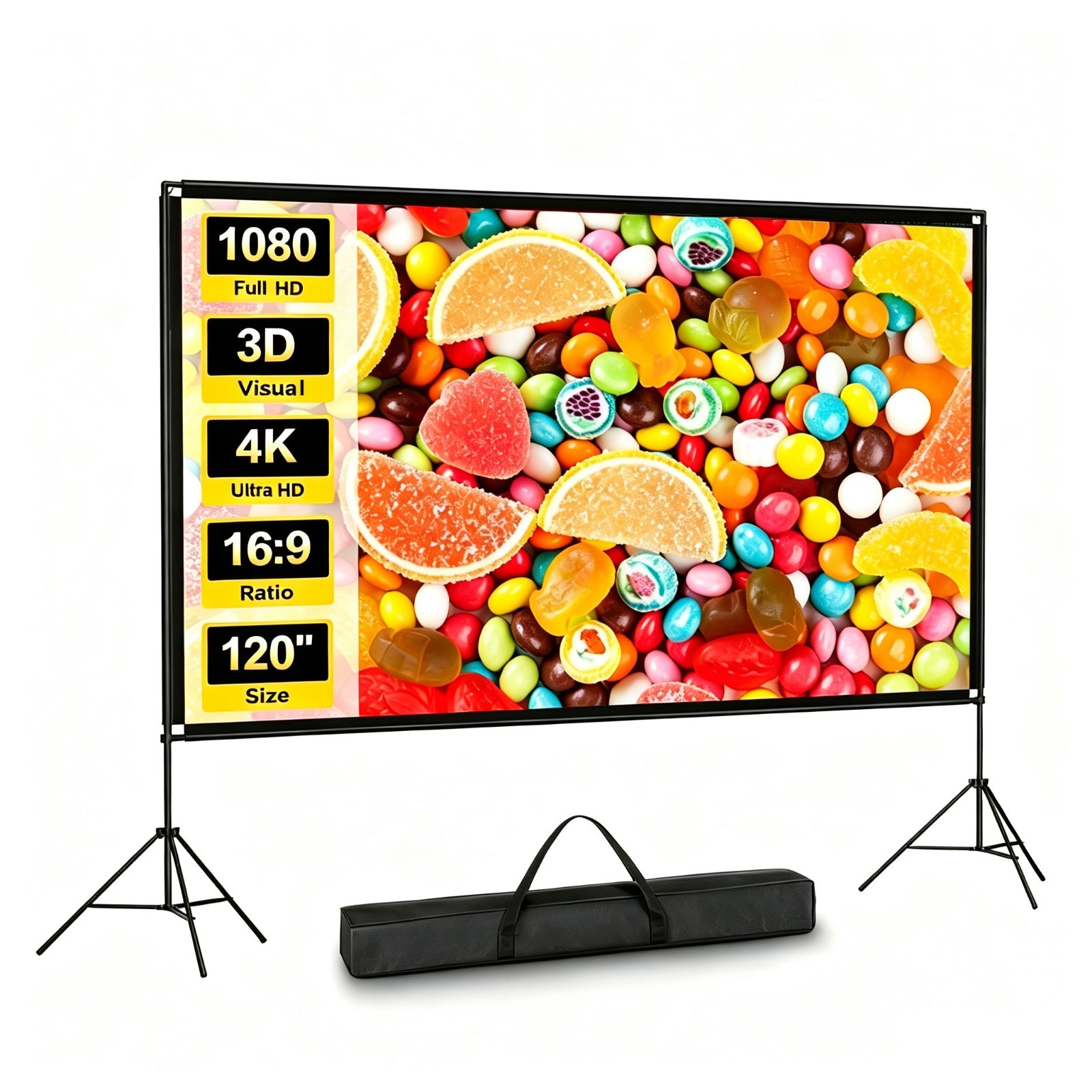 120 inch Outdoor Projector Screen with Stand Foldable Projector Screen 16:9 HD$59.99View on eBay
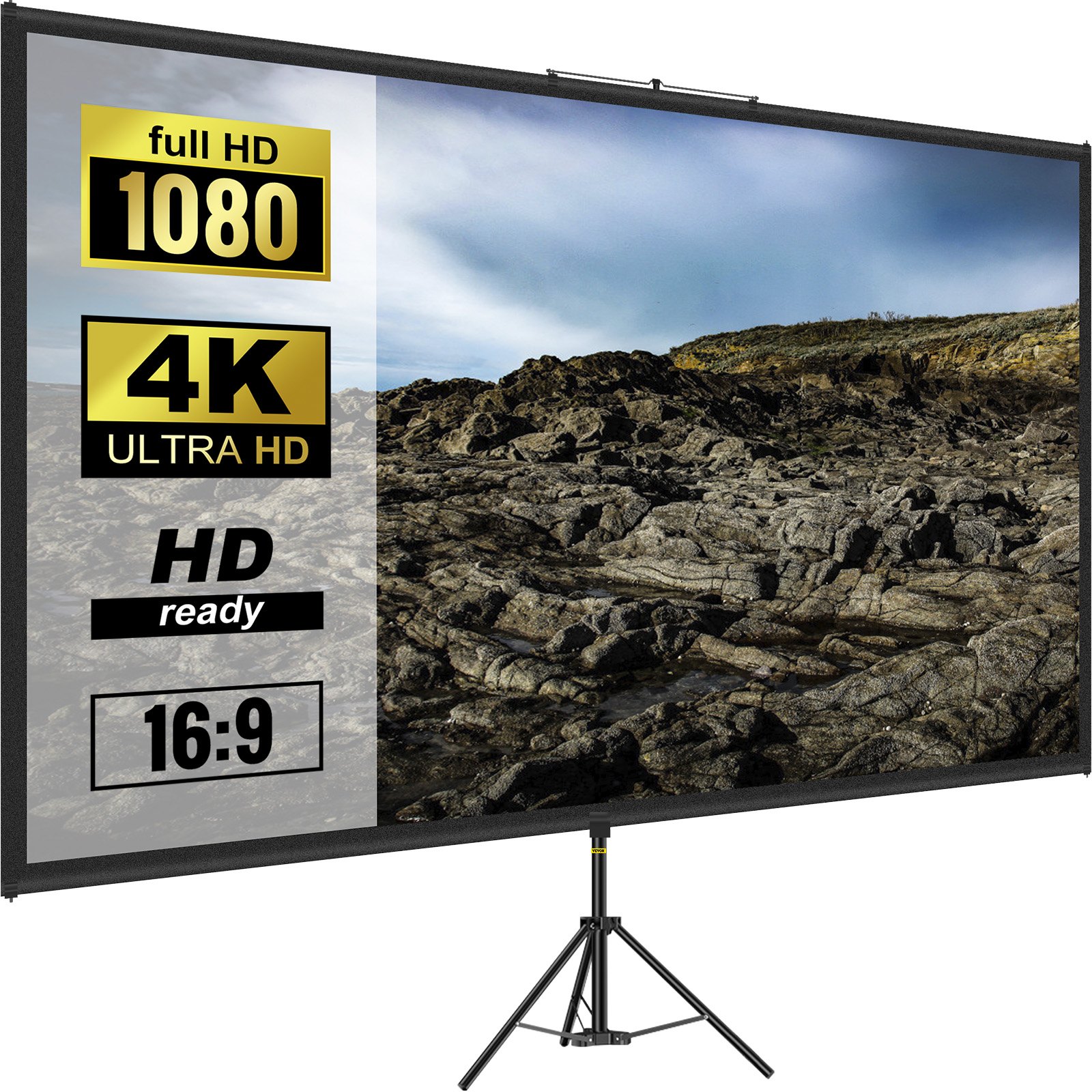 Tripod Projector Screen With Stand 60 Inch 16:9 4K HD Projection Wrinkle-Free Height Adjustable Portable For Indoor & Outdoor For Movie, Home Cinema, Gaming, Office$36.99View on Mallflare
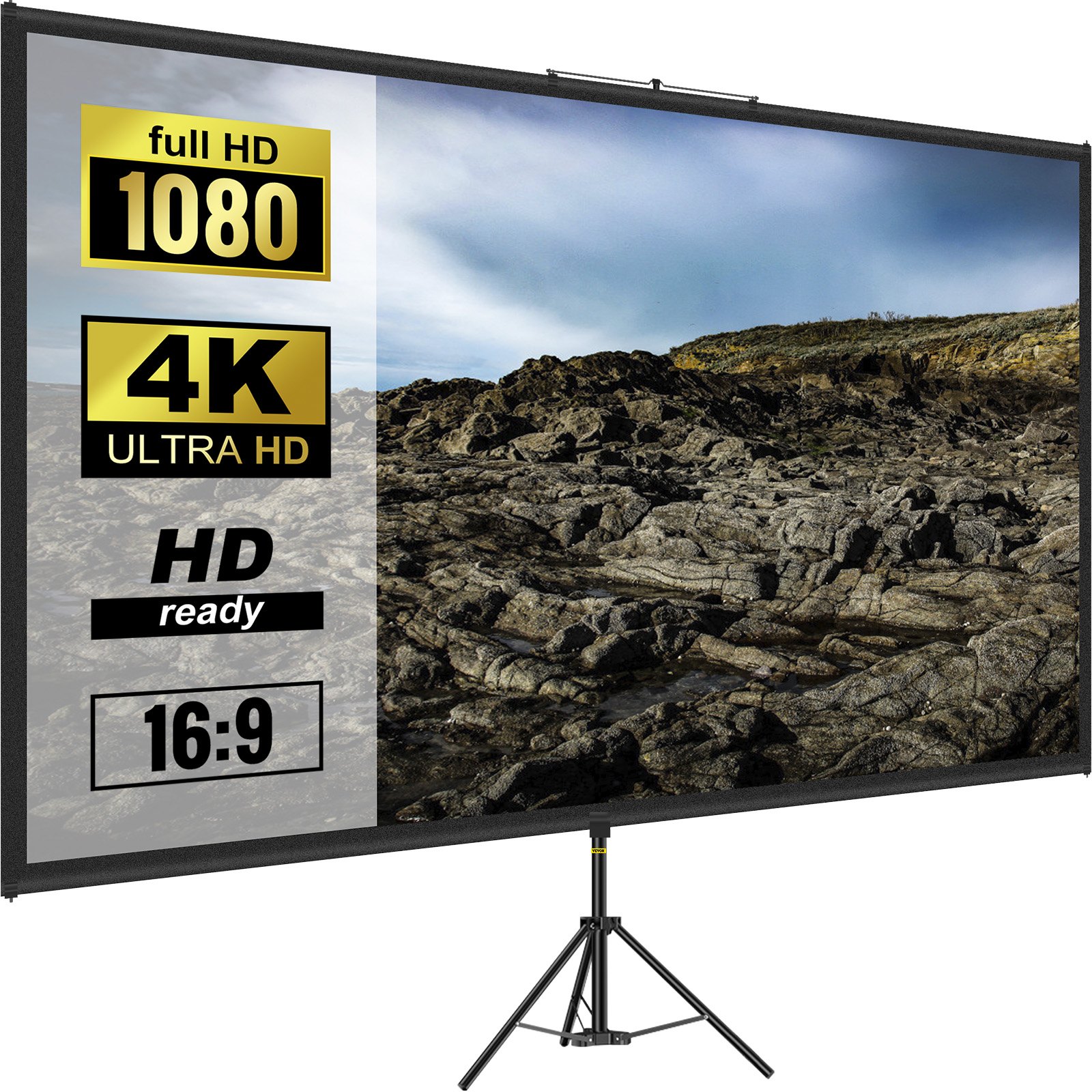 Tripod Projector Screen With Stand 110inch 16:9 4K HD Projection Wrinkle-Free Height Adjustable Portable For Indoor & Outdoor For Movie, Home Cinema, Gaming, Office$48.99View on Mallflare
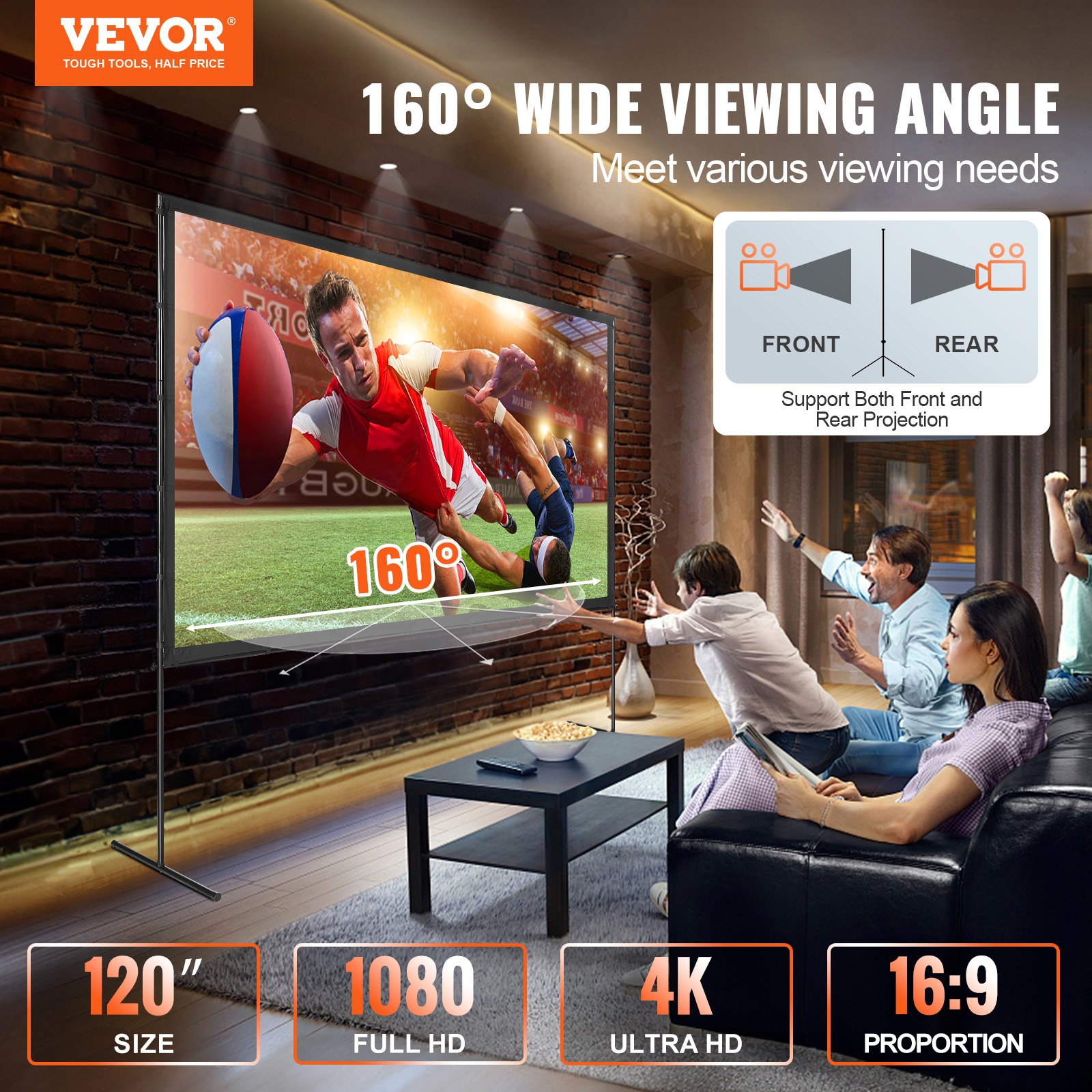 VEVOR Projector Screen With Stand, 120 Inch 4K 1080 HD Outdoor Movie Wrinkle-Free Projection Bar Feet And Carry Bag, For Home Theater Cinema Backyard Night$67.99View on Mallflare
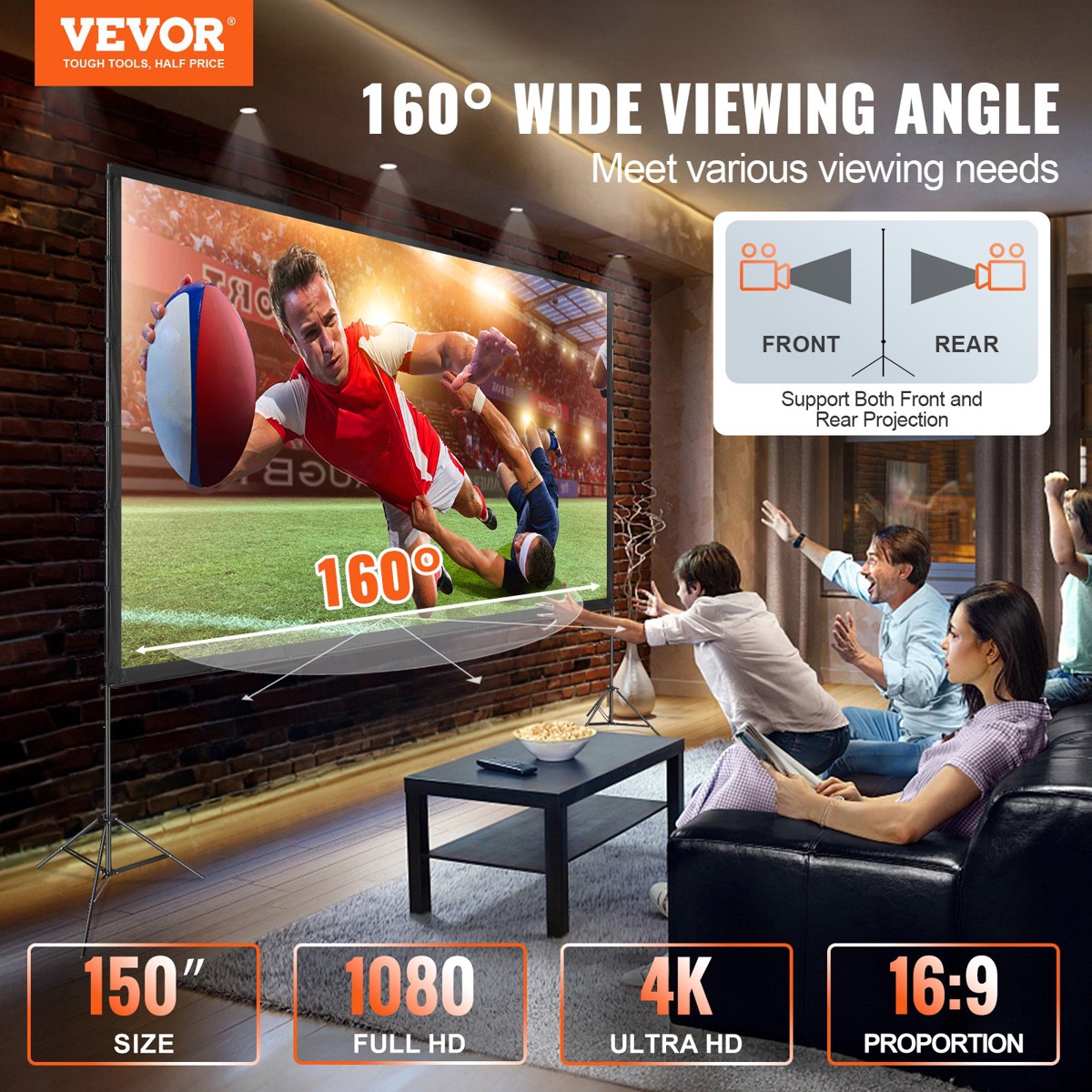 Projector Screen With Stand, 150 Inch 16 9 4K 1080 HD Outdoor Movie Wrinkle-Free Projection Tripods And Carry Bag, For Home Theater Cinema Backyard Night$70.99View on Mallflare
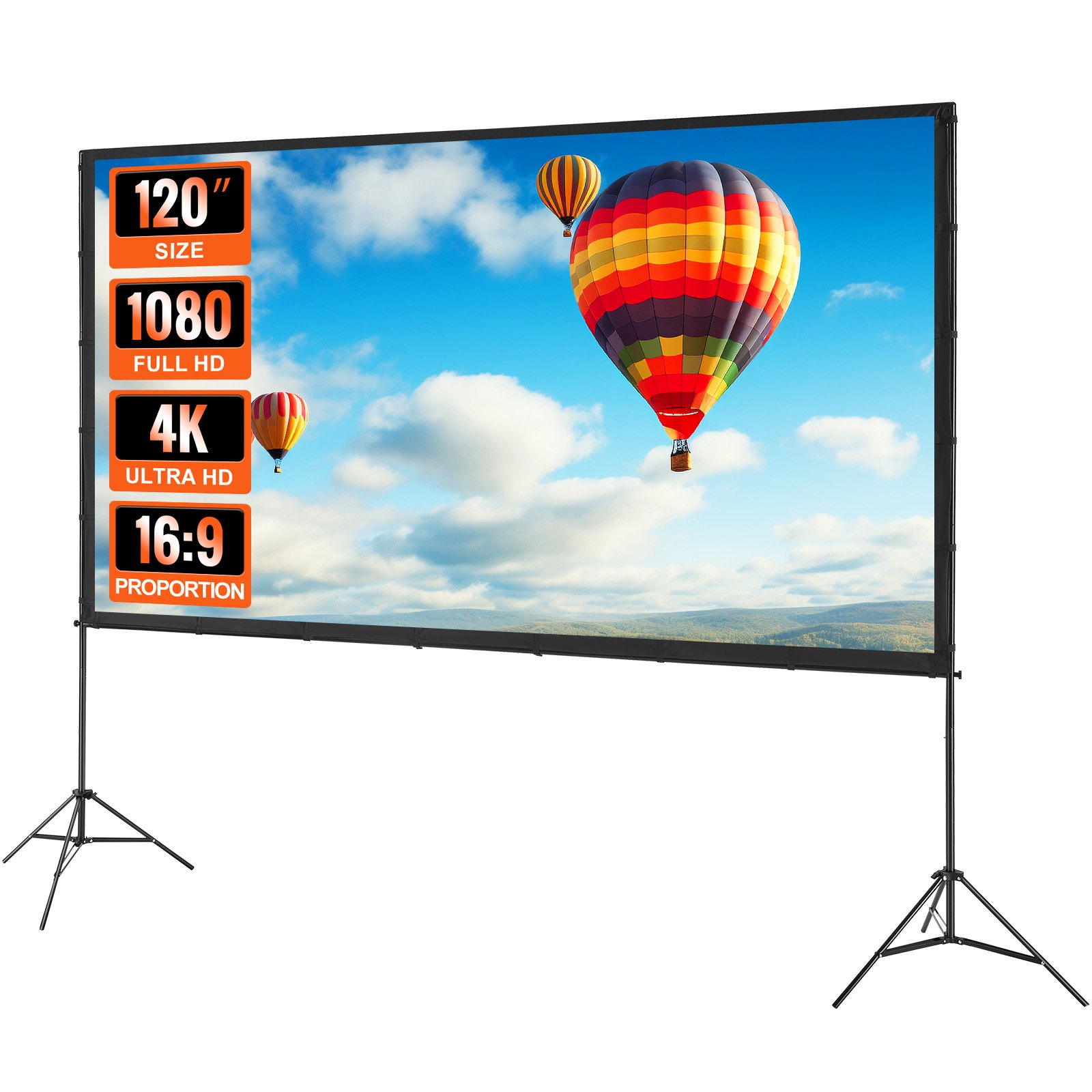 Projector Screen With Stand, 120 Inch 16:9 4K 1080 HD Outdoor Movie Wrinkle-Free Projection Tripods And Carry Bag, For Home Theater Cinema Backyard Night$74.99View on Mallflare
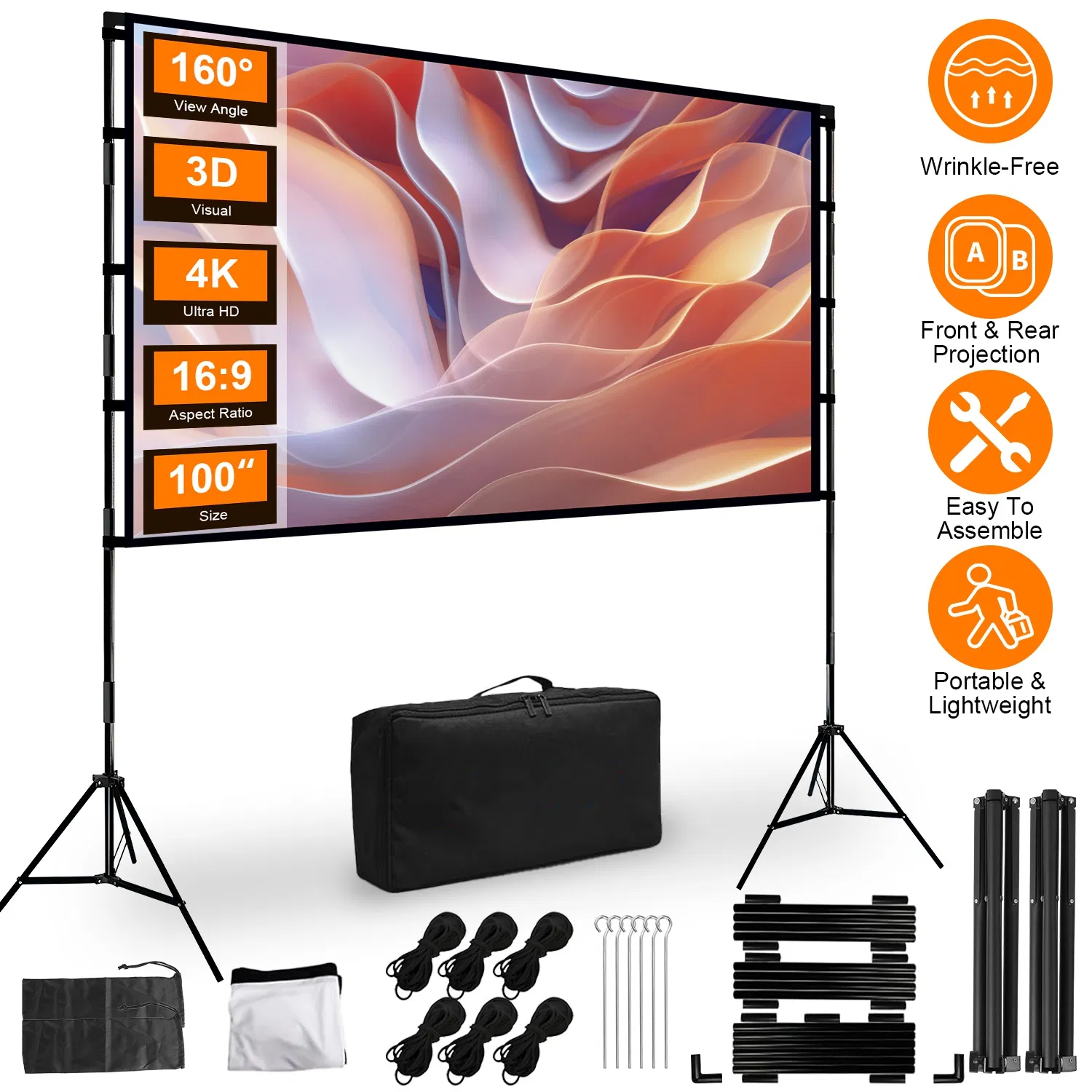 100inch 120inch Options Projector Screen With Stand 4K HD Rear Front Wrinkle-Free Portable And Foldable Movie Carry Bag For Indoor Outdoor Home Theater Backyard Cinema$87.99View on Mallflare
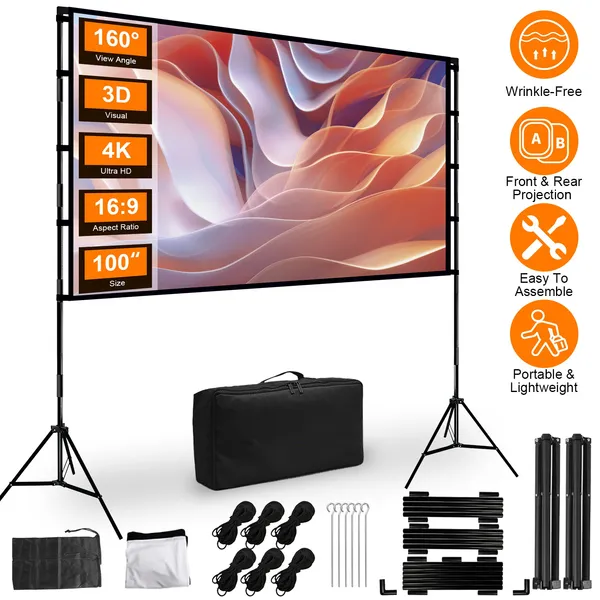 100inch/120inch Options Projector Screen With Stand 16:9 4K HD Rear Front Wrinkle-Free Portable And Foldable Movie Carry Bag For Indoor Outdoor Home Theater Backyard Cinema$87.99View on Mallflare
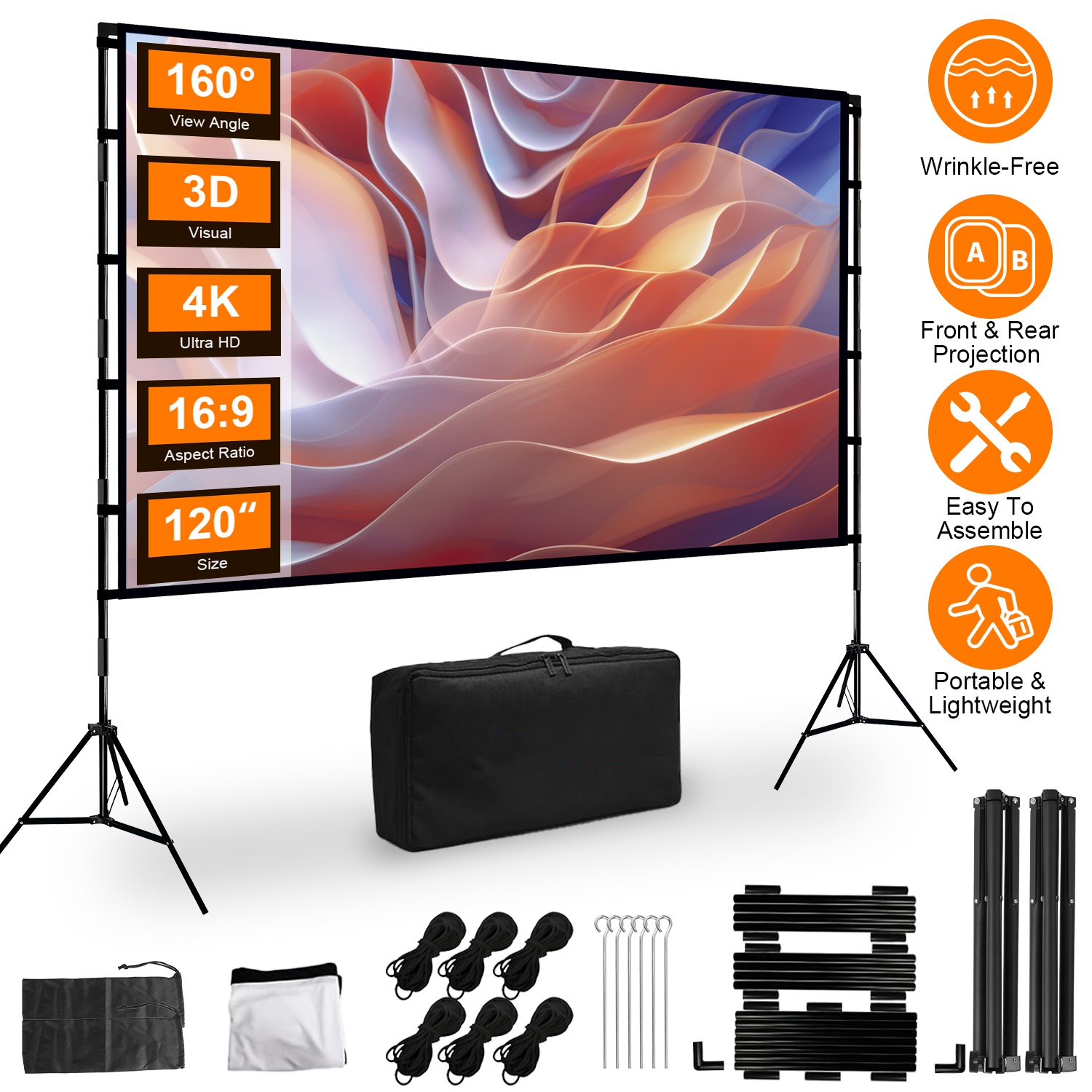 1Pc 120inch Or 100inch Projector Screen With Stand 16 9 4K HD Rear Front Wrinkle Free Portable And Foldable Movie Carry Bag For Indoor Outdoor Home Theater Backyard Cinema$97.99View on Mallflare
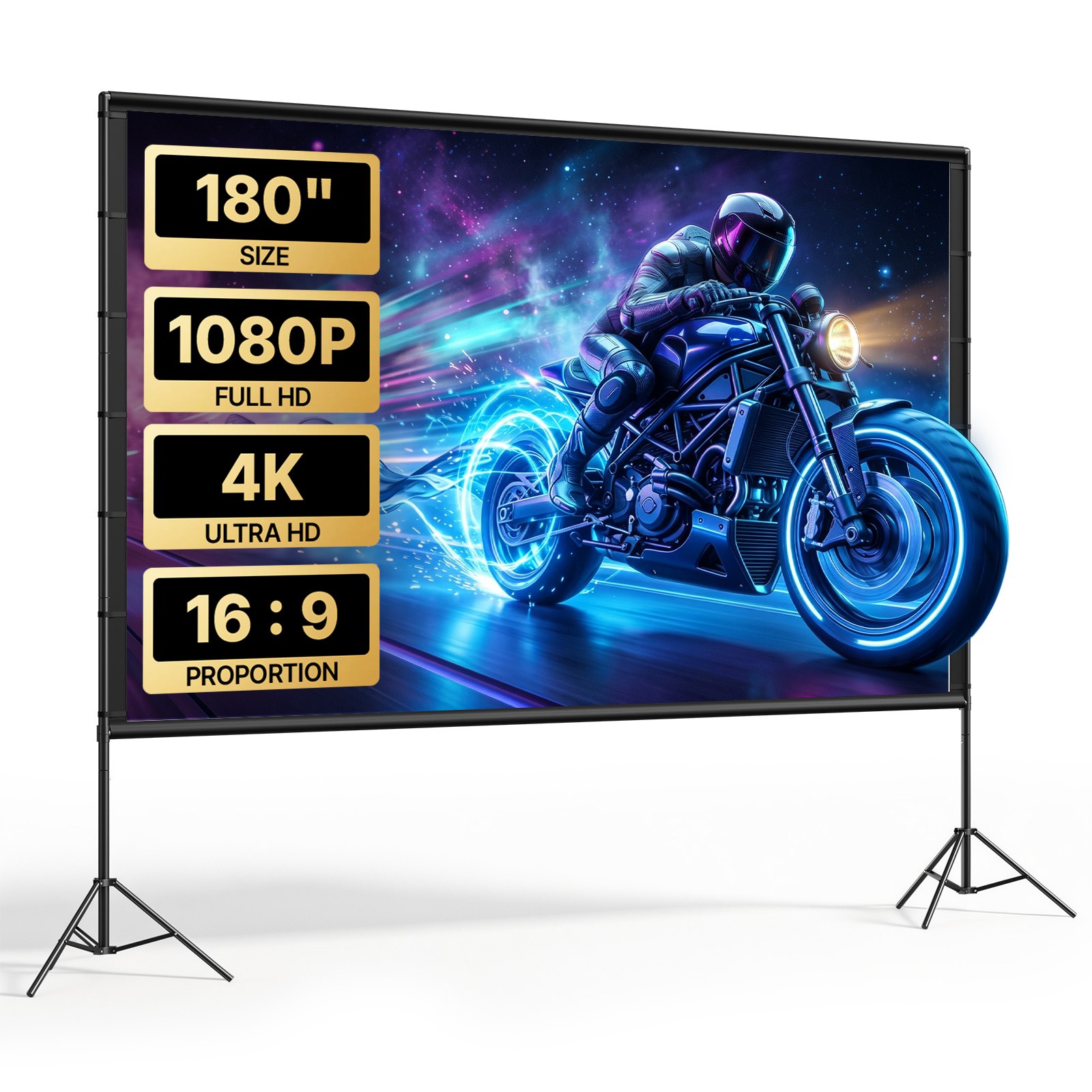 Projector Screen with Stands, 180 Inch 16:9 4K 1080P HD Movie 170° Wide Viewing, Front/Rear Projection Dual Tripod, Ground Stakes & Guy Ropes for Indoor Outdoor Nights$98.99View on Mallflare
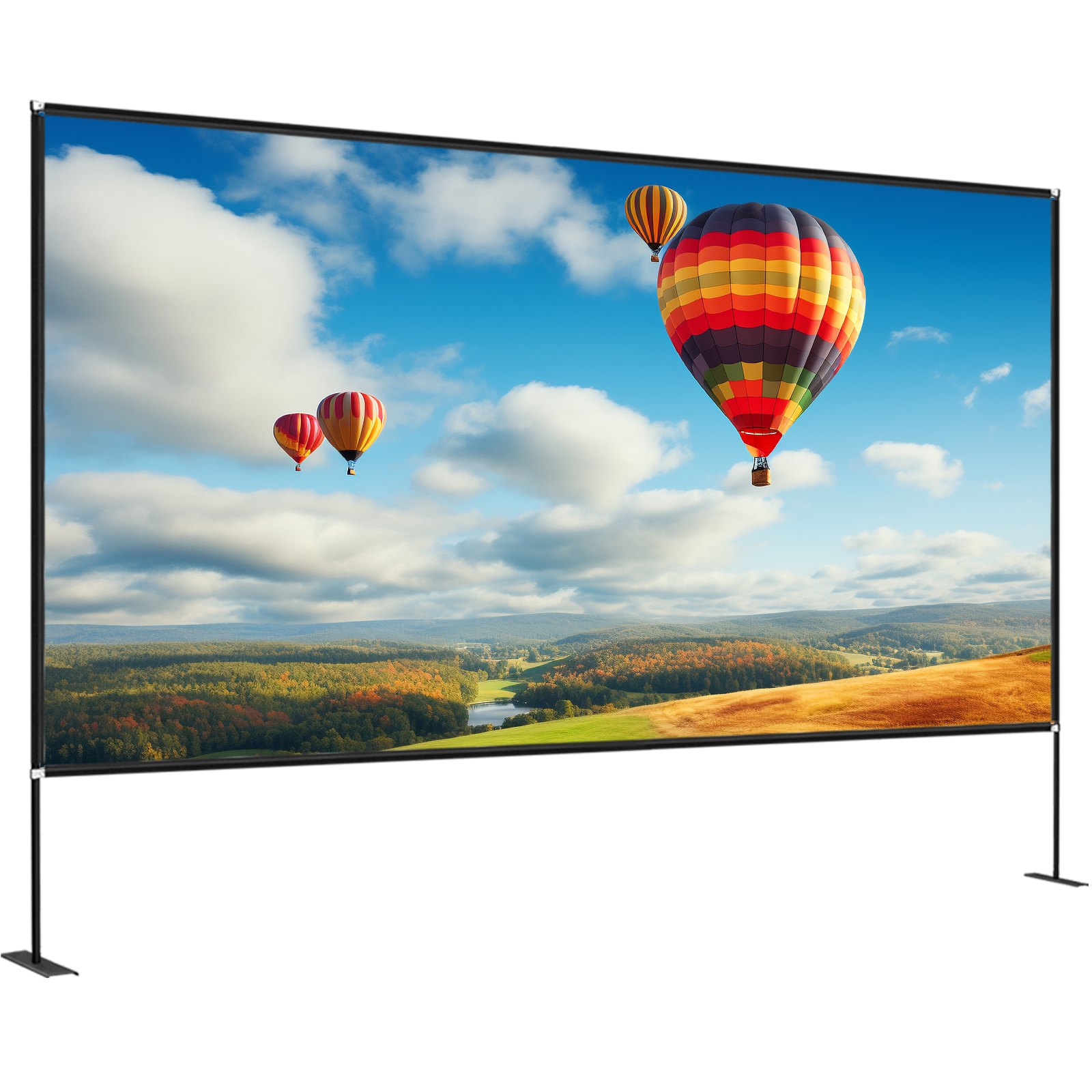 Projector Screen With Stand 150inch Portable Movie 16:9 4K HD Wide Angle Outdoor Easy Assembly Storage Bag For Home Theater Office Use$120.99View on Mallflare
Highlights
- Tripod-stand screens use a single central pole with guy-line or leg-foot anchoring; A-frame/bar-feet designs distribute load across two or four ground points for markedly better wind resistance.
- Screen surfaces are matte white PVC/vinyl or polyester fabric: anti-crease PVC rolls tighter and resists fold lines, while untreated fabric shows permanent creases after packing.
- A 16:9 aspect ratio is standard for 1080p/4K projectors; a 120-inch 16:9 screen is roughly 105 by 59 inches (267 by 150 cm) of viewing area—confirm wall or yard clearance before buying.
- Rear-projection capability requires a translucent grey or dual-surface material; standard matte white front surfaces are opaque and cannot be projected through from behind.
Best use cases
- Backyard movie nights with any wind exposure: pick a metal bar-feet or A-frame stand with ground stakes and a tensioned anti-crease PVC surface; skip single-pole tripods that sway and need guy lines.
- Indoor living-room or office presentations: a height-adjustable tripod screen in the 60-110 inch range is the right fit—light, quick to set up, and easy to store; oversized 150-inch frames are unnecessary and awkward indoors.
- Camping or tailgating with car transport: choose a foldable fabric screen with a compact carry bag under roughly 10 kg total; rigid 150-inch frames are too bulky and heavy for solo transport.
- Permanent patio installation: skip portable stands entirely and use a fixed wall or ceiling mount; portable stands are not designed for long-term weather exposure or unattended outdoor use.
Buying tips
- Match screen size to throw distance: a typical 1.2:1 throw-ratio projector needs about 10.5 ft (3.2 m) for 100 inches and 12.6 ft (3.8 m) for 120 inches—measure your yard before choosing 150 inches.
- Prefer metal (aluminum or steel) frame poles and legs over plastic joints; plastic tripod hubs crack under load and are the most common failure point on budget screens.
- Select anti-crease PVC or tightly woven polyester over thin untreated fabric; surfaces under roughly 100 GSM crease permanently and show visible hot-spotting with bright projectors.
- Confirm the screen supports both front and rear projection if you may place the projector behind the screen for a party layout; single-surface matte white models cannot be used from the rear.
Specs
| Stand Type | Tripod / A-frame bar feet |
|---|---|
| Screen Surface | Anti-crease PVC vs polyester fabric |
| Aspect Ratio | 16:9 standard (4:3 niche) |
| Diagonal Range | 60-150 in portable tiers |
Related searches
What to check before buying
- Measure available width and height: a 120-inch 16:9 screen needs about 105 x 59 inches of surface plus stand clearance, and 150-inch needs roughly 131 x 74 inches.
- Check the stand base footprint and anchoring options against your patio, lawn, or deck surface—tripod legs need open floor space, bar feet need stake-friendly ground.
- Verify projector brightness and throw distance: outdoor screens need 2,000+ lumens at dusk for 120 inches; confirm the projector can fill the chosen diagonal from your seating position.
- Confirm the carry bag dimensions and packed weight fit your vehicle and that one person can assemble the frame without tools.
FAQ
Data sources: eBay / Amazon listings and product attribute feeds. Updated Nov 27, 2026.
Some links on this page are affiliate links. If you buy after clicking one, we may earn a commission at no extra cost to you. This does not change which products appear here or their order. Affiliate disclosure.