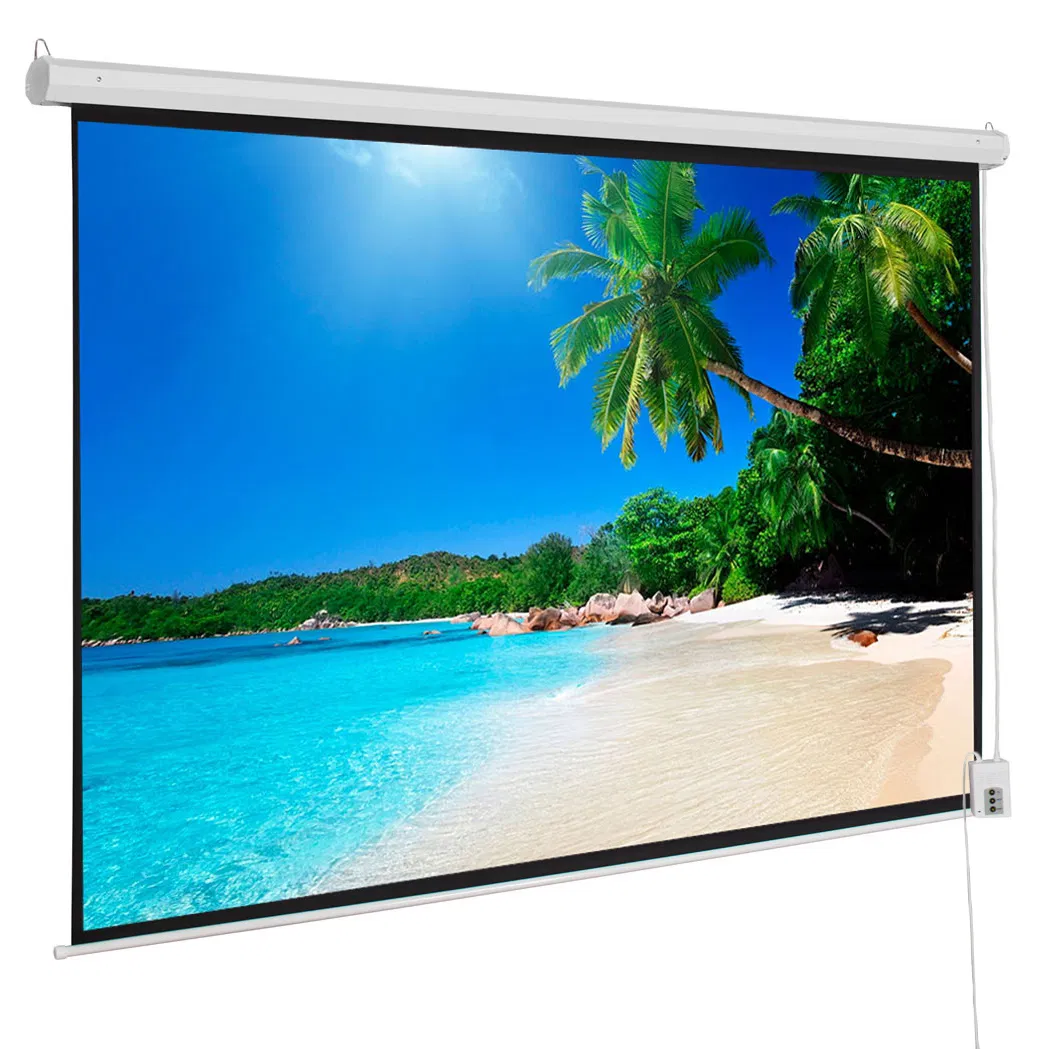

Photos from current listings. Actual item, color, and included accessories may vary.
Motorized Projector Screen Buying Guide
A motorized projector screen combines a roll-up fabric with an electric tubular motor, trading manual-pull simplicity for remote-controlled deployment and a permanently taut viewing surface. The critical trade-off is motor quality and fabric tensioning: cheap synchronous motors with plastic gearing and thin PVC fabric ripple, curl, and fail early, while tubular motors with limit switches and weighted or tensioned matte-white fabric stay flat for years. The decision rule: buy a screen whose motor has adjustable limit switches and whose fabric is at least 1.1 gain matte white with edge weighting or tab tensioning — skip anything with a fixed-limit motor or unweighted bottom bar.
Key takeaways
- Tubular motors with mechanical or electronic limit switches hold the drop position repeatably; fixed-limit synchronous motors drift and stall within months.
- Matte white fabric at 0.8–1.1 gain suits dark-to-moderate rooms; grey fabric at 0.7–0.9 gain improves contrast only in rooms with ambient light.
- Tab tensioning uses side cables to pull the fabric laterally flat; unweighted or lightly weighted bottom bars leave visible ripples on 100-inch-plus screens.
At a glance
- Category
- Projectors & Screens
- Last updated
- Nov 28, 2026
Current offers
Highlights
- Tubular motors with mechanical or electronic limit switches hold the drop position repeatably; fixed-limit synchronous motors drift and stall within months.
- Matte white fabric at 0.8–1.1 gain suits dark-to-moderate rooms; grey fabric at 0.7–0.9 gain improves contrast only in rooms with ambient light.
- Tab tensioning uses side cables to pull the fabric laterally flat; unweighted or lightly weighted bottom bars leave visible ripples on 100-inch-plus screens.
- 16:9 is the native ratio for HD/4K projection; a 92-inch 16:9 screen gives roughly 80 x 45 inches of viewing area, so match throw distance to width, not diagonal.
Best use cases
- Best fit: a dedicated dark media room with a fixed ceiling mount — choose a tab-tensioned 16:9 screen with a tubular motor and wall/remote control for a permanently flat image.
- Best fit: a multi-use living room where the screen retracts above a TV or window — choose a cassette-style or ceiling-recessed motorized screen with a slow-roll motor and adjustable limits.
- Wrong fit: a portable or outdoor setup — skip motorized models entirely; a manual pull-up or fixed-frame screen is lighter, cheaper, and needs no power at the screen.
- Wrong fit: a room with a low soffit or no ceiling joist at the mount line — skip a standard motorized roll and use a ceiling-recessed or wall-mounted cassette that clears obstructions.
Buying tips
- Calculate screen width from throw distance: for a 16:9 screen, width ≈ throw distance ÷ throw ratio; a 92-inch diagonal (80-inch width) needs a projector throw ratio near 1.5 at 10 feet.
- Demand a tubular motor rated for the screen's fabric weight with adjustable up/down limit switches — fixed-limit motors cannot be recalibrated after fabric stretch.
- Choose fabric by room light: matte white 0.8–1.1 gain for dark rooms; grey 0.7–0.9 gain or ALR fabric only when ambient light cannot be controlled.
- Match the screen's ratio to the projector's native resolution: 16:9 for 1080p/4K DLP and LCD projectors; 16:10 or 4:3 only for legacy or business projectors.
Specs
| Motor Type | Tubular w/ limits vs synchronous |
|---|---|
| Fabric Gain | Matte white 0.8–1.1 / grey 0.7–0.9 |
| Tensioning | Tab-tensioned vs weighted bar |
| Aspect Ratio | 16:9 native / 4:3 legacy |
Related searches
What to check before buying
- Measure ceiling-to-floor height and confirm the screen's drop plus case height clears furniture and the projector beam.
- Confirm a ceiling joist or solid mounting surface at the case location; motorized cases weigh enough that drywall anchors alone are insufficient.
- Check for a power outlet or hardwired circuit within reach of the motor's lead — most motorized screens are AC-powered, not battery.
- Verify the projector's throw ratio and vertical offset fit the screen's 16:9 viewing area before ordering the diagonal size.
FAQ
Data sources: eBay / Amazon listings and product attribute feeds. Updated Nov 28, 2026.
Some links on this page are affiliate links. If you buy after clicking one, we may earn a commission at no extra cost to you. This does not change which products appear here or their order. Affiliate disclosure.