
Photos from current listings. Actual item, color, and included accessories may vary.
LED Projector Buying Guide
LED projectors split into two distinct buyer intents: home-theater models rated in true ANSI lumens and native resolution, and novelty/ambient star projectors that are not video displays. The primary trade-off is brightness versus portability and lamp-free longevity, with real performance determined by ANSI lumens, native chip resolution, and LCD-vs-DLP light engine. The decision rule is simple: demand an ANSI lumen figure and native 1080p on the box for video use; treat '45000 lumen' or '4K supported' claims without ANSI ratings as decorative-tier compromises.
Median $140.99
Key takeaways
- ANSI lumens is the only comparable brightness metric; marketing 'lux' or unlabeled 'lumens' figures are typically 5-10x inflated over measured ANSI output.
- Native resolution requires the physical chip: 1920x1080 LCD/DLP panels deliver true 1080p, while '4K supported' units accept a 4K signal but downscale to 1080p or 720p.
- LED light engines rated 20,000-30,000 hours eliminate lamp replacement, but budget panels lose 30-50% brightness within the first 1,000 hours of use.
At a glance
- Category
- Projectors & Screens
- Last updated
- Nov 27, 2026
Current offers
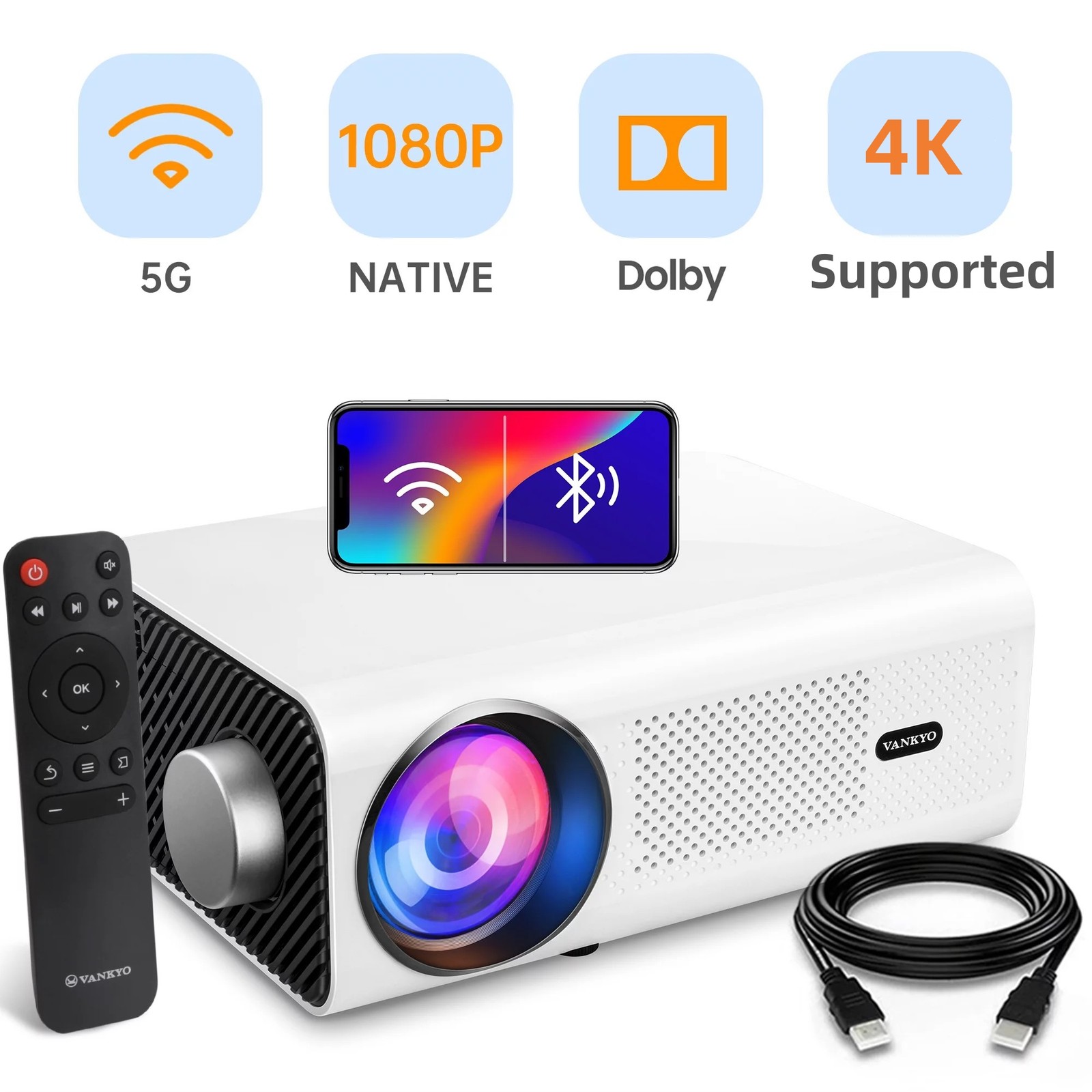 4K Projector Dolby 45000 Lumen LED 1080P 5G WiFi Bluetooth Portable Home Theater$31.69View on eBay
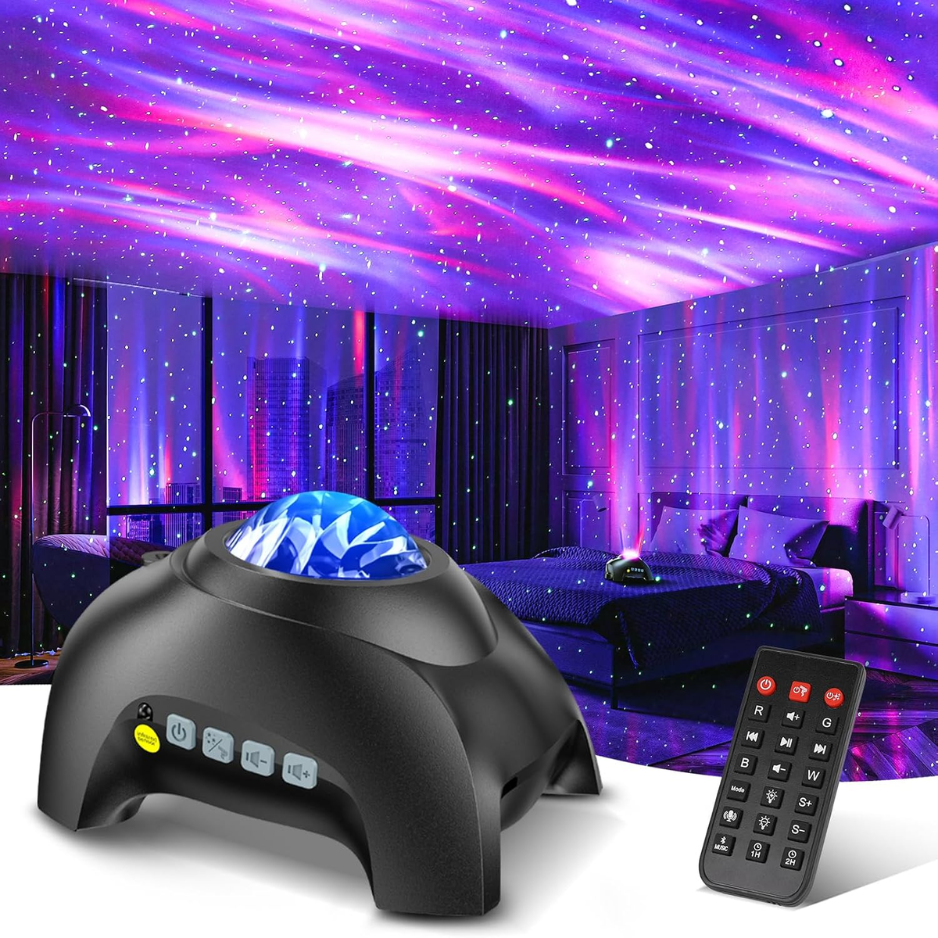 Northern Galaxy Aurora Projector, 33 Light Effects LED Star & Nebula Night Bluetooth Speaker With Remote Control & White Noise$128.99View on Mallflare
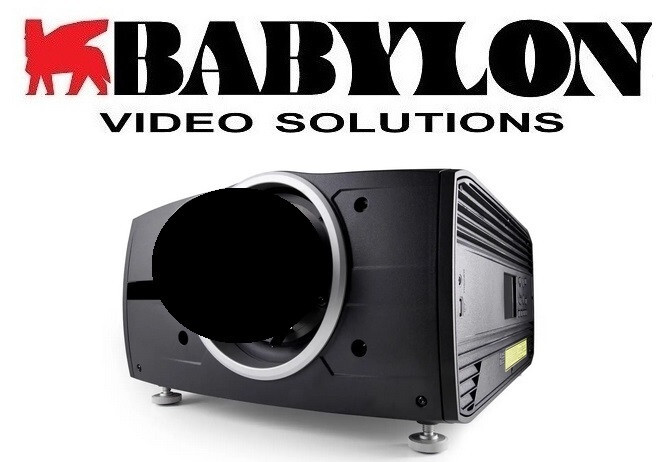 BARCO FS70-4K6 R9023455 GP7 4K WQXGA PROJECTOR, ( LOW RUNTIME & LOW LED TIME!! )$4,500.00Last checked Nov 18, 2026View on eBay
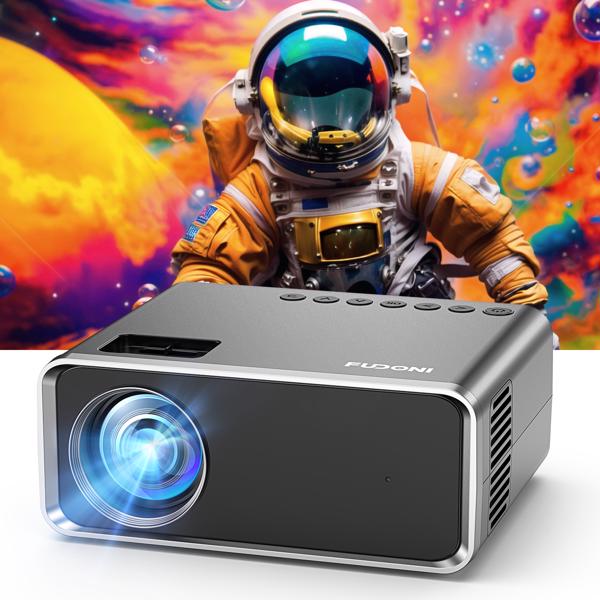 Projector With WiFi & Bluetooth, Upgraded 5G Portable Support 4K, Native 1080P, 12000 Lumens, Outdoor LED Movie Projector,Selling On The Amazon Platform Is Prohibited$152.99View on Mallflare
Highlights
- ANSI lumens is the only comparable brightness metric; marketing 'lux' or unlabeled 'lumens' figures are typically 5-10x inflated over measured ANSI output.
- Native resolution requires the physical chip: 1920x1080 LCD/DLP panels deliver true 1080p, while '4K supported' units accept a 4K signal but downscale to 1080p or 720p.
- LED light engines rated 20,000-30,000 hours eliminate lamp replacement, but budget panels lose 30-50% brightness within the first 1,000 hours of use.
- LCD single-panel engines dominate budget tiers with lower cost but visible pixel grid and weaker contrast; DLP with a color wheel offers sharper motion but risks rainbow artifacts.
Best use cases
- Dedicated dark room home theater: choose a native 1080p DLP or LCD unit with a real ANSI rating of 2,000+ lumens and HDMI 2.0; skip battery-powered pico units.
- Portable backyard or travel use: pick a sealed LED DLP with 300-500 ANSI lumens, built-in battery, and USB-C power; accept 720p native and dim-room-only performance.
- Ambient star/nebula projection for bedrooms: choose a dedicated galaxy projector with 33+ light effects and white-noise/Bluetooth audio; do not expect it to display video or text.
- Bright living room daytime viewing: skip LED projectors entirely below 3,000 ANSI lumens and use a UST laser or high-output lamp projector with an ALR screen instead.
Buying tips
- Match throw distance to room: a 1.2:1 throw ratio needs about 2.6m for a 100-inch image; short-throw 0.5:1 units need only about 1.1m, critical for small rooms.
- For a 100-inch 16:9 screen, minimum seating distance is roughly 2.5-3m; verify the projector's zoom range can hit your screen size from your actual mount point.
- Choose 2,000+ ANSI lumens for controlled-light rooms, 3,000+ for rooms with ambient light; below 500 ANSI lumens is pico/novelty tier only.
- Prefer units with HDMI 2.0, at least one USB-A for streaming sticks, and Bluetooth audio out; composite-only or MHL-only inputs date the unit and limit sources.
Specs
| Brightness Metric | ANSI lumens (true) vs marketing lumens |
|---|---|
| Native Resolution | 1080p chip vs 720p / 4K-supported |
| Light Engine | Single-panel LCD vs DLP + color wheel |
| LED Lifespan | 20,000-30,000 hr lamp-free |
Related searches
What to check before buying
- Measure wall or screen width and mount distance, then calculate required throw ratio; confirm the projector's zoom and offset can fill the screen without keystone distortion.
- Confirm room light control: blackout curtains and dark walls are required for sub-1,000-lumen units; ambient light demands 3,000+ ANSI lumens.
- Check voltage and plug standard (100-240V or regional plug) plus whether the power brick is internal or external for ceiling or shelf mounting clearance.
- Verify companion parts: ceiling mount pattern (1/4-20 or M6), HDMI cable length for your run, and whether a streaming stick or soundbar is needed since built-in speakers are typically 5-10W.
FAQ
Data sources: eBay / Amazon listings and product attribute feeds. Updated Nov 27, 2026.
Some links on this page are affiliate links. If you buy after clicking one, we may earn a commission at no extra cost to you. This does not change which products appear here or their order. Affiliate disclosure.