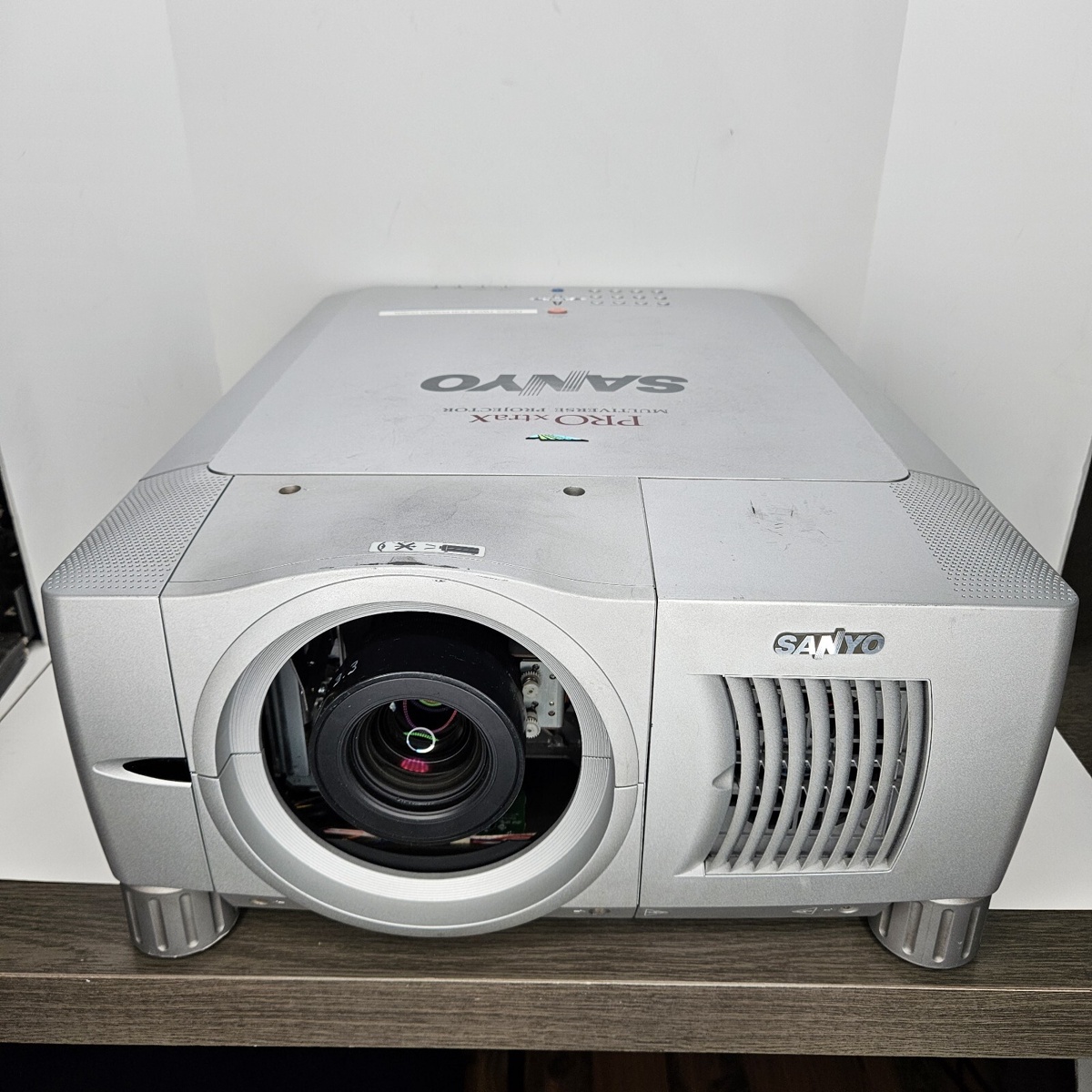

Photos from current listings. Actual item, color, and included accessories may vary.
Large Venue Projector Buying Guide
Large venue projectors are high-output installation-class models built for auditoriums, halls, and outdoor screens where ambient light and throw distance defeat consumer units. The critical trade-off is luminous flux versus resolution and lamp/light-source longevity, with 3LCD and DLP engines dominating different brightness tiers. Choose a model rated at 6,000+ ANSI lumens with a compatible long-throw lens and 24/7-rated cooling; anything below 5,000 lumens or without lens interchangeability is a compromise for large rooms.
Key takeaways
- Brightness drives venue sizing: 6,000–10,000 ANSI lumens covers 200–300 inch screens in dim rooms; 10,000–20,000 lumens handles 300–500 inch screens or moderate ambient light.
- Engine type matters: 3LCD delivers accurate color and high lumens per watt; single-chip DLP offers sharper motion but can show rainbow artifacts; 3-chip DLP is the reference for large-venue color and brightness.
- Lens interchangeability is the key installation feature: large-venue units accept long-throw, short-throw, and rear-projection lenses, while fixed-lens models lock you to one throw ratio.
At a glance
- Category
- Projectors & Screens
- Last updated
- Nov 28, 2026
Current offers
Highlights
- Brightness drives venue sizing: 6,000–10,000 ANSI lumens covers 200–300 inch screens in dim rooms; 10,000–20,000 lumens handles 300–500 inch screens or moderate ambient light.
- Engine type matters: 3LCD delivers accurate color and high lumens per watt; single-chip DLP offers sharper motion but can show rainbow artifacts; 3-chip DLP is the reference for large-venue color and brightness.
- Lens interchangeability is the key installation feature: large-venue units accept long-throw, short-throw, and rear-projection lenses, while fixed-lens models lock you to one throw ratio.
- Light source tiers: legacy UHP lamps need replacement every 2,000–4,000 hours; laser phosphor and LED-rated units run 20,000+ hours with consistent brightness and no lamp swaps.
Best use cases
- Best fit: auditoriums and lecture halls with controlled lighting and 250–400 inch screens — pick a 10,000+ lumen 3LCD or 3-chip DLP model with a long-throw lens and 24/7 cooling rating.
- Best fit: outdoor movie nights and event staging — choose a 12,000–20,000 lumen laser model with IP-rated or sealed optical path and vertical lens shift for ground-level placement.
- Wrong fit: small conference rooms under 150 inches — a 6,000+ lumen venue projector is overkill, generates excess heat and noise, and a 3,000–5,000 lumen business unit is the correct tier.
- Wrong fit: portable road use without case and rigging — venue projectors weigh 20–50 lbs; only choose a travel-case bundle if you have a two-person lift plan and reinforced mounting.
Buying tips
- Size the screen first: for a 16:9 screen, throw distance = throw ratio × screen width; confirm the lens ratio covers your room depth before buying any body.
- Require at least 1.5× vertical lens shift and 0.5× horizontal shift for venue mounting, or plan a ceiling mount with precise alignment; fixed-shift models force rigging compromises.
- Match input standards: for 4K or 1080p sources choose HDMI 2.0 with HDCP 2.2; legacy XGA models like the Sanyo PLC-XF35NL accept analog and DVI but are limited to 1024×768.
- Check power and cooling: venue units draw 400–1,200 W and need 20A circuits or dedicated breakers; confirm airflow clearance of at least 20 inches on intake and exhaust sides.
Specs
| Brightness Tier | 6,000–20,000 ANSI lumens |
|---|---|
| Engine Type | 3LCD / Single-chip DLP / 3-chip DLP |
| Light Source | UHP lamp vs Laser phosphor |
| Lens Mount | Interchangeable vs Fixed |
Related searches
What to check before buying
- Measure the room: screen width and throw distance must match the lens ratio; a 300-inch 16:9 screen is 262 inches wide, so a 1.5–2.0:1 lens needs 33–44 ft of throw.
- Confirm ceiling or rigging capacity: most large-venue projectors weigh 25–50 lbs; mounts must be rated for 2× the projector weight and use safety cables.
- Verify electrical: a dedicated 15A or 20A circuit at the projector location; laser models may need 208–240V for full output, so check the plug standard.
- Plan signal runs: HDMI over 50 ft needs active optical cable or HDBaseT extenders; confirm the projector accepts HDBaseT or SDI for long venue cable runs.
FAQ
Data sources: eBay / Amazon listings and product attribute feeds. Updated Nov 28, 2026.
Some links on this page are affiliate links. If you buy after clicking one, we may earn a commission at no extra cost to you. This does not change which products appear here or their order. Affiliate disclosure.