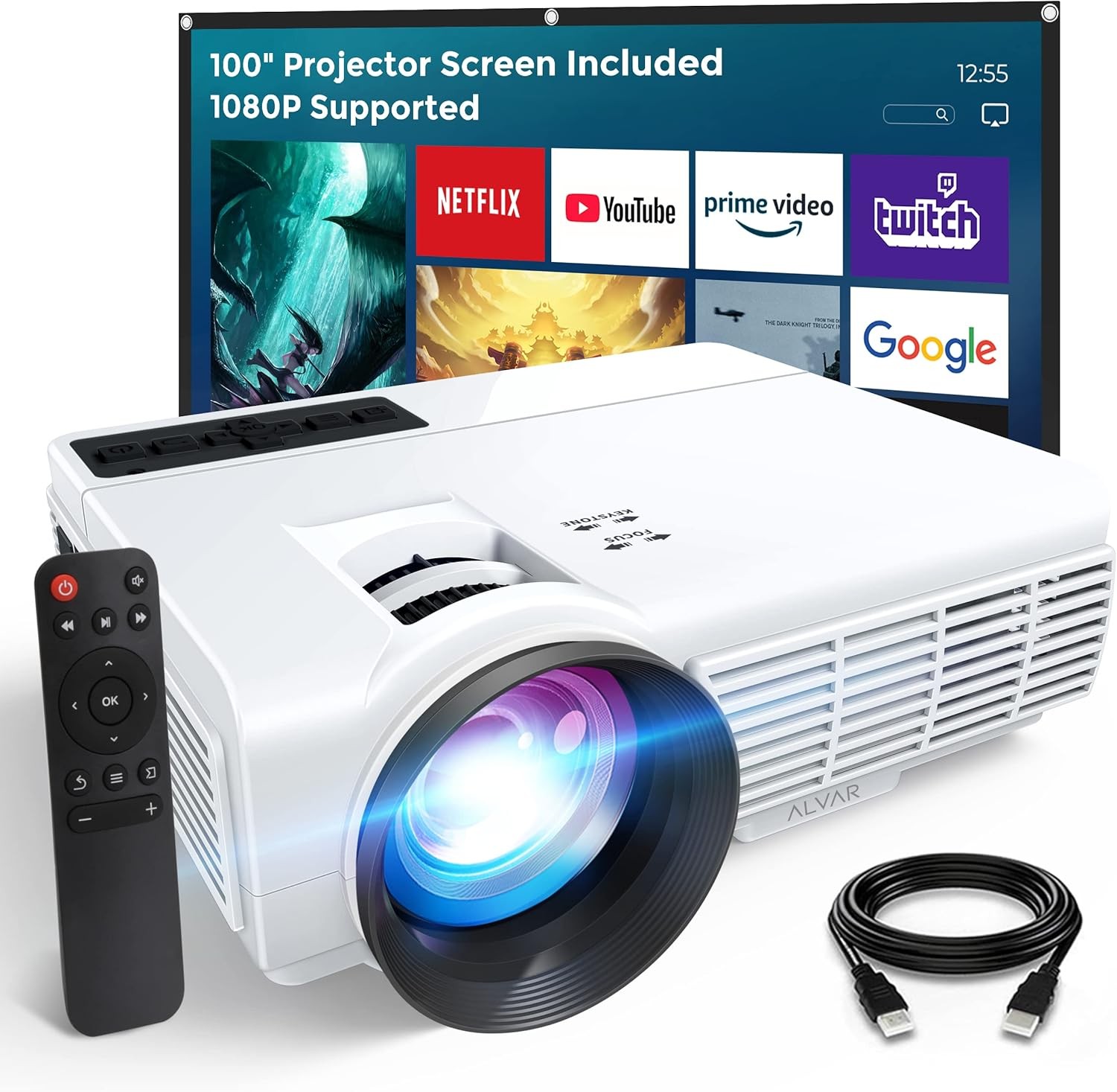

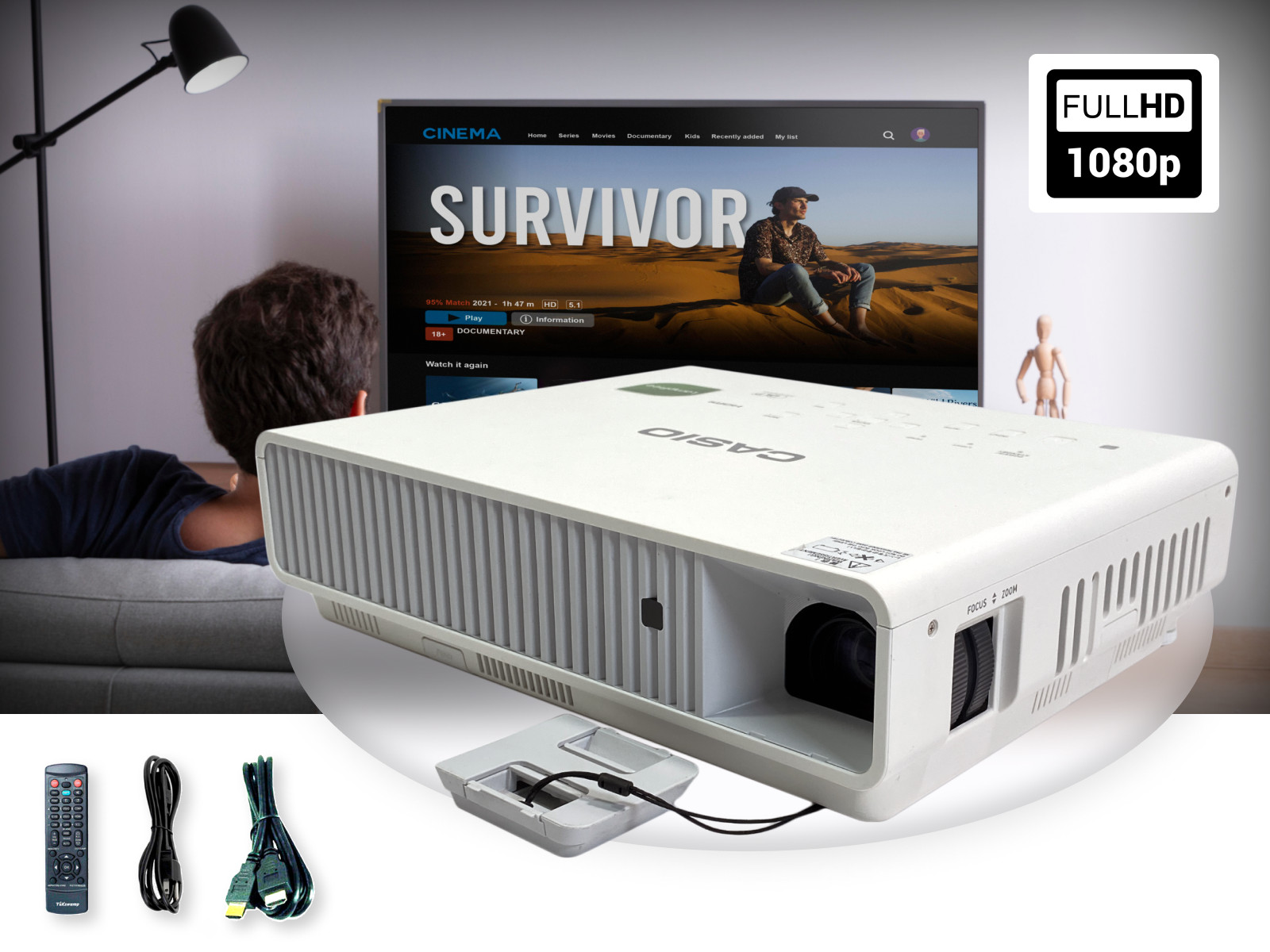
Photos from current listings. Actual item, color, and included accessories may vary.
Home Movie Projector Buying Guide
A home movie projector is an image-display system whose core trade-off is luminance versus resolution: high ANSI lumens deliver a bright, wash-resistant picture, while native 1080p or 4K panels provide sharpness that cheap 'support 4K' scalers cannot match. The decision rule is simple: buy for native resolution and true ANSI lumens first, then confirm throw ratio and screen gain; anything advertising only '8000 lumens' or '4K support' without a native panel spec is a compromise.
Median $65.56
Key takeaways
- Native resolution beats 'supported' formats: true 1920x1080 or 3840x2160 panels resolve detail; 854x480 or 1280x720 panels merely downscale and soften HD sources.
- ANSI lumens is the only honest brightness metric: 2,000+ ANSI lumens suits dim rooms, 3,000+ ANSI lumens resists moderate ambient light; 'lux' or 'LED lumens' figures inflate 5-10x.
- DLP vs LCD architecture: DLP yields higher contrast and no filter maintenance but can show rainbow artifacts; 3LCD delivers accurate color and no rainbows but needs periodic filter cleaning.
At a glance
- Category
- Projectors & Screens
- Last updated
- Nov 28, 2026
Current offers
Highlights
- Native resolution beats 'supported' formats: true 1920x1080 or 3840x2160 panels resolve detail; 854x480 or 1280x720 panels merely downscale and soften HD sources.
- ANSI lumens is the only honest brightness metric: 2,000+ ANSI lumens suits dim rooms, 3,000+ ANSI lumens resists moderate ambient light; 'lux' or 'LED lumens' figures inflate 5-10x.
- DLP vs LCD architecture: DLP yields higher contrast and no filter maintenance but can show rainbow artifacts; 3LCD delivers accurate color and no rainbows but needs periodic filter cleaning.
- Screen gain and wrinkle-free tensioning: 1.0-1.1 gain matte white suits dark rooms; a tensioned or tab-tensioned screen eliminates the hot spots and ripples common to foldable PVC sheets.
Best use cases
- Dedicated dark home theater: pick a 2,000-3,000 ANSI lumen native 1080p/4K projector with 1.2-1.5:1 throw ratio and a fixed 1.1-gain matte screen — skip ultra-portable battery units.
- Backyard movie night: choose a 3,000+ ANSI lumen projector plus a 120-inch wrinkle-free screen with stakes and sandbags; skip low-lumen pico projectors that wash out at dusk.
- Living-room multipurpose: select a 2,500+ ANSI lumen 3LCD or DLP unit with horizontal/vertical lens shift and a pull-down or tripod screen; skip fixed-frame screens if the wall must stay clear.
- Portable/travel use: choose a foldable 16:9 screen with carry bag and a projector under 3 lbs with HDMI/USB-C input; skip 150-inch tripod screens that exceed doorway and vehicle width.
Buying tips
- Match throw distance to room: throw ratio = distance ÷ screen width; a 1.5:1 projector needs 1.5 ft per 1 ft of image width — a 100-inch (7.3 ft wide) screen needs about 11 ft.
- Demand native resolution and ANSI lumens in writing: native 1920x1080 minimum for HD; 2,000 ANSI lumens minimum for dim rooms and 3,000+ for semi-lit spaces.
- Verify inputs and latency: HDMI 2.0 with HDCP 2.2 is required for 4K sources; game mode under 40 ms input lag matters if the projector doubles for console gaming.
- Screen material grade: matte white PVC or fiberglass at 1.0-1.1 gain; avoid glossy or grey screens in dark rooms because they skew color and reduce brightness.
Specs
| Native Resolution | 1920x1080 / 3840x2160 (4K) |
|---|---|
| Brightness | 2,000-3,500 ANSI lumens |
| Panel Technology | DLP vs 3LCD |
| Throw Ratio | 1.2:1 to 1.5:1 typical |
Related searches
What to check before buying
- Measure wall width and seating distance: confirm the planned screen diagonal fits with at least 1 ft clearance on each side and that throw distance matches the projector's ratio.
- Confirm ceiling/wall structure and mounting: projectors over 8 lbs need a stud or rated anchor; tripod screens need 8-9 ft ceiling clearance for the 120-150 inch models.
- Check room light control: blackout curtains are mandatory for sub-2,000 ANSI lumen units; ambient light above 300 lux demands 3,000+ ANSI lumens.
- Verify voltage and plug: confirm 100-240V auto-switching and the correct plug type for your region; projectors with external power bricks need the brick included.
FAQ
Data sources: eBay / Amazon listings and product attribute feeds. Updated Nov 28, 2026.
Some links on this page are affiliate links. If you buy after clicking one, we may earn a commission at no extra cost to you. This does not change which products appear here or their order. Affiliate disclosure.